AWS Public Sector Blog
When 1,800 employees needed an AI colleague, not just a chatbot
Since 1926, the Alberta Motor Association (AMA) has protected what matters most to Albertans across roadside assistance, membership, insurance, travel, banking, and driver education. As AMA marks its centennial this year, it’s setting out to change how everyday work gets done. Before this year, AMA teams had been experimenting with AI tools on their own and on separate systems, a pattern that risked fragmented, ungoverned shadow AI across the organization. AMA needed one governed AI foundation that every employee could use safely.
That foundation came out of AMA’s AI Center of Excellence (CoE), where technical leaders and architects worked alongside business apprentices who had little or no prior AI experience. Together they built the guardrails to govern the entire AI environment. The result is the AMA Agentic Platform, built on Amazon Web Services (AWS) using Amazon Bedrock AgentCore. The solution puts AI directly into the hands of all 1,800-plus employees, a shift from treating AI as a feature to working with AI as a colleague.
AMA launched the solution with Teddy, its first internal AI application and the main entry point for employees. Within its first weeks, Teddy reached over 50% adoption across business units and handled more than 7,000 requests. The impact was immediate: multi-day tasks are being completed in minutes, from business requirements to strategic documents to decision frameworks.
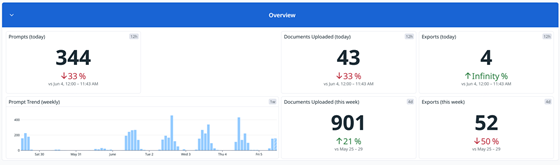
Figure 1: Teddy usage overview showing daily and weekly prompts, documents uploaded, and exports across AMA
Inside the AMA agentic solution
The solution’s goal is to shield internal builders from infrastructure complexity so they can focus on business logic. Scaling agent workflows across business lines created familiar hurdles: maintaining state, managing complex reasoning loops, repeating deployment scripts, and limited visibility into how agents behaved.
Building on the modular services in Amazon Bedrock AgentCore removed much of this undifferentiated heavy lifting. Teams write their agent logic with Strands Agents, an open source SDK, and the solution gives them a uniform way to build, deploy, and more securely connect agents to internal APIs and tools. Freed from managing infrastructure, internal teams now ship agents to production four times faster, taking an idea live in under a week instead of months.
An AI application and an agent and tool registry connect to Amazon Bedrock AgentCore Runtime, which runs the agent framework (Strands Agents, instructions, local tools, and context) and links to AgentCore Gateway and Code Interpreter, AgentCore Identity, AgentCore Policy, AgentCore Memory, Amazon Bedrock Guardrails, the underlying models, and observability through Amazon CloudWatch and Datadog. This architecture is shown in the following diagram:
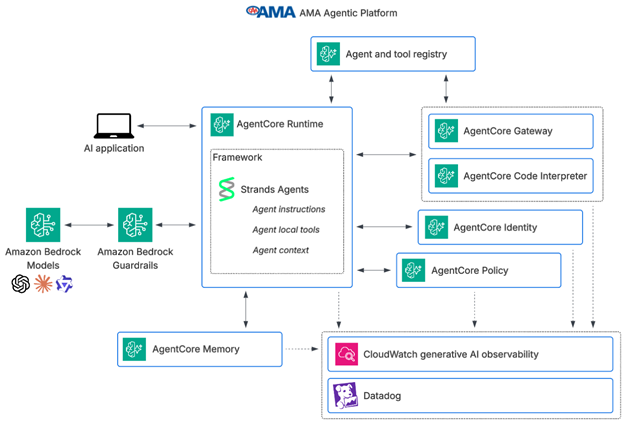
Figure 2: The AMA Agentic Platform architecture
The solution relies on the core capabilities of Amazon Bedrock AgentCore:
- More secure, isolated runtime – AgentCore Runtime is a managed, serverless runtime with session isolation that protects data pathways when agents reach core systems or external networks.
- State management – AgentCore Memory handles the extraction, consolidation, and retrieval of context so agents keep relevant information at enterprise scale.
- Identity and security – AgentCore Identity connects to corporate identity providers and uses a token vault with AWS Secrets Manager to secure user tokens, API keys, and credentials, with role-based access control (RBAC).
- Guardrails and responsible AI – Amazon Bedrock Guardrails screens and masks personally identifiable information (PII), toxic inputs, and harmful content before it reaches the models, in line with AMA’s responsible AI principles.
- Agent governance – Using Policy in Amazon Bedrock AgentCore and the open source Cedar policy language, the solution sets fine-grained controls over the data and tools each agent can use.
- Observability – With Amazon CloudWatch generative AI observability and OpenTelemetry, AMA gets real-time visibility into agent metrics, session traces, and token-level foundation model (FM) spend.
Teddy in action
At first glance, Teddy works as an internal assistant, giving staff intelligent search, document summarization, and help drafting communications. But Teddy is more than a chat application; it’s the single interface and hub for AI across AMA.
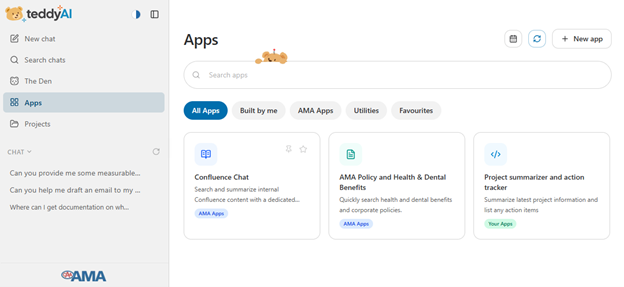
Figure 3: Teddy no-code AI agent builder
True democratization means more than giving employees access to AI. It means giving them the power to create. Teddy includes a no-code agent builder so any employee, whatever their technical background, can configure and deploy a custom agent for their daily work. A frontline insurance advisor can build a policy-lookup assistant. A travel agent can build an itinerary generator. They do it securely within Teddy without writing a single line of code. Each agent comes with full visibility into its usage and token-level spend.
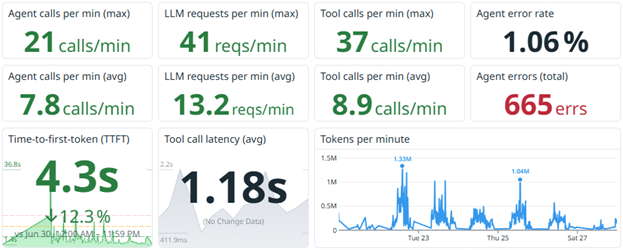
Figure 4: Teddy agent monitoring: agent invocations, model requests, and tool calls per minute, alongside the agent error rate

Figure 5: Teddy foundation model metrics: time to first token, token throughput, and total input and output tokens processed
Teddy also tackles siloed innovation by acting as a discovery and publishing hub. Agents deployed to the solution are automatically surfaced in Teddy, creating an internal catalog of “AI colleagues.” Instead of departments building the same tool twice, staff can browse, share, and reuse agents built by their peers.
Looking forward: The next 100 years
As AMA enters its second century, it’s focused on expanding these capabilities for both employees and members. The clearest change is cultural. Across departments, the everyday question has shifted from “How do I get through this repetitive task?” to “How can I build an AI colleague to do it for me?”
By putting Amazon Bedrock AgentCore directly into employees’ hands, AMA built a foundation for grassroots innovation rooted in safety, compliance, and governance, and it skipped much of the infrastructure engineering to focus on a more secure, intuitive solution suited to a multi-service, regulated business.
To learn how your organization can use the same building blocks to empower its workforce, explore Amazon Bedrock AgentCore and the open source Strands Agents SDK, and read how AMA transformed member experience on AWS in our earlier post on the AWS Public Sector Blog. Start shifting your strategy from building AI as a temporary feature to scaling AI as a lasting colleague.