Wie war dieser Inhalt?
Sprache des Inhalts
Im Moment sind nicht alle Inhalte übersetzt.
- Lernen
- From data to discovery: Helical powers a virtual lab for Pfizer, with AWS
From data to discovery: Helical powers a virtual lab for Pfizer, with AWS
AI is converging with biology. Machine learning and intelligence are augmenting human insight. Automation is replacing manual processes, siloed systems are being integrated, and once-fragmented teams are collaborating. New methods of drug discovery are being created, furthering scientific discovery and paving the way for new pharmaceutical developments and better treatment outcomes.
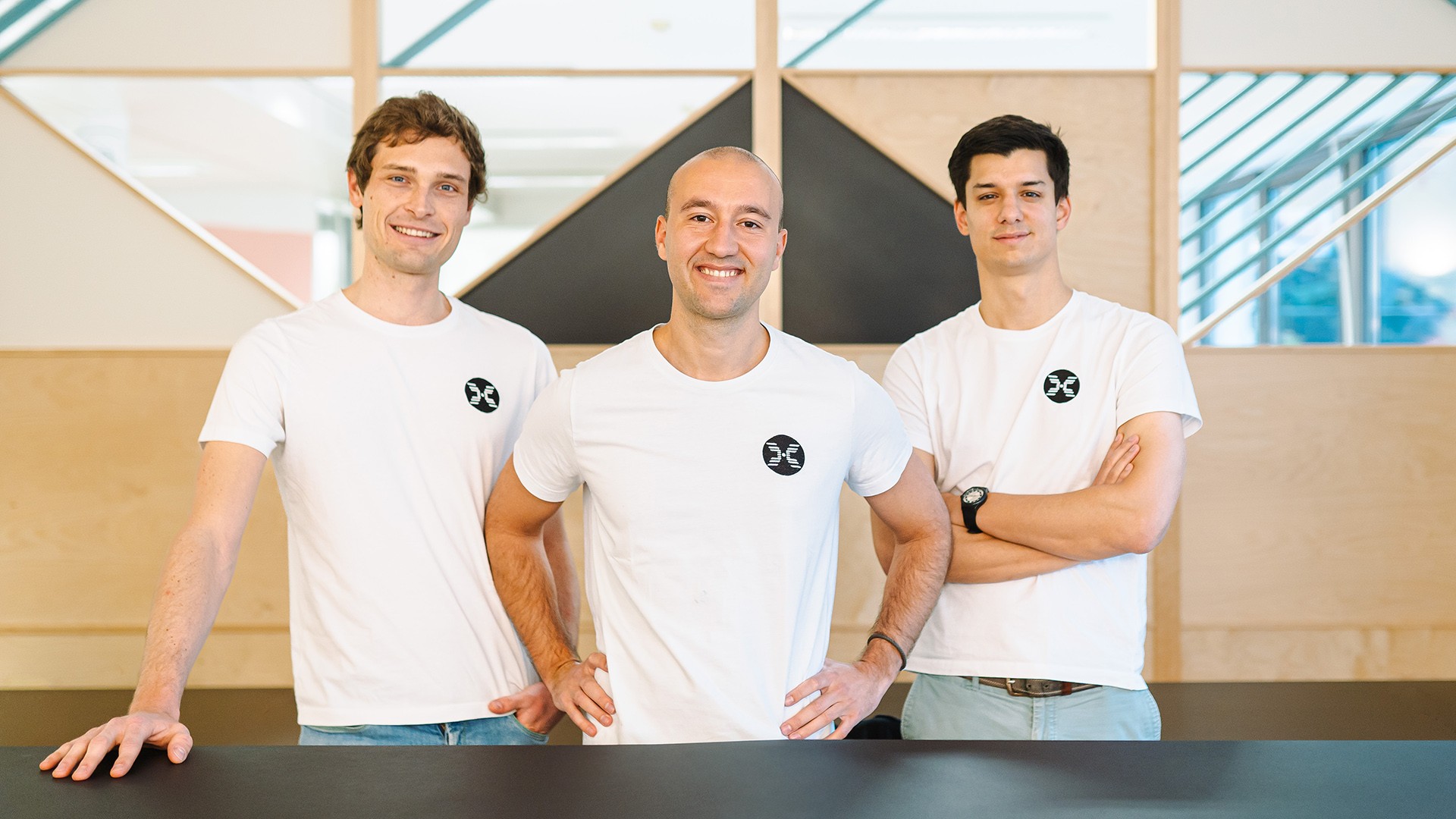
At the heart of this convergence sits Helical. Built on AWS, the startup’s Virtual Lab enables biologists to design experiments and evaluate biological outcomes in a simulated environment, without needing to write code. The solution provides an application layer around AI foundation models which “empowers scientists to access all of these models and then to use them in their virtual discovery process or run virtual experiments before touching a wet lab,” explains Rick Schneider, Co-founder and CEO, Helical.
Building together
Experiments can be designed and hypotheses tested at the speed of inference, providing a significantly lower-cost alternative to traditional in-lab operations. These processes happen “a lot faster” and “with a lot higher chance of success,” says Schneider. Virtual Lab integrates a number of features into a single platform, making processes more accessible to a wider user base. “Before, these tools were very verticalized and siloed,” says Maxime Allard, Co-founder and CTO, Helical. “You had the ML engineers that were building the models, but then the biologists didn't know how to ask the right questions.” There was similar fragmentation when it came to the different people working in the field. “In pharma you've got biologists on one hand and machine learning scientists on the other. They work in two completely different worlds,” says Schneider.
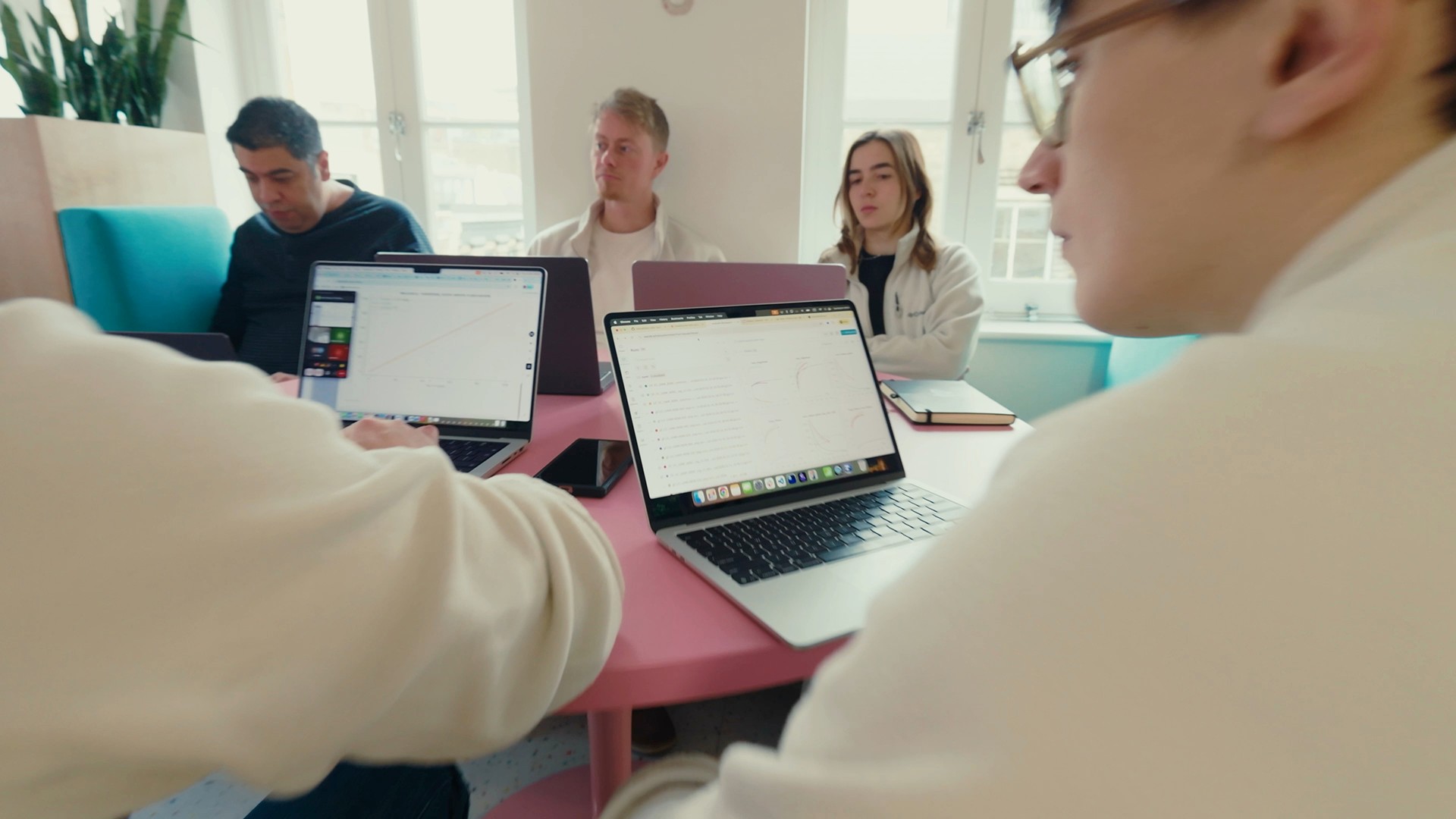
Helical’s solution enables teams to work together seamlessly in a virtual environment, fostering “a collaborative effort between scientists and computational biologists, and scaling that up to answer biological questions without worrying too much about the underlying technology,” explains Allard.
The AWS stamp of approval
AWS is powering this collaborative effort and “they are a major part of everything we've built so far,” says Allard. Helical is leveraging solutions such as Amazon EC2 and Amazon EKS to run the most recent Nvidia GPU chips; Amazon S3 and Amazon FSx for Amazon Lustre and Amazon EBS managed storage solutions for training models; and Amazon GuardDuty and Amazon CloudWatch for security and monitoring.
Helical was able to easily and cost-effectively deploy these services using US $200,000 in AWS Activate Credits, accessed through AWS Activate, the program dedicated to supporting startups build and scale. This support has also enabled Helical to run massive GPU compute, “which we've used to accelerate the scientific discovery workflows of our different clients,” says Allard.
The support extends to much more than financial backing. “Beyond the credits that we have got, the Activate program is really about partnership,” he continues. “Since we started with AWS, it's been really valuable to talk to them, to get access to conferences, and go together.” Helical had a strong presence at AWS Summit Paris and maintains a virtual one on AWS Marketplace to support its go-to-market strategy. “This stamp of approval from AWS in terms of the Marketplace was really direct support for our company,” says Allard. It demonstrated “yes, we adhere to the best practices that AWS have set, which accelerates our discussions on the IT side. That, paired with an attrition test that we have been running on our platform, was enough to convince our customers to work with us. I think that is only possible because of the partnership.”
Pfizer: AI in action
One of those customers is global pharmaceutical company, Pfizer, which deployed Helical’s Virtual Lab and bio foundation models to enable biomarker discovery for gene therapy safety. In the early stages, says Schneider, “they had the data, they had a deep conviction that AI bio foundation models could help, and they had the obvious scientific question.” However, he continues, “they hadn’t yet found the system that could operationalize those models for that specific problem.”
Enter Helical. The team ran a proof-of-concept for Pfizer which produced strong results, before expanding it to a full program and then focusing closely on the core challenge Pfizer was seeking to solve: determining which patients in the data trial were at risk of developing potential liver injury or adverse side effects. “They really wanted to move that prediction upstream,” says Schneider, “and think about, could blood-based biomarkers that we identify together computationally predict a liver injury pretreatment?”
Pfizer had strong scientific expertise in omics and drug discovery, but sought additional specialized infrastructure to rigorously evaluate and scale foundation models using large‑scale biological data for target identification, validation, and prioritization. “We saw the Helical platform as a way to experiment with and compare published models and figure out how we might be able to apply these to some of the questions we deal with in toxicology,” says Tom Lanz, Senior Director of Multi-Omics at Pfizer.
In a joint effort between Pfizer scientists and Helical’s deployed scientific engineers, the team used the platform to run experiments, virtually personalize models to clinical data, and then generate candidate biomarkers which were validated against multiple biological sources.
The partnership enabled Pfizer to overcome some of the biggest challenges in leveraging multi-omics for drug discovery: cost and analytics. “While the cost of sequencing has gone down over time, newer spatial and single cell technologies can be quite costly, and these require more advanced analytics and complexity of study design,” says Lanz. “Integrating omic data types can also be a challenge and requires a strong collaboration between computational groups and biologists.” Helical’s platform offers pre-trained models, resulting in “huge time savings,” says Lanz. The platform’s UI, meanwhile, “let us quickly upload fine-tuning data and not have to establish internal compute infrastructure to run these models.”
Beating benchmarks & bettering patient outcomes
The results were “super promising,” Schneider says. “We beat internal benchmarks by quite a lot.” Critically, this whole process was reproducible and as such, “we are actively looking more broadly with partners in other parts of Pfizer to identify additional scenarios in which we would like to try these models to solve problems,” says Lanz. Helical’s approach is also use case and disease agnostic, meaning “once it works, it can be replicated across the pipeline and across the different diseases,” says Allard.
In addition to positive outcomes for the use case trial, the results also demonstrate a far larger achievement. “On a wider scale, I think the significant impact here, if we take a step back, is the ability to identify at-risk patients before they even receive a treatment,” says Schneider. “That’s really translating AI into direct patient outcomes and hence better science. That is what matters in the end.”
GPUs on demand for experiments at scale
To achieve all of this, Helical required significant compute resources and highly robust security and data protection. One of the “big advantages” of building with AWS was its “very rich” product and service offerings, says Allard. “You can have your whole platform on AWS, not just a part of it.”
In addition to offering comprehensive infrastructure, Helical’s ambition to scale rapidly was also enabled by AWS. “We knew that very quickly our use cases would scale, and the value that we create would scale, with the number of GPUs you can have and the number of models you can run the experiments,” he continues. “And with the massive amount of GPUs that you need, AWS was really well suited for us to quickly get on-demand compute.”
To manage this scale, Helical runs its workloads on a containerized architecture powered by Amazon EKS, allowing the team to dynamically allocate GPU resources depending on demand. Helical’s customers will typically be running multiple experiments concurrently, requiring a lot of GPUs that sit in different instances to be spun up or down at speed. “For example, if Pfizer wants to run ten experiments, we want to make sure we can actually give them 80 GPUs that they can distribute across these workloads. They want to have a whole team working together and not be limited by a single GPU,” says Allard. “This is exactly where technology like EC2 or EKS comes into play. You’re not limited by the single hardware or single GPU anymore, but you can really scale this to eight GPUs on one node or even more.” Having access to these EC2 instances means that experimentations and analysis that typically took 35 days have been achieved in “a few hours” using the platform.
Security built for science
Alongside scalability, security was also a significant consideration for Helical when building its platform. The startup uses Amazon GuardDuty with integrated AI and ML intelligence to protect workloads and data from threats, and Amazon CloudWatch for comprehensive visibility into the performance, availability, and security of its tech stack. Leveraging AWS security solutions and testing its platform on AWS was, says Allard, “a major factor in client engagement,” providing “confidence to clients that their data is secure with us.”
“The truth is that major pharma companies are all using AWS,” adds Schneider, and have “large expectations and burdens on the IT security side and compatibility with their data security compliance standards.” In terms of security, building on AWS and deploying its platform through AWS Marketplace enabled Helical to gain access to a sector guarded by rigorous security standards and regulations. “It allows you to really have the trust that you are going to have the latest security techniques implemented,” says Allard.
The next frontier: bringing AI discovery to every lab
Going forward, Helical hopes to expand its footprint, moving from early-stage target identification to clinical use cases, and broadening its customer base from big names like Pfizer to smaller teams whose limited resources may have traditionally created a barrier to working with AI models.
“Things are moving incredibly fast in this space,” says Schneider, and “foundational AI models and biological data are getting bigger and bigger and more powerful.” Working with AWS means Helical is well positioned to keep pace with developments. “We will need more scale, and I think that is something that AWS is good at providing,” he continues. “We’ll need AWS on our side to keep pushing with us on the technology side, but then also help us on the market partnership side. And I think AWS has been an amazing partner so far in that sense. We're excited about the next steps.”
Wie war dieser Inhalt?