AWS Pricing
How does AWS pricing work?
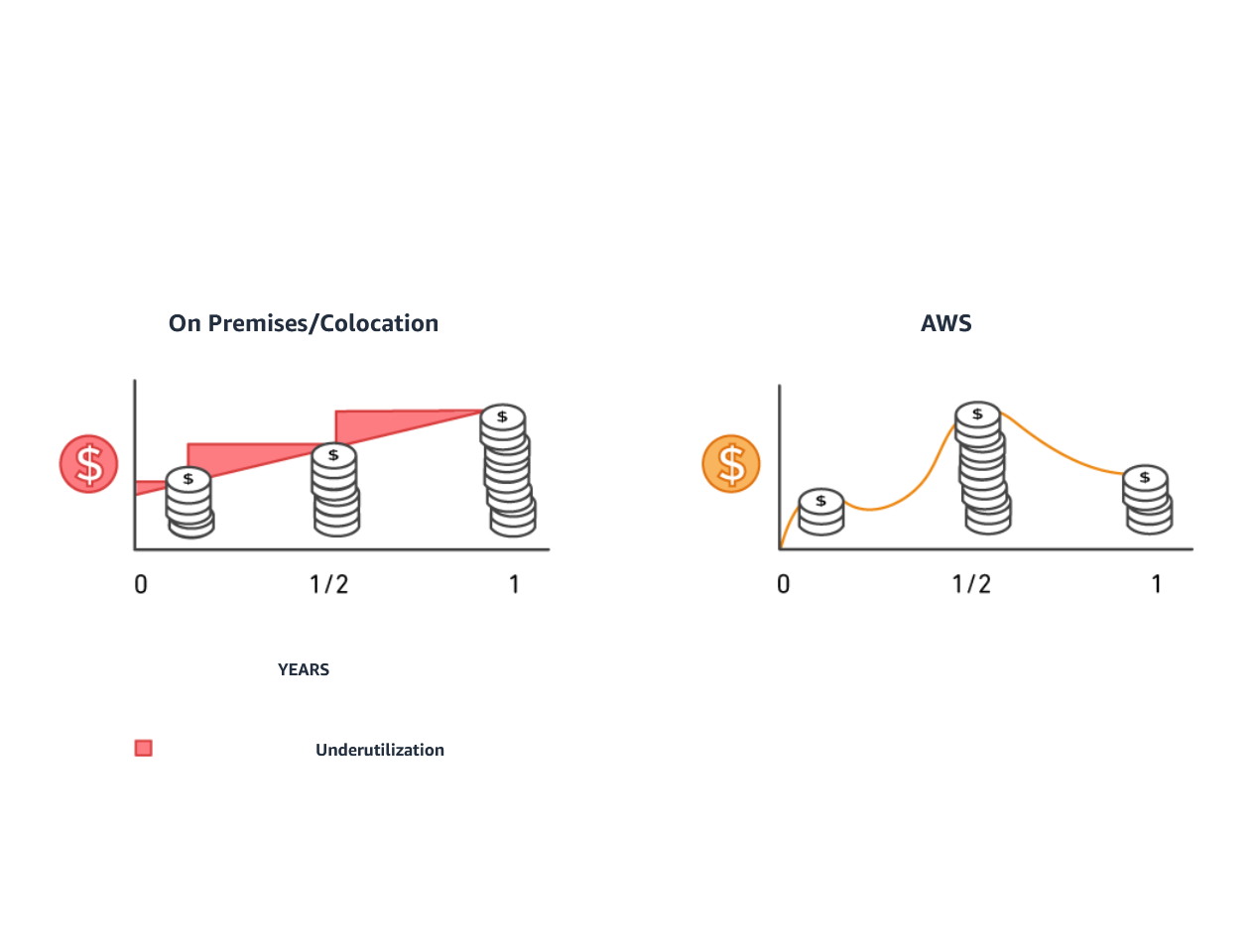
AWS offers you a pay-as-you-go approach for pricing for the vast majority of our cloud services. With AWS you pay only for the individual services you need, for as long as you use them, and without requiring long-term contracts or complex licensing. AWS pricing is similar to how you pay for utilities like water and electricity. You only pay for the services you consume, and once you stop using them, there are no additional costs or termination fees.
Find out how much you could be saving in the AWS cloud with AWS Pricing Calculator
How do you pay for AWS?
Pay-as-you-go
With AWS you only pay for what use, helping your organization remain agile, responsive and always able to meet scale demands.
Pay-as-you-go pricing allows you to easily adapt to changing business needs without overcommitting budgets and improving your responsiveness to changes. With a pay as you go model, you can adapt your business depending on need and not on forecasts, reducing the risk or overprovisioning or missing capacity.
By paying for services on an as needed basis, you can redirect your focus to innovation and invention, reducing procurement complexity and enabling your business to be fully elastic.
Flat rate
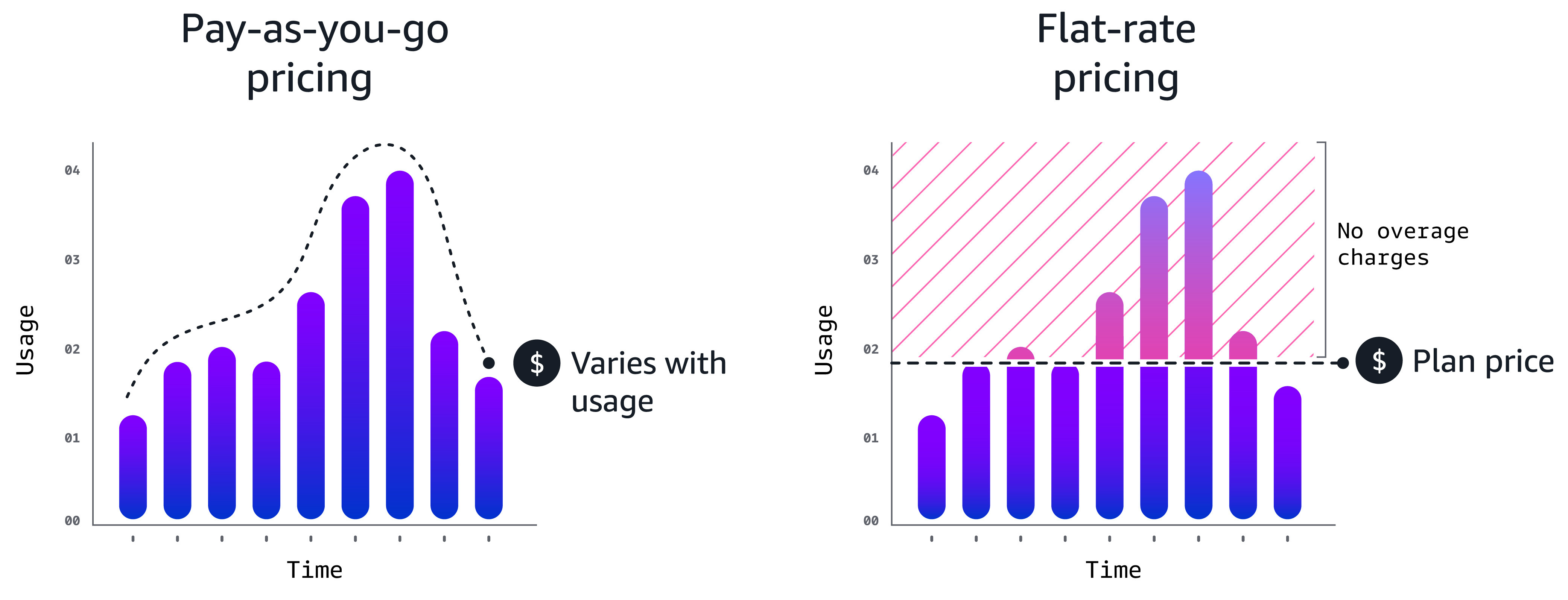
Flat-rate plans combine multiple AWS services into one price with no overage charges, giving you the reliability and security of AWS with simple monthly billing. As your needs grow, you can easily upgrade to plans with more capabilities and larger usage allowances.
Save when you commit
For AWS Compute and AWS Machine Learning, Savings Plans offer savings over On-Demand in exchange for a commitment to use a specific amount (measured in $/hour) of an AWS service or a category of services, for a one- or three-year period.
Savings Plans is a flexible pricing model that provides significant savings on your AWS usage. This pricing model offers lower prices on AWS Compute and AWS Machine Learning. Savings Plans offer savings over On-Demand in exchange for a commitment to use a specific amount (measured in $/hour) of an AWS service or a category of services, for a one- or three-year period.
You can sign up for Savings Plans for a 1- or 3-year term and easily manage your plans by taking advantage of recommendations, performance reporting, and budget alerts in the AWS Cost Explorer.
Pay less by using more
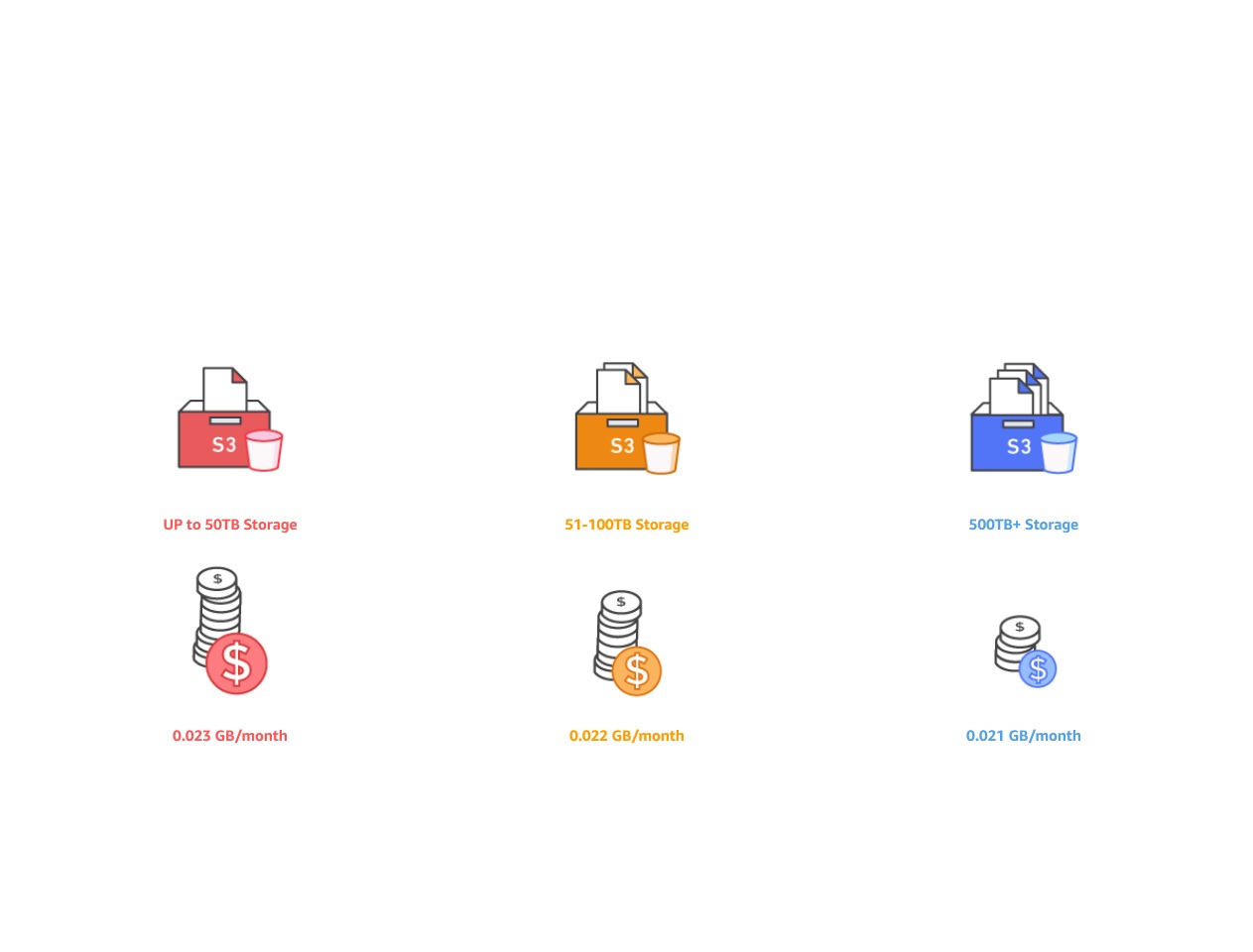
With AWS, you can get volume based discounts and realize important savings as your usage increases. For services such as S3 and data transfer OUT from EC2, pricing is tiered, meaning the more you use, the less you pay per GB. In addition, data transfer IN is always free of charge. As a result, as your AWS usage needs increase, you benefit from the economies of scale that allow you to increase adoption and keep costs under control.
As your organization evolves, AWS also gives you options to acquire services that help you address your business needs. For example, AWS’ storage services portfolio, offers options to help you lower pricing based on how frequently you access data, and the performance you need to retrieve it. To optimize your savings, choose the right combinations of storage solutions that help you reduce costs while preserving performance, security and durability.
Is AWS Private Pricing right for you?
Private Pricing offers access to commercial benefits in exchange for a commitment.
Gain access to discounts and investments for more than 200 eligible AWS services with a Private Pricing commitment over a period of time. The benefits you receive are driven by your commitment (minimum required). Private Pricing is available to customers purchasing directly from AWS or our AWS partners. To learn more, contact your AWS Account Manager or email aws-private-pricing-program@amazon.com.
Pricing for AWS products
Calculate your savings
AWS Pricing Calculator
Whether you are running a single instance or dozens of individual services, you can estimate your monthly bill using the AWS Pricing Calculator. The calculator allows you to estimate individual or multiple prices and use templates to appraise complete solutions.