AWS Partner Network (APN) Blog
Reimagining legacy applications with Pega and AWS through AI-driven approach
By: Andre Boaventura, Principal AI Solutions Consultant, Applied AI – Pegasystems Inc.
By: Surender Kumar, Mainframe Modernization Architect – Pegasystems Inc.
By: Sourav Sarkar, Senior Worldwide Specialist Solutions Architect – AWS
By: Ujwal Bukka, Senior Partner Solutions Architect – AWS
 |
 |
For most large enterprises, AI-driven legacy application modernization presents a clear imperative, but acting on it without disrupting the critical business processes that depend on those systems every day remains the core challenge. For decades, legacy applications have served as the operational bedrock of global enterprises. Yet these very systems, often built on tightly coupled, monolithic architectures, can make it difficult for organizations to move with the speed and agility that today’s business demands. Organizations face mounting pressures: high maintenance costs consuming IT budgets, immense technical debt accumulated over decades, scarcity of skilled talent familiar with legacy languages such as COBOL, and the inherent risk of big bang migration projects that frequently overrun budget and timeline.
These challenges drive many organizations to seek a structured approach that delivers business value incrementally. This post shows you how the AI-Driven App Modernization Platform from Pega and Amazon Web Services (AWS) provides a structured, low-risk methodology to transform legacy systems into intelligent, automated workflows.
The AI-Driven App Modernization Platform with Pega and AWS
The AI-Driven App Modernization Platform from Pega and AWS represents a fundamentally different approach. Instead of replatforming or refactoring legacy applications to like-for-like replacements, this solution fundamentally reimagines the business processes they support.
This solution combines the AWS Global Infrastructure and artificial intelligence and machine learning (AI/ML) services with Pega’s low-code platform for AI-powered decisioning and workflow automation. Together, they transform complex legacy architectures into a portfolio of intelligent, agentic workflows that are built for the cloud, automated, and designed around the customer experience and optimized for business agility.
This is not a like-for-like replacement. It’s an opportunity to reimagine existing processes onto an agentic platform, transforming core operations into intelligent, automated workflows.
Target use cases
The platform provides tailored, AI-accelerated paths for multiple complex legacy application estates. Each path addresses a specific modernization challenge:
- Mainframe systems – The platform provides a low-risk, phased approach to deterministically extract business rules, requirements, and process flows from mainframe applications with full traceability from every extracted artifact back to the original source code, transforming monolithic COBOL or PL/I systems into agile, Pega workflows built for the cloud. Common industry use cases include insurance claims processing, banking loan origination, customer onboarding, and supply chain orchestration.
- Legacy BPM platforms – Organizations running legacy business process management (BPM) suites can use a direct-to-Blueprint import of Business Process Model and Notation (BPMN) diagrams, allowing rapid reimagining of existing processes into intelligent, automated Pega workflows.
- Legacy Java and .NET applications – Custom-built applications on established frameworks are analyzed to identify and untangle business logic, allowing strategic migration to a modern, microservices-based architecture on the Pega platform.
- Legacy document-centric workflow applications – A specialized import path (to Blueprint) enables rapid analysis and transformation of form-based applications and embedded business logic directly into the Pega platform.
- Legacy ERP transformation – The platform acts as the workflow orchestration layer, building new workflows on Pega while ringfencing the legacy enterprise resource planning (ERP) tool, reducing expensive customizations without disrupting the core system of record.
- Application consolidation – A common use case is consolidation. Rather than treating each legacy application as a separate one-to-one modernization project, the platform provides a unified foundation to converge functionality across multiple legacy estates. As organizations modernize from mainframe, Notes, and legacy Java, they identify and remove redundant processes, creating a single, cohesive set of agentic workflows. The result is a simplified architecture and a significantly lower total cost of ownership (TCO).
Applications with embedded business rules and process flow can be Pega candidates. The following guidelines offer a starting point.
Banking and financial services:
- Loan origination, credit assessment, and fulfillment
- Loan servicing and product lifecycle management
- Account management, such as onboarding, changes, and offboarding
Insurance:
- Policy changes, endorsements, and renewal management
- Claims first notice of loss (FNOL), adjudication, and settlement orchestration
- Underwriting, such as submission intake, appetite, and risk decisioning
Communications and telecom:
- Order management, including validation, decomposition, and orchestration
- Enterprise trouble-to-resolve and fault management
- Billing dispute management and adjustments
Healthcare and health plans:
- Prior authorization, including intake, clinical review, and determination
- Member grievances, clinical appeals, and independent dispute resolution (IDR) management
- Provider credentialing, contracting, and network management
Government:
- Citizen service delivery, including case intake, tracking, and resolution
- Benefits eligibility determination and administration
- Grant management, including application, review, approval, and monitoring
Manufacturing:
- Engineering change orchestration and approval workflows
- Warranty claims processing and recovery and recall management
- Supplier onboarding, performance management, and risk assessment
Composable platform architecture
The platform is built on a composable architecture combining two vertical pillars with a central engine of four horizontal processing layers. The anatomy of the core modernization engine is as follows:
- Discovery, analysis and preprocessing – Uses specialized AWS services and tools such as AWS Transform and Kiro to perform deep analysis of legacy source code. A specialized Pega Blueprint Agent processes these insights through Amazon Bedrock AgentCore using agent-to-agent (A2A) and Model Context Protocol (MCP) integration capabilities to create enriched artifacts for the design layer.
- AI-powered application design and generation – This layer functions as the architect. It ingests the enriched artifacts from discovery and uses generative AI to create a comprehensive application design, including case type hierarchies, workflow models, data objects, and persona-based UI layouts. The output is a high-fidelity Blueprint: a validated, editable design document that defines what the modernized application should look like and how it should behave.
- Pega Platform – This layer acts as the builder. It takes the validated Blueprint design and automatically generates a functional, running application on the Pega Platform. Developers can then refine and extend the generated application using the low-code App Studio, with the full power of Pega’s decisioning and workflow automation engine underneath.
- Data and integration services – Provides broad connectivity, including microservices integration built for the cloud, legacy application connectivity, data modernization paths, and unified identity and security.
The foundation of the platform relies on AWS Cloud and AI infrastructure and the Pega Cloud Platform. AWS Cloud and AI infrastructure provides global scale, scalable compute, and a rich AI/ML portfolio that includes Amazon Bedrock and Amazon SageMaker AI.
Pega Cloud Platform delivers a fully managed platform as a service (PaaS) with always-on architecture, security with SOC 2 and ISO 27001 compliance with around-the-clock SOC monitoring, integrated DevOps through Pega Deployment Manager, and proactive global support.
The following diagram illustrates the platform anatomy.
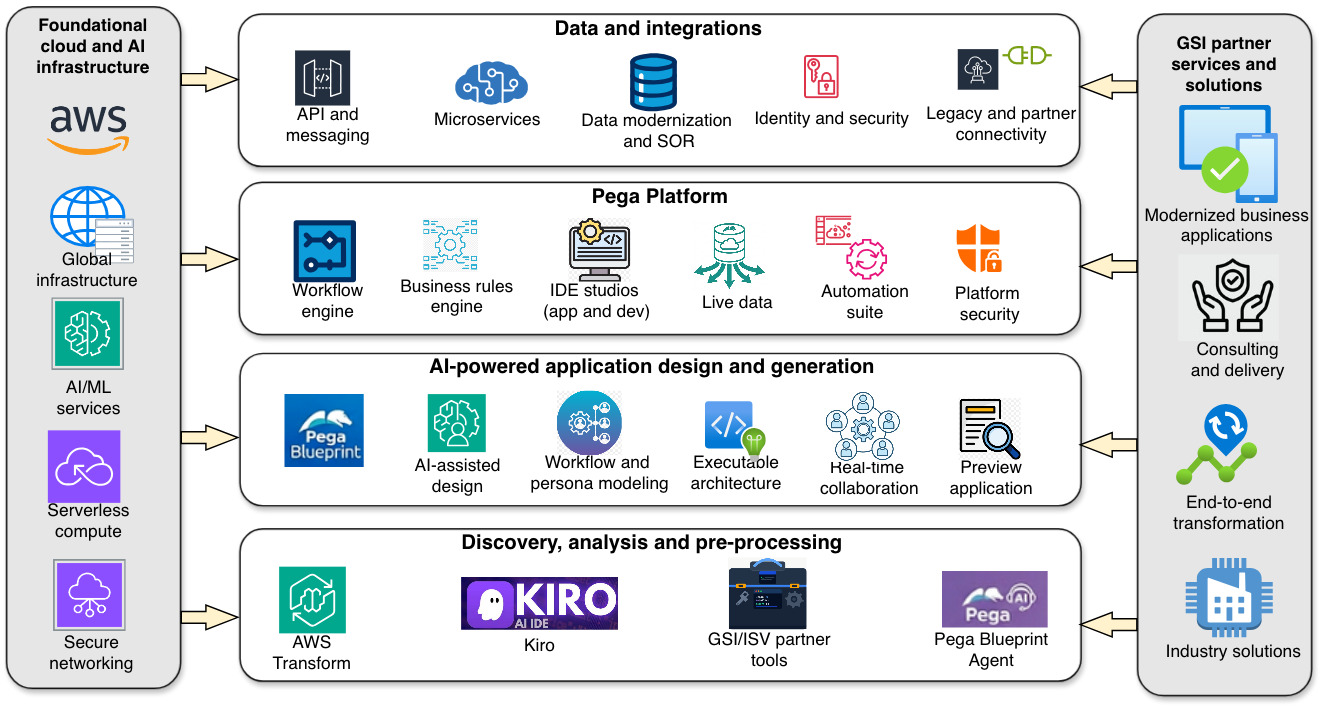
Figure 1: Anatomy of the AI-Driven App Modernization Platform
The three-phase modernization methodology: Anything to Blueprint to cloud
The platform follows an anything-to-Blueprint-to-cloud (ABC) methodology that guides organizations from legacy complexity to a modernized future on Pega Cloud. The methodology follows three phases:
- Reverse engineering and discovery
- AI-powered forward engineering
- Deployable architecture on Pega Cloud
The next sections explain these phases.
Phase 1: Reverse engineering and discovery
Goal: Transform the mystery of undocumented legacy functionality into a structured, queryable knowledge base.
The platform ingests legacy technologies including COBOL, Programming Language One (PL/I), Java, .NET, legacy ERPs, and legacy forms and workflows. These assets are processed using the powerful analysis engines of AWS Transform, Kiro, and other specialized partner tools. For example, for legacy mainframe COBOL code, AWS Transform deterministically discovers business functions and generates verified, implementation-ready requirements. The output delivers following key capabilities:
- Discovery Business Functions – Discovers business functions from the codebase to produce a catalog of logical modernization boundaries. This gives both business and technical stakeholders a shared language for scoping transformation with evidence from the code itself.
-
- Code Analysis – Ingests source code, classifies artifacts, builds dependency graphs across programs, entry points, and data stores, and measures code complexity.
- Data Analysis – Maps Db2 tables and VSAM files, traces data lineage across programs and JCL jobs, and catalogs field-level metadata in a generated data dictionary.
- Discover Data Paths – Identifies distinct execution paths from entry point triggers through to specific outputs, traced deterministically across the codebase.
- Discover Business Functions – Groups data paths into business functions (online, batch, or mixed), producing a catalog organized by business process and mapping dependencies to inform wave planning.
- Reimagine – Produces formal functional requirements that are technology-agnostic and include testable acceptance criteria, replacing undocumented business logic in applications with a verified, traceable starting point for forward engineering with Pega Blueprint.
-
- Extract Business Logic – Performs deterministic static analysis to extract business rules from actual execution logic, with each rule carrying a natural language description, acceptance criteria, and exact source line traceability.
- Generate Requirements – Produces user stories with structured business rules in EARS (Easy Approach to Requirements Syntax) format, with full traceability from requirements to rules to source code
Phase 2: AI-powered forward engineering
Goal: Use agentic AI to accelerate application design and reimagine legacy processes.
The Pega Blueprint Agent ingests phase 1 artifacts and generates a comprehensive starter application design enriched with Pega’s industry best practices. This facilitates a collaborative AI-assisted design cycle where stakeholders can rearchitect customer journeys, introduce intelligent automation and AI decisioning, simplify data structures, and design modern user interfaces.
The modernized application automatically inherits Pega Platform capabilities including case management, predictive AI and decisioning agents, Center-out™ architecture, and built-in reporting and process optimization.
Phase 3: Deployable architecture on Pega Cloud
Goal: Transform the blueprint into a deployable application using an incremental deployment strategy.
The core deployment strategy is the strangler fig pattern, an incremental approach that gradually replaces legacy functionality without disrupting the business. Think of the legacy application as the host tree and the new Pega application as the vine that grows around it until the old system can be safely decommissioned. This pattern relies on two critical components:
- The strangler façade – This layer acts as the single, intelligent entry point for all application traffic, dynamically routing requests between legacy and modern endpoints based on configurable policies. As each business domain is modernized, the façade is reconfigured to direct traffic to the new Pega application, with zero changes required on the client side.
- The anti-corruption layer (ACL) – This layer is a sophisticated translator that protects the new Pega application from legacy complexity, allowing it to communicate with legacy applications using modern REST APIs across supported legacy technologies, including COBOL, PL/I, Java, and .NET. In a mainframe modernization scenario, for example, OpenLegacy(a 3rd party Legacy-to-API integration platform) serves as the ACL, allowing Pega to interact with COBOL systems without needing to understand COBOL data structures, Extended Binary Coded Decimal Interchange Code (EBCDIC) character sets, or mainframe protocols.
Applications are modernized in logical phases called “migration waves.” Each delivers a complete business domain and its associated data. The façade begins by routing traffic to the legacy application and is progressively reconfigured with each wave, until the legacy system is fully replaced and can be safely decommissioned. This incremental modernization is illustrated in the following graphic.
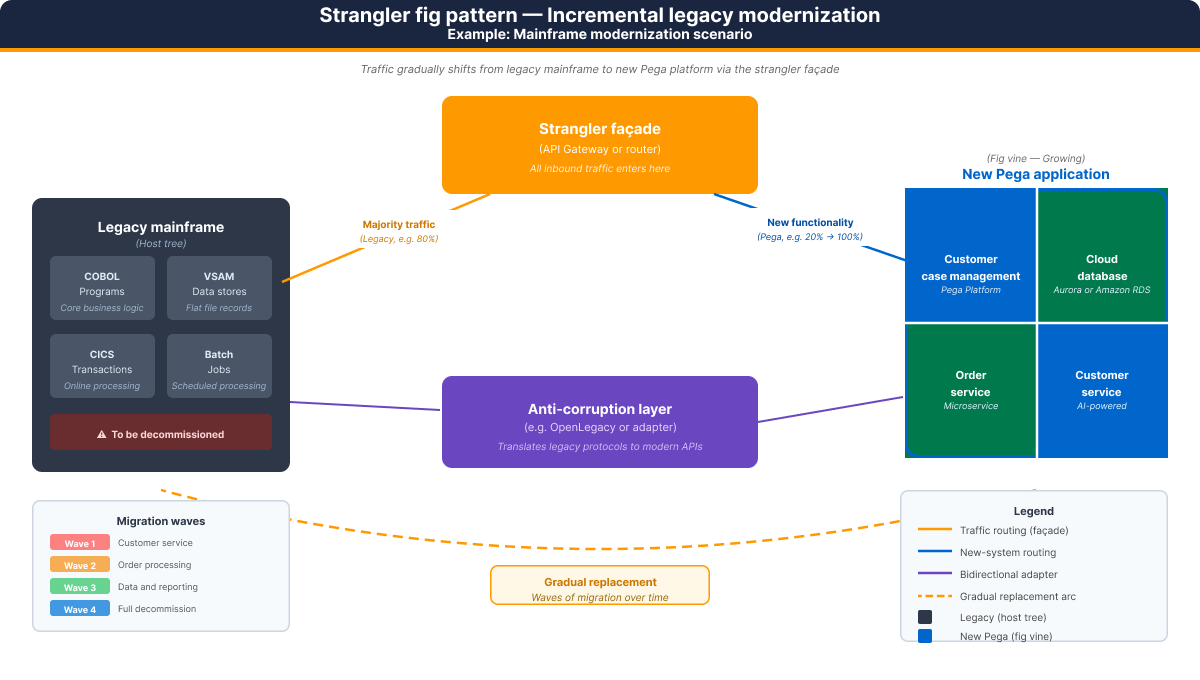
Figure 2: The strangler fig pattern – Mainframe modernization scenario
This strategy is underpinned by a powerful, automated toolchain. Validated case types, data objects, and UI designs from the Blueprint are used as direct inputs to automatically generate the core Pega application structure, minimizing manual effort. Pre-built infrastructure as code (IaC) templates deploy the entire supporting AWS architecture, including networking, security, and data services needed to connect Pega Cloud to the legacy environment. A holistic, layered security model protects the solution at every level: infrastructure-level security enforces least-privilege access through AWS Identity and Access Management (IAM) roles and policies, and application-level security is managed within Pega using role-based access control (RBAC) and single sign-on integration.
The following graphic illustrates this three-phase modernization methodology.
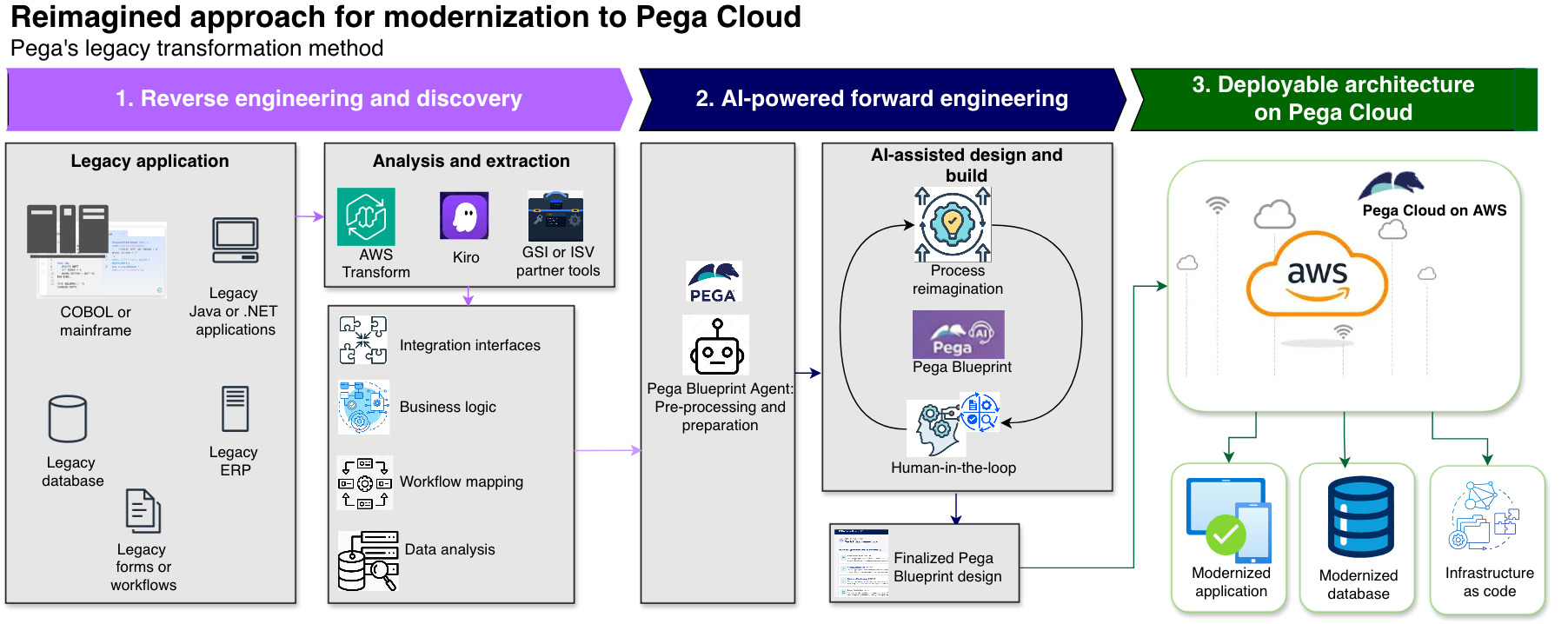
Figure 3: The three-phase modernization methodology
Key benefits
The three-phase modernization methodology offers several benefits:
- Accelerated time to value – AI-driven discovery and design can reduce modernization timelines, cutting projects from years to months.
- Reduced risk – Automated logic extraction prevents loss of critical functionality; iterative validation removes costly rework.
- Lower TCO – This methodology removes expensive licensing and million instructions per second (MIPS) costs, technical debt, and frees IT resources.
- Business agility – Low-code platform empowers rapid adaptation without long IT cycles.
- Enhanced experience – Modern, intelligent applications drive higher satisfaction and productivity.
Getting started
To begin your modernization journey, follow these steps:
- Schedule a personalized demo – Contact Pega to see the platform in action, tailored to your specific systems and business goals.
- Book a discovery workshop – Engage with the Pega and AWS team for a guided assessment of your legacy application estate and a preliminary modernization roadmap.
- Learn more online – For a deeper technical dive into this joint solution including architecture deep-dives and use-case guidance, refer to our joint technical whitepaper, The AI-Driven App Modernization Platform.
- Engage with a certified delivery partner – The ecosystem of certified global system integrators including TCS, Infosys, and Accenture brings deep industry expertise and proven delivery capacity to accelerate your transformation.
Conclusion
The AI-Driven App Modernization Platform from Pega and AWS offers you a fundamentally new approach to legacy application transformation. By combining the AWS Cloud infrastructure and AI-powered analysis tools with Pega’s generative AI design capabilities and workflow automation, you can modernize targeted workloads incrementally, safely, and with confidence. Beyond modernization, this platform helps you reimagine your business processes on an agentic platform designed for the AI era.

Pega – AWS Partner spotlight
Pega is an AWS ISV Partner that delivers AI-powered decisioning and workflow automation to major global enterprises. With solutions spanning customer engagement, intelligent automation, and AI-driven application modernization, Pega helps organizations accelerate their digital transformation on AWS. Learn more at pega.com