AWS Architecture Blog
Category: Architecture
Field Notes: Inference C++ Models Using SageMaker Processing
Machine learning has existed for decades. Before the prevalence of doing machine learning with Python, many other languages such as Java, and C++ were used to build models. Refactoring legacy models in C++ or Java could be forbiddingly expensive and time consuming. Customers need to know how they can bring their legacy models in C++ […]

Architecting Secure Serverless Applications
Introduction Cloud security at AWS is our top priority, and we have a deep set of cloud security tools consisting of more than 200 security, compliance, and governance services and key features. It’s why a broad set of customers — from enterprises, to the public sector, to startups — continue to rely on the capabilities […]
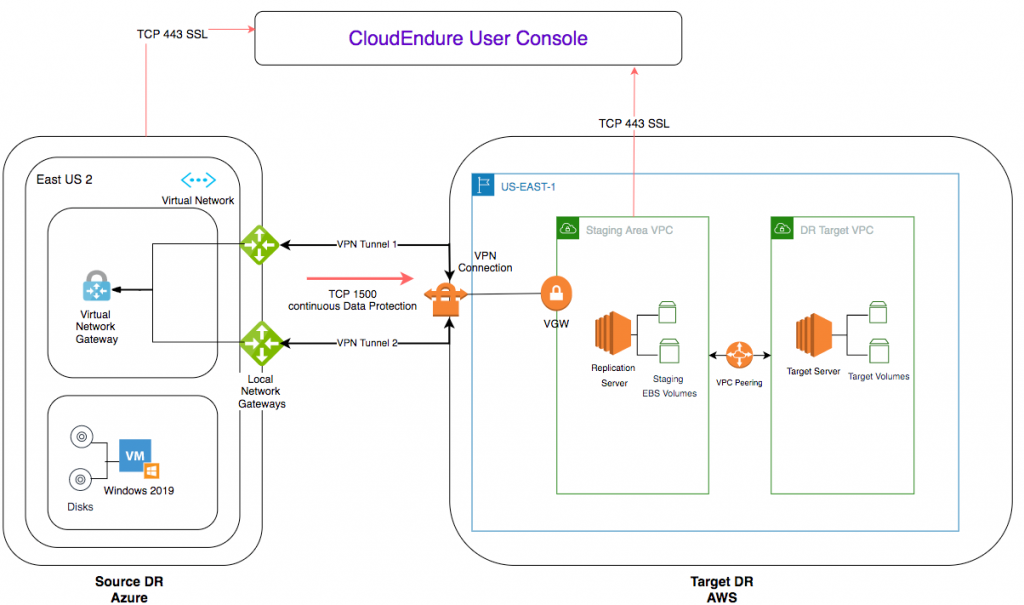
Field Notes: Building a Disaster Recovery site on AWS for your Azure Workload
Customers running workloads on other clouds, like Azure or GCP, can increase resilience and meet compliance requirements by using AWS as their disaster recovery site. CloudEndure Disaster Recovery provides an easy cross-cloud solution for replicating and recovering workloads from other cloud providers to AWS. It automatically converts your source machines so that they boot and […]
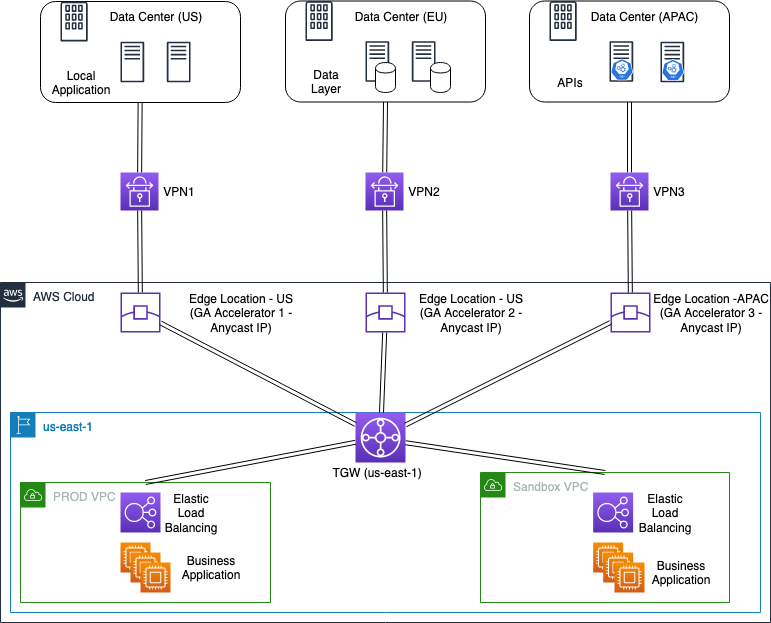
Improve VPN Network Performance of AWS Hybrid Cloud with Global Accelerator
Introduction Connecting on-premises data centers to AWS using AWS Site-to-Site VPN to support distributed applications is a common practice. With business expansion and acquisitions, your company’s on-premises IT footprint may grow into various geographies, with these multiple sites comprising of on-premises data centers and co-location facilities. AWS Site-to-Site VPN supports throughput up to 1.25 Gbps, […]
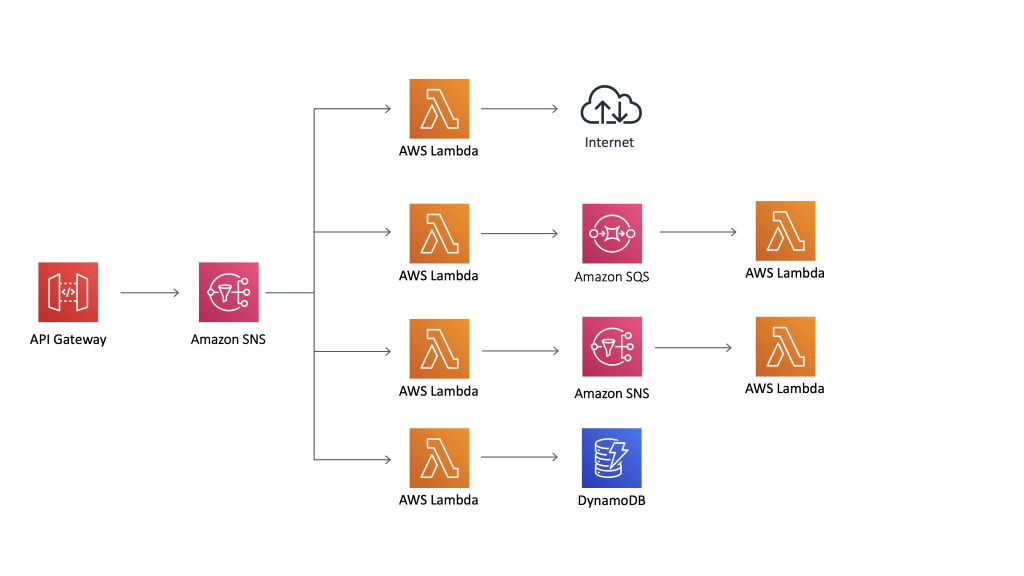
Liberty IT Adopts Serverless Best Practices Using AWS Cloud Development Kit
This post was co-written with Matthew Coulter, Lead Technical Architect of Global Risk at Liberty Mutual Liberty IT Solutions, part of Liberty Mutual Group, has been using AWS CloudFormation to deploy serverless applications on AWS for the last four years. These deployments typically involve defining, integrating, and monitoring services such as AWS Lambda, Amazon API […]

AWS Architecture Monthly Magazine: Advertising & Marketing
With 200+ services and 15 years of proven expertise, AWS has everything you need to build faster, operate cost-effectively, and run virtually any advertising and marketing technology workload at petabyte scale and millisecond latency. For the July issue, we spoke to three Advertising & Marketing experts about the general architecture pattern trends in this sector […]

What’s New in the Well-Architected Operational Excellence Pillar?
We recently released an updated version of the Operational Excellence pillar of the AWS Well-Architected Framework, which includes expanded guidance on operating model, and organizational culture, as well as some other refinements. Gerald Weinberg, in his 1985 book, The Secrets of Consulting, defined The Second Law of Consulting as “No matter how it looks at […]
What’s New in the Well-Architected Reliability Pillar?
The new version of the Reliability pillar for AWS Well-Architected includes expanded content across all areas of reliability. Guidance on distributed system architecture has been reorganized and expanded, and new best practices have been added as part of the Well-Architected Review. There is a sharper focus on chaos engineering with more explanation and examples. We’ve […]
What’s New in the Well-Architected Performance Efficiency Pillar?
We recently published a significant update to the AWS Well-Architected Framework, and as part of that update, the Performance Efficiency Pillar whitepaper has been streamlined and improved. The questions in the whitepaper are now better aligned with those in the AWS Well-Architected Tool, making it easy to cross-reference between them when reviewing workloads. With clearer […]

Leveraging AWS Global Backbone for Data Center Migration and Global Expansion
Update: January, 2025 AWS Direct Connect now supports directly communication between AWS Direct Connect locations using SiteLink feature. The architecture described in this post is no longer needed. Refer to Introducing AWS Direct Connect SiteLink and Advanced Routing scenarios with AWS Direct Connect SiteLink to learn more. Many companies run their applications in data centers, […]