AWS Architecture Blog
Category: Amazon EC2

Insights for CTOs: Part 1 – Building and Operating Cloud Applications
In my role as a Senior Solutions Architect, I have spoken to chief technology officers (CTOs) and executive leadership of large enterprises like big banks, software as a service (SaaS) businesses, mid-sized enterprises, and startups. In this series, I share insights gained from various CTOs and engineering leaders during their cloud adoption journeys at their […]

Overview of Data Transfer Costs for Common Architectures
Data transfer charges are often overlooked while architecting a solution in AWS. Considering data transfer charges while making architectural decisions can help save costs. This blog post will help identify potential data transfer charges you may encounter while operating your workload on AWS. Service charges are out of scope for this blog, but should be […]
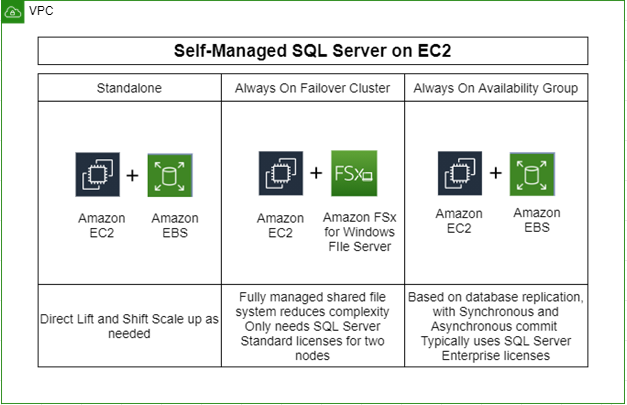
Field Notes: SQL Server Deployment Options on AWS Using Amazon EC2
Many enterprise applications run Microsoft SQL Server as their backend relational database. There are various options for customers to benefit from deploying their SQL Server on AWS. This blog will help you choose the right architecture for your SQL Server Deployment with high availability options, using Amazon EC2 for mission-critical applications. SQL Server on Amazon […]

Field Notes: Benchmarking Performance of the New M5zn, D3, and R5b Instance Types with Datadog
This post was co-written with Danton Rodriguez, Product Manager at Datadog. At re:Invent 2020, AWS announced the new Amazon Elastic Compute Cloud (Amazon EC2) M5zn, D3, and R5b instance types. These instances are built on top of the AWS Nitro System, a collection of AWS-designed hardware and software innovations that enable the delivery of private networking, […]

Designing a Successful Pilot Phase for Your Cloud Migration
Pilot phases, or pilots, as we will call them from now on, should be conducted to test and find the positive and negative aspects of a particular use case, design pattern, or application migration approach. They allow you to validate the foundation of your architecture (for example, with a landing zone governed by AWS Control […]

Disaster Recovery (DR) Architecture on AWS, Part II: Backup and Restore with Rapid Recovery
In a previous blog post, I introduced you to four strategies for disaster recovery (DR) on AWS. These strategies enable you to prepare for and recover from a disaster. By using the best practices provided in the AWS Well-Architected Reliability Pillar whitepaper to design your DR strategy, your workloads can remain available despite disaster events […]

Journey to Adopt Cloud-Native Architecture Series: #2 – Maximizing System Throughput
April, 2026: Aurora Serverless v2 has been renamed Aurora serverless. No action required. In the last blog, Preparing your Applications for Hypergrowth, we talked about hypergrowth and the technical challenges it presents to companies. As a reminder, we presented an example ecommerce company running a monolithic application on Elastic Compute Cloud (Amazon EC2). This application […]

Disaster Recovery (DR) Architecture on AWS, Part I: Strategies for Recovery in the Cloud
As lead solutions architect for the AWS Well-Architected Reliability pillar, I help customers build resilient workloads on AWS. This helps them prepare for disaster events, which is one of the biggest challenges they can face. Such events include natural disasters like earthquakes or floods, technical failures such as power or network loss, and human actions […]

Journey to Adopt Cloud-Native Architecture Series: #1 – Preparing your Applications for Hypergrowth
In this blog series, we take an example ecommerce company and talk about their challenges due to hypergrowth. Their journey from running monolith applications to running cloud-native applications will provide you architecture patterns and strategies you can adopt to become more agile and innovative. Later in the series, we show you how to address immediate […]
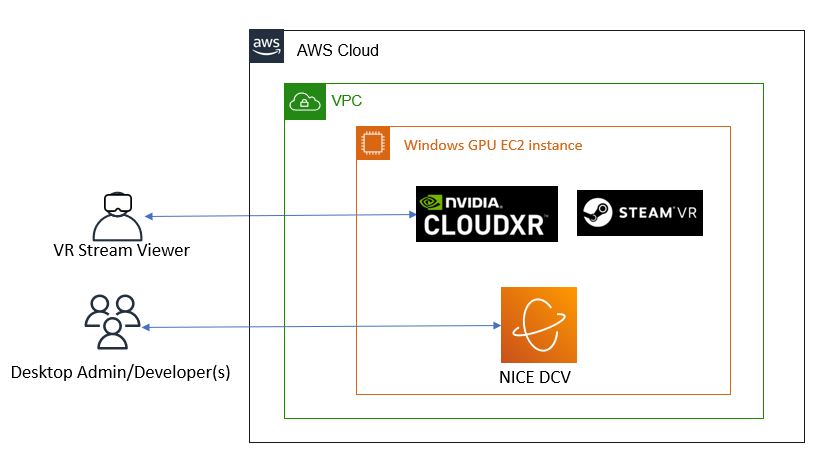
Field Notes: Streaming VR to Wireless Headsets Using NVIDIA CloudXR
It’s exciting to see many consumer-grade virtual reality (VR) hardware options, but setting up hardware can be cumbersome, expensive and complicated. Wired headsets require high-powered graphics workstations, and a solution to prevent you from tripping over the wires. Many room-scale headsets require two external peripherals (or ‘light towers’) to be installed so the headset can […]