AWS Compute Blog
Category: Uncategorized

Applying the Twelve-Factor App Methodology to Serverless Applications
The Twelve-Factor App methodology is twelve best practices for building modern, cloud-native applications. With guidance on things like configuration, deployment, runtime, and multiple service communication, the Twelve-Factor model prescribes best practices that apply to a diverse number of use cases, from web applications and APIs to data processing applications. Although serverless computing and AWS Lambda […]
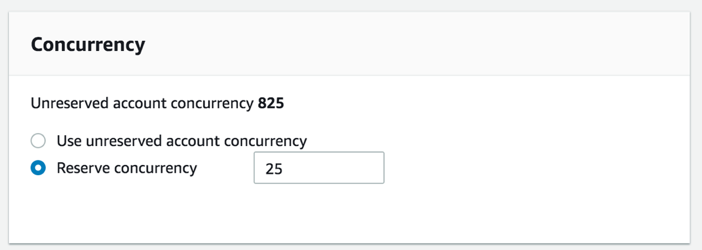
Managing AWS Lambda Function Concurrency
One of the key benefits of serverless applications is the ease in which they can scale to meet traffic demands or requests, with little to no need for capacity planning. In AWS Lambda, which is the core of the serverless platform at AWS, the unit of scale is a concurrent execution. This refers to the […]

Implementing Dynamic ETL Pipelines Using AWS Step Functions
This post contributed by: Wangechi Dole, AWS Solutions Architect Milan Krasnansky, ING, Digital Solutions Developer, SGK Rian Mookencherry, Director – Product Innovation, SGK Data processing and transformation is a common use case you see in our customer case studies and success stories. Often, customers deal with complex data from a variety of sources that needs […]

AWS Fargate: A Product Overview
It was just about three years ago that AWS announced Amazon Elastic Container Service (Amazon ECS), to run and manage containers at scale on AWS. With Amazon ECS, you’ve been able to run your workloads at high scale and availability without having to worry about running your own cluster management and container orchestration software. Today, […]
Simplify Your Pub/Sub Messaging with Amazon SNS Message Filtering
Contributed by: Stephen Liedig, Senior Solutions Architect, ANZ Public Sector, and Otavio Ferreira, Manager, Amazon Simple Notification Service Want to make your cloud-native applications scalable, fault-tolerant, and highly available? Recently, we wrote a couple of posts about using AWS messaging services Amazon SQS and Amazon SNS to address messaging patterns for loosely coupled communication between highly cohesive components. For […]

Serverless Automated Cost Controls, Part1
This post courtesy of Shankar Ramachandran, Pubali Sen, and George Mao In line with AWS’s continual efforts to reduce costs for customers, this series focuses on how customers can build serverless automated cost controls. This post provides an architecture blueprint and a sample implementation to prevent budget overruns. This solution uses the following AWS products: […]

Introducing Cloud Native Networking for Amazon ECS Containers
This post courtesy of ECS Sr. Software Dev Engineer Anirudh Aithal. Today, AWS announced task networking for Amazon ECS. This feature brings Amazon EC2 networking capabilities to tasks using elastic network interfaces. An elastic network interface is a virtual network interface that you can attach to an instance in a VPC. When you launch an […]
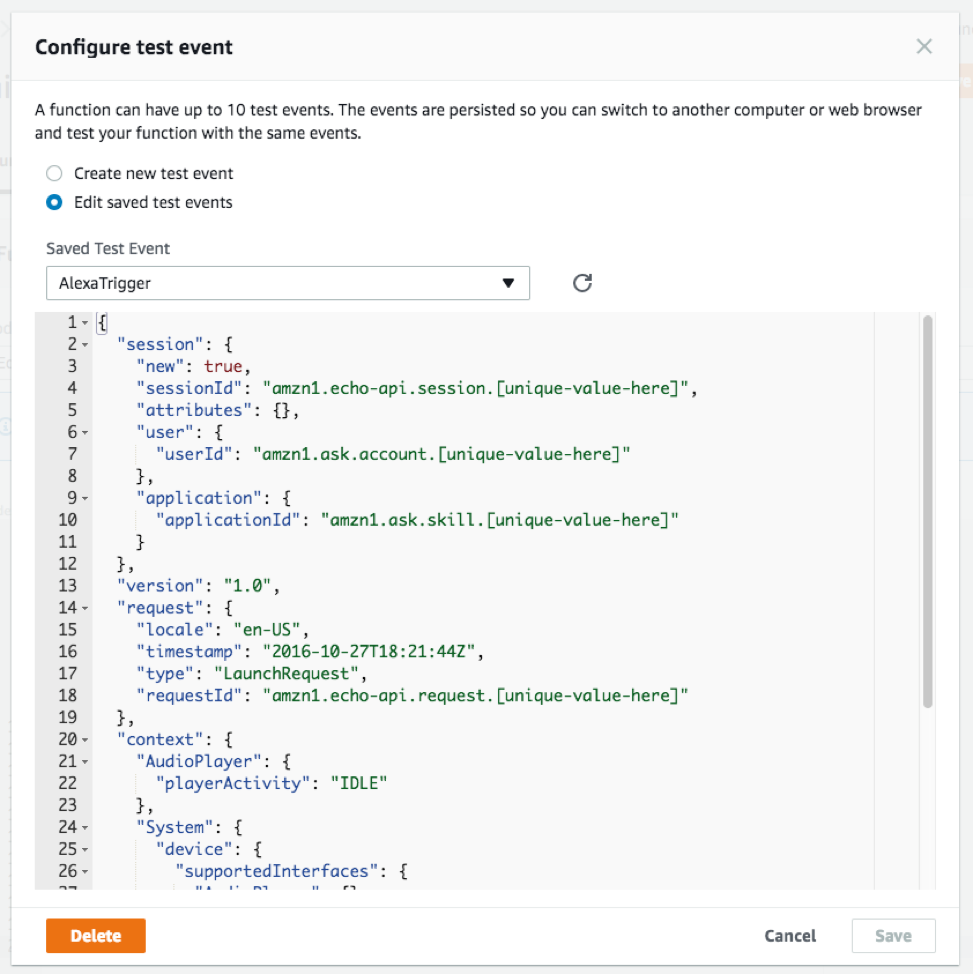
Improved Testing on the AWS Lambda Console
(This post has been written by Chris Tate, SDE on the Lambda Console team) Today, AWS Lambda released three console enhancements: A quicker creation flow that lets you quickly create a function with the minimum working configuration, so that you can start iterating faster. A streamlined configuration page with Lambda function settings logically grouped into […]
Deploying Java Microservices on Amazon Elastic Container Service
This post and accompanying code graciously contributed by: Huy Huynh Sr. Solutions Architect Magnus Bjorkman Solutions Architect Java is a popular language used by many enterprises today. To simplify and accelerate Java application development, many companies are moving from a monolithic to microservices architecture. For some, it has become a strategic imperative. Containerization technology, such […]
Manage Kubernetes Clusters on AWS Using Kops
Any containerized application typically consists of multiple containers. There are containers for the application itself, a database, possibly a web server, and so on. During development, it’s normal to build and test this multi-container application on a single host. This approach works fine during early dev and test cycles but becomes a single point of […]