AWS Compute Blog
Integrating Event Source Mappings with AWS Lambda tenant isolation mode
Building event-driven multi-tenant SaaS applications typically requires compute isolation between tenants to prevent data leakage, maintain security boundaries, and ensure compliance. Traditionally, you had to choose between two approaches: sharing execution environments across tenants (risking cross-tenant contamination of in-memory state) or managing separate Lambda functions per tenant (which introduces operational overhead, increasing costs, and complicating deployments). Both approaches required you to make trade-offs between security, operational complexity, and cost efficiency.
AWS Lambda tenant isolation mode with Event Source Mappings addresses this trade-off. This approach reduces operational complexity, improves your security posture, and removes the need to manage separate functions per tenant, all while maintaining strict compute-level isolation boundaries. You can now build event-driven architectures using services like Amazon SQS and Amazon EventBridge where each tenant’s workloads run in dedicated execution environments, but you manage only a single Lambda function.
In this post, you’ll learn how to propagate tenant identity from event payloads, implement IAM permissions for tenant-isolated invocations, apply validation strategies to verify tenant context, and use a lightweight routing mechanism that invokes tenant-isolated backends. Complete sample code demonstrating this pattern is available in the AWS samples repository.
Understanding Lambda tenant isolation mode
AWS Lambda tenant isolation mode extends Lambda’s execution model by introducing tenant-aware routing of invocations. Instead of reusing execution environments across all invocations of a function, Lambda associates each execution environment with a specific tenant identifier. When a new request is received, Lambda routes it to an existing environment for that specific tenant or creates a new one if none exists.
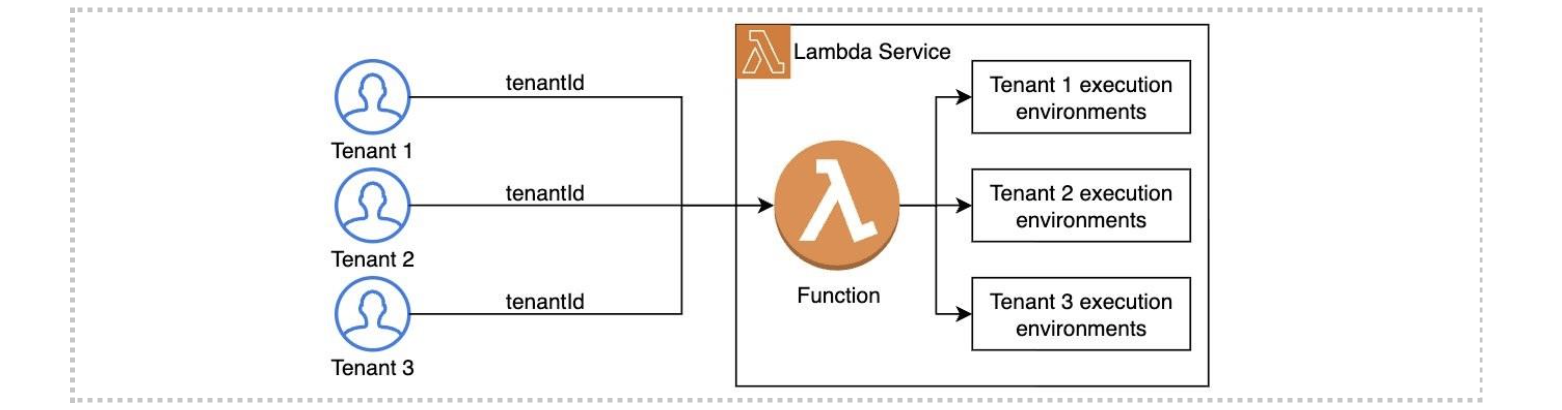 Figure 1. Using Lambda tenant isolation mode for compute isolation
This simplifies how you build multi-tenant SaaS systems, while maintaining isolation boundaries at the compute level. Execution environments are never shared across tenants but still reused within the same tenant for maximum efficiency. That means you can safely cache tenant-specific configurations, such as feature flags or database connection strings, without adding isolation logic manually in your code.
To use the tenant isolation mode, every invocation must include a tenant ID parameter. For synchronous, direct invocations, such as originating from Amazon API Gateway or AWS SDKs, you pass it using the X-Amz-Tenant-Id header, as described in the launch blog and service documentation. Lambda service uses this header to route the invocation to tenant-specific execution environments. Inside your function handler, the tenant ID is available using the context.tenantId property, so you can implement tenant-aware logic.
port const handler = async (event, context) => {
    const tenantId = context.tenantId;

    // Tenant-specific business logic here
    console.log(`Processing request for tenant: ${tenantId}`);
};
Figure 2. Accessing tenant ID from function handler.
When using API Gateway, you can extract the tenant ID value from incoming request metadata, such as HTTP headers, path parameters, query parameters, or JWT claims, and map it directly to the downstream X-Amz-Tenant-Id in the API Gateway integration request configuration. See the launch blog for detailed guidance.
This model works well for direct, synchronous invocations. However, many serverless applications rely on event-driven patterns, where Lambda is invoked through Event Source Mappings.
Using tenant isolation mode with event sources
Many serverless applications use event-driven architectures built on services like Amazon SQS, Amazon EventBridge, Amazon Kinesis, or Amazon DynamoDB Streams. In these cases, Lambda is invoked by an Event Source Mapping (ESM), which polls the event source and invokes your function when new events arrive.
With these services, you’ll commonly find the tenant identity embedded in the event payload or metadata – for example, in an SQS message body or EventBridge event detail. Each event source has its own payload schema. Below are example payloads when using SQS and EventBridge, where you can see the tenantId parameter present in the payload.
SQS message body:
{
    "tenantId": "TenantA",
    "orderId": "ord-12345",
    "eventType": "ORDER_PLACED",
    "payload": { ... }
}
EventBridge event detail:
{
    "source": "com.myapp.orders",
    "detail-type": "OrderPlaced",
    "detail": {
        "tenantId": "TenantA",
        "orderId": "ord-12345"
    }
}
However, event sources don’t provide a built-in mechanism to map message properties to HTTP headers. As a result, if you try to invoke a function with tenant isolation mode enabled directly from an event source mapping, it fails because the tenant ID isn’t propagated as the X-Amz-Tenant-Id header. The following section describes how to address this and integrate ESMs with tenant-isolated Lambda functions.
Propagating tenant identity with Event Source Mappings
To propagate tenant identity from ESM messages, you can introduce a routing component – a lightweight Lambda function that sits between the event source and your tenant-isolated backend function. Your routing function receives events from the ESM, extracts the tenant ID from each message, and invokes your backend function using the Lambda Invoke API, passing the required X-Amz-Tenant-Id header. See the following diagram for an example architecture using SQS ESM.
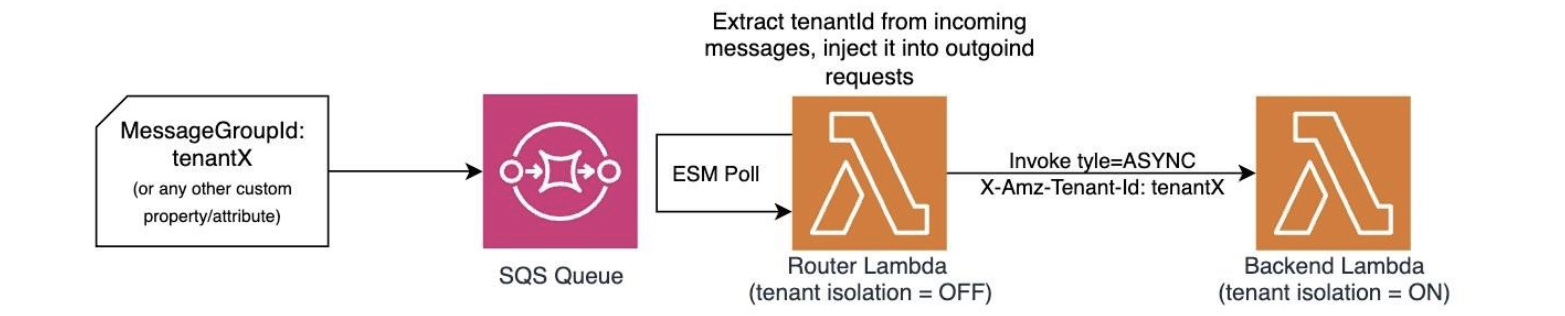
Figure 3. Propagating tenant ID from SQS messages to Lambda with tenant isolation mode enabled
You don’t need to enable tenant isolation mode on the routing function itself – it acts as a stateless dispatcher. Your multi-tenant backend function, which contains your core business logic, runs with tenant isolation mode enabled and receives properly scoped, tenant-aware invocations. This pattern keeps tenant isolation at the backend layer while preserving a shared event ingestion model.
The following example illustrates a routing function that processes incoming SQS messages, extracts the tenant ID from each message body, and invokes your backend function with the appropriate tenant context. This example assumes MessageGroupId is used to carry the tenant identifier, which ensures messages from the same tenant are processed in order when you’re using FIFO queues.
export const handler = async (event) => {
    for (const record of event.Records) {
        const body = record.body;
        const messageGroupId = record.attributes?.MessageGroupId;

        const command = new InvokeCommand({
            FunctionName: BACKEND_FUNCTION_NAME,
            InvocationType: 'Event',
            TenantId: messageGroupId,
            Payload: Buffer.from(body)
        });

        await lambdaClient.send(command);
    }
}
Figure 4. Routing SQS messages to a Lambda function with tenant isolation mode enabled
The following example illustrates how you can achieve the same routing functionality when processing EventBridge events.
export const handler = async (event) => {
    const tenantId = event.detail?.tenantId;

    if (!tenantId) {
        throw new Error(`Missing tenantId in EventBridge event: ${JSON.stringify(event)}`);
    }

    const command = new InvokeCommand({
        FunctionName: BACKEND_FUNCTION_NAME,
        InvocationType: 'Event',
        TenantId: tenantId,
        Payload: JSON.stringify(event.detail),
    });

    await lambdaClient.send(command);
};
Figure 5. Routing EventBridge events to a Lambda function with tenant isolation mode enabled
IAM permissions
Your routing function’s execution role needs permission to:
- Poll the event source: You can apply this policy either to your function execution role or as a resource policy on the event source itself.
- Invoke the downstream backend function: Additionally, your router function requires the lambda:InvokeFunction permission scoped to your backend function ARN.
Below is an example execution role policy to allow the router function to poll from an SQS queue
{
    "Version": "2012-10-17",
    "Statement": [{
        "Effect": "Allow",
        "Action": [
            "sqs:ReceiveMessage",
            "sqs:DeleteMessage",
            "sqs:GetQueueAttributes"
        ],
        "Resource": "arn:aws:sqs:us-east-1:123456789012:my-queue"
    }]
}
Below is an example execution role policy to allow the router function to invoke the backend function
{
    "Version": "2012-10-17",
    "Statement": [{
        "Effect": "Allow",
        "Action": "lambda:InvokeFunction",
        "Resource": "arn:aws:lambda:us-east-1:123456789012:function:my-backend-function"
    }]
}
Figure 6. IAM permissions used for implementing the tenant ID router function mechanism.
Best practices and considerations
When implementing the pattern described in this post, keep these important considerations in mind regarding validation, scaling, and overall system design.
Validate tenant identity before invocation. Tenant identity comes from event payloads, you shouldn’t automatically assume it’s trustworthy. Here’s how to protect your system:
- Validate incoming payloads and reject messages with missing, malformed, or unauthorized tenant IDs at the routing layer before invoking your backend function
- Maintain an authoritative tenant registry and validate incoming tenant IDs against it
- Use dead-letter queues (DLQs) on your SQS queues to capture messages that fail validation for investigation and replay
- When using EventBridge Pipes, use the enrichment step to validate or normalize tenant IDs before they reach your routing function
- Enable partial batch response for applicable ESMs, such as SQS, so your routing function can report individual message failures without failing the entire batch
Plan for scaling considerations. Tenant isolation mode creates separate execution environments per tenant. This can increase the number of cold starts compared to shared environments. Each tenant consumes concurrency independently, so monitor your usage and request quota increases as your tenant base grows.
Optimize the routing function. Your routing function introduces an additional invocation segment. Use asynchronous invocation (InvocationType: ‘Event’) to reduce idle waiting time and size your function accordingly.
Understand permission boundaries. Tenants share your backend function’s execution role. If you need fine-grained per-tenant permissions, consider propagating tenant-scoped credentials (for example, using AWS STS AssumeRole) from the upstream segment.
Sample code
A complete, deployable sample project demonstrating this pattern – including SQS routing functions, a tenant-isolated backend function, and AWS SAM infrastructure – is available in this GitHub repository. Follow the instructions in README.md to provision the sample project in your account
Conclusion
Lambda tenant isolation mode introduces cross-tenant compute isolation for your multi-tenant SaaS applications by routing each invocation to a tenant-specific execution environment. When you combine this with event-driven architectures built on services like SQS, EventBridge, and Kinesis, the routing function pattern described in this post allows you to propagate tenant identity from event payloads and invoke your tenant-isolated backend with the correct context.
This approach extends tenant isolation mode to your asynchronous workloads without changing your core business logic. You retain per-tenant execution environment isolation while continuing to use Lambda’s native event source integrations, scaling model, and operational tooling. Together, these patterns provide you with a practical foundation for building secure, scalable, event-driven multi-tenant SaaS applications on AWS.
Next steps: Consider extending this pattern to other event sources like Kinesis Data Streams or DynamoDB Streams. You can also explore combining this approach with AWS Step Functions for orchestrating complex multi-tenant workflows while maintaining tenant isolation boundaries.
Follow below links to learn more: