AWS Compute Blog

Managing federated schema with AWS Lambda and Amazon S3
Schema Management is a non-trivial challenge in federated GQL systems. The highest risk to your system availability comes with the potential of introducing breaking schema change by one of the graphlets. Your system cannot serve any requests after that. There is the problem of the delayed feedback loop for the engineers working on schema changes and the impact of schema composition during runtime on the service latency.

Getting started with testing serverless applications
Testing is an essential step in the software development lifecycle. Through the different types of tests, you validate user experience, performance, and detect bugs in your code. Features should not be considered done until all of the corresponding tests are written. The distributed nature of serverless architectures separates your application logic from other concerns like […]
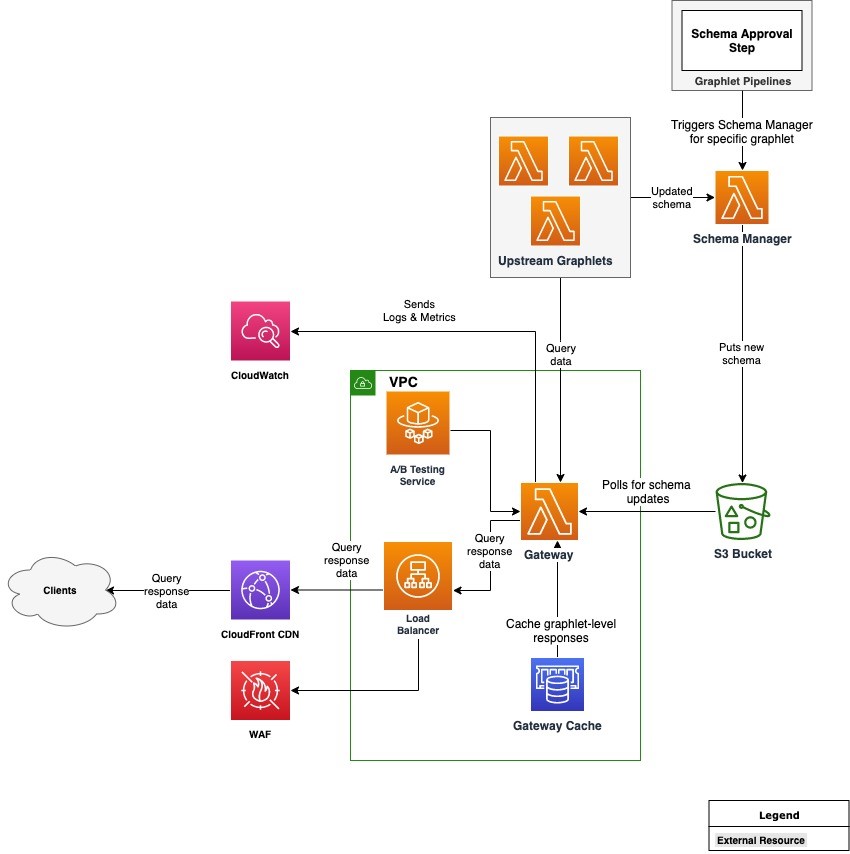
Building federated GraphQL on AWS Lambda
A single, highly discoverable, and well-documented backend endpoint enabled our clients to experiment with the data available in the graph. We were able to clean up the backend API layer, introduce clear ownership boundaries, and give our client powerful tools to speed up their development cycle.

Optimize costs by up to 70% with new Amazon T3 Dedicated Hosts
This post is written by Andy Ward, Senior Specialist Solutions Architect, and Yogi Barot, Senior Specialist Solutions Architect. Customers have been taking advantage of Amazon Elastic Compute Cloud (Amazon EC2) Dedicated Hosts to enable them to use their eligible software licenses from vendors such as Microsoft and Oracle since the feature launched in 2015. Amazon EC2 Dedicated […]
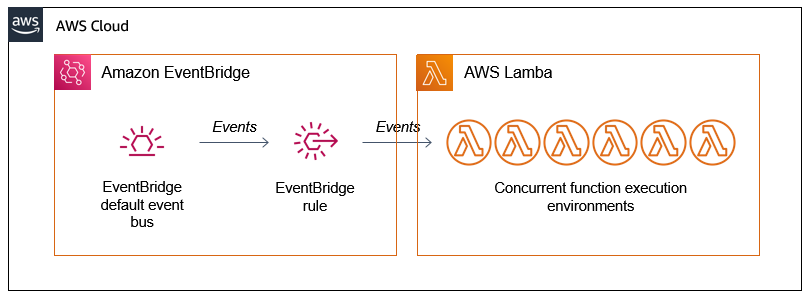
Building a serverless GIF generator with AWS Lambda: Part 2
Part 2 of this blog post expands on some of the advanced topics around scaling Lambda in parallelized workloads. It explains how the asynchronous invocation mode of Lambda scales and different ways to scale the worker Lambda function.

Enabling parallel file systems in the cloud with Amazon EC2 (Part I: BeeGFS)
This post was authored by AWS Solutions Architects Ray Zaman, David Desroches, and Ameer Hakme. In this blog series, you will discover how to build and manage your own Parallel Virtual File System (PVFS) on AWS. In this post you will learn how to deploy the popular open source parallel file system, BeeGFS, using AWS […]

Building well-architected serverless applications: Optimizing application costs
This series of blog posts uses the AWS Well-Architected Tool with the Serverless Lens to help customers build and operate applications using best practices. In each post, I address the serverless-specific questions identified by the Serverless Lens along with the recommended best practices. See the introduction post for a table of contents and explanation of the example application. COST 1. How […]

Building a serverless distributed application using a saga orchestration pattern
This post showed how to implement the saga orchestration pattern using API Gateway, Step Functions, Lambda, DynamoDB, and .NET Core 3.1. This can help maintain data integrity in distributed transactions across multiple services. Step Functions makes it easier to implement the orchestration in the saga pattern.

Building well-architected serverless applications: Optimizing application performance – part 3
February 12, 2024: Amazon Kinesis Data Firehose has been renamed to Amazon Data Firehose. Read the AWS What’s New post to learn more. September 8, 2021: Amazon Elasticsearch Service has been renamed to Amazon OpenSearch Service. See details. This series of blog posts uses the AWS Well-Architected Tool with the Serverless Lens to help customers build and operate applications […]

Increasing performance of Java AWS Lambda functions using tiered compilation
Tiered compilation stopping at level 1 reduces the time the JVM spends optimizing and profiling your code. This could help reduce start up times for Java applications that require fast responses, where the workload doesn’t meet the requirements to benefit from profiling.