AWS DevOps & Developer Productivity Blog
Category: Uncategorized

Building an end-to-end Kubernetes-based DevSecOps software factory on AWS
DevSecOps software factory implementation can significantly vary depending on the application, infrastructure, architecture, and the services and tools used. In a previous post, I provided an end-to-end DevSecOps pipeline for a three-tier web application deployed with AWS Elastic Beanstalk. The pipeline used cloud-native services along with a few open-source security tools. This solution is similar, […]
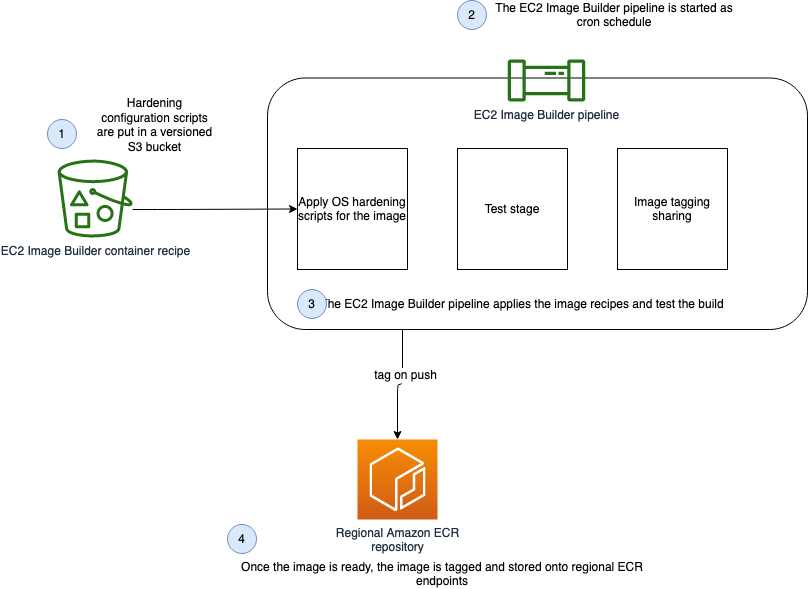
Build and Deploy Docker Images to AWS using EC2 Image Builder
The NFL, an AWS Professional Services partner, is collaborating with NFL’s Player Health and Safety team to build the Digital Athlete Program. The Digital Athlete Program is working to drive progress in the prevention, diagnosis, and treatment of injuries; enhance medical protocols; and further improve the way football is taught and played. The NFL, in […]
Best practices for developing cloud applications with AWS CDK
April 20, 2022: Updates are available in the Best practices topic of the AWS CDK documentation. The documentation is the most up-to-date resource going forward. In this post, we discuss strategies for organizing the development of complex cloud applications with large teams, using the AWS Cloud Development Kit (AWS CDK) as a central technology. AWS […]

Improving the CPU and latency performance of Amazon applications using Amazon CodeGuru Profiler
Amazon CodeGuru Profiler is a developer tool powered by machine learning (ML) that helps identify an application’s most expensive lines of code and provides intelligent recommendations to optimize it. You can identify application performance issues and troubleshoot latency and CPU utilization issues in your application. You can use CodeGuru Profiler to optimize performance for any […]
CDK Corner – March 2021
Social – Community Engagement The CDK team has started live streaming on the AWS Twitch Channel! The CDK Construction Zone is a semi regular series with members of the CDK Team diving into, and demonstrating how to build a CDK Construct. The series is dedicated to building CDK Triggers, with the code from this series […]

Developing enterprise application patterns with the AWS CDK
Enterprises often need to standardize their infrastructure as code (IaC) for governance, compliance, and quality control reasons. You also need to manage and centrally publish updates to your IaC libraries. In this post, we demonstrate how to use the AWS Cloud Development Kit (AWS CDK) to define patterns for IaC and publish them for consumption […]
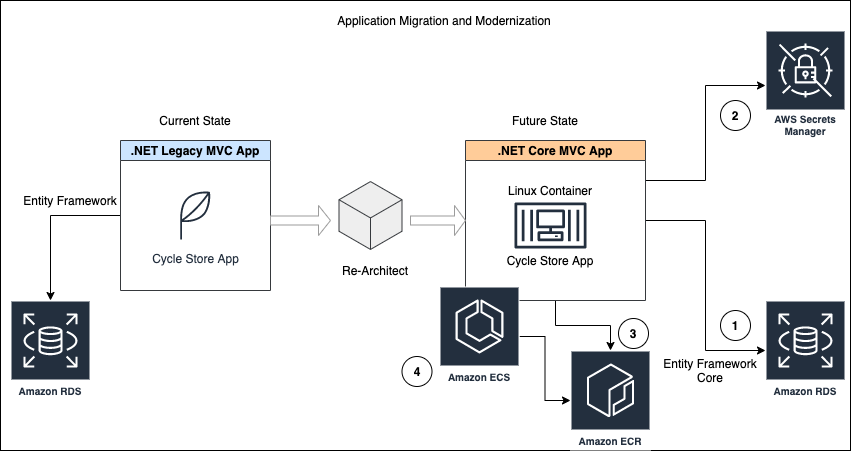
Modernizing and containerizing a legacy MVC .NET application with Entity Framework to .NET Core with Entity Framework Core: Part 2
This is the second post in a two-part series in which you migrate and containerize a modernized enterprise application. In Part 1, we walked you through a step-by-step approach to re-architect a legacy ASP.NET MVC application and ported it to .NET Core Framework. In this post, you will deploy the previously re-architected application to Amazon […]

Modernizing and containerizing a legacy MVC .NET application with Entity Framework to .NET Core with Entity Framework Core: Part 1
Tens of thousands of .NET applications are running across the world, many of which are ASP.NET web applications. This number becomes interesting when you consider that the .NET framework, as we know it, will be changing significantly. The current release schedule for .NET 5.0 is November 2020, and going forward there will be just one […]


Monitoring and management with Amazon QuickSight and Athena in your CI/CD pipeline
One of the many ways to monitor and manage required CI/CD metrics is to use Amazon QuickSight to build customized visualizations. Additionally, by applying Lean management to software delivery processes, organizations can improve delivery of features faster, pivot when needed, respond to compliance and security changes, and take advantage of instant feedback to improve the […]