AWS for Industries
Accelerate design space exploration with AI on AWS
Engineers rarely get to validate more than a handful of designs. With generative AI and machine learning (ML) inference, engineering teams can now evaluate dozens of design variants in the time it once took to validate one. This approach explores the design space far more completely than conventional methods allow. Analysis has always been the bottleneck: each modeling and simulation phase can span days to months with conventional physics-based methods. Under that time and cost pressure, most promising alternatives never get tested. To transform their design processes, manufacturers want to begin with technical feasibility and iterate within system constraints while validating performance across multiple disciplines simultaneously. This avoids running iterations and functional analyses separately through lengthy integration and evaluation phases. Design space exploration removes this bottleneck through three capabilities working together:
- Multimodal generative AI and geometric reasoning speeds design model creation from concept to validation. You can verbally describe concepts, generate 2D views for approval, and create 3D surface models for validation, all within minutes.
- Machine learning inference modeling uses surrogate models trained on existing simulation data to predict the same outputs in a fraction of the time. It reduces simulation in areas such as computational fluid dynamics and finite element analysis from hours to seconds, which leaves more time for optimization and iteration.
- Agentic engineering orchestration coordinates complex system development across multiple disciplines, combining traditional modeling with ML-driven methods to automate processes and make both experts and non-experts more effective.
This post walks through the Design Space Exploration use case: a multi-agent Design Space Explorer built on Amazon Bedrock, Amazon Bedrock AgentCore, and the Strands Agents SDK. Engineers use it to evaluate, modify, and compare car body designs against aerodynamics, structural feasibility, and manufacturing cost through a natural-language interface.
Intelligent orchestration with Amazon Bedrock AgentCore and Strands Agents
Exploring a design space requires coordinated reasoning across geometry, aerodynamics, structures, and cost. Each discipline is traditionally owned by a different team and tool chain. With Amazon Bedrock AgentCore runtime, a capability of Amazon Bedrock AgentCore, and the Strands Agents SDK, you can build agentic systems that deploy and manage specialized AI agents. In this Design Space Exploration use case, the Orchestrator agent interprets an engineer’s request and coordinates with four specialist agents (Aerodynamics, Structural, Cost, and Geometry) using the Agent-to-Agent (A2A) protocol. Each agent handles a distinct, multi-step task autonomously and returns results that the Orchestrator synthesizes into a single, decision-ready answer.
Each agent runs on Amazon Bedrock AgentCore runtime, a fully managed service that handles deployment, scaling, and isolation so you do not manage servers. Amazon Bedrock AgentCore, with its memory capability, gives the Orchestrator conversation context across turns. Amazon Bedrock AgentCore Gateway, a capability of Amazon Bedrock AgentCore, provides access to cost data through the Model Context Protocol (MCP). Amazon Bedrock AgentCore Code Interpreter, a capability of Amazon Bedrock AgentCore, provides a sandboxed environment for geometry generation.
Solution overview
The Design Space Exploration use case combines conversational AI with a tool-augmented, multi-agent architecture. Engineers interact through a browser-based chat interface to evaluate aerodynamic performance, run structural feasibility checks, estimate manufacturing cost, generate new parametric geometries, and visualize surface pressure, all in one place. Requests stream to the backend over a WebSocket connection managed by Amazon API Gateway, giving immediate feedback as the agents collaborate.
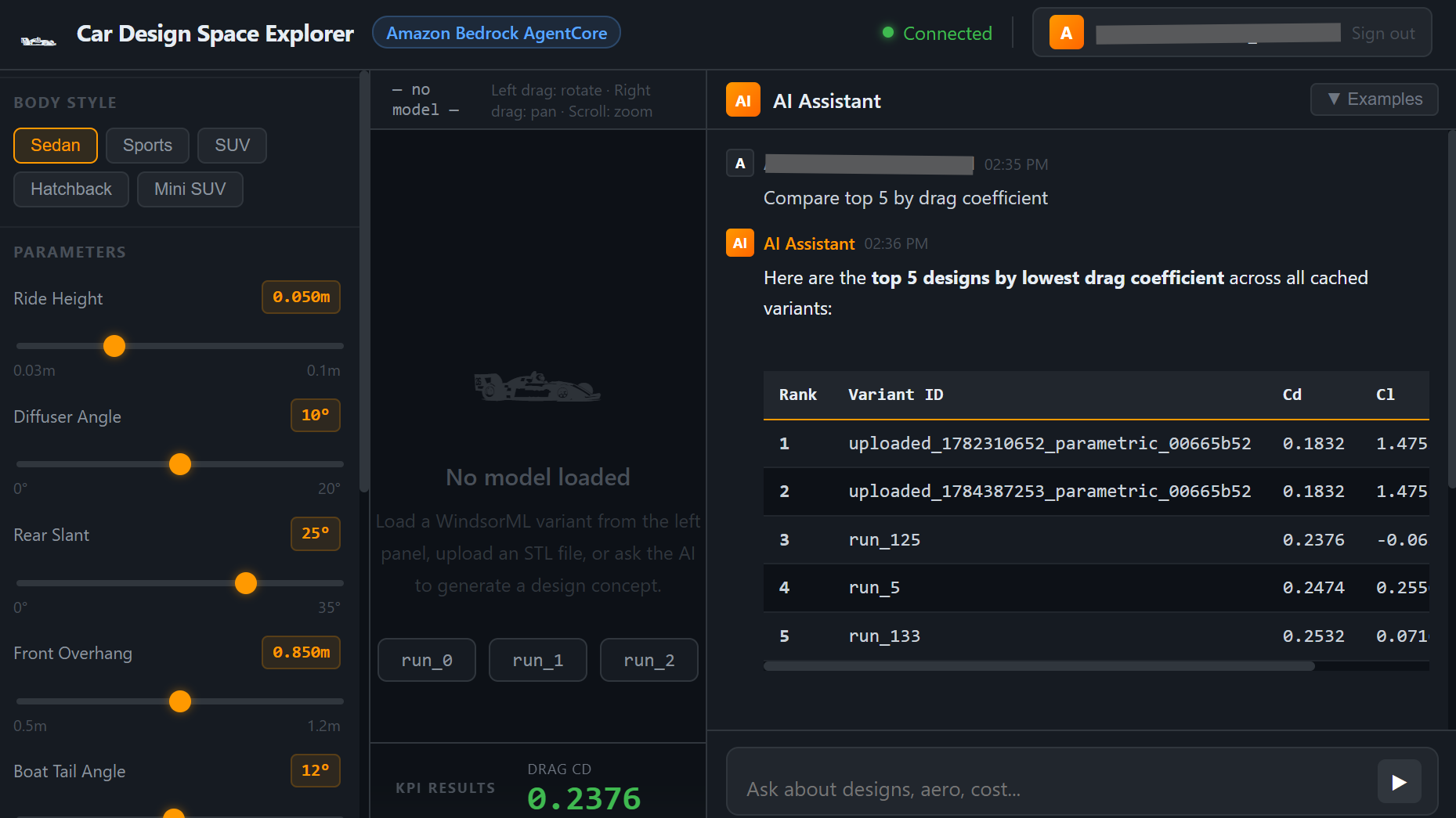
Figure 1: Design Space Explorer chat interface, showing an engineer querying design variants and viewing results
The Design Space Explorer web interface, organized into three panels with a header showing the app name, an Amazon Bedrock AgentCore badge, and a connected status indicator. The left panel holds design controls: a Body Style selector set to Sedan, with Sports, SUV, Hatchback, and Mini SUV options, and parameter sliders for Ride Height, Diffuser Angle, Rear Slant, Front Overhang, and Boat Tail Angle, each showing its current value. The center panel is a 3D model viewport, currently empty with a prompt to load a WindsorML variant, upload an STL file, or ask the AI to generate a concept, with a drag coefficient KPI reported at the bottom. The right panel is an AI Assistant chat where the user asked to compare the top 5 designs by drag coefficient, and the assistant returned a ranked table of five variants with their Variant ID, drag coefficient, and lift coefficient values
The Strands Agents SDK, an open-source framework for building AI agents, provides the orchestration layer. It selects each agent’s tools based on user intent, manages conversation flow, and chains specialist agents together for complex workflows. Cost estimation is one such chain: the Cost agent needs geometry metrics from the Structural agent before it can run its cost calculation. The framework divides the work across focused agents, each with its own set of tools:
| Agent | Function |
| Orchestrator agent | Routes requests and coordinates trade-off analysis across the specialist agents |
| Aero agent | Evaluates aerodynamic performance |
| Structural agent | Assesses structural behavior of a design |
| Cost agent | Estimates manufacturing or design cost |
| Geometry agent | Generates and renders design geometry |
Table 1: Design Space Explorer agents at a glance
Orchestrator agent: routing and trade-off analysis
The Orchestrator is the main entry point. It routes each request to the right agent, chains multi-agent workflows, and turns raw evaluations into recommendations.
- Agent discovery and A2A messaging finds the specialist agent endpoints and sends them structured task requests over the A2A protocol.
- Pareto front computation identifies non-dominated designs on the drag-versus-cost plane, so engineers see the true trade-off frontier.
- Variant ranking and parameter sweep ranks evaluated variants by any objective and generates sweep combinations for systematic exploration.
Aero agent: aerodynamic prediction
The Aero agent replaces hours-long computational fluid dynamics runs with ML surrogate model inference. It runs these models on AI Surrogate Models in Engineering on AWS (MLSimKit), an open-source AWS library. It uses a two-tier data access pattern: pre-computed results are served from a low-latency Amazon DynamoDB cache, and new geometries fall back to live inference in seconds.
- Aerodynamic coefficient prediction predicts drag (Cd), side force (Cs), lift (Cl), and yaw moment (Cmy) coefficients for a design variant.
- Surface data visualization generates surface pressure and skin-friction heatmaps mapped onto the vehicle body.
- Flow slice visualization produces velocity flow-field slice images through the flow domain.
Structural agent: feasibility evaluation
The Structural agent analyzes the 3D mesh directly and applies manufacturing rules, with no simulation required.
- Geometry metrics computation measures surface area, curvature variation, draw depth, surface patch count, and undercuts from the STL mesh.
- Structural feasibility evaluation derives weight, stiffness score, recommended panel thickness, and constraint violations for steel, aluminum, or carbon fiber.
Cost agent: manufacturing cost estimation
The Cost agent separates data from math. It fetches cost parameters from two MCP servers through Amazon Bedrock AgentCore Gateway, then runs deterministic cost computations.
- Internal cost parameters retrieve material costs, stamping rates, tooling costs, assembly costs, and complexity multipliers.
- External cost data retrieves industry pricing, supplier quotes, historical benchmarks, regional factors, and volume discounts.
- Manufacturing cost computation produces a full breakdown of material, stamping, tooling, and assembly cost per variant.
Geometry agent: generative design
The Geometry agent turns natural language into 3D geometry. Generated and modified meshes are stored in Amazon Simple Storage Service (Amazon S3) for downstream evaluation by the other agents.
- Parametric design generation creates new car bodies from parameters such as ride height, rear slant, diffuser angle, front overhang, and boat-tail angle across vehicle segments (sedan, sports car, SUV, hatchback, mini-SUV).
- Design modification from natural language adds features such as side mirrors, a rear spoiler, or a diffuser to an existing car body when an engineer asks, updating the 3D model directly.
- Generative design preview renders 2D concept images with Stability AI Stable Diffusion 3.5 Large on Amazon Bedrock for fast visual approval before 3D work begins.
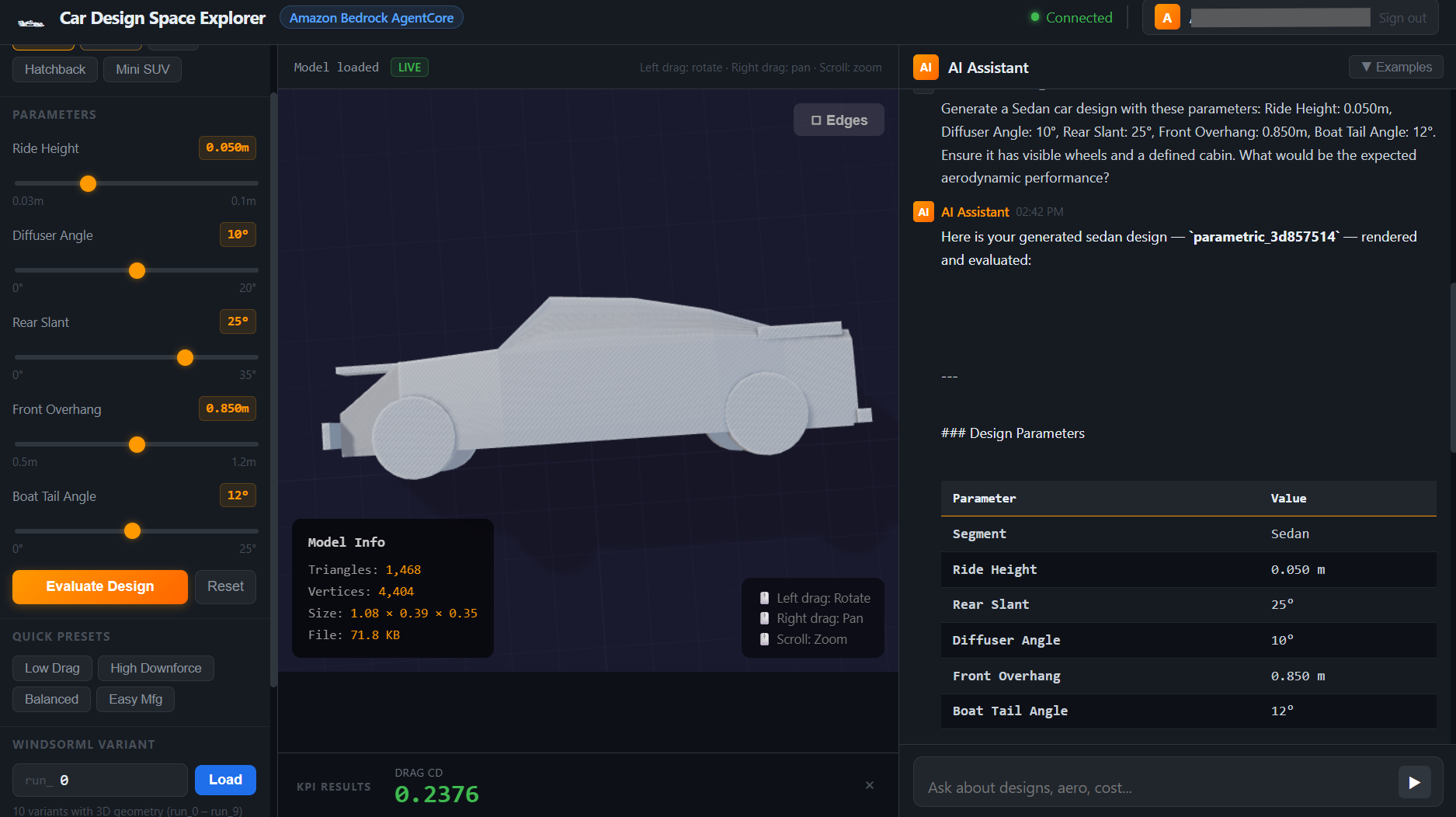
Figure 2: A parametric design generated from a natural-language request, displayed in the browser-based 3D viewer
The Design Space Explorer with a generated sedan loaded in the center 3D viewport, shown in side profile as a smooth grey mesh with visible wheels and a defined cabin, and an Edges toggle available above it. The left panel shows the aerodynamic parameter sliders set for this design: ride height, diffuser angle, rear slant, front overhang, and boat tail angle, with an Evaluate Design button, quick presets for Low Drag, High Downforce, Balanced, and Easy Mfg, and a WindsorML variant loader. A Model Info overlay reports the mesh triangle and vertex counts, bounding size, and file size. The right AI Assistant panel shows the user’s natural-language request to generate the sedan and the assistant’s response, which names the generated variant and lists its design parameters in a table. A drag coefficient KPI is reported at the bottom.
Architecture
The following architecture shows the end-to-end flow. The frontend authenticates through Amazon Cognito and connects over an Amazon API Gateway WebSocket API to an AWS Lambda handler. The Lambda function invokes the Orchestrator agent on Amazon Bedrock AgentCore runtime, which coordinates the specialist agents over the A2A protocol. Agents read and write geometry and results in Amazon S3 and Amazon DynamoDB, retrieve cost data through Amazon Bedrock AgentCore Gateway and an AWS Lambda-backed MCP target, and call Amazon Bedrock for both the language model and generative image previews.
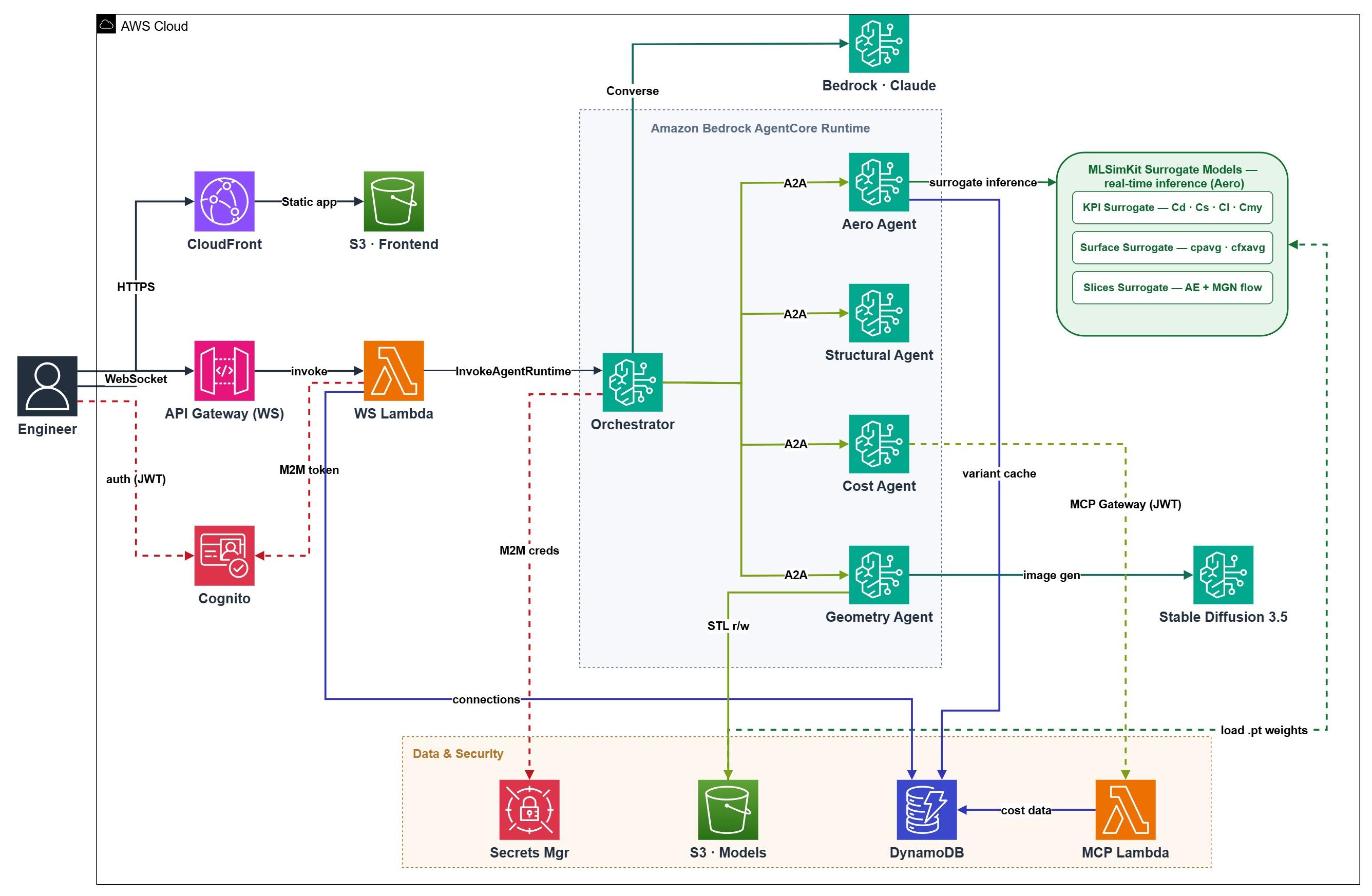
Figure 3: End-to-end architecture of the multi-agent Design Space Explorer
An AWS Cloud architecture diagram tracing a design query end to end. An engineer reaches the app over HTTPS: Amazon CloudFront serves the static React app from an Amazon S3 frontend bucket, and the browser also opens a WebSocket to Amazon API Gateway. The engineer authenticates through Amazon Cognito with a JWT. API Gateway invokes a WebSocket AWS Lambda function, which obtains a machine-to-machine token from Cognito and calls InvokeAgentRuntime on the Orchestrator inside the Amazon Bedrock AgentCore Runtime. The Orchestrator converses with Anthropic Claude on Amazon Bedrock and, over the agent-to-agent (A2A) protocol, delegates to four specialist agents: Aero, Structural, Cost, and Geometry. The Aero Agent runs MLSimKit surrogate models for real-time inference, a KPI surrogate, a surface surrogate, and a slices surrogate, and reads a variant cache. The Geometry Agent performs image generation with Stable Diffusion 3.5 and reads and writes STL meshes. A Data and Security layer at the bottom holds AWS Secrets Manager for machine-to-machine credentials, an Amazon S3 models bucket, Amazon DynamoDB for connections and the variant cache, and an MCP Lambda function reached through Amazon Bedrock AgentCore Gateway with JWT authentication that returns cost data and loads model weights. Results stream back to the engineer over the WebSocket.
ML inference with MLSimKit
The aerodynamic intelligence in this solution is powered by AI surrogate models built with MLSimKit (AI Surrogate Models in Engineering on AWS). MLSimKit gives engineers and designers a starting point for near real-time predictions of physics-based simulations using ML models, so they can iterate designs and see immediate results instead of waiting hours for a full simulation to run.
In a traditional iterative design-simulate workflow, a single computational fluid dynamics cycle can take days. MLSimKit introduces an additional “train-design-predict” workflow: models are trained on simulated ground truth, then used to predict results for new designs in minutes. In the Car Design Space Explorer, three MLSimKit model types trained on the public WindsorML computational fluid dynamics dataset provide aerodynamic predictions:
- Aerodynamic KPI prediction predicts the four aerodynamic coefficients (Cd, Cs, Cl, Cmy) for a car body geometry.
- Surface variable prediction predicts per-surface fields such as average pressure coefficient (cpavg) and skin friction (cfxavg), rendered as surface heatmaps.
- Slice prediction combines an autoencoder with a MeshGraphNet to produce velocity flow-field slice images.
The Aero agent loads these trained model weights and runs inference on CPU within Amazon Bedrock AgentCore runtime, returning predictions in seconds. This is what makes interactive Design Space Exploration practical: an engineer can evaluate, modify, and re-evaluate dozens of variants in a single working session.
For more information on MLSimKit, its supported datasets (AhmedML, WindsorML, DrivAerML), and how to train and deploy your own surrogate models, see AI Surrogate Models in Engineering on AWS (MLSimKit).
Amazon Bedrock AgentCore provides the production-grade managed runtime for hosting and scaling the Strands-powered agents:
- Persistent memory: Stores conversation history per session so the Orchestrator can resolve references such as “the previous variant” across exchanges.
- Containerized deployment: Runs each agent as an independently scaled runtime, built server-side with AWS CodeBuild, with no local Docker required.
- Code Interpreter: Provides a sandboxed environment used by the geometry agent for mesh generation and processing.
- AgentCore Gateway: Exposes the Cost agent’s data tools over MCP with Amazon Cognito JWT authentication, bridging to an AWS Lambda function backed by Amazon DynamoDB.
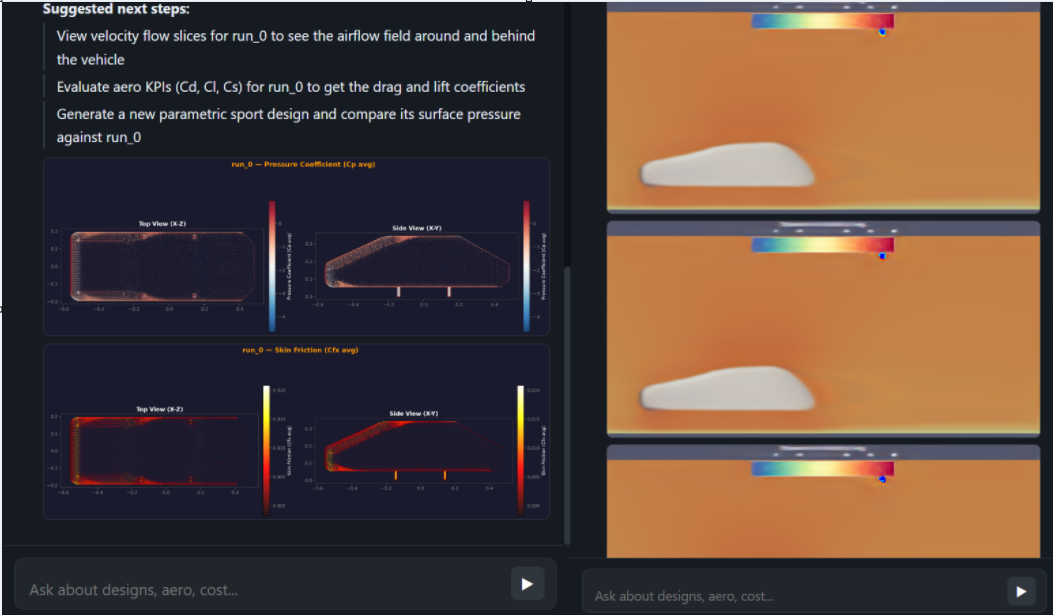
Figure 4: Surface pressure heatmap generated by the MLSimKit surface prediction model for a selected design variant
The Design Space Explorer showing aerodynamic analysis results for a generated variant. A suggested next steps list recommends viewing velocity flow slices to see the airflow field around and behind the vehicle, evaluating aerodynamic KPIs to get the drag and lift coefficients, and generating a new parametric design to compare surface pressure against this baseline. Below the list, two result panels plot the variant: a pressure coefficient map and a skin friction map, each shown in top view and side view with color scales indicating magnitude. On the right, a vertical stack of velocity flow slices shows cross sections of the airflow field around the vehicle silhouette, with color gradients representing flow velocity. A natural-language input box sits at the bottom to ask further questions about designs, aerodynamics, or cost.
Data foundation and connectivity
Amazon S3 stores STL geometries, rendered images, heatmaps, and model weights. Amazon DynamoDB serves as a low-latency store for pre-computed aerodynamic KPIs, cost parameters, external industry data, and WebSocket connection state. Cost data reaches the Cost agent through Amazon Bedrock AgentCore Gateway and an AWS Lambda-backed MCP target, keeping the enterprise data access pattern clean and auditable. The same pattern extends to other disciplines and data sources across engineering domains.
Security architecture
Security and privacy are foundational. The solution implements defense in depth so you can adopt generative AI for design modernization while protecting proprietary intellectual property. Each layer addresses a distinct part of the stack:
- Network isolation. A dedicated Amazon Virtual Private Cloud (Amazon VPC) isolates the network, with the WebSocket AWS Lambda function running in private subnets and egress through NAT gateways.
- Authentication. Amazon Cognito provides user authentication through JWT tokens for the frontend, plus a separate machine-to-machine pool for agent-to-agent and MCP AgentCore Gateway authorization.
- Secure connections. Amazon API Gateway manages secure WebSocket connections.
- Encryption at rest. Customer-managed AWS Key Management Service (AWS KMS) keys encrypt data across Amazon DynamoDB, AWS Secrets Manager, and Amazon CloudWatch Logs.
- Data protection in Amazon S3. Amazon S3 buckets enforce TLS, block public access, and use versioning.
- Credential management. AWS Secrets Manager holds the OAuth and Amazon Bedrock AgentCore Gateway credentials.
Business outcomes
Applying generative AI and ML inference to design space exploration delivers measurable value across several dimensions:
- Faster performance analysis. ML surrogate models return aerodynamic predictions in seconds, compared with the hours a single computational fluid dynamics run takes on a cluster, and cached variants return in under 100 milliseconds. A per-variant evaluation that once took hours now completes in seconds.
- More variants per session. Instead of hand-evaluating a handful of candidates, engineers can sweep the full 355-variant WindsorML design space in a single working session, with the Orchestrator ranking results and computing the Pareto front automatically.
- Concurrent multidisciplinary validation. The agentic workflow validates aerodynamics, structure, and cost in a single chained request rather than in three sequential, separately integrated phases, surfacing trade-offs early through Pareto analysis.
- Accessible to more people. The natural-language interface opens the capability to both specialists and non-experts, removing the simulation-expertise barrier.
- Concept to validated model, faster. Generative design shortens the path from a verbal concept to a validated 3D model from days to minutes.
- Higher-value engineering time. Together, these shifts move engineering effort away from waiting on simulations and toward optimization and decision-making.
Conclusion
By combining Amazon Bedrock AgentCore, the Strands Agents SDK, and MLSimKit surrogate models, the Design Space Explorer transforms a traditionally slow, sequential design process into an interactive, multidisciplinary exploration. Multimodal generative AI creates and modifies geometry from natural language, ML inference predicts performance in seconds rather than hours, and agentic orchestration coordinates the whole workflow. As a result, engineers explore the design space more completely and rapidly than conventional methods allow.
You can try the Design Space Explorer yourself. The complete sample code is available in the aws-samples repository on GitHub, and these resources will help you build on it:
- Amazon Bedrock AgentCore documentation for deploying and scaling the agents.
- Strands Agents documentation for the orchestration framework.
- AI Surrogate Models in Engineering on AWS (MLSimKit) for the ML inference approach.
This sample uses MLSimKit surrogate models for aerodynamic prediction to demonstrate the pattern. For production engineering workloads, AWS Partners such as NeuralConcept and PhysicsX provide supported surrogate modeling on AWS that integrates with the same agentic AI architecture.