AWS for Industries
Build ChatGPT Apps with MCP Servers and AWS Infrastructure
Introduction
What if your customers could shop your entire catalog, get personalized recommendations, and complete a purchase—all without ever leaving a conversation?
Well, that is exactly what ChatGPT Apps make possible, and forward-thinking retailers are racing to deploy them. In this post, we’ll unpack what ChatGPT Apps are, why they’ve become a strategic priority for retailers, and how they fit into a broader agentic commerce vision. We’ll also show you why AWS is the ideal back-end infrastructure. We’ll take you through a real-world example: a ChatGPT App for a notional eCommerce coffee bean store, complete with a deployable AWS reference architecture you can use as your own starting point.
ChatGPT Apps hit the stage
In October 2025, OpenAI announced ChatGPT Apps. ChatGPT Apps allow ChatGPT users to interact with third-party apps directly within the ChatGPT user interface. ChatGPT Apps can include rich, interactive, and graphical user interface components that augment the typical text-based ChatGPT user experience.
Retailers can build their own ChatGPT Apps to bring unique experiences to customers already familiar with the ChatGPT user interface. According to Agentic AI Commerce: The Next Retail Revolution Is Here, Retailers should consider building ChatGPT Apps because more customers are beginning their product discovery and purchase decision journeys on AI Assistants such as ChatGPT.
A ChatGPT App must be hosted through a Model Context Protocol (MCP) Server. These MCP Servers need to be hosted outside of ChatGPT. AWS offers secure and scalable cloud infrastructure that is ideal for hosting MCP Servers.
In the following sections, we’ll show you an example ChatGPT App to give you an idea of what is possible to build for your own Retail app. We’ll also show you how the example solution is deployed on AWS, and how AWS services like Amazon OpenSearch enhance the ChatGPT app’s product search and discovery experience by providing hybrid search capabilities.
Here’s how it works
We’ll take you through a series of 5 easy steps to illustrate how ChatGPT Apps work. After these steps, you’ll see a shopping cart ready to place an order. Let’s get started!
Step 1: Add the ChatGPT App to the conversation
From the ChatGPT user interface, we start by adding our “coffee” ChatGPT App to our current conversation using the “plus” icon in the bottom left. Then we can ask natural, conversational questions like “I usually like light roasts with fruity notes, any suggestions?”.
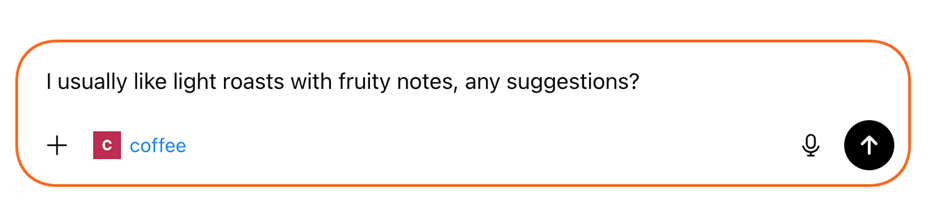
Figure 1: Add the “coffee” ChatGPT App to the conversation and begin the conversation.
ChatGPT interprets the question and automatically calls “search_products_tool” from the MCP server to search for relevant products based on our query. It renders a rich, graphical user interface that is returned as part of the MCP server response. This user interface shows multiple relevant light roast coffees with fruity notes, as shown below.
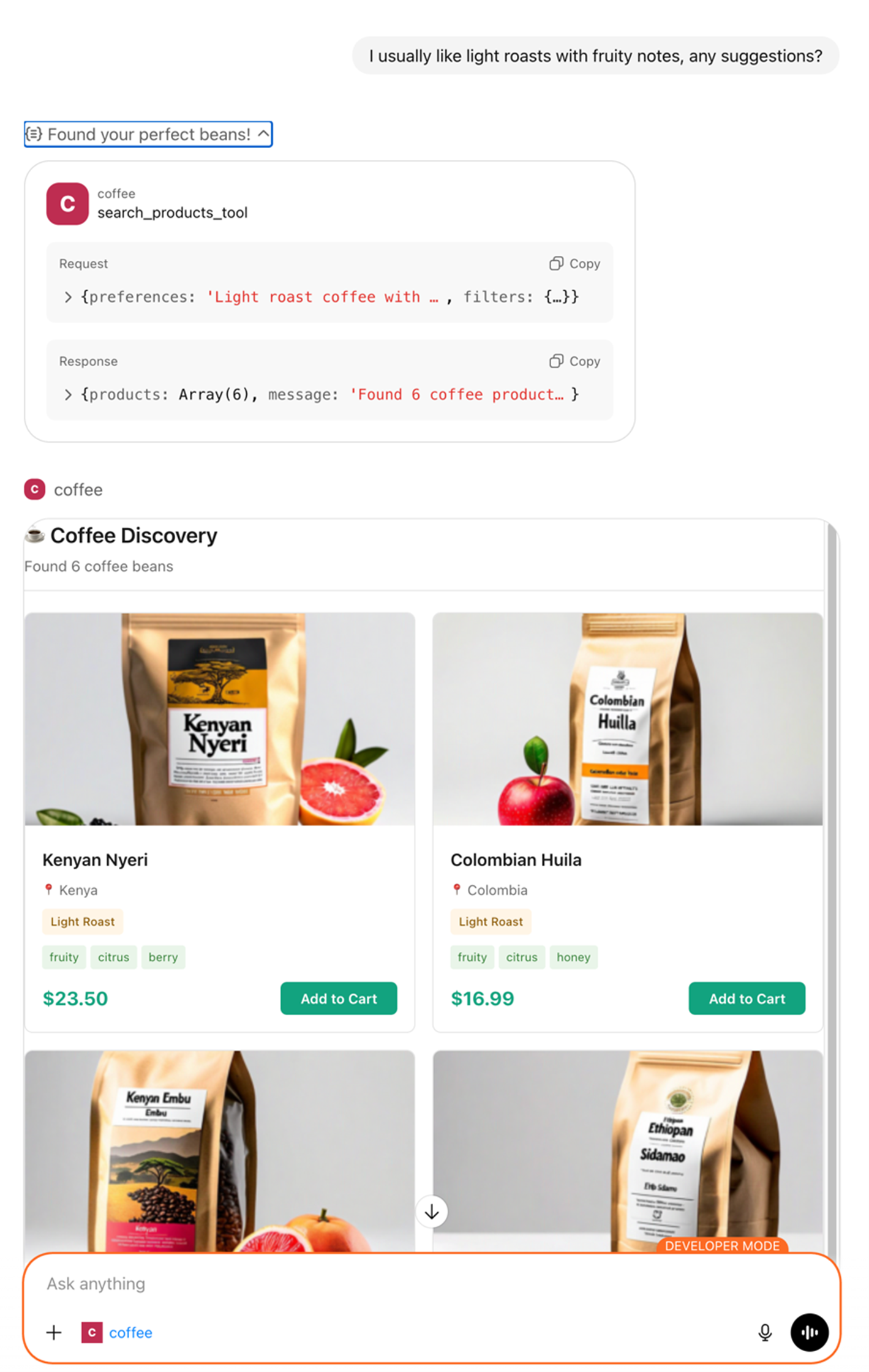
Figure 2: ChatGPT App uses the MCP Server backend to search for relevant products and displays them in a graphical user interface.
Step 2: Get more product details
Here, we can click on a product and get a pop-over showing the product details and additional information.
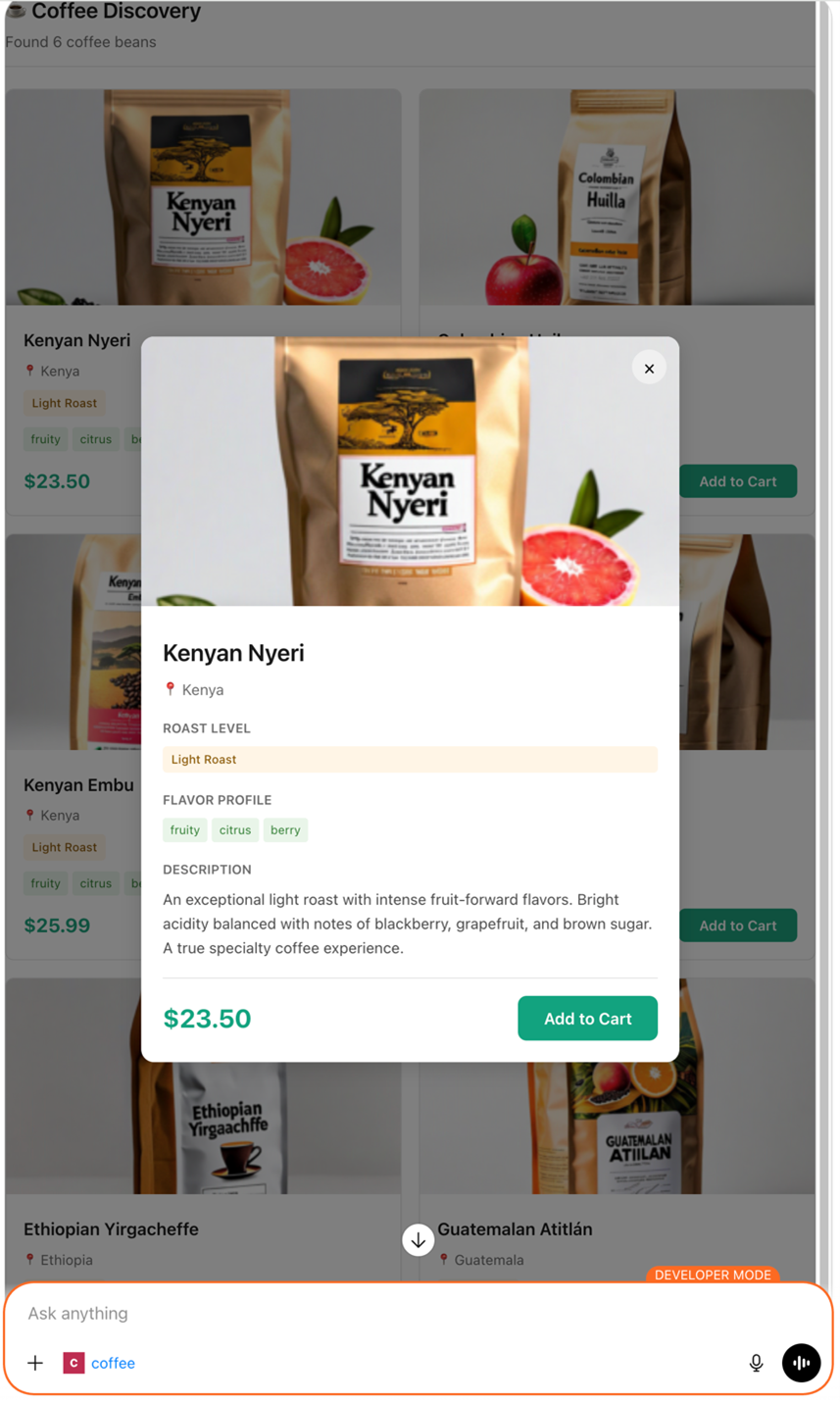
Figure 3: The graphical user interface includes the ability to click on specific products to show product details.
Step 3: Get a richer point of view from ChatGPT
In addition to showing the graphical user interface, ChatGPT also continues the conversation, editorializing the search results and giving some of the “why” behind the suggestions. It also attempts to move the conversation forward and narrow down our product search by asking a clarifying question about which brewing equipment we use at home.
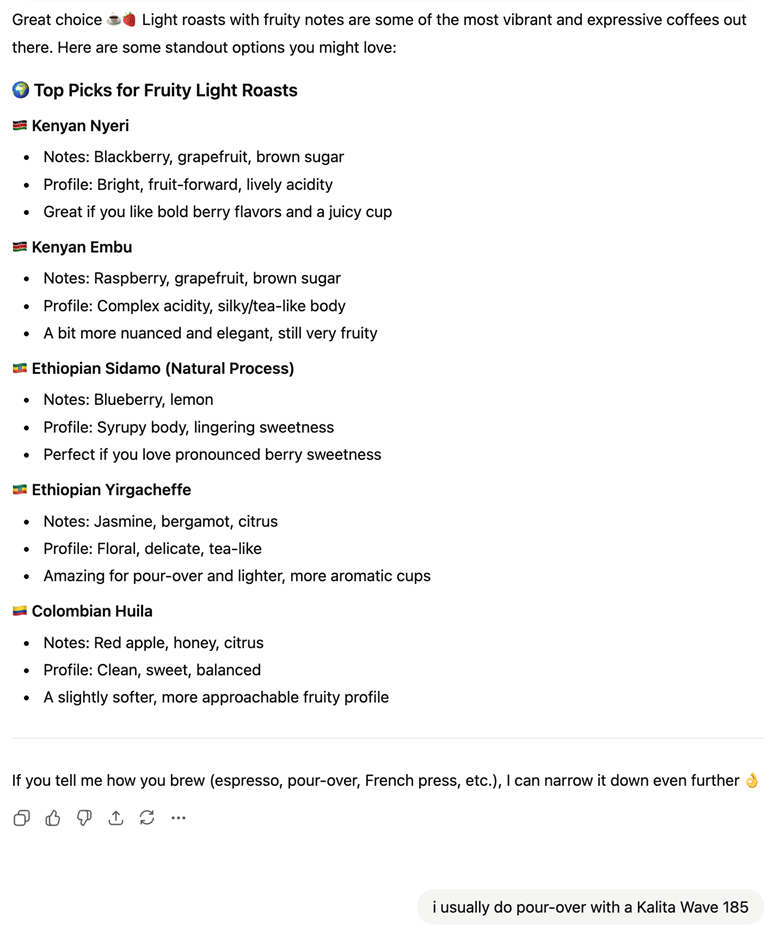
Figure 4: ChatGPT also continues the text-based conversation alongside the graphical user interface components that it renders, automatically asking follow-up questions to help prompt the user to narrow the product search.
Step 4: Narrow our selection
After we specify that we use a Kalita Wave 185 pour-over, ChatGPT uses this context to further narrow down its recommendations to a single “best overall” choice.
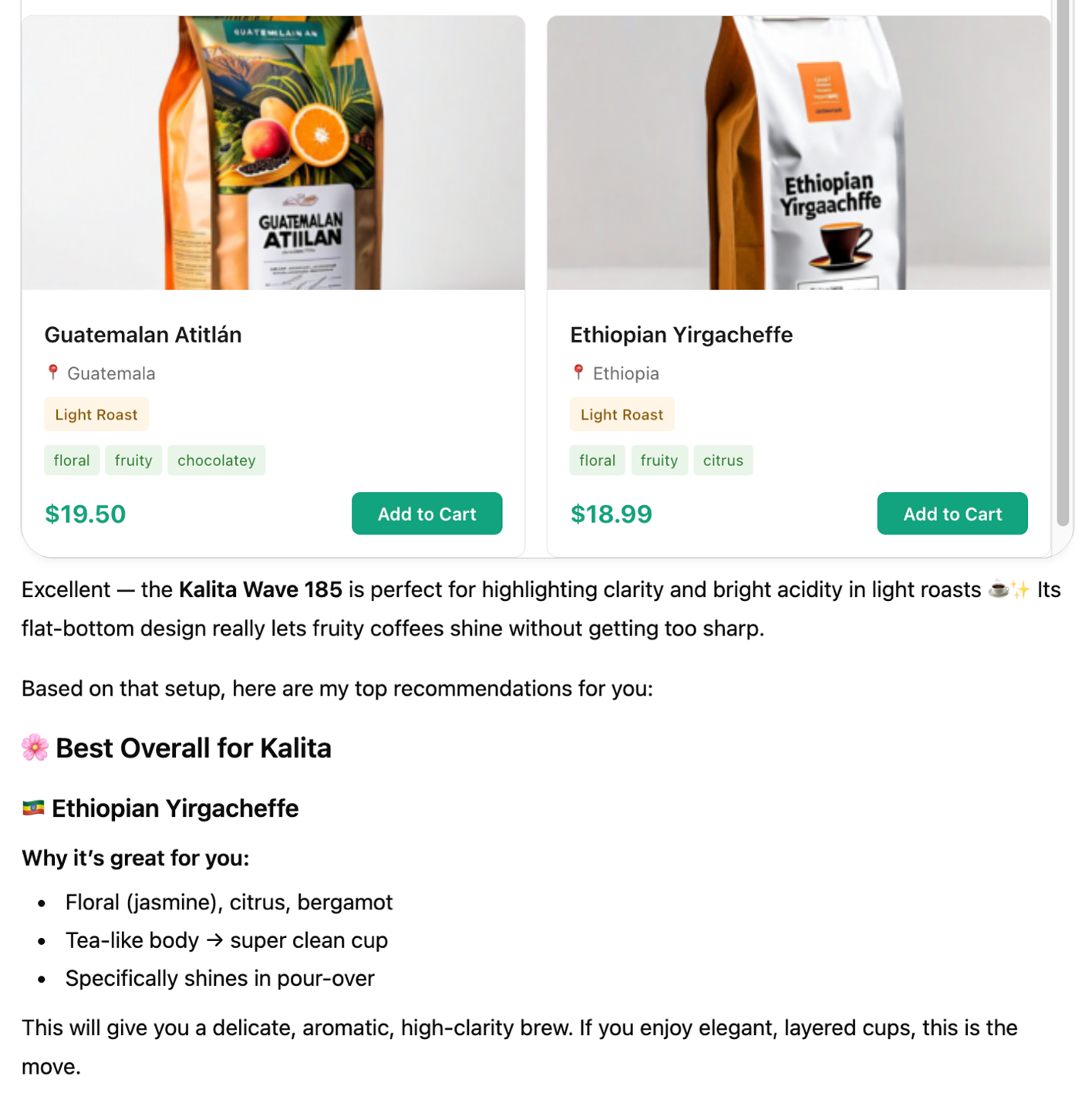
Figure 5: After gathering more context about the customer’s equipment, ChatGPT follows-up and narrows down the products it has recommended.
Step 5: Add the final selection to our cart
Because ChatGPT has guided us to a well-reasoned and specific product recommendation, we’re ready to “try the Ethiopian Yirgacheffe.” ChatGPT correctly interprets the intent of our request and uses the appropriate MCP endpoint to add the coffee beans to our shopping cart. ChatGPT is eager to continue the conversation about brewing techniques to ensure we get the most out of our coffee and feel excited to complete the purchase.
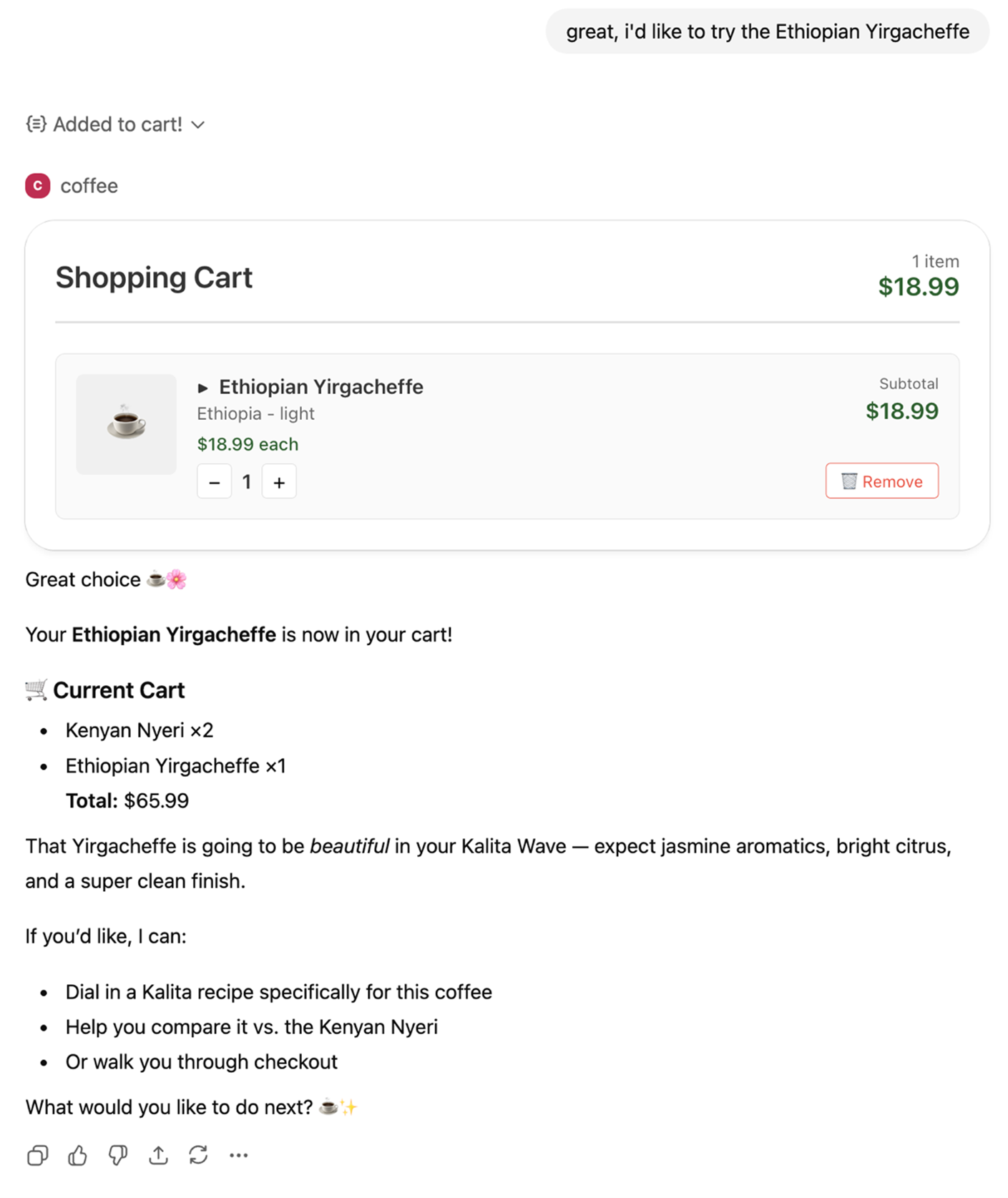
Figure 6: ChatGPT interprets the customer’s natural language request and uses the MCP server to add the requested item to the shopping cart.
How we built our solution
ChatGPT Apps require the application owner to provide back-end infrastructure that exposes an MCP server. For this example, the back-end infrastructure is hosted on AWS services, as shown in Figure 7. The application works as follows:
- ChatGPT users add the ChatGPT App to their current ChatGPT conversation. They ask natural language questions in ChatGPT. ChatGPT interprets the user’s question, reads the MCP endpoint descriptions, and calls the appropriate tools exposed by the MCP server.
- The MCP server URL is routed to Amazon API Gateway, which in turn calls the MCP server hosted in an AWS Lambda function.
- The AWS Lambda function authenticates the end user using Amazon Cognito and OAuth depending on whether the action requires authentication. For example, product search does not necessarily require authentication, but adding a product to a shopping cart often does.
- For product catalog search queries, AWS Lambda generates a vector embedding of the user’s query using the Amazon Titan Text Embeddings model in Amazon Bedrock, then calls Amazon OpenSearch Serverless, which performs a hybrid search that combines keyword search and semantic search for increased accuracy. For example, when we ask for “a light roast with fruity notes”, a keyword search would not find “Ethiopian Yirgacheffe” even with metadata tags like “bright, citrusy, and delicate” because there are no direct keyword matches. But a hybrid search adds semantic search capabilities, which can find associations between “fruity” and “citrusy”, and “light” and “delicate”. Hybrid search is an important component of this conversational system because it allows users to speak in natural language without worrying about “speaking in keywords”.
- For shopping cart related queries, AWS Lambda calls Amazon DynamoDB, which stores the shopping cart state for the application.
- For product catalog search queries, the MCP response content has image URLs. ChatGPT fetches these images from an Amazon S3 bucket via an Amazon CloudFront distribution.
- The product catalog images were created using the Amazon Nova Canvas model which was accessed through Amazon Bedrock.
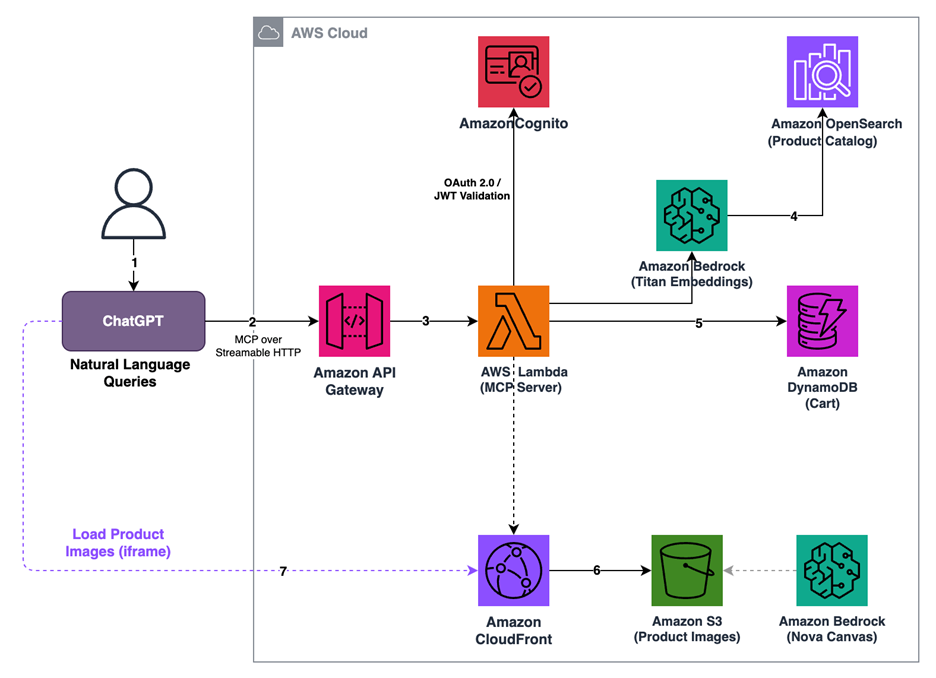
Figure 7: AWS solution architecture
Conclusion
In this post, we’ve demonstrated the type of user experience Retailers can create with a ChatGPT App. We’ve seen how AWS services can support key requirements for deploying a ChatGPT App, including scalable MCP Server hosting, user authentication and authorization, state management, and hybrid search capabilities for product catalogs.
While many Retailers will choose to start building app integrations with ChatGPT Apps, it’s important to note that most of the work done to create the MCP server that supports your ChatGPT App will be re-usable, which increases the value of the initial effort. For example, the same (or very similar) MCP server can be used as the foundation for building an on-site AI Shopping Assistant Agent (think: Amazon Rufus).
As the agentic commerce space continues to evolve, investments in foundational MCP server capabilities now will create the foundation for building rich, personalized customer experiences across new channels as they emerge. ChatGPT is the leading AI Assistant by market share, so retailers should consider starting with a ChatGPT App. AWS provides scalable and secure infrastructure and services to host the MCP servers required by ChatGPT Apps, so retailers should consider building this required infrastructure on AWS.
Next steps
To view the source code and deployment instructions for this example solution, visit the GitHub repository in aws-samples.
Read more about Agentic Commerce strategy for retailers and how investment in MCP server foundations can scale across use cases in this blog: Decoding the Future of Retail: Embracing AI Shopping Agents.