AWS for Industries
Enterprise lab-in-the-loop on AWS: How Sanofi is compressing drug discovery from years to weeks
The pharmaceutical industry is racing to use AI for drug discovery, yet many organizations encounter the same invisible constraint: despite powerful models and virtually unlimited compute, discovery cycles remain stubbornly slow. The core issue isn’t capability; it’s context.
Across R&D organizations, AI agents are beginning to design molecules, plan syntheses, execute assays, and analyze experimental data. But these systems often operate without awareness of prior experiments, failed approaches, or parallel work happening across the organization. Sanofi recognized this limitation early and partnered with Amazon Web Services (AWS) to reimagine the foundation for AI-enabled discovery.
The result is the Scientific Workflow Experience Labs (SWEL)—a context-aware scientific operating system designed to provide shared memory and continuity across the drug discovery lifecycle. By giving AI systems access to experimental and organizational context, SWEL helps discovery programs move faster and with greater precision.
“Sanofi aspires that SWEL reduces the number of molecules requiring wet lab validation by 50%, while improving hit quality. We anticipate a tenfold increase in the speed of deploying AI-driven workflows, letting us run two to three times more in silico projects within the same timeframe” – Sabyasachi Dasgupta, VP Global Head of R&D Data and Platforms, Sanofi
From pipelines to contextual orchestration
At the foundation of Sanofi’s scientific data ecosystem is Scientific Information Processing Services (SIPS), a unified data layer built on Amazon Simple Storage Service (Amazon S3) using a Lab Data Mesh framework. SIPS manages Sanofi’s R&D scientific data and contextual metadata, with more than 20 petabytes of scientific data products available.
The goal of SIPS is to centralize lab data and ensure that every data product carries sufficient context to support downstream analytics, reproducibility, and AI. This is achieved by connecting hundreds of lab instruments and various systems of record into a common data foundation. Identifiers and metadata are captured as soon as a run is completed, an experiment is registered, or a workflow step is executed. These signals link instrument outputs to the relevant experiment, sample, protocol, assay, instrument, and analytical result. Raw files, processed outputs, scientific context, lineage, and results remain connected and ready for reproducibility, analytics, and AI.
Building on this foundation, Sanofi’s response to the context gap is SWEL, a scientific operating layer that connects data, workflows, models, and AI agents across the discovery lifecycle. Traditional discovery systems followed a linear pattern: data flowed through pipelines to generate reports, with limited ability to learn from prior outcomes. SWEL replaces this with a closed-loop model in which SIPS feeds execution through intelligent orchestration and continuously informs the next experiment.
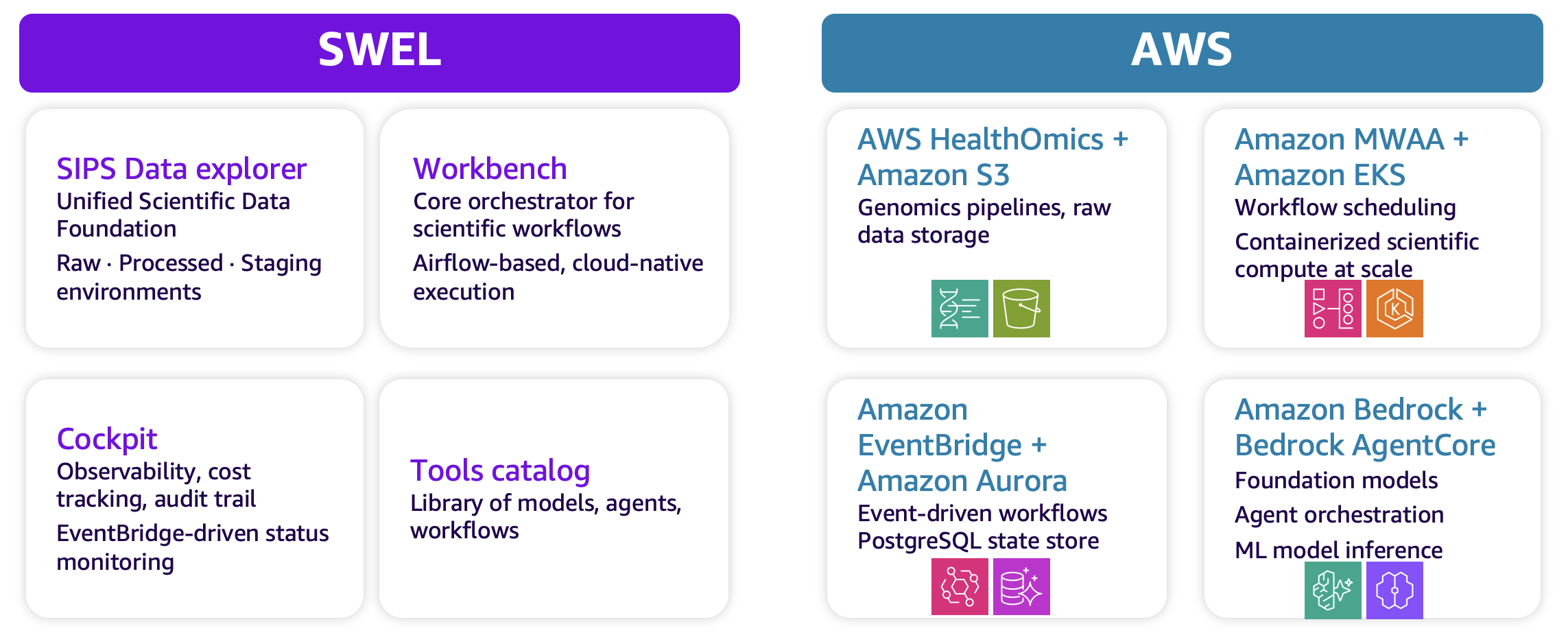
Figure 1: The four major modules of SWEL and the AWS services they’re built on
The SWEL workflow orchestration layer and its components are shown in the preceding figure. Using AWS HealthOmics, Amazon Managed Workflows for Apache Airflow (MWAA), AWS Batch, and Amazon Elastic Kubernetes Service (Amazon EKS), SWEL enables cloud-centered, containerized execution and orchestration of complex scientific workflows across distributed environments. To support regulated pharmaceutical requirements, SWEL incorporates observability and governance through a cockpit built on Amazon EventBridge and Amazon Aurora. This provides real-time workflow visibility, cost tracking, and audit trails.
The AI agent platform forms the reasoning layer of the system. Powered by Amazon Bedrock and Amazon Bedrock AgentCore, it enables foundation model access, agent coordination, and scalable inference within the broader SWEL architecture.
SWEL Copilot: AI meets the scientist
The frontend interface for scientists is SWEL Copilot—an R&D agentic studio built on Bedrock AgentCore. Through natural language interaction, scientists can initiate workflows, query data, deploy models, and diagnose issues, such as running in silico molecular screening workflows, exploring compound data, deploying predictive models, or investigating pipeline failures.
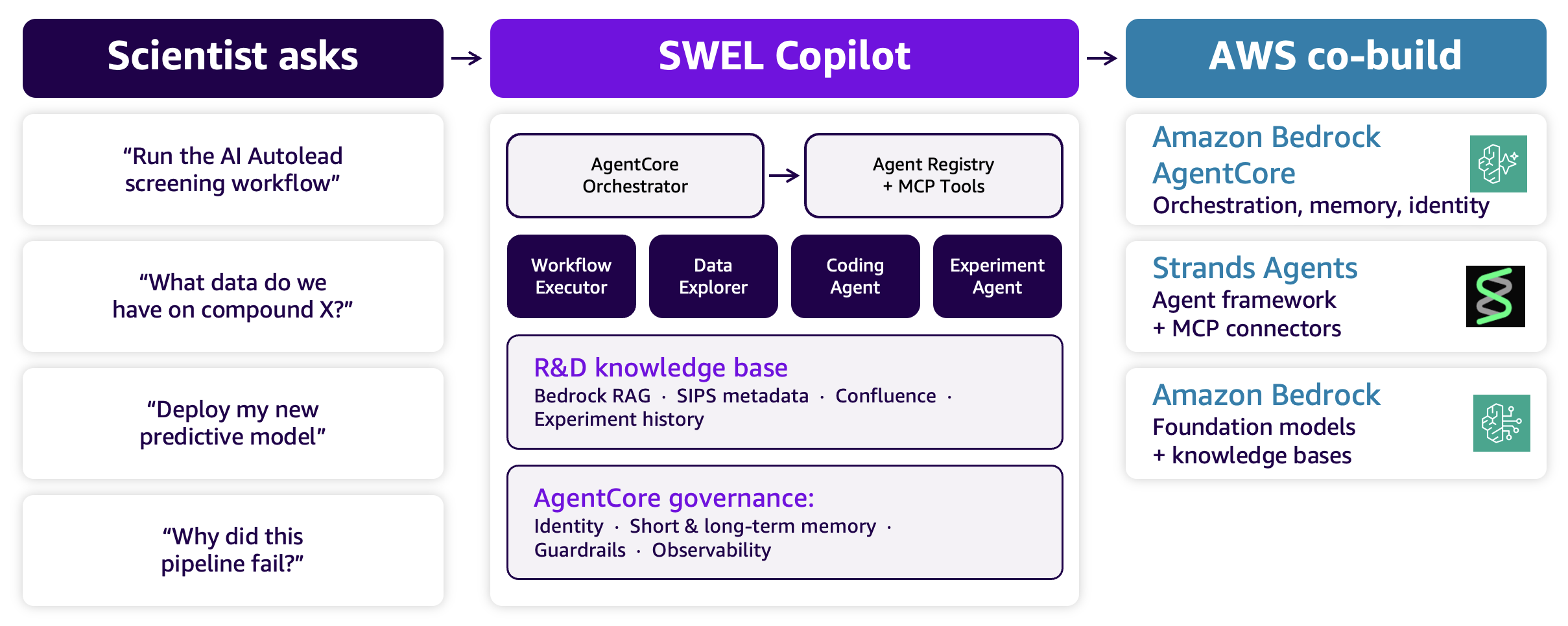
Figure 2: Workflow use SWEL Copilot to run queries
Behind the interface, a Bedrock AgentCore orchestrator coordinates specialized agents for workflow execution, data exploration, code generation, and experiment management. These agents operate against a shared R&D knowledge base that incorporates experiment history, SIPS metadata, and institutional knowledge.
The platform also embeds enterprise-grade governance for safe and responsible agent use. Bedrock AgentCore enforces per-agent AWS Identity and Access Management (IAM) permission boundaries so each agent operates under least-privilege access—scientists interact only with the data and tools they’re authorized to. Amazon Bedrock Guardrails is used to layer in content filtering, personally identifiable information (PII) and Protected Health Information (PHI) redaction, and grounding checks to reduce hallucination in scientific outputs. Every agent action is captured in step-by-step execution traces, giving compliance teams full visibility into what was done and by whom.
The result isn’t a simple conversational interface, but a scientific reasoning platform with persistent memory that enables AI systems to learn, adapt, and contribute meaningfully across the discovery lifecycle.
The outcome: Towards lab automation and measurable impact
A clear demonstration of SWEL’s impact is its ability to support AI-driven design and data analysis as part of an automated design-make-test-analyze (DMTA) process, where each discovery cycle informs the next to establish a continuous learning cycle.
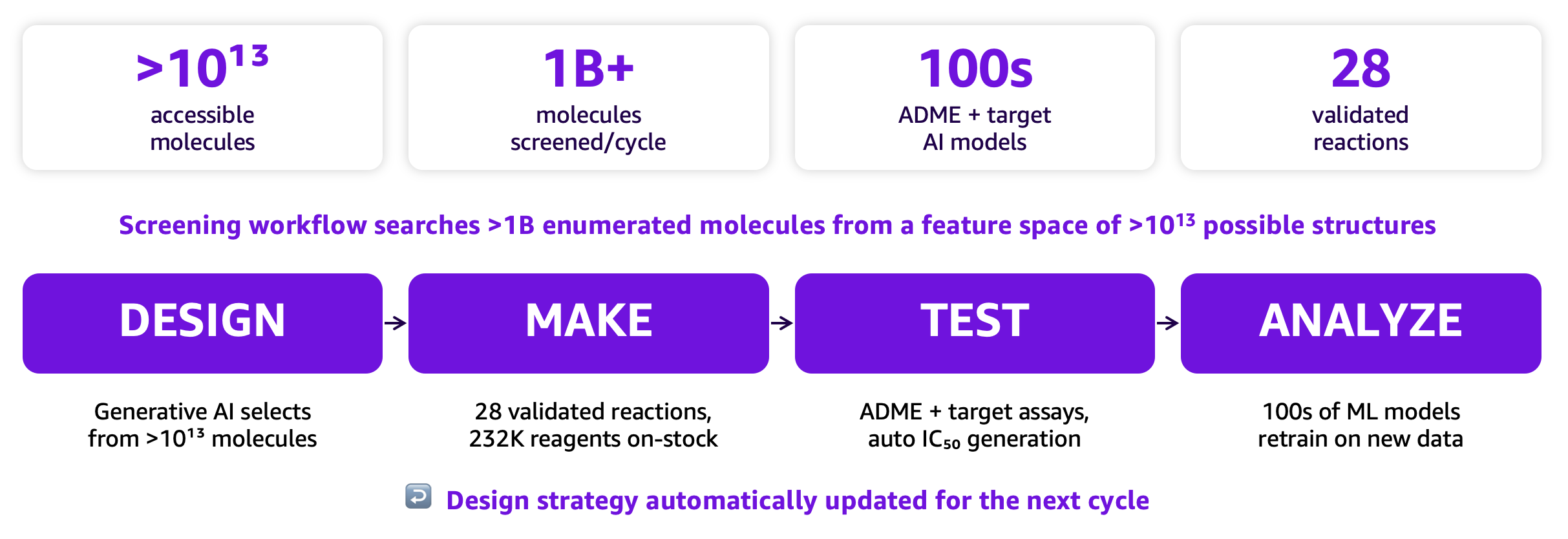
Figure 3: Using SWEL to support automated DMTA processes
The scale of this system is substantial:
- Chemical search space – More than 10¹³ accessible molecules
- Building block collection – A large proprietary library spanning more than 25 reaction classes, enabling virtual libraries containing billions of compounds to be constructed and intelligently searched
- Focused exploration – Rather than exhaustively enumerating the entire space, SWEL’s AI-driven workflows focus on the most promising chemical matter
- Parallel model inference – Hundreds of ADME and target-specific models run in parallel to guide compound prioritization
The platform follows the DMTA paradigm while maintaining data continuity across every stage:
- Design – Generative AI proposes candidate molecules informed by prior experimental outcomes, efficiently navigating large chemical spaces to prioritize high-potential compounds.
- Make – Synthesis planning engines incorporate validated reaction pathways and reagent availability to identify viable synthetic routes.
- Test – Automated assays execute experiments at scale, generating structured data ready for downstream learning.
- Analyze – Machine learning models are retrained on newly generated experimental data. Updated models refine the design strategy for subsequent cycles, continually improving the quality and efficiency of discovery efforts.
Each cycle feeds the next; creating a closed loop where every experiment makes the system smarter.
Critically, this isn’t a future ambition. SWEL has already contributed to identifying biologically active compounds in a discovery project, demonstrating that AI-guided discovery can deliver real scientific outcomes at scale. That result is one expression of a platform built to span modalities rather than a single chemistry. The same execution plane supports:
- Small molecules – Closed-loop DMTA with iterative compound optimization
- Large molecules – Structure prediction, developability scoring, and sequence-liability assessment for antibodies and nanobodies
- Beyond – mRNA, vaccines, and CMC workflows
Just as important, SWEL isn’t AI alone. It brings multi-omics, high-performance computing, and agentic AI onto a single plane: SWEL spans compute-intensive, long-running science such as molecular dynamics and free-energy simulations, NGS and RNA-sequencing pipelines, and coordinated AI agents, all within one governed environment instead of a patchwork of disconnected tools. The broader operational results show meaningful improvements: early projects have demonstrated improved hit rates, and teams can execute multiple projects more efficiently within the same time frame. The initial minimum viable product was deployed in 2.5 months, and the platform has since scaled to support more than 50 scientific workflows.
The broader impact: Toward autonomous discovery
SWEL’s architecture points toward a future where drug discovery becomes increasingly autonomous. The enabling principle is context propagation: every layer of the system carries forward the scientific, experimental, and operational history needed for informed decision-making. This scientific context propagates through workflows in a token efficient manner, where we prioritize the most scientifically relevant information to maximize computational value while minimizing redundant processing.
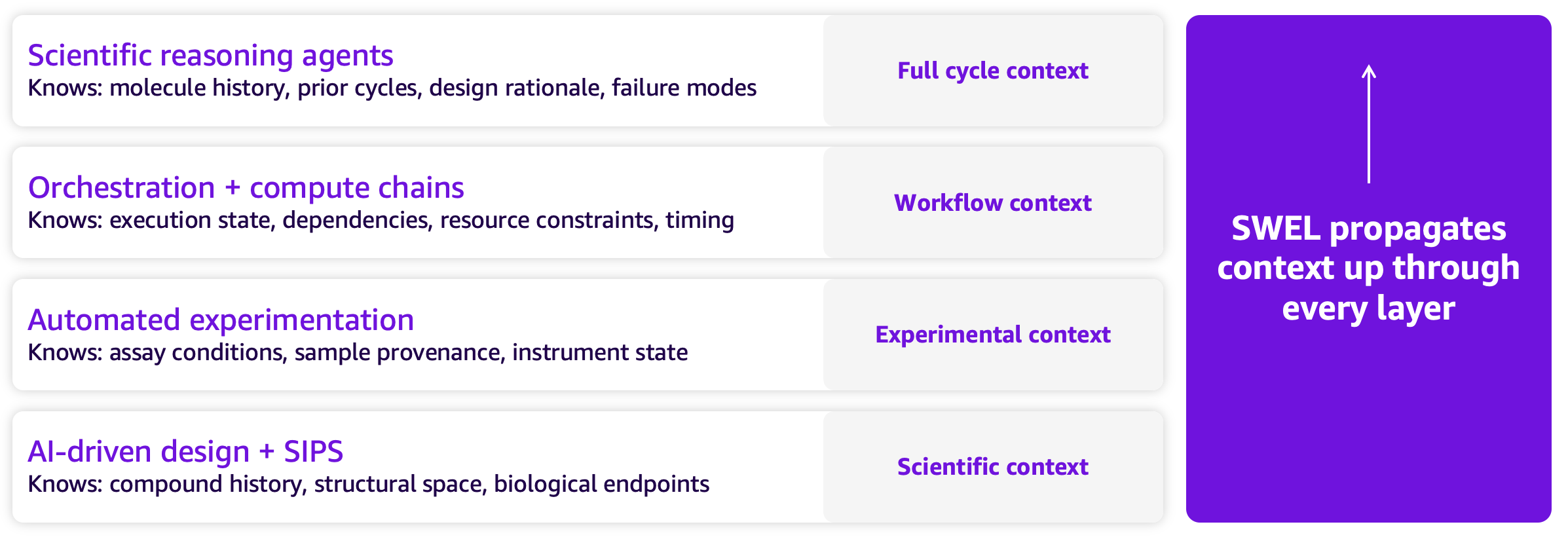
Figure 4: The four layers of context managed by SWEL
The context propagates through layers, as shown in the preceding figure:
- At the design layer, AI-driven modeling integrated with SIPS tracks compound history, explores chemical space, and relevant biological endpoints.
- At the experimentation layer, automated assay systems preserve conditions, sample provenance, and instrument state.
- At the orchestration layer, workflow engines track execution state, interdependencies, and resource constraints.
- At the reasoning layer, scientific reasoning agents unify these inputs across prior cycles, molecular evolution, design rationale, and observed failure modes.
A second enabling principle is the use of core shared services as the foundation of the system. By standardizing data access, orchestration, governance, and AI services into reusable building blocks, SWEL allows Sanofi to extend the same architecture across new laboratories, modalities, and research teams without rearchitecting the core.
When context flows across these layers, AI shifts from isolated task execution to adaptive reasoning across the discovery lifecycle. This transition from automation to contextual intelligence is what makes autonomous scientific discovery possible at enterprise scale.
Lessons learned: Building AI-powered discovery systems
Sanofi’s journey highlights several practical lessons for organizations pursuing AI-driven drug discovery. Data readiness defines the true starting point: without clean, accessible, and well-contextualized data, even advanced AI systems operate with limited effectiveness.
High-impact use cases should come first. Rather than building abstract capabilities, teams should prioritize scientifically meaningful and operationally critical problems where success creates visible value.
Early adopters should be treated as co-builders, not end users. Sanofi engaged initial users as active partners in shaping the platform, using continuous feedback to improve the product and build internal champions.
Deploying AI in production is also an organizational challenge. Model performance matters, but adoption depends on trust, workflow integration, and scientists’ confidence in using AI systems as part of daily R&D.
Finally, partnership plays a decisive role. Sanofi’s collaboration with Amazon Web Services extended beyond standard service adoption to deep co-development.
From years to weeks: Your three-step path to accelerations
Traditional closed-loop laboratory programs often require more than 3 years for their computational, data, and workflow capabilities to reach maturity. Using AWS services, Sanofi has identified a potential path to establishing in-silico lab-in-the-loop capabilities on significantly accelerated timelines. While implementation durations will vary based on organizational requirements and assumptions, the focus is on accelerating computational workflows and data integration rather than accelerate building physical laboratory infrastructure. AWS provides a structured path for organizations seeking to develop and scale these capabilities.
The first step is to initiate a lab-in-the-loop experiment using Sanofi’s existing laboratory capabilities and digital infrastructure. Teams can run an initial AI-guided experimental cycle by connecting our established lab environments (instruments, data platforms, and scientific workflows) into a unified, AI-enabled operating model. This approach builds on Sanofi’s investments in laboratory automation and digital platforms, with selective integration to services like Amazon Bio Discovery where they complement our internal capabilities.
In parallel, we’re accelerating the maturity of our lab-AI integration through cross-functional partnerships between Digital, R&D, and Lab Operations. This enables us to scale proven patterns across our global laboratory network while maintaining the scientific rigor and regulatory compliance that defines Sanofi’s research standards.
The final step is scale. By adopting a connectivity factory model, organizations can expand across sites, instrument types, and therapeutic areas in a repeatable and controlled manner.
Organizations ready to compress discovery timelines can engage their AWS Life Sciences teams to begin building a Lab-in-the-Loop foundation and accelerate toward context-aware, AI-driven R&D.
Contact an AWS representative today to learn how we can help your organization accelerate what’s next.