AWS for Industries
How smart Europe Revolutionized Automotive Customer Support with Amazon Bedrock
For car manufactures, new car model releases, over-the-air software update and connected service launches create fresh customer experiences. While these innovations help enhance driving experiences, they also generate waves of car owner inquiries about vehicle features, charging capabilities, maintenance procedures, and digital services.
This constant innovation cycle is essential for car manufacturers to stay competitive in the modern automotive industry. Innovation speed places increasing pressure on customer engagement center agents who must quickly master new technologies and provide expert guidance to customers navigating an ever-expanding array of vehicle capabilities and services.
Specifically, smart Europe’s customer engagement team faced:
- Exponential support case growth: Frequent product launches and feature updates overwhelmed agents with high-case volumes, creating bottlenecks in customer response times. The manual processes required to handle this volume significantly increased operational costs as smart Europe’s workforce needed to be increased.
- Extended resolution cycles: Time-intensive manual processes resulted in extended resolution cycles. Preprocessing, triaging, categorizing, and responding to cases led to prolonged customer wait times.
- Knowledge scaling challenges & inconsistent service quality: Complex automotive topics stretched support agent capabilities as they needed to provide expert guidance on everything from basic vehicle operation to advanced connected car features. This resulted in variable resolution quality across different support agents and expertise areas.
Traditional scaling approaches would have been costly. Hiring more agents or extending support hours would have dramatically increased costs without addressing the root efficiency issues.
To help resolve these challenges, AWS collaborated with smart Europe to create a new support tool, smart.AI Case Handler, that increases the efficiency of smart Europe’s support agents by providing case insights and tailored response suggestions. This blog post will guide you through the implementation details of smart Europe’s smart.AI Case Handler.
About smart Europe
smart Europe GmbH, headquartered in Leinfelden-Echterdingen, Stuttgart, is pioneering the future of electric mobility. Since 2020, smart became the first automotive enterprise to switch to 100% electric vehicles. This established them as a first mover in urban premium, electric, and connected mobility solutions.
The automotive industry is rapidly evolving. Electric vehicle technology, autonomous driving features, and connected car services are transforming the automotive landscape. smart Europe continuously introduces new products and advanced features to meet changing consumer demands and regulatory requirements. However, this innovation cycle created an unexpected challenge, Customer support complexity and volume grew exponentially.
Solution
smart Europe recognized the need for an automated, intelligent, scalable support solution, which handles the unique challenges of automotive customer support. For this purpose, smart Europe collaborated with AWS to implement a comprehensive Generative AI (GenAI) solution called smart.AI Case Handler. smart.AI Case Handler is an assistance tool for support agents that generates case insights and tailored response suggestions for each customer support case based on smart Europe’s knowledgebase that contains historical data from finalized cases and guidelines. From the user-experience perspective, once the support agent opens a case in Salesforce (smart Europe’s CRM system), the system displays an AI-generated summary of the case and suggests a response which the agent can review and use to respond to the customer.
To create a robust, scalable solution, smart Europe implemented a serverless architecture using multiple AWS services. These serverless services scale automatically as traffic and usage demands change, saving costs and handling sudden spikes in traffic without impacting application performance.
smart.AI Case Handler operates through two complementary automated workflows that work together to provide comprehensive AI-powered support:
Workflow 1: Intelligent Case Tagger – Automatically categorizes and prioritizes new support cases the moment they’re created, ensuring proper routing to domain experts.
Workflow 2: Case Insights Generator – Provides AI-generated analysis, similar case references, and response suggestions that update dynamically as cases evolve.
This dual-workflow approach ensures that cases are both properly classified from creation and continuously enriched with relevant insights throughout their lifecycle. The following sections detail how each workflow operates.
Workflow 1: Intelligent Case Tagger
An essential part of smart.AI Case Handler is the tagging of each customer’s support case,
- the incoming cases are categorized, prioritized to be picked by relevant domain owners
- smart.AI Case Handler can generate accurate insights based on the tagged cases.
The architecture diagram in figure 1 shows how the CaseTagger workflow is implemented.
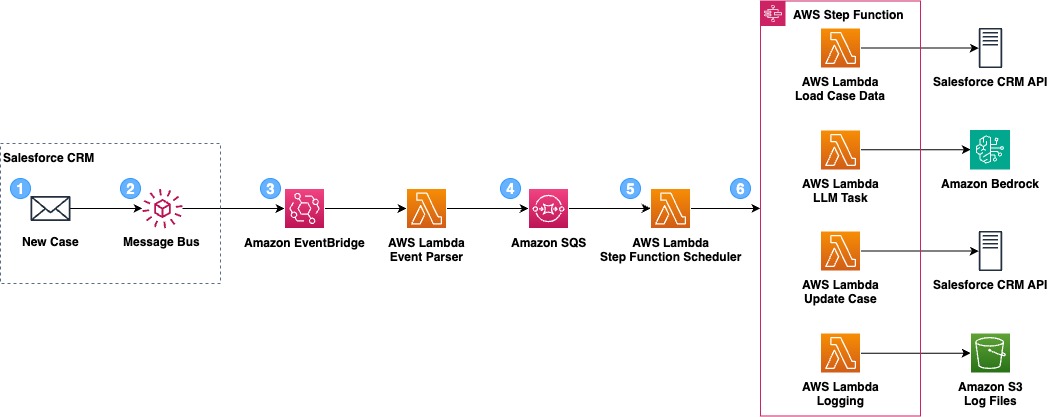
Figure 1: Event-Driven Case Tagging Workflow
The CaseTagger workflow provides prompt classification of new customer cases through an event-driven workflow that follows these steps:
1. Case Creation: New case is created in Salesforce CRM.
2. Event Publication: Salesforce EventBus sends the case creation event.
3. Event Capture: Amazon EventBridge receives the event and forwards it to Amazon Simple Queue Service (SQS).
4. Buffering: Amazon SQS queues the event to manage concurrency and helps prevent exceeding Amazon Bedrock quota limits.
5. Processing Trigger: Amazon SQS triggers the “Step Function Scheduler” AWS Lambda function.
6. Orchestration: The Lambda function initiates an AWS Step Functions workflow for GenAI based multi-step processing. A set of AWS Lambda functions utilize Amazon Bedrock endpoints to generate tags for the new case.
7. Result Integration: At workflow completion, results are sent back via Salesforce API.
This automated tagging helps ensure cases are properly categorized from the moment of creation, resulting in more efficient routing and prioritization without manual intervention.
Workflow 2: Case Insights Generator
Case Insights Generator provides:
- Case description, progress steps, customer’s historical activities summarized in a few paragraphs.
- Historically resolved similar cases.
- Excerpts from knowledge articles with reference URLs to the documents.
- Customer response suggestions to the support agent.
The below diagram in Figure 2 shows, how this workflow was implemented.
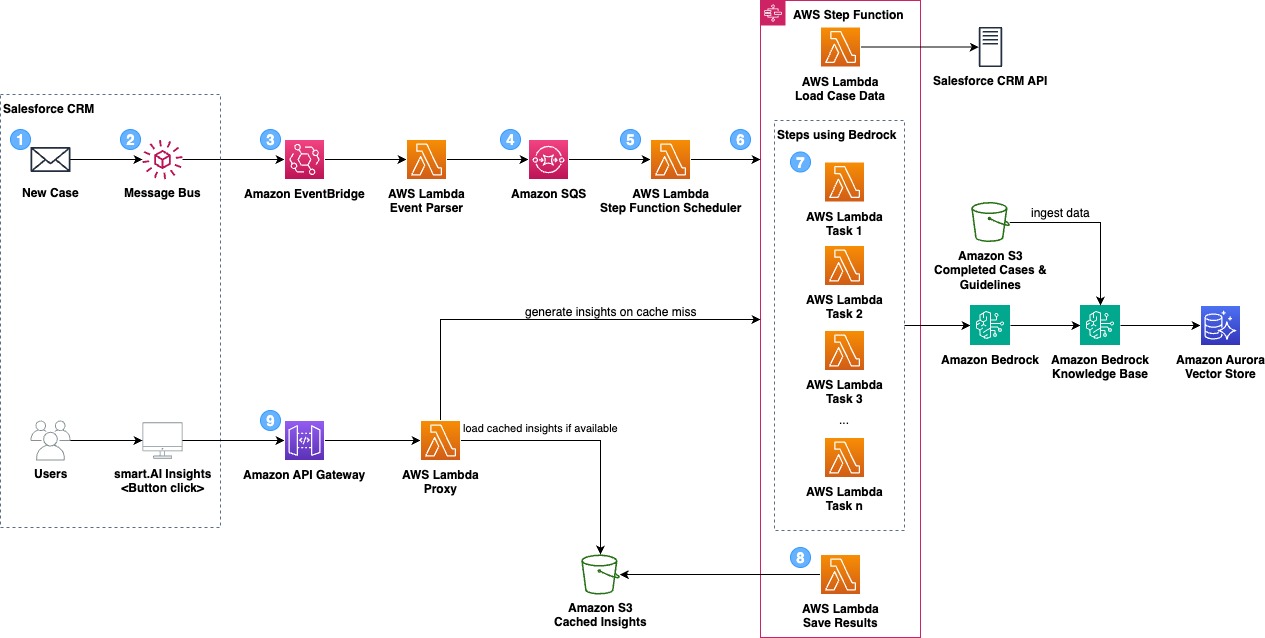
Figure 2: Advanced AI Analysis for Case Updates
The Case Insights Generator workflow provides support agents with AI-generated analysis and response suggestions both on case creation and update. It runs through following steps:
1. The case is updated with new information (comments, call logs, internal posts, emails, etc.).
2. Salesforce EventBus sends the case update event.
3. Amazon EventBridge receives the event and forwards it to Amazon SQS.
4. Amazon SQS queues the event to manage concurrency and helps prevent exceeding Amazon Bedrock quota limits.
5. Amazon SQS triggers an AWS Lambda function when resources are available.
6. AWS Lambda function initiates AWS Step Functions workflow for comprehensive analysis.
7. AWS Step Functions workflow generates insights via a series of steps utilizing GenAI model endpoints and the knowledgebase provided by Amazon Bedrock (see A deeper look into insight generation logic).
8. Generated insights are stored (as cached results) in an encrypted Amazon S3 bucket
9. When support agents click “Generate Insights” in Salesforce, Amazon API Gateway retrieves the pre-generated insights from Amazon S3, providing prompt access.
This proactive approach helps ensure insights are ready before agents need them, eliminating waiting time while maintaining high-quality AI assistance.
A deeper look into insight generation logic
To implement the business logic of insights generation, the smart Europe’s AI team implemented the AWS Step Functions workflow shown in Figure 3 below:
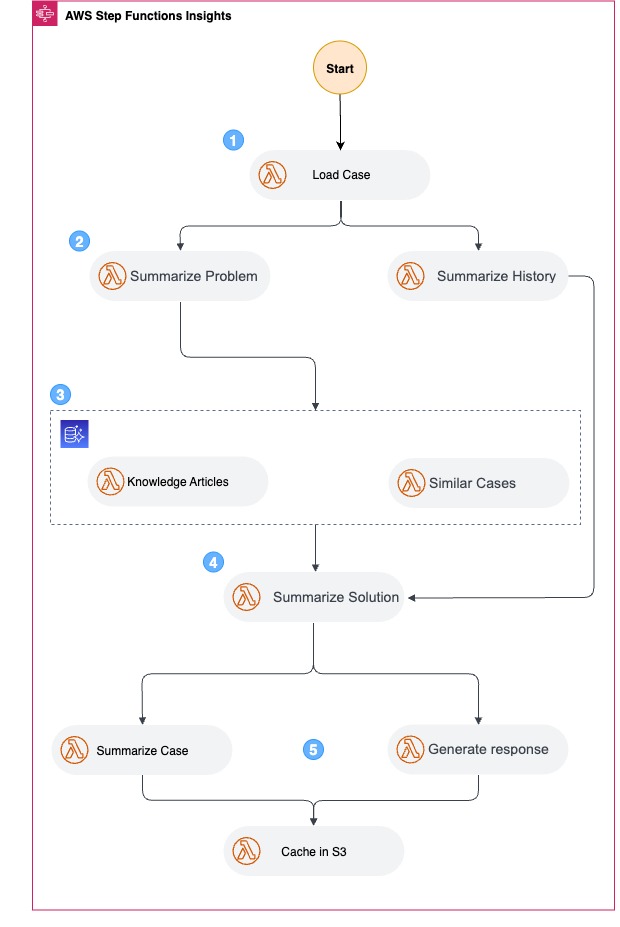 Figure 3: Detailed Step Functions Workflow
The AWS Step Functions workflow orchestrates multiple AI operations to generate comprehensive insights for support agent review:
1. Load Case: Extracts all relevant data from Salesforce, including the case details and customer’s historical cases.
2. Summarize Problem: Uses Amazon Bedrock LLMs to create a structured summary of the customer’s issue.
3. Parallel Knowledge Retrieval: Simultaneously queries multiple knowledge sources from Bedrock Knowledge Bases backed by Amazon Aurora (with pg_vector) and helps:
- Knowledge Articles Step: Retrieve relevant documentation from a knowledge base; and
- Similar Cases Step: Identify semantically similar historical cases.
4. Summarize Solution: Synthesizes the problem summary, knowledge articles, and similar cases to generate a solution proposal.
5. Parallel Output Generation:
- Summarize Case: Creates a concise case summary.
- Generate Response: Drafts a potential response for the agent to customize and send.
Overcoming Technical Challenges
When implementing this architecture, smart Europe ran into three (3) specific challenges which had to be solved.
Challenge 1: Long Agent Wait Times
In early iterations, case tagging and response generation were triggered when support agents clicked “Generate Insights”. This required agents to wait 1-2 minutes for the complete AWS Step Functions workflows to finish, creating an unacceptable user experience.
Solution:
The team implemented proactive background processing that generates and caches insights before agents request them. This transformed the experience from a long-wait operation to instant insight delivery.
Challenge 2: API Throttling and Rate Limits. Amazon Bedrock has different inference rate limits for different models. During peak periods, high load of simultaneous case updates exceeded these limits, resulting in throttling.
Solution:
The application uses Amazon SQS to buffer the requests and utilizes the AWS Step Functions Scheduler Lambda function with reserved concurrency limits to control the pace of inference requests towards the GenAI endpoints. This mechanism helps ensure that the GenAI inferences initiated by the AWS Step Functions running in parallel do not exceed Amazon Bedrock runtime quotas and helps prevent throttling of Amazon Bedrock endpoints (see Figure 4 of this blog post for in-depth elaboration of the patterns). Additionally exponential backoff and jitter is applied within the AWS Step Functions to increase the resilience of the application.
Challenge 3: Excessive Update Triggers
The application was processing every case update, even when new AI insights weren’t needed, creating unnecessary load and cost.
Solution:
smart Europe developed a filtering mechanism in AWS Lambda functions that selectively processes only relevant updates based on change type, content significance, and business rules.
Transformative Results
The impact of Amazon Bedrock-powered automation has been transformative. With a lean team of just four developers (one AI engineer, one Cloud Architect, and two CRM Engineers) designing and delivering the solution in three months, smart Europe has achieved:
- 40% decrease in case resolution times: Support agents resolve customer inquiries much faster with AI assistance.
- 20% increase in “first contact resolution”: More customer issues are resolved without requiring follow-up interactions.
- Over 10,000 cases processed: The solution has already helped handle substantial real-world volume.
- 30% projected savings of the initially planned budget in 2025: Significant return on investment from efficiency improvements and reduced handling times.
Going forward, the smart Europe AI team plans to enrich the solution with agentic capabilities as the product complexities increase.
Conclusion: Accelerating Automotive Customer Experience
smart Europe’s implementation demonstrates how GenAI and AWS cloud technologies can help address the unique challenges that modern automotive companies face daily. By combining intelligent automation with human expertise, smart Europe’s AI team created a scalable solution that grows with their innovation cycle while reducing costs and improving customer satisfaction.
Beyond smart Europe’s immediate gains, this implementation reveals the transformative potential of AI-powered customer support across industries experiencing rapid technological evolution. As automotive companies continue integrating advanced connected services and autonomous features, solutions like smart.AI Case Handler provide proven examples for maintaining exceptional customer experience at scale while dramatically improving support efficiency.
If you’re facing similar challenges with growing support volumes, extended resolution times, or scaling knowledge across your team, Amazon Bedrock can help you build your own intelligent support solution. Get started with Amazon Bedrock and take your first steps toward transforming your customer support operations.