Artificial Intelligence

Author: Nick McCarthy

Beyond the price per token: Choosing the right OpenAI model on Amazon Bedrock for your workload
Comparing models on dollars per million tokens misses what production workloads actually pay for: outcomes. This post shares an open-source benchmarking harness that measures cost per correct answer, agent trajectory cost, and rubric-graded deliverable quality across OpenAI models on Amazon Bedrock.
Set up OpenAI ChatGPT Codex with LiteLLM on Amazon ECS and Amazon Bedrock
Deploy a customer-operated LiteLLM gateway on Amazon ECS with AWS Fargate, connect it to an OpenAI model on Amazon Bedrock, and configure Codex to route requests through the gateway’s Responses API with scoped identities, budgets, rate limits, and telemetry. We also compare direct IAM Identity Center access and a managed Portkey deployment.
Reinforcement fine-tuning on Amazon Bedrock: Best practices
In this post, we explore where RFT is most effective, using the GSM8K mathematical reasoning dataset as a concrete example. We then walk through best practices for dataset preparation and reward function design, show how to monitor training progress using Amazon Bedrock metrics, and conclude with practical hyperparameter tuning guidelines informed by experiments across multiple models and use cases.
AWS AI League: Atos fine-tunes approach to AI education
In this post, we’ll explore how Atos used the AWS AI League to help accelerate AI education across 400+ participants, highlight the tangible benefits of gamified, experiential learning, and share actionable insights you can apply to your own AI enablement programs.
Enhanced performance for Amazon Bedrock Custom Model Import
You can now achieve significant performance improvements when using Amazon Bedrock Custom Model Import, with reduced end-to-end latency, faster time-to-first-token, and improved throughput through advanced PyTorch compilation and CUDA graph optimizations. With Amazon Bedrock Custom Model Import you can to bring your own foundation models to Amazon Bedrock for deployment and inference at scale. In this post, we introduce how to use the improvements in Amazon Bedrock Custom Model Import.
Fine-tune VLMs for multipage document-to-JSON with SageMaker AI and SWIFT
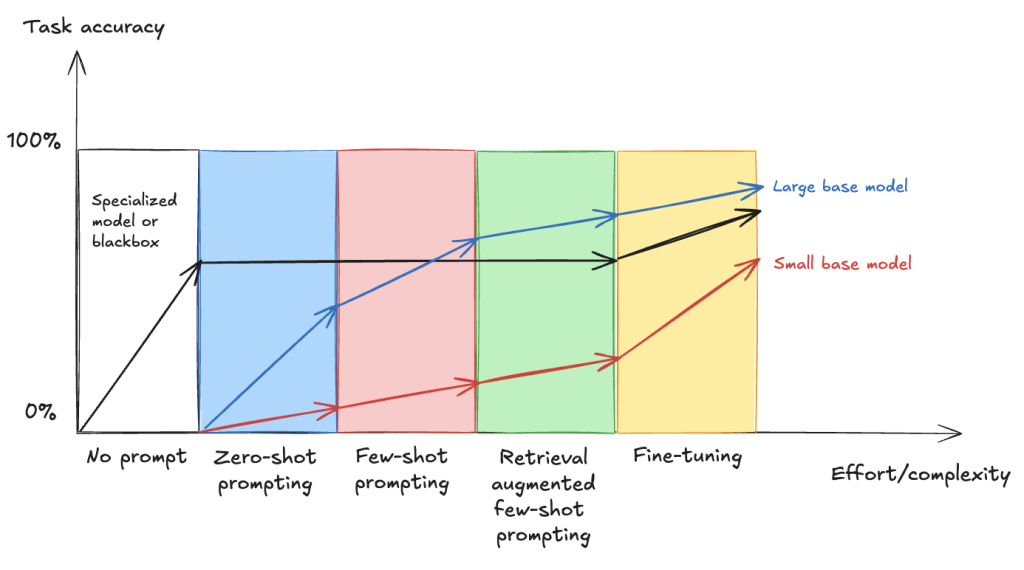
In this post, we demonstrate that fine-tuning VLMs provides a powerful and flexible approach to automate and significantly enhance document understanding capabilities. We also demonstrate that using focused fine-tuning allows smaller, multi-modal models to compete effectively with much larger counterparts (98% accuracy with Qwen2.5 VL 3B).

Prepare training and validation dataset for facies classification using a Snowflake OAuth connection and Amazon SageMaker Canvas
February 2024: This post was reviewed and updated for accuracy. This post is co-written with Thatcher Thornberry from bpx energy. Facies classification is the process of segmenting lithologic formations from geologic data at the wellbore location. During drilling, wireline logs are obtained, which have depth-dependent geologic information. Geologists are deployed to analyze this log data […]
Explaining Bundesliga Match Facts xGoals using Amazon SageMaker Clarify
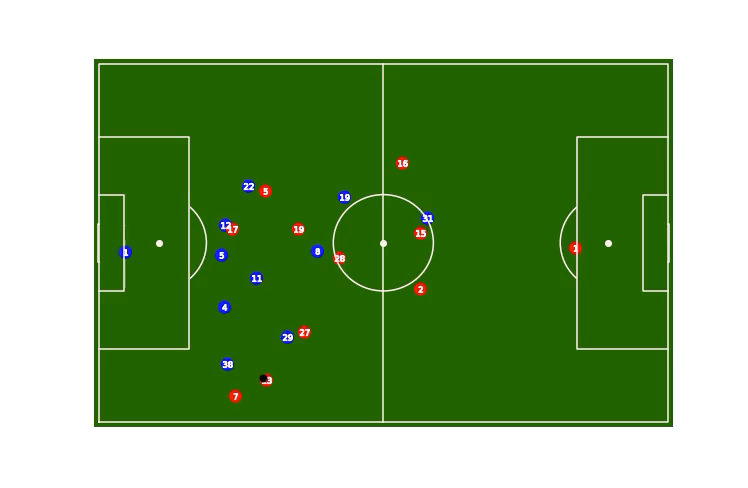
One of the most exciting AWS re:Invent 2020 announcements was a new Amazon SageMaker feature, purpose built to help detect bias in machine learning (ML) models and explain model predictions: Amazon SageMaker Clarify. In today’s world where predictions are made by ML algorithms at scale, it’s increasingly important for large tech organizations to be able […]