AWS for M&E Blog
Accelerating sports content creation using agentic AI: PGA TOUR
In a sport where every stroke, statistic, and storyline unfolds in real time across hundreds of players and thousands of fans, the PGA TOUR is rewriting the rules of sports content.
In this blog post, we’ll describe how PGA TOUR uses Amazon Bedrock to address the fundamental challenges facing modern sports organizations in delivering timely, accurate, high-quality and engaging content across multiple platforms simultaneously to millions of fans worldwide. Unlike traditional content creation workflows that rely heavily on manual processes, this solution employs a distributed network of specialized AI agents that collaborate autonomously to research, create, validate, and publish content with minimal human intervention.
In collaboration with CapTech, an AWS Partner that specializes in AI for Sports, the PGA TOUR recently developed a solution to generate content. The “Automated Content System” solution, uses a revolutionary approach to sports content creation, generating around 1200+ pieces of content every week, spending less than 25 cents for each piece of content generated, and achieving 95% cost reduction. This solution enables content generation and near instant publication typically within minutes of live sports, scaling from manual processes to automated creation of content such as round recaps, tournament recaps, and betting profiles for all of the 150+ players in a field per tournament. The system delivers the content with unprecedented speed, adaptability, consistency, for multiple platforms cost efficiently while maintaining strict brand standards and data accuracy.
The business challenge
Before implementing this solution, the PGA TOUR faced several critical limitations:
- Missed engagement – Manual processes created significant delays between events and content availability. Delays meant missing peak fan interest windows.
- Limited coverage – Content creation focused only on prominent players and major events. Manual processes couldn’t handle comprehensive tournament coverage, leaving smaller storylines and emerging players with minimal exposure.
- Cost inefficiencies – External vendor dependency created unpredictable cost structures and delays with increased content demands.
These limitations particularly affected major tournaments, where hundreds of players generate thousands of noteworthy moments requiring individual coverage that modern sports fans expect.
Solution overview
Comprehensive solution architecture
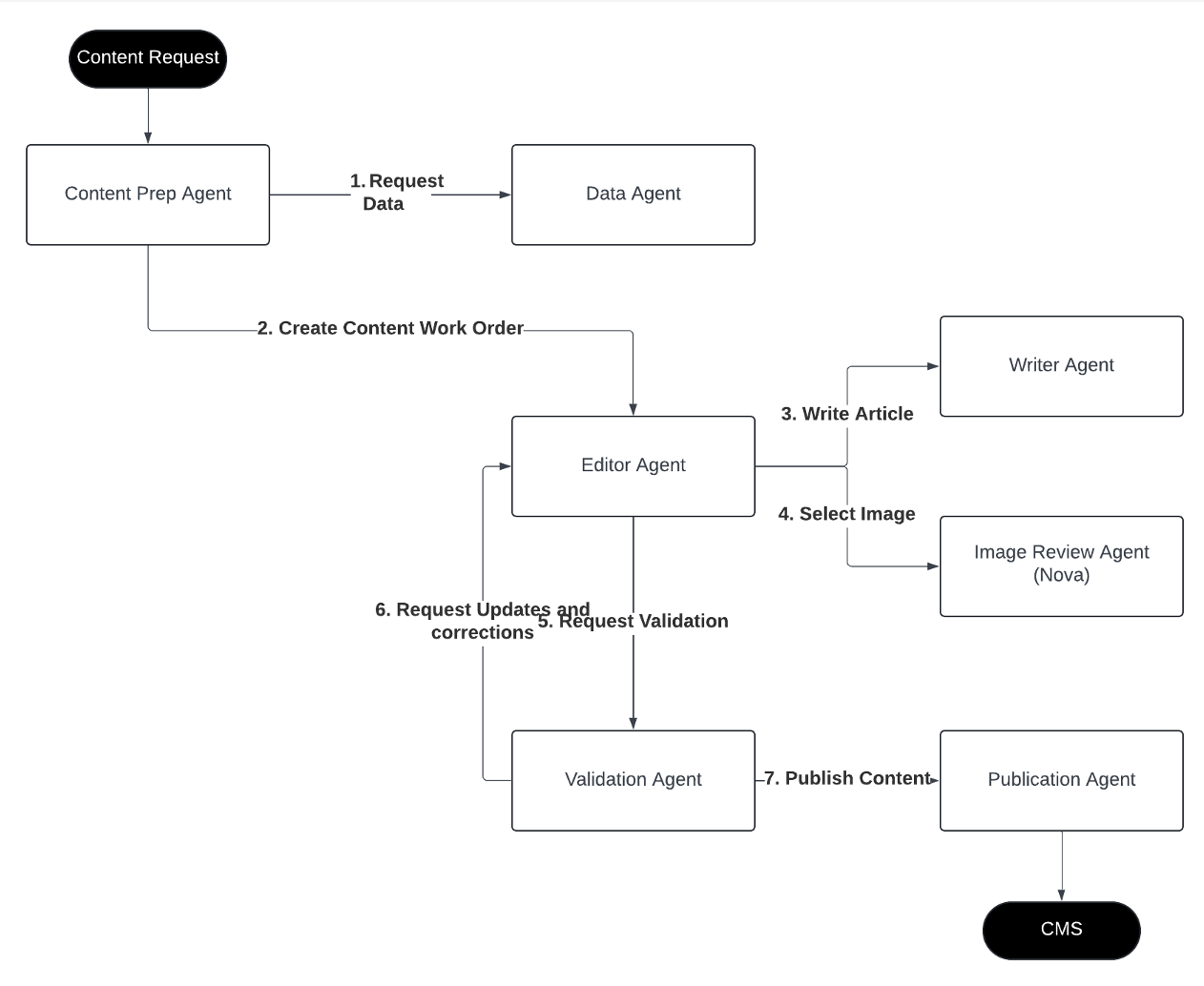
Figure 1: Content generation – agent orchestration
The heart of the content generation engine lies in its sophisticated multi-agent orchestration system with deterministic workflow guardrails, ensuring predictable and reliable content generation outcomes. The orchestration system intelligently manages agent specialization, assigning specific roles and responsibilities to different agents based on their optimal capabilities and cost-effectiveness. Research agents focus exclusively on data gathering and fact verification, while writer agents specialize in content creation across various formats and styles. Validation agents provide quality assurance and brand compliance checking, while editor agents refine content for specific publication channels and audience segments.
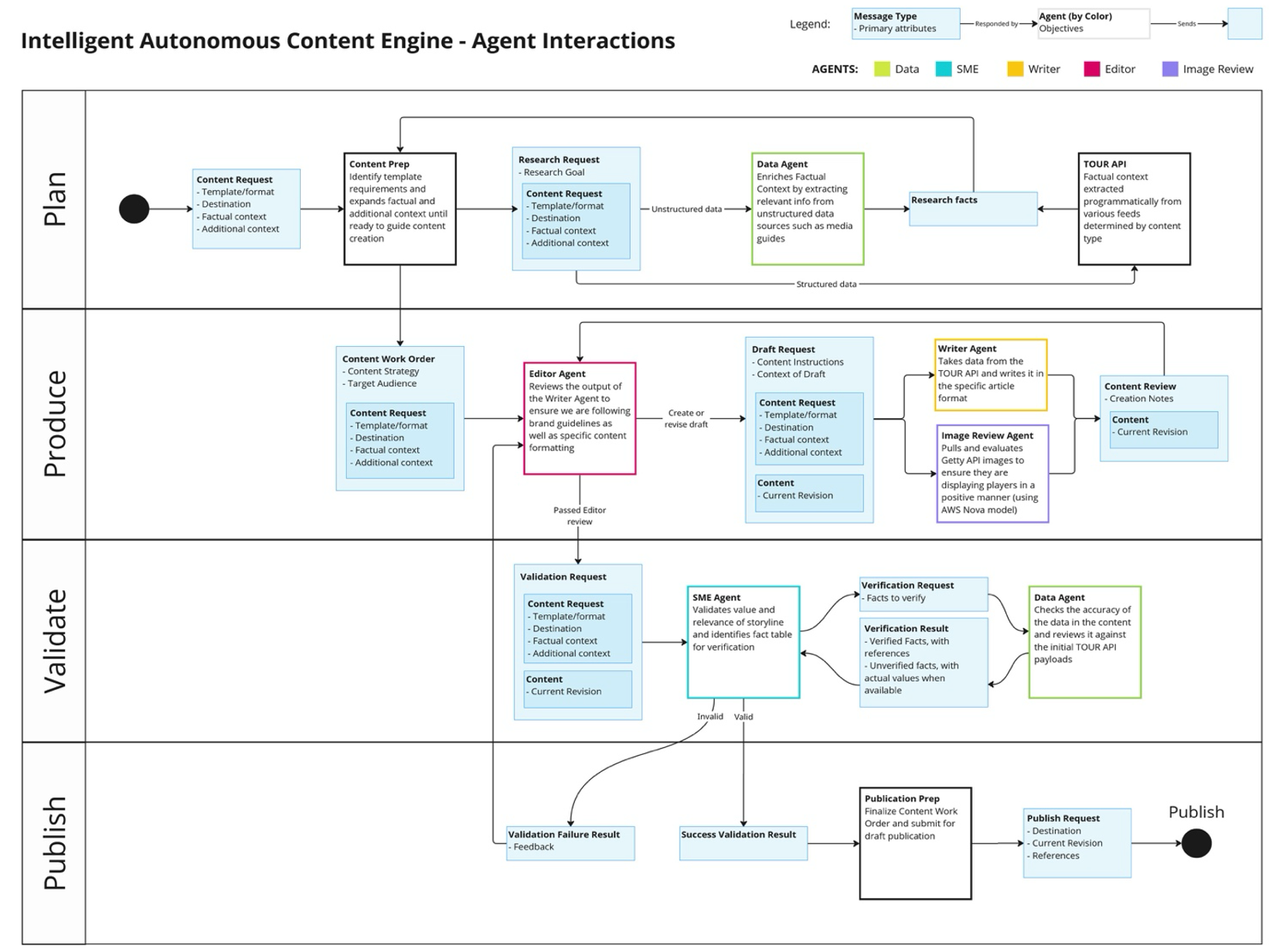
Figure 2: Content generation – agent interactions
PGA TOUR selects the best available model for each agent based on capability. Amazon Bedrock empowers their team with the flexibility to choose the right model for the job.
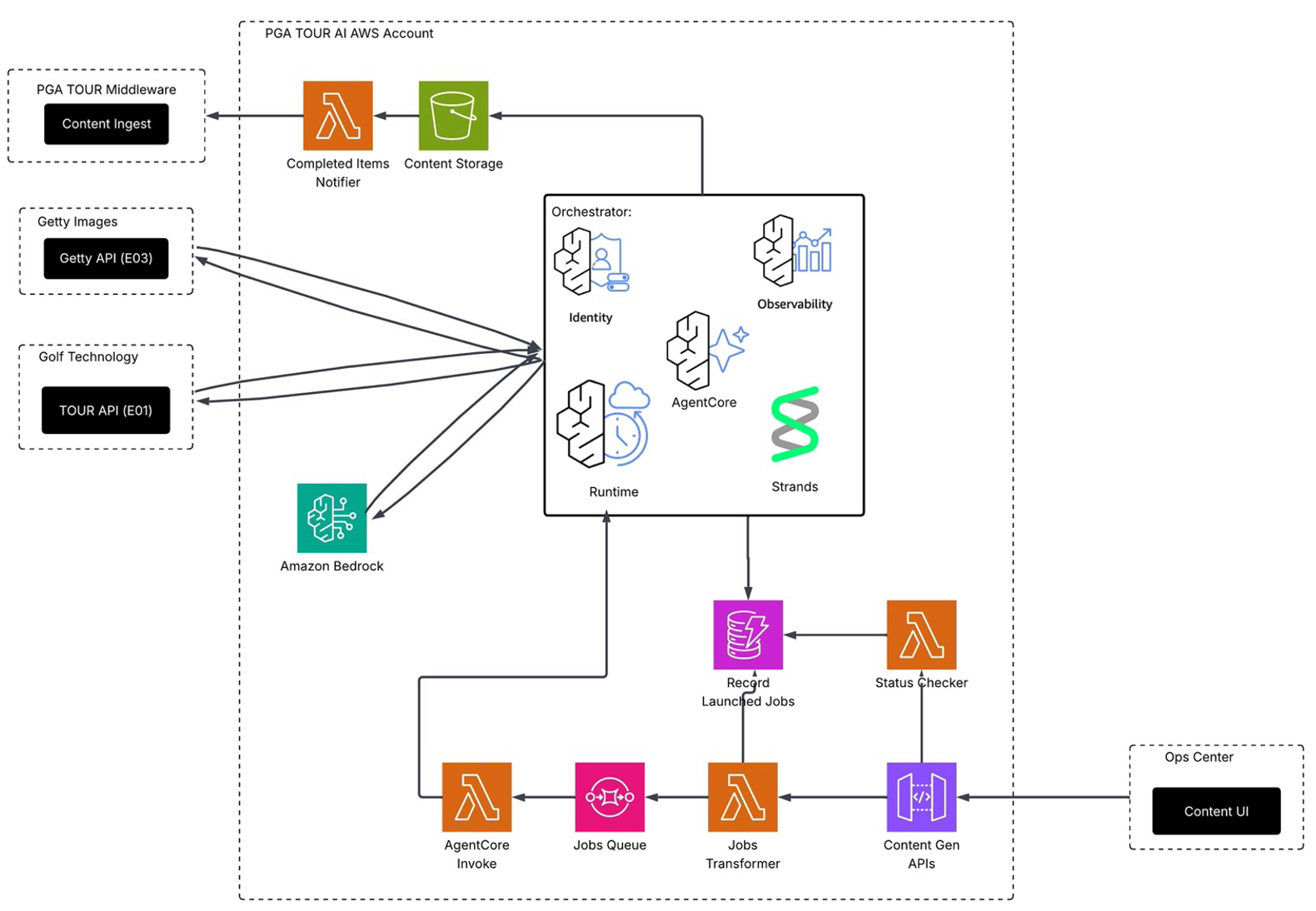 Figure 3: Content generation – technical architecture
Intelligent research agent capabilities
Research agents form the foundation of accurate and engaging content creation by providing comprehensive data gathering capabilities that rival and often exceed human researchers in both speed and thoroughness. These agents integrate directly with the PGA TOUR API through custom Python functions that retrieve data such as real-time player statistics, tournament information, leaderboard data, historical performance records, and detailed shot-by-shot tracking information.
The research agent architecture supports both dynamic and programmatic operation modes, providing flexibility to handle diverse content creation scenarios. In dynamic mode, agents respond intelligently to natural language prompts, automatically selecting and executing appropriate tools based on context and requirements. This capability enables a writer agent to request specific types of content using conversational language, with agents translating these requests into precise API calls and data retrieval operations.
Programmatic mode enables standardized content workflows where research agents follow predetermined sequences of data gathering operations optimized for specific content types. Tournament recap generation, for example, triggers a standard sequence of leaderboard retrieval, key moment identification, statistical analysis, and historical context gathering that ensures comprehensive coverage while maintaining consistency across all tournament summaries.
The extensible tools architecture allows seamless integration of additional data sources as they become available and as content requirements evolve. Media guides, external statistical databases, and weather information services can be incorporated into the research agent toolkit without requiring fundamental system changes. This flexibility ensures that the content generation system can continually adapt to new information sources and evolving content strategies.
Advanced content validation systems
Content validation represents one of the most critical aspects of automated content generation, ensuring that published material meets both factual accuracy standards and brand consistency requirements. The validation system employs a multi-layered approach that combines automated fact-checking with brand voice compliance and visual asset evaluation.
Data correctness validation operates through collaborative interaction between validation agents and research agents, creating a comprehensive fact-checking workflow that rivals traditional editorial processes. Validation agents analyze content drafts to extract specific factual claims, organizing these claims into structured fact tables that can be systematically verified against authoritative data sources. When discrepancies are identified, the system automatically generates correction recommendations and initiates content revision workflows with the writer agents to generate a revised draft.
The fact extraction process utilizes advanced natural language processing capabilities to identify not only explicit statistical claims but also implied assertions about player performance, tournament conditions, and historical comparisons. This comprehensive approach ensures that subtle factual errors that might escape casual review are identified and corrected before publication.
Brand voice validation ensures that all generated content maintains consistency with established organizational voice and style guidelines. Editor agents review content against detailed style guides, checking for appropriate tone, terminology usage, and adherence to communication standards. The system maintains databases of preferred terminology, prohibited language, and context-specific style requirements that inform validation decisions.
Multimedia agents extend validation capabilities to visual assets, evaluating player images, graphics, and other visual elements against brand guidelines for consistency, quality, and appropriateness. This capability ensures that automated content generation maintains visual brand standards across all publication channels and content types.
Scalability and cost optimization
Agent specialization contributes to cost optimization by ensuring that computational resources are allocated efficiently across different types of content generation tasks. Simple operations like basic fact checking and tool selection utilize cost-effective models, while complex creative tasks leverage more sophisticated and expensive foundation models only when necessary.
The modular architecture enables selective scaling of specific agent types based on workload characteristics. During periods of high research demand, additional research agents can be deployed without unnecessarily scaling writing or validation capabilities. This granular scaling approach optimizes both performance and cost efficiency across varying operational scenarios.
Use of generative AI for content generation tasks resulted in immediate cost reductions while providing greater control over content quality and publication timing.
Integration, security, and monitoring
The system’s tools leverage REST API’s for seamless connection. API design follows industry best practices for security, performance, and reliability, incorporating comprehensive authentication, authorization, and rate limiting mechanisms. Monitoring and logging capabilities provide detailed observability into system performance, usage patterns, and potential issues before they impact content generation workflows. Amazon CloudWatch integration enables real-time performance monitoring and automated alerting when system metrics exceed predefined thresholds.
Solution Impacts
The PGA TOUR realized the following benefits by implementing this solution:
- First to market: Content can be generated and published across various platforms (official websites, social media) within minutes of the event taking place, such as round and tournament recaps, shot commentaries, etc.
- Scale: The AI systems achieve a level of scale previously impossible, unlocking new content types such as event recaps for all 150+ players in a field and shot commentaries for every shot (amounting to 30K+) of a golf tournament.
- Efficiency: Multimedia agents evaluate visual assets much faster than humans to ensure adherence to brand standards.
- Flexibility and adaptability: The agents handle a diverse array of content including tournament and player previews, betting profiles, recaps of player and field performance by round and by tournament, and articles for short form/social media platforms.
- Expansion of usage: Golf content is parameterized so that separate sets of content can be generated based on the preferences assigned by various golf associations. This has allowed the PGA TOUR to collaborate with the United States Golf Association (USGA) to generate tailored content for them.
- Cost: Regular content needs such as player betting profiles for every golf tournament were previously generated weekly by third-party vendors. They are now generated in-house by the AI content generation system.

Figure 4: Articles generated by AWS generative AI
Future expansion and adaptability
Content format flexibility enables the system to adapt to new publication channels and content formats as they emerge. The same underlying content generation capabilities can produce short-form social media posts, long-form articles, multimedia presentations, and interactive content formats through appropriate agent configuration and output formatting.
Integration capabilities support connection with emerging data sources and third-party services as they become available or as organizational requirements evolve. The extensible tool architecture ensures that new capabilities can be incorporated without disrupting existing operations or requiring system downtime.
Implementation recommendations
The Automated Content System demonstrates the transformative potential of combining Amazon Bedrock’s foundation models with sophisticated multi-agent orchestration systems to address real-world content generation challenges at enterprise scale. The PGA TOUR implementation validates the approach’s effectiveness in delivering rapid, accurate, and brand-consistent content across multiple publication channels while achieving substantial cost reductions and operational efficiency improvements.
Organizations considering similar implementations should begin with pilot projects focused on specific content types or use cases to validate the approach within their unique operational contexts. Gradual expansion allows teams to develop expertise with the system while minimizing risks associated with large-scale changes to established workflows.
Success factors include comprehensive planning for data integration requirements, clear definition of brand guidelines and style standards that can be codified into validation rules, and establishment of performance metrics that align with organizational content strategy objectives. Organizations should also plan for change management processes that help content teams adapt to new workflows and capabilities enabled by automated content generation.
The modular architecture and extensible design principles ensure that initial implementations can evolve and expand to address growing requirements and new use cases as organizations gain experience and confidence with AI-driven content generation capabilities.