AWS for M&E Blog
How Xytech AI cut media production scheduling from hours to minutes with AWS
Media production scheduling has always been slow, manual, and unforgiving. Fabric set out to change that. Working with Amazon Web Services (AWS) and the AWS Prototyping team, we built Xytech AI, an AI-powered intelligent scheduling assistant that production teams can use to build optimized schedules by describing in natural language what they need. The result was an approximately 80% reduction in resource scheduling time, from 45 minutes down to 5–10 minutes, with fewer errors and more efficient resource allocation.
Launched at NAB Show 2026, Xytech AI is the first step in a much larger vision: making the full depth of the Xytech media operations platform accessible through natural language.
Why media production scheduling is so hard
Studios, broadcasters, and postproduction facilities coordinate crew, equipment, and assets across dozens of concurrent projects under tight deadlines and constrained budgets. Production coordinators spend hours hand-building schedules, juggling hundreds of variables at a time.
Manual scheduling forces an impossible balancing act between hard constraints, such as crew availability and equipment capacity, and soft constraints, such as continuity preferences and cost optimization. It rarely surfaces the most efficient allocation, and a single mistake can cascade into a chain of conflicts that disrupts multiple productions. When those problems surface after a schedule is finalized, the rework costs of idle crew, underutilized equipment, and missed production windows compound fast. For studios running hundreds of projects a year, efficient scheduling is a direct lever on profitability.
How Xytech AI works
Xytech AI gives production teams a natural-language interface into the Xytech Operations resource management platform. Instead of learning which screen or workflow performs a task, a coordinator describes the outcome they need, and the assistant handles the orchestration, optimization, and execution behind the scenes.
A coordinator can type a request as plainly as “schedule one director, two cameras, and two camera operators for 3 days, 9AM–5PM, starting August 12, 2026,” and receive an optimized, conflict-free schedule in minutes.
The tool offers several key capabilities:
- Natural-language interface – Request schedules in everyday language. No scheduling software expertise or constraint-programming knowledge required.
- Multi-objective optimization – The system balances competing goals simultaneously:
- Minimize costs by optimizing resource utilization
- Maintain crew continuity across shooting days
- Match crew skills to project requirements
- Respect equipment maintenance schedules
- Accommodate crew preferences when possible
- What-if scenario analysis – Ask “What if we delay the shoot by 2 days?” or “Can we use a different camera package to reduce costs?” and compare the trade-offs of each option.
- Real-time conflict identification – A live view of resource availability prevents double-booking. When a requested resource isn’t available, the system flags the conflict and suggests alternatives.
- Placeholder resources – Keep schedules moving by slotting in placeholders for hard-to-find assets, then swapping in the real resources later.
- Template-based scheduling – Capture recurring production patterns such as common resource combinations, typical durations, and preferred crew as reusable templates that still optimize for current availability.
Proven results
Resource scheduling that took 45 minutes now takes 5–10 minutes, an improvement of about 80%.
“Working with AWS gave us access to cutting-edge AI capabilities and the technical expertise to implement them effectively. This collaboration accelerated our product roadmap and opened new market opportunities.” — Rob Delf, CEO, Fabric
“The AWS Prototyping team’s expertise in generative AI and constraint programming let us move from concept to working prototype in weeks instead of months.” — Bracken Benavidez, VP of Engineering, Fabric
Beyond scheduling: XytechMCP and the operational AI layer
Scheduling is the proof point, and Fabric hasn’t stopped there. At the center of Fabric’s vision is XytechMCP, a Model Context Protocol (MCP) server that exposes Xytech’s operational data to AI.
Most enterprise AI integrations today rely on custom connectors, bespoke APIs, and purpose-built interfaces. MCP replaces that with a universal bridge between operational systems and AI clients. Through XytechMCP, AI systems can securely access and act on real-time operational data across the Xytech platform using natural language.
As MCP support expands across Xytech’s full module set—scheduling, media orders, service workflows, resource management, timecards, invoicing, and transmission operations—each of those workflows becomes directly accessible through conversational AI. Coordinators can query availability, create work orders, substitute resources, review timecard status, resolve conflicts, or analyze operational bottlenecks by asking in natural language, inside the tools they already use every day, whether that’s Slack, Claude, or any other MCP-compatible client.
Xytech’s operational depth stops being a barrier to adoption. Users no longer need to know which screen or module performs a task. Instead, they describe the outcome, and the AI orchestrates it. Humans stay focused on the creative, operational, and strategic decisions that require judgment and experience, while AI handles the repetitive coordination, data retrieval, optimization, and workflow execution behind the scenes.
Inside the architecture: A five-agent pipeline on AWS
Solving an optimization problem follows a natural progression: understand it, formulate it, translate it into code, solve it, and interpret the results. Fabric mirrored that human workflow by decomposing it into five specialized agents using Strands Agents, each owning one stage of the pipeline. A focused prompt and clear inputs and outputs per agent make the system far more reliable and independently testable than a single monolithic agent attempting end-to-end generation.
The assistant runs on a fully serverless multi-agent architecture built on Amazon Bedrock and Amazon Bedrock AgentCore, using Claude by Anthropic in Amazon Bedrock:
- Formulator agent – Translates the natural-language request into a structured problem definition (including decision variables, objective, and constraints), establishing a shared contract for the downstream agents.
- Coder agent – Generates a MiniZinc constraint-programming model from the structured definition, turning mathematical intent into executable code.
- Validator agent – Reviews the model for logical errors, missing constraints, and edge cases, then feeds corrections back to the Coder, creating a self-healing loop before the model ever runs.
- Solver agent – Executes the validated MiniZinc model against the OR-Tools CP-SAT optimization engine and produces a raw solution.
- Interpreter agent – Transforms raw output into human-readable schedules and Excel reports and powers what-if analysis so users can explore trade-offs.
XytechMCP is the data bridge at both ends. At the start, the Formulator queries it for resource types, crew qualifications, and work-order templates—the real-world inputs that ground the model in actual operational data. At the end, the Interpreter writes the validated schedule back through the same MCP layer, creating work orders directly in Xytech with no manual reentry.
How a request flows through the system:
- User query – You submit a natural-language request. For example, “Schedule one director, two cameras, and two camera operators for 3 days, 9AM–5PM, starting August 12, 2026. For the last day, only one camera operator is needed. Jack and Joe shouldn’t be scheduled together.” The request enters the graph orchestration layer at the Formulator.
- Resource lookup – The Formulator queries XytechMCP for resource and qualification codes, for example, DIR for directors, CAM and HDCAM for cameras, CAMOP for camera operators.
- Structured problem definition – The Formulator analyzes the request, collects your feedback, and produces a structured output.
- Availability query – The Coder uses those codes to query the databases for qualifying resources and their availability through XytechMCP.
- Constraint model generation – The Coder builds a MiniZinc model (.mzn) with decision variables, hard constraints, and an objective function for the soft constraints.
- Validation – The Validator checks for missing constraints (for example, Jack and Joe shouldn’t be scheduled together) and fixes any syntax errors the Solver surfaces.
- Optimization – The Solver runs the MiniZinc code using OR-Tools CP-SAT, producing a feasible solution, an infeasible result, or a detailed error that routes back to the Validator.
- Result interpretation – You receive a detailed feasible schedule, or the reasons for infeasibility plus options like placeholder resources or alternate dates.
- Artifact handling – The system optionally saves the schedule back through XytechMCP, uploads artifacts to Amazon Simple Storage Service (Amazon S3), and collects your feedback.
- Feedback loop – Based on your response, the workflow completes or returns to the Formulator with conversation history for what-if analysis.
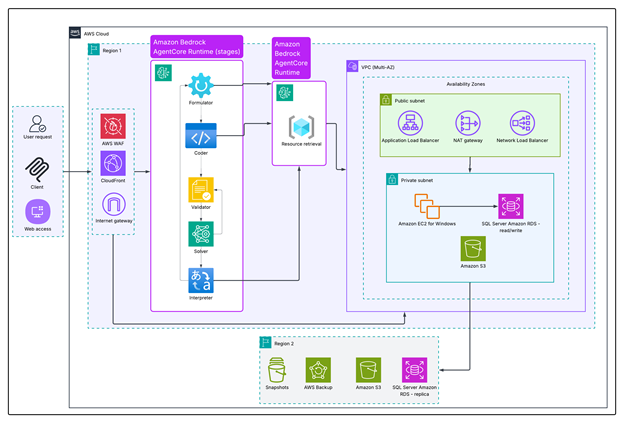
Figure 1: XytechMCP architecture diagram
The bottom line
Generative AI is reshaping how media operations teams solve complex problems. Xytech AI shows how natural-language interfaces and constraint programming work together to help production coordinators move faster and optimize more effectively. With Xytech AI, your team can:
- Reduce scheduling time from hours to minutes
- Identify and resolve conflicts before they cause delays
- Optimize resource utilization to reduce costs
- Explore what-if scenarios to make better decisions
- Maintain crew continuity and skill matching automatically
The partnership between Fabric and AWS shows how media and entertainment leaders can use generative AI to solve real operational problems, creating new value for their audiences.
Ready to cut your scheduling time by up to 80%?
Explore the Fabric Xytech intelligent scheduling assistant in AWS Marketplace or reach out to Fabric to get started. Meet with us at IBC 2026. Come see Xytech AI in action.
Building on AWS? If you have an innovative idea that would benefit from a bespoke prototype, reach out to your AWS account team and request a discussion with the AWS Prototyping team.
Further reading
- Xytech Media operations and scheduling platform – Learn more about the Xytech platform powering Xytech AI, and how Fabric helps broadcast, production, sports, and live-events teams plan smarter and execute faster.
- Xytech X2 MCP Server documentation – Technical documentation for the Model Context Protocol server that exposes Xytech’s operational data to AI clients, the data bridge at the center of Xytech AI.
- Fabric knowledge base – Full developer and product documentation, including REST API v3, webhooks, and MCP server guides.
About Fabric
Fabric is an AWS Partner and a leading provider of data management, operations, and scheduling solutions for the media and entertainment industry, focused on content metadata management, AI-driven enrichment, and supply chain automation.
Xytech is Fabric’s media operations and scheduling platform, purpose-built for broadcast, production, sports, and live events. It delivers real-time visibility across resources, workflows, orders, and transmission so teams can plan smarter, execute faster, and optimize media operations across complex environments.