AWS Compute Blog
Category: AWS Lambda

Quick Restoration through Replacing the Root Volumes of Amazon EC2 instances
This blog post is written by Katja-Maja Krödel, IoT Specialist Solutions Architect, and Benjamin Meyer, Senior Solutions Architect, Game Tech. Customers use Amazon Elastic Compute Cloud (Amazon EC2) instances to develop, deploy, and test applications. To use those instances most effectively, customers have expressed the need to set back their instance to a previous state […]
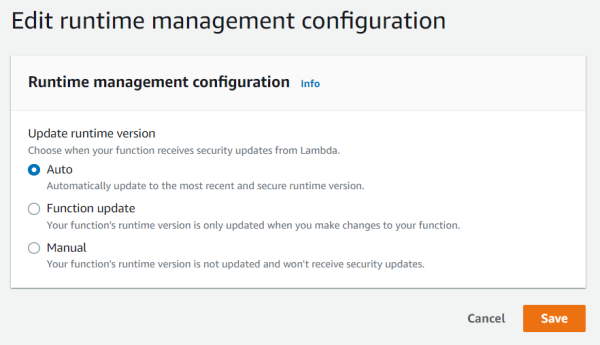
Introducing AWS Lambda runtime management controls
This blog post is written by Jonathan Tuliani, Principal Product Manager. Today, AWS Lambda is announcing runtime management controls which provide more visibility and control over when Lambda applies runtime updates to your functions. Lambda is also changing how it rolls out automatic runtime updates to your functions. Together, these changes provide more flexibility in […]

AWS Lambda: Resilience under-the-hood
This post is written by Adrian Hornsby (Principal System Dev Engineer) and Marcia Villalba (Principal Developer Advocate). AWS Lambda comprises over 80 services working together to provide the serverless compute service that it offers to customers. Under the hood, many of these services are built on top of Amazon Elastic Compute Cloud (Amazon EC2) instances, […]

Introducing maximum concurrency of AWS Lambda functions when using Amazon SQS as an event source
This blog post is written by Solutions Architects John Lee and Jeetendra Vaidya. AWS Lambda now provides a way to control the maximum number of concurrent functions invoked by Amazon SQS as an event source. You can use this feature to control the concurrency of Lambda functions processing messages in individual SQS queues. This post […]

Serverless ICYMI Q4 2022
Welcome to the 20th edition of the AWS Serverless ICYMI (in case you missed it) quarterly recap. Every quarter, we share all the most recent product launches, feature enhancements, blog posts, webinars, Twitch live streams, and other interesting things that you might have missed!In case you missed our last ICYMI, check out what happened last […]

Enabling load-balancing of non-HTTP(s) traffic on AWS Wavelength
This blog post is written by Jack Chen, Telco Solutions Architect, and Robert Belson, Developer Advocate. AWS Wavelength embeds AWS compute and storage services within 5G networks, providing mobile edge computing infrastructure for developing, deploying, and scaling ultra-low-latency applications. AWS recently introduced support for Application Load Balancer (ALB) in AWS Wavelength zones. Although ALB addresses […]

Visualizing the impact of AWS Lambda code updates
This post is written by Brigit Brown (Solutions Architect), and Helen Ashton (Observability Specialist Solutions Architect). When using AWS Lambda, changes made to code can impact performance, functionality, and cost. It can be challenging to gain insight into how these code changes impact performance. This blog post demonstrates how to capture, record, and visualize Lambda […]

Securing Lambda Function URLs using Amazon Cognito, Amazon CloudFront and AWS WAF
This post is written by Madhu Singh (Solutions Architect), and Krupanidhi Jay (Solutions Architect). Lambda function URLs is a dedicated HTTPs endpoint for a AWS Lambda function. You can configure a function URL to have two methods of authentication: IAM and NONE. IAM authentication means that you are restricting access to the function URL (and […]
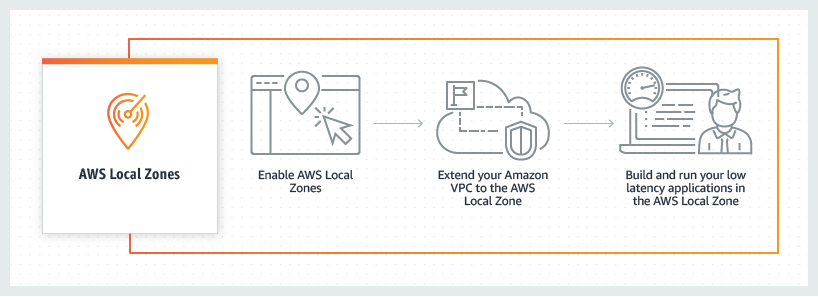
AWS Local Zones and AWS Outposts, choosing the right technology for your edge workload
This blog post is written by Joe Sacco, Senior Technical Account Manager. The AWS Global Cloud Infrastructure includes 30 Launched Regions, 96 Availability Zones (AZs), 410+ Points of Presence with 400+ Edge Locations, and 13 Regional Edge Caches. With over 200 AWS services, most customer workloads can run in the AWS Regions. However, for some […]

Reducing Java cold starts on AWS Lambda functions with SnapStart
At AWS re:Invent 2022, AWS announced SnapStart for AWS Lambda functions running on Java Corretto 11. This feature enables customers to achieve up to 10x faster function startup performance for Java functions, at no additional cost, and typically with minimal or no code changes.