Como estava esse conteúdo?
Idioma do conteúdo
No momento, nem todo o conteúdo está traduzido.
- Aprenda
- Reality Defender vs the deepfake era: building trust with AWS
Reality Defender vs the deepfake era: building trust with AWS
A politician posts a scandalizing video of the opposition on social media. A news site publishes photos of troops committing war crimes. A mother receives a call from her daughter requesting money in an emergency. An HR exec hosts a video interview with a candidate for a high-profile job opportunity. A decade ago, we’d watch these videos, see these images, hear these voices, and partake in these calls without questioning their veracity. Today, it’s a very different story.
Deepfakes have infiltrated popular media, the news environment, political spheres, and enterprise. We’ve come to recognize some of the early tell-tale signs: six-fingered people, facial inconsistencies, robotic tones. Yet as AI systems become more sophisticated and cheaper to use, the signs are becoming harder to spot and the line between reality and fraud increasingly blurred.
“We live in what we would probably frame as a post-reality world,” says Alex Lisle, CTO at Reality Defender. “All of a sudden something that you took for granted, that seeing and hearing was believing, suddenly wasn't. And that happened remarkably quickly.” Navigating this new world is problematic. On a human level, it necessitates a complete shift in mindset. Deepfakes may have evolved rapidly, but the way we interpret the world has not. “We still believe what we believe,” says Lisle. Furthermore, it requires not just new technologies, but companies that are able to constantly innovate and scale their solutions to keep pace with the development of AI-enabled deepfakes. Reality Defender is one such company.
Trust in the AI era
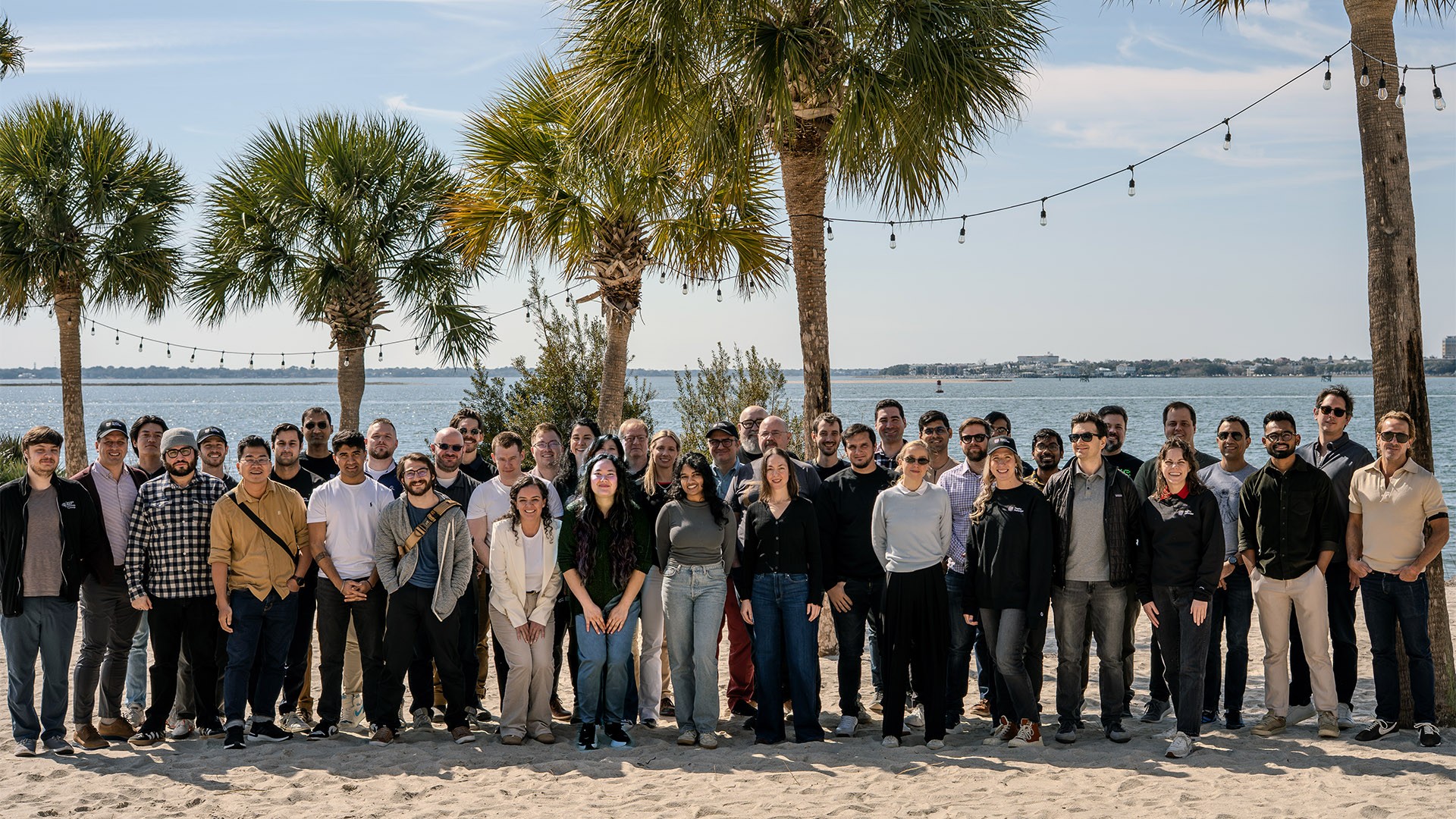
Based in New York, the 55-person startup is “leading the market in deepfake detection,” says Founder and CEO Ben Colman. Its solution can detect deepfakes across real-time video and voice, as well as in images, securing critical communications channels without requiring any biometric data from its customers. For Reality Defender, “it was only natural for us to begin with AWS in our early days,” says Colman. Using AWS solutions such as Amazon EC2, Amazon S3, Amazon EBS, Amazon Lambda, Amazon RDS, Reality Defender built a platform capable of supporting the security and scalability requirements of customers, which include financial institutions, cybersecurity firms, and government agencies and defense departments.
Progress in those early days was accelerated by Reality Defender’s participation in the AWS Generative AI Accelerator and AWS Activate programs and its utilization of AWS Credits. Since then, AWS support, infrastructure, and initiatives have helped the startup to innovate, scale, and win awards and customers. More recently, it’s taken part in a number of AWS-adjacent events and is looking ahead to a listing on AWS Marketplace to support its go-to-market strategy.
Ahead of the deepfake curve
Deepfakes are a more widely recognized threat today, but just a few years ago the field was underexplored and underexposed. “We started the company as a non-profit research project ahead of the 2020 election,” explains Colman. “We went to market with a tool, with the idea of it being able to detect deepfakes from the election. What we realized very quickly was that there were no deepfakes in the 2020 election, and we were quite a few years ahead of the market.”
The gap between Reality Defender’s vision and broader market awareness gave the company time to refine its product but also created pressure to build efficiently with limited resources. Accessing AWS Credits through AWS Activate were critical. “We were very ahead of the market, by three or four years,” says Colman. “But the collaboration, and because of the credits and the access to specific machines, we were able to do this early,”—building its solution and its team in time to meet the needs and challenges of the deepfake era it had foreseen.
As such, Reality Defender is now serving some of the leading names in their respective fields, including professional services firms like Accenture and Booz Allen Hamilton, tier one banks such as JP Morgan, as well as government agencies in the US and UK.
Detecting deception in real time
Despite the increased awareness of the impact of deepfakes in these sectors, there’s yet to be a real cultural shift. “In a short space of time, the technology enabling deepfakes has evolved significantly, but the mindset and fundamental beliefs of those consuming content has not,” says Lisle. “The idea of Reality Defender was a way of being able to say in near real time, given just the raw artifact itself, is this real or not? There's suddenly a fundamental need to be able to answer that question.”
To overcome this barrier, organizations need a solution that’s straightforward to deploy and ensures robust security. As awareness of the threat of deepfakes grows, and as instances of their deployment increase, this solution must also be scalable, allowing businesses to identify and prevent attacks before they cause harm.
Reality Defender developed its platform to address these requirements. “There's a whole bunch of tools that historically have done a lot of things across voice authentication, contact centers, identity verification, video conferencing, and beyond. But none of them solve deepfakes,” says Colman. These tools may be able to identify someone’s credentials, such as their device, geolocation, or social security number, but they can’t prove that the person using these credentials are who they say they say are. “You need a tool that can actually scan that person’s voice or face in real time and then feed that signal into all the tools you already use.” Reality Defender’s platform does just this, and being API-first, “provides a signal into all the fraud tools, real-time call center platforms or video conferencing solutions that everyone already uses.”
AWS infrastructure simplifies deployment for enterprise already operating AWS environments, meaning organizations can incorporate Reality Defender’s detection capabilities into existing workflows. Many of Reality Defender’s customers are “large consumers of AWS compute,” says Colman, and are able to consume its signal through Amazon Connect, a solution which is already part of their tech stack. “We're scanning all voice traffic coming inside and out of their call centers, which would be impossible to do without our long-standing relationship with AWS,” he says. This relationship has enabled the startup to “scale infinitely and scan concurrent real-time phone calls, real-time video conferencing with integrations on Zoom and Teams, brand safety tools, social media monitoring, endpoint scanning, and beyond.”
Infinite scalability & security wins
Given that Reality Defender is engaging in very delicate real-time communications for clients in highly regulated sectors, “we keep having to prove to them that not only we, but also our upstream or downstream partners like AWS, are supporting them at the highest level of security,” says Colman. A quick glance at the company’s awards cabinet would indicate that they’ve already won this approval. Among its accolades are an induction into the JP Morgan Hall of Innovation, a place in the World Economic Forum’s Technology Pioneers 2025, and the RSAC Innovation Sandbox: “the Oscars for cybersecurity,” says Colman.
Again, the close partnership with AWS has been critical. “What we presented at RSAC, which led to us winning in 2024, was specifically based on our collaboration with AWS,” says Colman. Reality Defender is also more easily able to meet the foundational security requirements for its customers. At a big picture level this means enabling customers to detect fraud and malicious activity in a secure AWS environment “at massive scale.” At the smaller, but no less critical level, it’s eased security processes for Reality Defender, such as creating vendor risk assessment reports, “which we could not do without AWS's partnership.”
Scalability became increasingly important as Reality Defender expanded into real-time enterprise communications environments handling large volumes of concurrent voice and video interactions. The company relies on AWS infrastructure because, “it's effectively infinitely scalable,” says Colman. “We've never had a problem with a client reaching capacity because we auto-scale with AWS to the point where we've already been able to detect the first kind of voice-based DDoS attack on a Fortune 10 client.” Using AWS solutions to, among many other things, train its foundation models, deploy its SaaS platform, and use managed databases, “helps us scale to the levels that we need to be at,” adds Lisle.
Accelerating growth through collaboration
The relationship stretches beyond on-screen communications. The team at Reality Defender have benefitted from “phenomenal” on-site meetings at AWS HQ in Seattle, says Colman, during which they received the kind of support which is crucial for many early-stage tech startups. “It's always a challenge when you have a deep tech solution and you want to fill up a slide with stats. That doesn't tell a story,” he explains. “AWS helped us really tell the story in a way that is consumable.”
Since then, Reality Defender has been sharing its story more widely, delivering presentations to stakeholders, meeting with investors, and building brand recognition at major industry events. These opportunities “could not have happened without AWS,” says Colman. “The collaboration has been key, not only for NVIDIA GTC, but also at tier 1 conferences like RSAC, Money 2020, Black Hat, and Defcon, where we've benefited from AWS support, whether it's booths, compute, or joint demos, to overlapping clients.”
Navigating the post-reality era
Reality Defender was founded on a clear vision of where deepfakes in enterprise was headed and the threats this would entail. Before the inflection point of ChatGPT and before deepfakes and gen AI became buzzwords, the startup needed a partner that shared its vision and could help it realize success. “The fact that AWS and Amazon were thinking about AI back then really helped us dramatically accelerate both our R&D, but also our go-to-market,” says Colman. The team at AWS “always helped with our bizarre requests,” adds Lisle. “As you can imagine, we do stuff that's cutting edge. There's always been a rep who's been happy to talk to us and guide us through doing some of the more esoteric aspects of what we do.”
Now the esoteric has been demystified and the bizarre has become the norm, Reality Defender is looking ahead to reach new customers and markets, such as non-profit and democracy-first groups. “AWS has always been a partner there to help us or move whatever mountains are needed to make sure that we get our continued success,” says Lisle.
In a world where seeing and hearing can no longer be taken at face value, Reality Defender remains committed to restoring trust in digital communications. From protecting consumers against fraud to helping preserve journalistic integrity and supporting government and enterprise security, the company’s mission is rooted in a simple but increasingly urgent question: what’s real? With AWS providing the infrastructure, scalability, and support to help answer that question in real time, Reality Defender will continue to refine its platform and strategy and redefine trust for the AI era.
Como estava esse conteúdo?