AWS Architecture Blog
Unlocking the future of video data: March Networks cloud storage on AWS
Enterprise video surveillance is operating at an unprecedented scale as organizations across retail, banking, quick-service restaurants (QSR), convenience stores, and transportation networks generate petabytes of video data across thousands of distributed locations. As retention requirements grow and organizations seek to extract more operational insights from video, traditional on-premise storage models are becoming increasingly difficult and expensive to scale.
March Networks is a global provider of intelligent video surveillance and business intelligence solutions serving enterprises across banking, retail, quick-service restaurants, transportation, and other multi-site environments. With more than 25 years of experience in video technology, the company helps organizations transform video data into operational insights through cloud-based platforms, AI-powered analytics, and enterprise-scale video management.
Unlocking the power of video data
In this post, we show how March Networks built a scalable cloud architecture on Amazon Web Services (AWS) to support large-scale enterprise video storage and analytics. The solution uses Amazon Simple Storage Service (Amazon S3) and Amazon S3 Glacier to manage long-term video retention, while integrating with additional AWS services to support ingestion, lifecycle management, monitoring, and secure access. We also explore how this architecture enables advanced video analytics using technologies such as Amazon S3 Vectors and Amazon Bedrock, helping organizations store petabyte-scale video data more cost-effectively while accelerating investigations and operational insights.
The challenge: Managing enterprise video at scale
Historically, enterprise video has been stored on local network video recorders (NVRs) and on-premise servers deployed at each site. Although this model provides localized control, it creates fragmented storage environments that require frequent hardware expansion, ongoing maintenance, and inconsistent retention policies across locations. This also limits organizations’ ability to centrally access, analyze, and govern video data across their enterprise.
As organizations increase video retention periods for compliance, liability protection, and operational intelligence, infrastructure requirements grow rapidly. Adding local storage hardware across hundreds or thousands of sites increases operational complexity and introduces lifecycle management challenges.
The economic impact of cloud video storage
Cloud storage introduces a more flexible model by consolidating distributed video data into centralized, elastic storage infrastructure. Even partial migration (such as moving long-term retention or compliance archives to the cloud), can significantly reduce infrastructure overhead while enabling centralized data management and analytics.
The financial impact of this shift can be substantial. For example, one retail organization evaluated the benefit of moving to a hybrid cloud storage model to extend video retention for a period of up to 5 years — a common retention window driven by compliance standards and laws — without adding new on-premise hardware. This customer operated more than 580 cameras, generating approximately 5,600 TB of archived video. The total storage required depends on factors such as video bitrate and quality, camera count, and backup duration. Their estimated cloud storage cost using a third-party cloud provider was approximately $347,000 per year, compared to roughly $1.7 million annually to store the same volume of video on-premise. For long-term cloud storage, data is not expired or deleted; customers are notified as their storage quota approaches capacity and can purchase additional storage as needed. By retaining recent footage locally while archiving older video to a third-party cloud provider, the organization significantly reduced storage costs while maintaining access to archived footage when needed.
Solution overview: March Networks cloud storage on AWS
March Networks Cloud Storage is a cloud-based video storage solution built on AWS. It is designed for distributed enterprise environments such as retail chains, financial institutions, convenience stores, and transportation systems that operate thousands of cameras across geographically dispersed locations.
The solution leverages Amazon S3 and Amazon S3 Glacier to provide scalable and durable storage for large volumes of video data while integrating AWS services that support secure ingestion, lifecycle management, monitoring, and access control. By combining AWS cloud infrastructure with March Networks’ video surveillance expertise, organizations can modernize video retention strategies while maintaining operational flexibility.
The platform supports multiple deployment models that allow organizations to adopt cloud storage at their own pace. Hybrid architectures allow recent footage to remain on-site for immediate access while older video is archived to the cloud. In other deployments, organizations can move a majority of video storage into AWS to reduce on-premise infrastructure and simplify long-term retention management.
Because the platform is built on AWS, storage capacity scales automatically as organizations add cameras, extend retention periods, or onboard new sites. This allows customers to grow video storage environments without hardware planning, or infrastructure expansion.
Architecture deep dive
The Cloud Storage architecture integrates on-premise video infrastructure with AWS services that manage ingestion, storage, monitoring, and secure access to video data.
At a high level, the architecture connects local video systems, including NVRs, cameras, and client applications, to AWS cloud services through secure network connections. March Networks securely ingests video data into AWS storage infrastructure, where customers can retain, monitor, and retrieve it based on their defined policies.
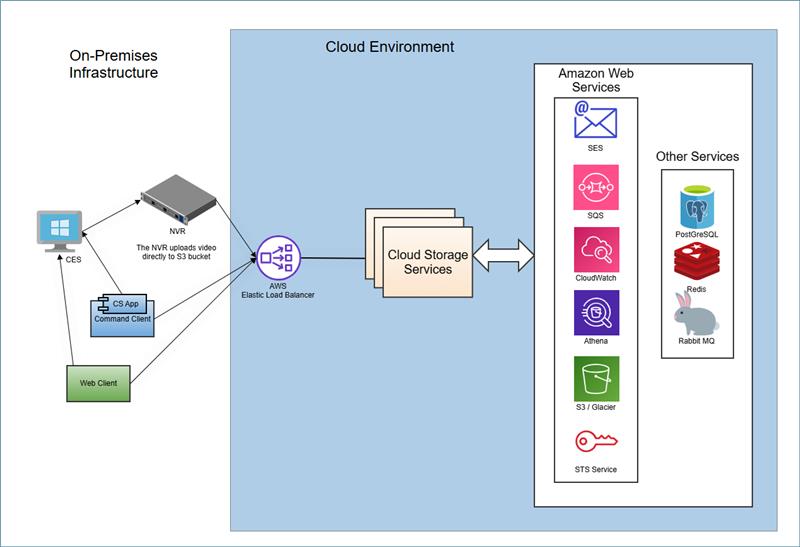
Figure 1: March Networks Architecture on AWS.
Video ingestion and storage
March Networks securely uploads video recorded on local NVRs to Amazon S3 buckets using encrypted transmission protocols. Amazon S3 provides highly durable object storage designed to store large volumes of data while enabling efficient retrieval and lifecycle management.
Once stored, organizations can retain video data for active investigations or operational review. Organizations configure lifecycle management policies that automatically move older footage to lower-cost storage tiers based on their access patterns.
Tiered storage with Amazon S3 and Amazon S3 Glacier
Video storage requirements vary depending on how frequently footage must be accessed. The platform uses multiple Amazon S3 tiers to align performance and cost with real-world video access patterns.
Amazon S3 Standard and Amazon S3 Standard-Infrequent Access (S3 Standard-IA) support video that must remain readily accessible for investigations, operational review, or analytics. For long-term retention, the platform uses Amazon S3 Glacier storage tiers to provide ultra-low-cost archival storage for footage that must be preserved but is rarely accessed.
Lifecycle policies automatically transition videos between tiers according to customer-defined retention policies. This allows organizations to store high-value recent video on high-performance storage while archiving older footage economically.
Supporting AWS services
Several AWS services support the reliability, scalability, and operational visibility of the platform:
- Amazon Simple Queue Service (Amazon SQS) manages asynchronous messaging between system components, enabling reliable communication between ingestion, processing, and storage services.
- Amazon Simple Email Service (Amazon SES) provides notification capabilities for operational alerts and system events.
- Amazon CloudWatch monitors system performance, logs activity, and provides operational visibility into cloud infrastructure.
- AWS Security Token Service (AWS STS) enables secure authentication and temporary credentials for system components accessing cloud resources.
For metadata management and caching, the platform uses PostgreSQL and Amazon ElastiCache for Redis to maintain high-performance access to video metadata and system state.
Together, these services enable March Networks to deliver a secure, scalable cloud architecture capable of supporting petabyte-scale video workloads across distributed environments.
Outcomes and benefits
By building its video storage architecture on AWS, March Networks enables organizations to modernize video infrastructure while reducing operational complexity and long-term storage costs. This includes:
Reduced storage costs
Tiered storage using Amazon S3 and Amazon S3 Glacier allows organizations to align storage costs with actual video access patterns. Frequently accessed footage remains readily available, while older video can be archived at significantly lower cost.
Elastic scalability
AWS infrastructure enables organizations to scale video storage across hundreds or thousands of locations without adding on-premise hardware. As organizations add cameras or extend retention periods, storage capacity expands automatically.
Centralized investigations and governance
Cloud-based video storage enables security and operations teams to investigate incidents across multiple sites using a centralized platform. Organizations can apply consistent retention policies, maintain audit trails, and enforce standardized governance across all locations.
AI-driven analytics and search
Centralized video storage also enables advanced analytics capabilities. March Networks integrates AI-powered tools such as AI Smart Search, which allows users to locate relevant footage using natural-language queries across large video archives.
These capabilities leverage technologies, including Amazon S3 Vectors and Amazon Bedrock to support semantic search and AI-driven video intelligence across enterprise-scale datasets.
Conclusion
As organizations generate increasing volumes of video data, scalable cloud infrastructure becomes essential for managing long-term storage and enabling advanced analytics. By building its Cloud Storage platform on AWS, March Networks provides organizations with a durable, secure, and cost-efficient foundation for enterprise video retention.
Services such as Amazon S3, Amazon S3 Glacier, Amazon SQS, Amazon CloudWatch, and AWS Security Token Service support a scalable architecture capable of storing and managing petabytes of video data across distributed environments. This cloud-native approach allows organizations to modernize video infrastructure today while preparing for future AI-driven analytics and operational intelligence.
Learn more about how March Networks Cloud Storage powered by AWS services can modernize your video infrastructure.