AWS Database Blog
Oracle Database@AWS decoded: Determining the right fit for your Oracle workloads
AWS has offered a rich set of options for running Oracle workloads for over 15 years, from the managed simplicity of Amazon RDS for Oracle to the full flexibility of Amazon Elastic Compute Cloud (Amazon EC2) with multiple storage options such as Amazon EBS io2 Block Express, gp3, and Amazon FSx for NetApp ONTAP. These services continue to serve organizations well across a wide range of Oracle deployments, including Oracle Database-powered applications (Oracle E-Business Suite, PeopleSoft, Siebel, JD Edwards), custom applications built on Oracle Database, middleware platforms (Oracle WebLogic, Oracle Fusion Middleware), and ISV applications that rely on Oracle Database as their data tier.
Oracle Database@AWS (ODB@AWS), generally available since July 2025, adds a new option to this portfolio, bringing Exadata Database Service (ExaDB) and Autonomous Database (ADB) physically hosted in AWS Availability Zones.
In this post, we explore the key reasons why Oracle Database@AWS is a strong fit for organizations running Oracle workloads on AWS. We cover the business, technical, and licensing advantages it brings, and how it complements the existing AWS options you already know, such as Amazon RDS for Oracle and Amazon EC2.
Five questions to help you decide if ODB@AWS is the right fit for your workload
Before diving into the reasons, consider these five questions. If the answer is yes to any of them, ODB@AWS is worth exploring:
- Performance and future readiness – Do your current workloads use or potentially benefit from Oracle Exadata platform features or capabilities?
- Business continuity and risk – Oracle Real Application Clusters (Oracle RAC) lets multiple servers run Oracle Database software while accessing a single database, providing fault tolerance and horizontal scalability. Do your applications require Oracle RAC for fault tolerance and zero downtime through rolling patching to maintain essential business operations?
- Capacity and cost efficiency – Does your Oracle database need to scale capacity for seasonal demands without a disproportionate cost escalation?
- Flexibility around Oracle database licensing – Are you looking for a pay-as-you-go licensing model for Enterprise Edition databases that scales with workload demand, rather than traditional upfront license costs?
Note: ODB@AWS offers License Included (LI), Bring Your Own License (BYOL), or a mix of both across workloads. BYOL customers benefit from double the core entitlement per license. ODB@AWS uses OCPU-based licensing (0.5 core factor), so each Processor license covers 2 OCPUs (4 vCPUs), halving the license requirement compared to standard vCPU-based cloud deployments. With License Included, all Enterprise Edition feature packs, including Oracle RAC, Advanced Data Guard, Multitenant, and Diagnostics & Tuning Packs, are bundled into the hourly OCPU price at no additional cost.
- Explicit certification for Oracle applications hosted on Oracle databases on AWS – Does your line of business require an explicit certification from Oracle for the Commercial-off-the-shelf (COTS) application, including the underlying infrastructure on which it is hosted? Oracle Database@AWS provides certified reference architectures for key Oracle enterprise applications, including Oracle E-Business Suite (Oracle EBS), PeopleSoft, Siebel, JD Edwards EnterpriseOne, Oracle Enterprise Performance Management, Oracle Retail Applications, and Oracle middleware platforms such as WebLogic and Fusion Middleware. For example, Oracle EBS 12.2 is certified with Oracle Database 26ai on Exadata, with application tiers running on Amazon EC2 and the database tier on Exadata using ODB@AWS. This certification confirms full Oracle support for these deployment patterns, giving you confidence that your COTS applications and their underlying infrastructure meet Oracle’s supportability requirements. For further details, refer to the Oracle AI Database@AWS FAQ
These questions provide a practical starting point for evaluating where ODB@AWS fits within your Oracle strategy. Now, let’s look at the reasons in detail.
Business benefits
The following are five business advantages that make Oracle Database@AWS a compelling choice for organizations running Oracle workloads on AWS.
#1 – Run Oracle workloads alongside over 200 AWS services
AWS offers comprehensive breadth and depth for enterprise Oracle workloads, with over 200 natively integrated services spanning compute, storage, networking, analytics, artificial intelligence and machine learning (AI/ML), and security. Although Oracle Database@AWS is technically a third-party managed service, its native integration with AWS, through the AWS Management Console, AWS Command Line Interface (AWS CLI), AWS CloudFormation, and services like Amazon Redshift (using zero-ETL), Amazon Bedrock, and Amazon SageMaker AI, is so deep that it operates almost indistinguishably from a first-party AWS service. With an ever-expanding global infrastructure footprint and proven compliance frameworks, AWS delivers the reliability and data residency options that mission-critical Oracle applications demand. Continuous AWS innovation from zero-ETL analytics to generative AI, helps your Oracle investments remain competitive and future-ready.
#2 – Oracle Database 26ai with AI Vector Search
ODB@AWS supports Oracle Database 26ai, which includes AI Vector Search natively in the database engine. Organizations building AI-powered applications can store and query vector embeddings alongside relational data without a separate vector database. Exadata AI Smart Scan accelerates these vector operations by offloading vector processing to storage servers, delivering fast performance for AI workloads. For more information, see Accelerate generative AI use cases with Amazon Bedrock and Oracle Database@AWS.
- Retrieval augmented generation (RAG) – Store document embeddings in the same database as transactional data, grounding AI responses in enterprise data.
- Semantic search – Go beyond keyword matching to find records based on meaning and context.
- Recommendation engines – Build similarity-based recommendations using vector distance calculations.
- Anomaly detection – Identify unusual patterns in transactional data using vector representations.
Flexible AI architecture with choice of large language models (LLMs)
Oracle Database 26ai’s native vector capabilities integrate with the comprehensive AI/ML services of AWS, giving you flexibility in choosing the right large language model (LLM) for your use case. You can connect Oracle AI Vector Search to LLMs hosted on Amazon Bedrock, Amazon SageMaker AI, or Amazon Quick, enabling use cases such as semantic search and retrieval-augmented generation (RAG):
- Amazon Bedrock – Access a variety of foundation models to build generative AI applications.
- Amazon SageMaker AI – Deploy and fine-tune your own custom models, including open source LLMs, with full control over training data and model behavior.
- Amazon Quick – Connect to enterprise data sources, including Oracle databases, and allow your teams to query and act on organizational data using natural language.
Enterprise AI foundation
This architecture creates a foundation for enterprise AI where:
- Oracle data stays on Exadata – Your mission-critical transactional data remains on proven, high-performance infrastructure with AI Smart Scan processing vector data at memory speed.
- AI applications run on AWS – Use the elastic compute, managed AI services, and global infrastructure of AWS.
- Vector embeddings live alongside transactional data – Remove data movement and maintain consistency between operational and AI workloads.
- You control the AI stack – Choose the LLMs, frameworks, and tools that fit your requirements without vendor lock-in.
Whether you’re building customer service chatbots grounded in ERP data, fraud detection systems analyzing transaction patterns, or intelligent document processing pipelines, Oracle Database 26ai on ODB@AWS provides the data foundation. AWS gives you the flexibility to choose and deploy the AI technologies that best serve your business objectives.
#3 – Financial flexibility through licensing options
ODB@AWS is purchased through AWS Marketplace with a single invoice, which streamlines both financial planning and vendor management:
- Counts toward AWS committed spend – ODB@AWS purchases can apply to your existing AWS commercial agreements, meaning your Oracle database spend may contribute toward your AWS commitments.
- Bring Your Own License (BYOL) – Use your existing Oracle Database licenses (Enterprise Edition or Standard Edition 2) when deploying Exadata Database Service or Autonomous Database on ODB@AWS. With this flexibility, you can deploy License Included (LI) for new projects or new environments while using BYOL for existing workloads, avoiding sequential project constraints because of licensing limitations.
- License Included – Include Oracle licensing in the service price to remove the need to maintain separate Oracle support contracts. If your strategy includes simplifying Oracle support costs, this option provides a clean path to do so.
- Oracle Support Rewards – Oracle Database@AWS is eligible for Oracle’s Support Rewards program, which accrues $0.25 in credits for every $1 spent on the service (or $0.33 per $1 for Unlimited License Agreement customers). These credits can be applied to offset your annual Oracle technology support bill, covering products such as Oracle Database, Oracle Applications, WebLogic and more. Further, ODB@AWS accrues the same Support Rewards in parity with OCI, meaning you can benefit from the same reward schedule as you would have realized running on OCI
- Pay-as-you-go scaling – Enterprise Edition database capacity that scales with workload demand, replacing traditional upfront license procurement.
- Single invoice – No separate Oracle infrastructure billing to reconcile.
Autonomous Database licensing flexibility:
Oracle Autonomous Database on ODB@AWS includes comprehensive capabilities (RAC, Exadata features, automation) in a single offering. Customers with existing Standard Edition 2 (SE2) licenses can use them through the BYOL program when deploying Autonomous Database, or they can adopt the License Included model for subscription-based licensing that eliminates separate license management and Oracle support contract administration.
Pricing aligns with Oracle Exadata Database Service on OCI. For organisations with existing Oracle license investments, BYOL enables you to leverage those entitlements on ODB@AWS. For those seeking operational simplicity, the License Included model offers a streamlined procurement path with no existing entitlements required.
#4 – Unblocks cloud migrations and stranded assets
ODB@AWS also directly addresses one of the most pressing infrastructure challenges facing Oracle customers today: stranded assets amplified by recent virtualization licensing changes and escalating virtualization costs. Many organizations have significant Oracle workloads within or adjacent to on-premises virtualization environments, facing dramatic cost increases that make continued operation financially unsustainable.
By providing a native, cloud-hosted path for Oracle Exadata workloads, ODB@AWS enables these organizations to move away from constrained infrastructure, migrating workloads to AWS without re-architecture while unlocking the value of their existing Oracle investments. This creates a clear, cost-effective migration path for previously stranded Oracle assets, turning a liability into cloud-enabled.
#5 – Expanding to 20+ AWS Regions globally
ODB@AWS continues to expand globally, with availability in over 12 AWS Regions. This global footprint means you can run ODB@AWS close to your users and applications, meeting data residency requirements and minimizing latency. For multinational organizations running Oracle E-Business Suite or other Oracle applications across multiple Regions, this expansion enables a consistent architecture worldwide.
You can check Region availability using the following Oracle Region Availability Link.
Technical benefits
The following eight technical capabilities highlight how Oracle Database@AWS delivers high-performance database operations within the AWS environment.
#6 – Exadata and Oracle RAC capabilities, natively within AWS
Some Oracle workloads depend on capabilities that are specific to the Exadata platform: Oracle RAC for multi-node resilience, Exadata smart scans for storage-level query offloading, Exadata AI Smart Scan for vector processing, hybrid columnar compression, and storage indexes. These are architectural requirements, not preferences, for many mission-critical applications.
ODB@AWS delivers these capabilities on purpose-built Exadata hardware, managed by Oracle, running physically inside an AWS Availability Zone:
- Oracle RAC – Provides horizontal scalability, maximum uptime/zero downtime, and fault tolerance across multiple database nodes.
- Exadata smart scans – Offload query processing to storage servers, potentially reducing the compute needed on the database layer.
- Exadata AI Smart Scan – Offloads vector operations to storage servers for AI Vector Search workloads, processing vector data at memory speed and delivering improved performance for AI applications.
- Hybrid columnar compression – Optimizes storage of analytical and archival data.
- Storage indexes – Eliminate unnecessary I/O at the storage layer.
- Exadata X11M infrastructure – The current model as part of the offering, with up to 32 database servers and 64 storage servers.
#7 – Oracle Autonomous Database
ODB@AWS includes Oracle Autonomous Database on Dedicated Exadata Infrastructure, a fully self-managing database that uses machine learning to automate patching, tuning, scaling, and security.
Autonomous Database handles traditionally complex operational tasks without human intervention:
- Auto-indexing that continuously monitors workloads and creates, drops, or rebuilds indexes.
- Auto Scaling that adjusts CPU and storage resources based on demand.
- Auto-patching with zero-downtime rolling updates.
- Auto-tuning that optimizes SQL execution plans in real time.
With Autonomous Database, database administrators (DBAs) can focus on strategic initiatives that drive business value, automating routine maintenance so teams can accelerate innovation and business objectives. It also supports pay-as-you-go models that scale with actual workload demand rather than requiring upfront capacity planning.
VM Cluster configuration: ODB@AWS supports flexible deployment to choose between ExaDB-D and ADB-D with granular resource configuration to right-size to your workload:
- Exadata VM Cluster (for Oracle Exadata Database Service): Configurable CPU cores, memory, and local storage per VM. Supports Oracle RAC and Oracle Grid Infrastructure. Enables right-sizing of compute to workload requirements rather than over-provisioning for peak capacity.
- Autonomous VM Cluster (for Oracle Autonomous Database on Dedicated Exadata Infrastructure): Configurable ECPU core count per VM, database memory per CPU, database storage, and maximum number of Autonomous Container Databases. Automates provisioning, securing, updating, backing up, and tuning using machine learning (ML) and AI, with no human intervention required for routine database management tasks.
#8 – Fast, lift-and-shift migration to cloud
ODB@AWS supports migration using the full Oracle-native toolchain, enabling lift-and-shift with minimal risk and maximum speed. Because the target is genuine Exadata hardware, migrations maintain full feature compatibility without requiring re-architecture or feature deprecation.
Oracle-native migration tools:
- Oracle Zero Downtime Migration (ZDM) – Oracle’s own automated migration tool, fully supported for migrations to ODB@AWS.
- RMAN – Block-level backup and restore for reliable, consistent migrations.
- Oracle Data Guard – Physical and logical standby for zero-downtime cutovers.
- Transportable Tablespaces – Fast schema-level migration with minimal downtime.
- Oracle Data Pump – Logical export/import for schema and data migration.
- Oracle GoldenGate – Real-time, bidirectional replication for near-zero downtime cutovers.
#9 – Oracle Autonomous Recovery Service: Comprehensive ransomware protection and immutable backup
Oracle Autonomous Recovery Service (ARS) provides comprehensive data protection for Oracle Database@AWS with capabilities specifically designed to defend against ransomware events and helps provide business continuity. This fully managed service delivers comprehensive backup and recovery features that complement AWS’s native backup solutions.
Real-time data protection with sub-second RPO
Autonomous Recovery Service offers real-time data protection that continuously streams redo logs to the service, achieving a recovery point objective (RPO) of less than one second. This minimizes the risk of data loss to near-zero levels, ensuring that even in the event of a catastrophic failure or ransomware event, you can recover your database to within a second of when the event occurred.
Immutable backup protection with retention lock
ARS provides immutable backup protection through retention lock capabilities that prevent any modification or deletion of backups during their retention period. After activation, backups can’t be altered or removed until the retention period expires, not even by privileged users. This creates an important safeguard against ransomware events, insider threat actors, and accidental deletions, ensuring your data remains secure and compliant throughout its lifecycle.
Key features and benefits:
- Automated backup orchestration – Full automation of backup scheduling, execution, and lifecycle management reduces operational overhead and helps provide consistent protection.
- Continuous backup validation – Backups are continuously validated to make sure they haven’t been tampered with, providing confidence that recovery assets are always viable.
- Optimized recovery workflows – Streamlined recovery processes enable fast, predictable recovery to any point in time with minimal manual intervention.
- Policy-driven lifecycle management – Protection policies (Bronze, Silver, Gold, Platinum, or custom) define retention periods from 14–95 days, with the flexibility to store backups in AWS or OCI regions.
- Separation of duties – Backup administration is separated from database administrators, preventing unauthorized access or manipulation of backup data.
- Incremental forever strategy – After an initial full backup, only incremental changes are captured, optimizing storage consumption and backup windows.
Flexible deployment options
For Oracle Database@AWS deployments, you can configure Autonomous Recovery Service to store backups in the same cloud provider location as your database. By turning on the Store backups in the same cloud provider as the database option in your protection policy, backups remain within AWS, simplifying data residency and compliance requirements.
Protection policies
ARS offers predefined protection policies to match your business requirements:
- Bronze: 14 days retention.
- Silver: 35 days retention (default).
- Gold: 65 days retention.
- Platinum: 95 days retention.
- User-defined: 14–95 days retention.
Ransomware resilience
In an era where ransomware events continue at record-breaking pace, Autonomous Recovery Service provides strong defense capabilities. The combination of immutable backups, retention lock, continuous validation, and real-time data protection verifies that your Oracle databases can be recovered quickly and completely, even after a ransomware event.
Why Autonomous Recovery Service is a compelling choice
Autonomous Recovery Service delivers a combination of sub-second RPO, immutable protection with retention lock, continuous validation, and automated lifecycle management. This makes it a strong choice for organizations that require high levels of data protection, regulatory compliance, and ransomware resilience for their Oracle Database@AWS deployments.
#10 – Native AWS console and API integration
ODB@AWS resources are provisioned and managed through familiar AWS tools, so you don’t need to adopt a second operational model:
- AWS Management Console – A dedicated ODB@AWS dashboard for creating ODB networks, Exadata infrastructure, and VM clusters.
- AWS CLI and APIs – Programmatic access that calls corresponding OCI APIs behind the scenes.
- AWS CloudFormation – Infrastructure-as-code for repeatable, auditable deployments.
Multi-account shared Exadata infrastructure using AWS Resource Access Manager (AWS RAM):
AWS Resource Access Manager (AWS RAM) lets multiple AWS accounts within your organization share a single Exadata infrastructure, reducing costs and simplifying management across teams or business units. Using AWS RAM, Exadata infrastructure and ODB networks can be shared across multiple AWS accounts within the same AWS Organization:
- The owner account provisions the Exadata infrastructure and creates a resource share specifying trusted accounts.
- Trusted accounts can create their own VM clusters and databases on the shared infrastructure but cannot delete the underlying Exadata infrastructure or ODB network.
- Trusted accounts must initialize the ODB@AWS service before using shared resources.
- Resources can only be shared within the same AWS Organization, in the same Region, and with specific AWS account IDs.
- Resource shares cannot be modified once created; resources cannot be shared with another buyer account.
This enables centralized infrastructure ownership, cost optimization through shared Exadata capacity, and logical isolation between database teams, all within the AWS account governance model.
- AWS Identity and Access Management (IAM) – Authentication and authorization using existing identity frameworks.
- Amazon CloudWatch – Metrics in the
AWS/ODBnamespace for VM clusters, container databases, and pluggable databases. - AWS CloudTrail – Full API audit logging for compliance and governance.
- Amazon EventBridge – Event-driven automation for database lifecycle events.
Your existing AWS operational runbooks, monitoring dashboards, and security policies extend naturally to ODB@AWS. Your cloud operations teams work with the tools they already know.
For more information on best practices for cross-account sharing, see Best practices and architecture patterns for cross-account sharing in Oracle Database@AWS.
Network connectivity patterns: ODB@AWS supports three connectivity patterns depending on scale and topology requirements:
- Pattern 1, direct VPC peering (one-to-many): Simplest network path. Peered VPC acts as the application VPC to ODB Network. Best suited when Oracle databases primarily serve applications within a single VPC. Now supports up to 45 VPC connections.
- Pattern 2, single-Region scale using AWS Transit Gateway: Peered VPC acts as the ODB transit VPC. Traffic is forwarded to the ODB network through the Transit Gateway, enabling multiple VPCs across a single AWS Region to access ODB@AWS resources.
- Pattern 3, multi-Region scale using AWS Cloud WAN: Peered VPC acts as the transit VPC. Traffic is forwarded through the AWS Cloud WAN core network, enabling connectivity from multiple AWS Regions and on-premises networks to ODB@AWS.
- Pattern 4, OCI VCN peering for cross-Region connectivity: For cross-Region disaster recovery (DR) or hybrid cloud scenarios, ODB networks can connect to OCI Virtual Cloud Networks (VCNs) using Local Peering Gateways (LPG). Each ODB network has a 1:1 mapping with an OCI VCN in the customer’s linked OCI tenancy. This enables connectivity between ODB@AWS deployments across different AWS Regions through OCI VCN peering, supporting use cases like Oracle Data Guard configurations spanning multiple Regions.
Technical considerations: ODB network supports up to 45 ODB peering connections. IP address space planning is required for ODB network CIDRs. VPC route tables must be manually updated for ODB network CIDRs. Amazon Route 53 Resolver outbound endpoints must be deployed in the peered VPC for DNS resolution. There are no data transfer charges when Oracle applications and databases are in the same AZ.
Enhanced security controls: In addition to IAM, Amazon CloudWatch, AWS CloudTrail, and Amazon EventBridge, ODB@AWS provides:
- SSL/TLS encryption – All connections to ODB@AWS are encrypted in transit.
- AWS Key Management Service (AWS KMS) – Integration for encryption key management using AWS CloudFormation and managed integrations.
- Network isolation – The ODB network is private and not exposed to the public internet; all connectivity is using ODB peering, AWS Transit Gateway, or AWS Cloud WAN, within the AWS network fabric.
ODB@AWS inherits the compliance certifications (SOC, ISO, PCI DSS, HIPAA eligibility) for the AWS infrastructure layer, while Oracle maintains compliance for the Exadata and database software layer.
#11 – Zero-ETL integration with Amazon Redshift
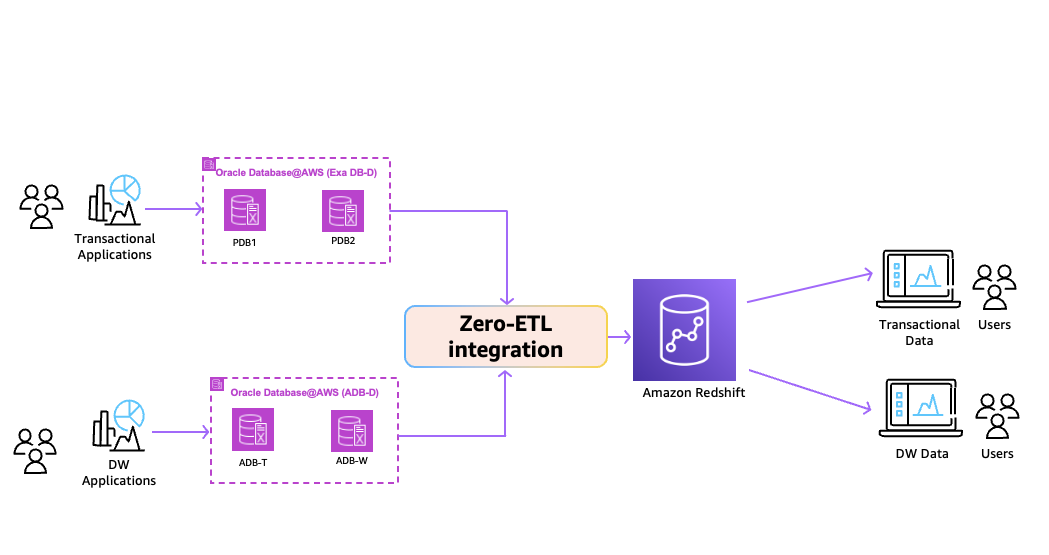
Figure 1: Zero-ETL integration to Amazon Redshift
Zero-ETL with Amazon Redshift replicates Oracle transactional data to Amazon Redshift without building or managing ETL pipelines, and without cross-network data transfer costs. This unlocks:
- Real-time analytics on Oracle transactional data using Amazon Redshift’s columnar engine.
- ML and AI workloads using Amazon SageMaker AI connected to Amazon Redshift.
- Cross-source analytics joining Oracle data with data from other AWS sources already in Amazon Redshift.
- Business intelligence using Amazon QuickSight dashboards fed by near real-time Oracle data.
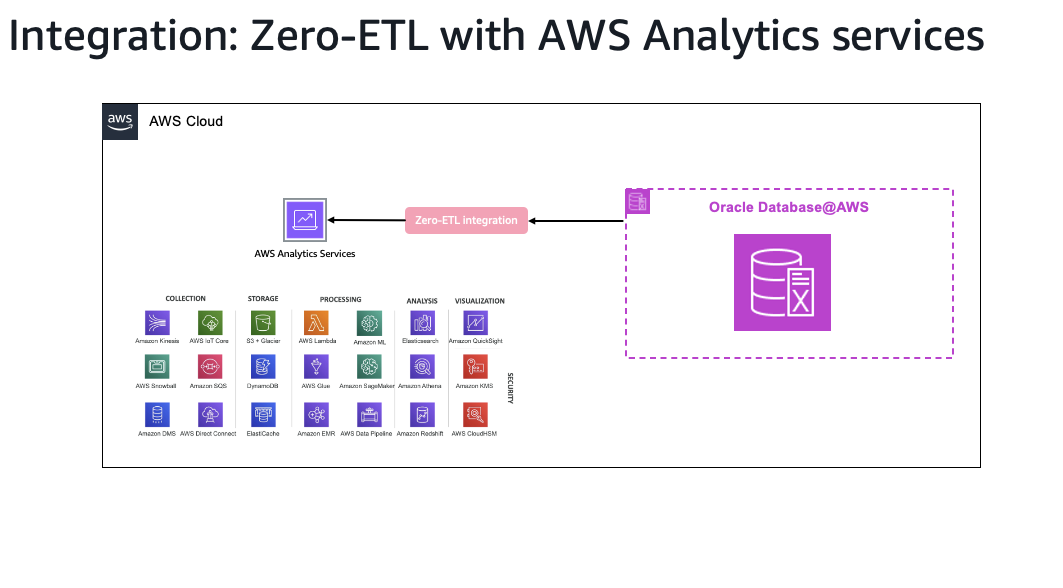
Figure 2: Integration of Zero-ETL with analytical services
For Oracle Enterprise Applications like Oracle E-Business Suite (Oracle EBS), PeopleSoft, and Siebel environments, this is particularly relevant. Oracle EBS generates enormous volumes of transactional data across financials, supply chain, manufacturing, and HR. Zero-ETL means your finance team can run analytics on GL journal entries, your supply chain team can analyze inventory movements, and your procurement team can track PO spend, all in near real-time without a separate ETL infrastructure.
- AWS service connectivity using Amazon VPC Lattice – AWS Glue Zero-ETL and other AWS analytics integrations are enabled using Amazon VPC Lattice, which provides native access to AWS services from the ODB network.
- Amazon S3 using VPC Lattice – Oracle managed backups stored directly to Amazon S3 (designed for 11 nines of durability, 99.999999999 percent) without traversing the public internet.
- Amazon Bedrock and Amazon SageMaker AI – With Oracle data flowing into Amazon Redshift or Amazon S3, customers can build generative AI and ML pipelines using Amazon Bedrock foundation models (FMs) or Amazon SageMaker AI for use cases like predictive maintenance, demand forecasting, and LLM-powered analytics on Oracle transactional data.
Note: Standard VPC Lattice data processing charges apply for managed integrations. There is no hourly charge for the integrations themselves.
#12 – Certified architecture for Oracle applications
Oracle has published reference architectures for deploying Oracle enterprise applications on ODB@AWS, with Oracle E-Business Suite (Oracle EBS) as the first certified deployment pattern, a supported path to run application tiers on AWS with the database tier on Exadata, all within the same AWS Region.
Reference architecture for Oracle E-Business Suite:
- Oracle application tiers on Amazon EC2 – Web, forms, concurrent processing, and admin servers.
- Database tier on Exadata using ODB@AWS – Connected through ODB peering with low-latency networking within the same Availability Zone.
- AWS Transit Gateway – Hub-and-spoke networking for connecting multiple VPCs, ODB networks, and on-premises locations.
- Amazon FSx for NetApp ONTAP – Shared APPL_TOP file system, with SnapMirror for cloning between production and non-production environments.
- AWS Direct Connect – Hybrid connectivity back to on-premises data centers.
Your Oracle EBS application code doesn’t change. Database features, including RAC, Data Guard, ASM, and RMAN, all work exactly as they do on-premises. Oracle EBS 12.2 is certified with Oracle Database 26ai on Exadata, so you can use 26ai features while running Oracle EBS on ODB@AWS.
Support for additional Oracle applications:
ODB@AWS also supports other Oracle enterprise applications, including PeopleSoft, Siebel, JD Edwards EnterpriseOne, Oracle Enterprise Performance Management, and Oracle Retail Applications. These applications follow similar architectural patterns with application tiers on Amazon EC2 and database tiers on Exadata using ODB@AWS, maintaining the same low-latency connectivity and AWS service integration benefits.
Oracle middleware platforms like WebLogic and Fusion Middleware integrate with this architecture, and ISV applications built on Oracle Database can follow the same deployment pattern.
The Reference architecture for deploying EBS on ODB@AWS is a supported path to run Oracle EBS application tiers on AWS with the database tier on Exadata, all within the same AWS Region:
- EBS application tiers on Amazon EC2 – Web, forms, concurrent processing, and admin servers.
- Database tier on Exadata using ODB@AWS – Connected through ODB peering with low-latency networking within the same Availability Zone.
- AWS Transit Gateway – Hub-and-spoke networking for connecting multiple VPCs, ODB networks, and on-premises locations.
- Amazon FSx for NetApp ONTAP – Shared APPL_TOP file system, with SnapMirror for cloning between production and non-production environments.
- AWS Direct Connect – Hybrid connectivity back to on-premises data centers.
- Amazon S3 – Database backups with eleven nines of durability.
Your Oracle EBS application code doesn’t change. Database features, including RAC, Data Guard, ASM, and RMAN, all work exactly as they do on-premises. Oracle EBS 12.2 is now certified with Oracle Database 26ai on Exadata, so you can take advantage of 26ai features while running Oracle EBS on ODB@AWS.
#13 – Choosing the right AWS option for each Oracle workload
AWS now offers three strong options for Oracle workloads. The right choice depends on the workload requirements, not on which service is “better”:
| Workload requirement | Best fit |
| Managed Oracle DB, co-managed operations, automated maintenance, standard features | Amazon RDS for Oracle, or ADB-D |
| Full OS access, custom configurations, specific patching needs | Oracle on Amazon EC2 or ExaDB-D |
| Exadata features, Oracle RAC fault tolerance, Autonomous DB | Oracle Database@AWS – ExaDB-D |
| Autonomous Database, self-managing operations, automated maintenance | Oracle Database@AWS – ADB-D |
| Oracle support cost elimination using License Included for EE | Oracle Database@AWS (ExaDB-D or ADB-D) |
| Cost optimization through storage efficiency | Oracle Database@AWS (ExaDB-D or ADB-D) – Exadata without compression delivers $0.025 per GB |
Many organizations will use more than one option across their Oracle estate. You might run development and test databases on Amazon RDS for Oracle, applications requiring custom Oracle configurations on RDS Custom for Oracle, and your mission-critical Oracle EBS production environment on Oracle Database@AWS. The options work together as a portfolio.
Getting started
To begin exploring Oracle Database@AWS:
- Visit the AWS Management Console – Navigate to the Oracle Database@AWS dashboard service page in the AWS Management Console to explore the service and available configurations.
- Request a private offer – Contact your AWS or Oracle account team, or request directly through AWS Marketplace.
- Assess your workloads – Use the Oracle AWS Optimization and Licensing Assessment (OLA) to evaluate your Oracle estate, licensing position, and migration readiness. Apply the preceding decision framework to determine the right ODB@AWS service tier (ExaDB or ADB) for each workload.
- Review the documentation – The Oracle Database@AWS User Guide and Oracle documentation provide detailed setup, configuration, and migration guidance.
- Engage a partner – AWS Oracle Competency Partners can help architect, deploy, and manage your ODB@AWS environment, including ZDM-based migration planning and execution.
Conclusion
In this post, we explored how Oracle Database@AWS expands the portfolio of options available for running Oracle on AWS. This solution brings Exadata performance, RAC fault tolerance, Autonomous Database automation, and flexible licensing models into AWS, with native console integration, zero-ETL analytics, and AI capabilities through Oracle Database 26ai.
If you need Exadata features, Oracle RAC for business continuity, storage cost optimization, pay-as-you-go Enterprise Edition licensing, or a path to simplify Oracle support costs, ODB@AWS is worth a closer look. It’s not about replacing what works. It’s about having the right option for every Oracle workload.
We encourage you to explore how Oracle Database@AWS could fit into your cloud strategy and consider how it might address your specific Oracle workload requirements. Ready to see ODB@AWS in action? Request an AWS Optimization and Licensing Assessment (AWS OLA), a comprehensive engagement where AWS and Oracle experts collaborate to evaluate your current Oracle estate, identify optimization opportunities, and design a tailored migration or modernization roadmap for Oracle Database@AWS. Request your AWS OLA today to begin your journey toward optimized Oracle workloads on AWS.
Share your thoughts in the comments or reach out to our team to discuss how Oracle Database@AWS can support your organization’s needs.