AWS for Industries
Clinical doppelgangers: Accelerating pediatric insights
Treating complex patients can be difficult. The ability to see how other patients with similar symptoms or conditions were treated and what their outcomes were can help clinicians better understand how to approach their own patients. Traditional search, however, falls short for nuanced clinical care scenarios (for example, post-Norwood arrhythmias responsive to alternative pacing).
Clinicians need to reason over context, not only keywords, to connect anatomy, intervention, and outcomes. The Clinical Doppelgangers project is a clinician-led initiative at Boston Children’s Hospital that uses large language models (LLMs), alongside Amazon Web Services (AWS) managed services, to surface patients with similar characteristics, such as clinical symptoms, conditions, and lab values.
Clinical Doppelgangers transforms unstructured narratives into queryable signals (semantic embeddings and sparse lexical vectors). It joins them with structured data, serving as an agentic LLM that helps clinicians, and researchers, ask natural language questions and receive interpretable source-attributed answers.
What we built
Boston Children’s Hospital implemented a complete pipeline that has processed over 6000 complex cardiac intensive care unit (CICU) pediatric cases. In doing so a knowledge base of over 250 structured measurements was developed (including over 500 sparse vector representations and thousands of semantic embeddings) to capture clinical meaning combined with numerical measurements. An LLM agent powered with this knowledge base can transform a natural language query into an object used to search this repository and find relevant patients to develop a cohort within seconds to minutes.
When a clinician wants to find patients that have, for example, hypoplastic left heart and arrhythmia after Glenn with good response to pacing, the LLM interprets intent and plans a multistep search across our knowledge base to develop a relevant patient cohort. The clinician can then look over these similar patients to help inform decisions going forward for the patient at hand.
Leveraging AWS to scale and move fast
The high-level architecture for Clinical Doppelgangers is shown in Figure 1 and includes the following components:
- Ingestion and orchestration
- Clinical notes and PDFs land in Amazon Simple Storage Service (Amazon S3)
- AWS Step Functions orchestrate the workflow
- AWS Lambda validates payloads and coordinates next tasks
- Extraction
- Amazon Textract performs optical character recognition (OCR) and layout extraction on PDFs
- Amazon Comprehend Medical and Amazon Bedrock tag diagnoses, medications, procedures, and attributes
- A clinical embeddings model hosted on Amazon SageMaker generates vectors
- A SPLADE (sparse lexical and expansion model) document encoder is also hosted on Amazon SageMaker, which produces sparse maps of each note section and report
- Storage and search
- Normalized rows go to Amazon Aurora PostgreSQL for SQL
- Vectors are indexed in Amazon OpenSearch Service
- Agentic querying and reasoning
- Amazon Bedrock Agents parse the clinician’s question, generating a search data structure and iteratively search the knowledge repository
- LLMs are also used to generate high-level cohort answers based on the clinician’s query
- Security
- Everything runs in a private Amazon Virtual Private Cloud (Amazon VPC) with interface endpoints
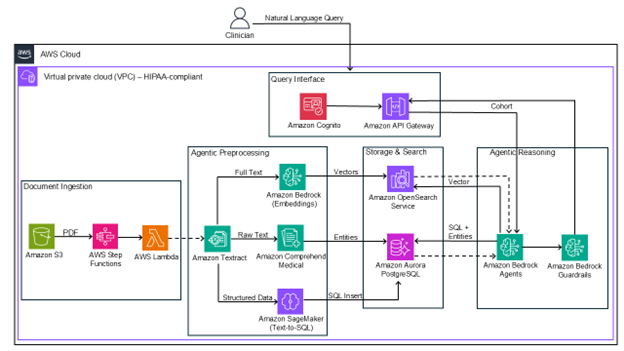 Figure 1: High-level architecture for Clinical Doppelgangers
Early clinical impact and what’s next
Having received very positive feedback from their clinicians, the Boston Children’s Hospital are working to further expand the Clinical Doppelgangers project—increasing its clinical impact. In terms of time required to insight, they are targeting an 80% reduction in chart review to improve decision time for complex patient cases.
Clinical Doppelgangers can also be instrumental for research acceleration, where faster cohort identification is vital for quality improvement and research projects. The roadmap for the Clinical Doppelgangers project includes expanding beyond the CICU to additional ICUs and specialties. They are also looking to integrate into electronic health records (EHR) to streamline workflows and expanding learnings to other institutions (including both pediatric and adult healthcare organizations).
Where to learn more
Contact an AWS Representative to know how we can help accelerate your business.
Learn more about AWS for Healthcare & Life Sciences and our curated AWS services or check out the AWS Partner Network solutions used by thousands of healthcare and life sciences customers globally. Visit the AWS Healthcare Solutions webpage or check out the AWS Health Data Portfolio site. You can also read more blogs about AWS healthcare stories.