Artificial Intelligence
Category: Artificial Intelligence
Implement automated smoke testing using Amazon Nova Act headless mode
This post shows how to implement automated smoke testing using Amazon Nova Act headless mode in CI/CD pipelines. We use SauceDemo, a sample ecommerce application, as our target for demonstration. We demonstrate setting up Amazon Nova Act for headless browser automation in CI/CD environments and creating smoke tests that validate key user workflows. We then show how to implement parallel execution to maximize testing efficiency, configure GitLab CI/CD for automatic test execution on every deployment, and apply best practices for maintainable and scalable test automation.
Real-world reasoning: How Amazon Nova 2 Lite handles complex customer support scenarios
This post evaluates the reasoning capabilities of our latest offering in the Nova family, Amazon Nova 2 Lite, using practical scenarios that test these critical dimensions. We compare its performance against other models in the Nova family—Lite 1.0, Micro, Pro 1.0, and Premier—to elucidate how the latest version advances reasoning quality and consistency.

Create AI-powered chat assistants for your enterprise with Amazon Quick Suite
In this post, we show how to build chat agents in Amazon Quick Suite. We walk through a three-layer framework—identity, instructions, and knowledge—that transforms Quick Suite chat agents into intelligent enterprise AI assistants. In our example, we demonstrate how our chat agent guides feature discovery, use enterprise data to inform recommendations, and tailors solutions based on potential to impact and your team’s adoption readiness.
How AWS delivers generative AI to the public sector in weeks, not years
Experts at the Generative AI Innovation Center share several strategies to help organizations excel with generative AI.

S&P Global Data integration expands Amazon Quick Research capabilities
Today, we are pleased to announce a new integration between Amazon Quick Research and S&P Global. This integration brings both S&P Global Energy news, research, and insights and S&P Global Market Intelligence data to Quick Research customers in one deep research agent. In this post, we explore S&P Global’s data sets and the solution architecture of the integration with Quick Research.
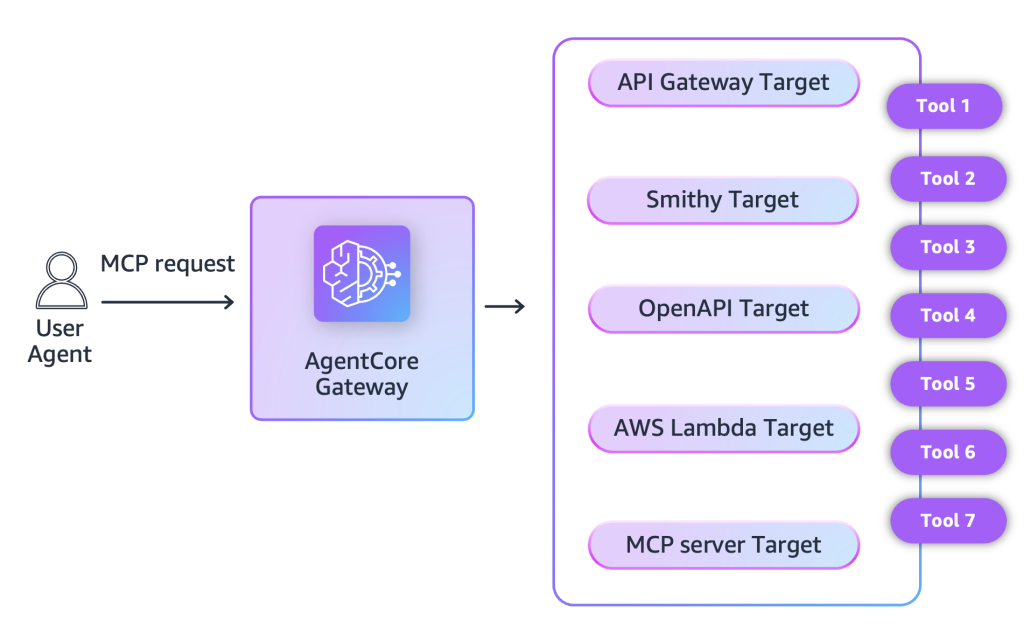
Streamline AI agent tool interactions: Connect API Gateway to AgentCore Gateway with MCP
AgentCore Gateway now supports API Gateway. As organizations explore the possibilities of agentic applications, they continue to navigate challenges of using enterprise data as context in invocation requests to large language models (LLMs) in a manner that is secure and aligned with enterprise policies. This post covers these new capabilities and shows how to implement them.
Create an intelligent insurance underwriter agent powered by Amazon Nova 2 Lite and Amazon Quick Suite
In this post, we demonstrate how to build an intelligent insurance underwriting agent that addresses three critical challenges: unifying siloed data across CRM systems and databases, providing explainable and auditable AI decisions for regulatory compliance, and enabling automated fraud detection with consistent underwriting rules. The solution combines Amazon Nova 2 Lite for transparent risk assessment, Amazon Bedrock AgentCore for managed MCP server infrastructure, and Amazon Quick Suite for natural language interactions—delivering a production-ready system that underwriters can deploy in under 30 minutes .
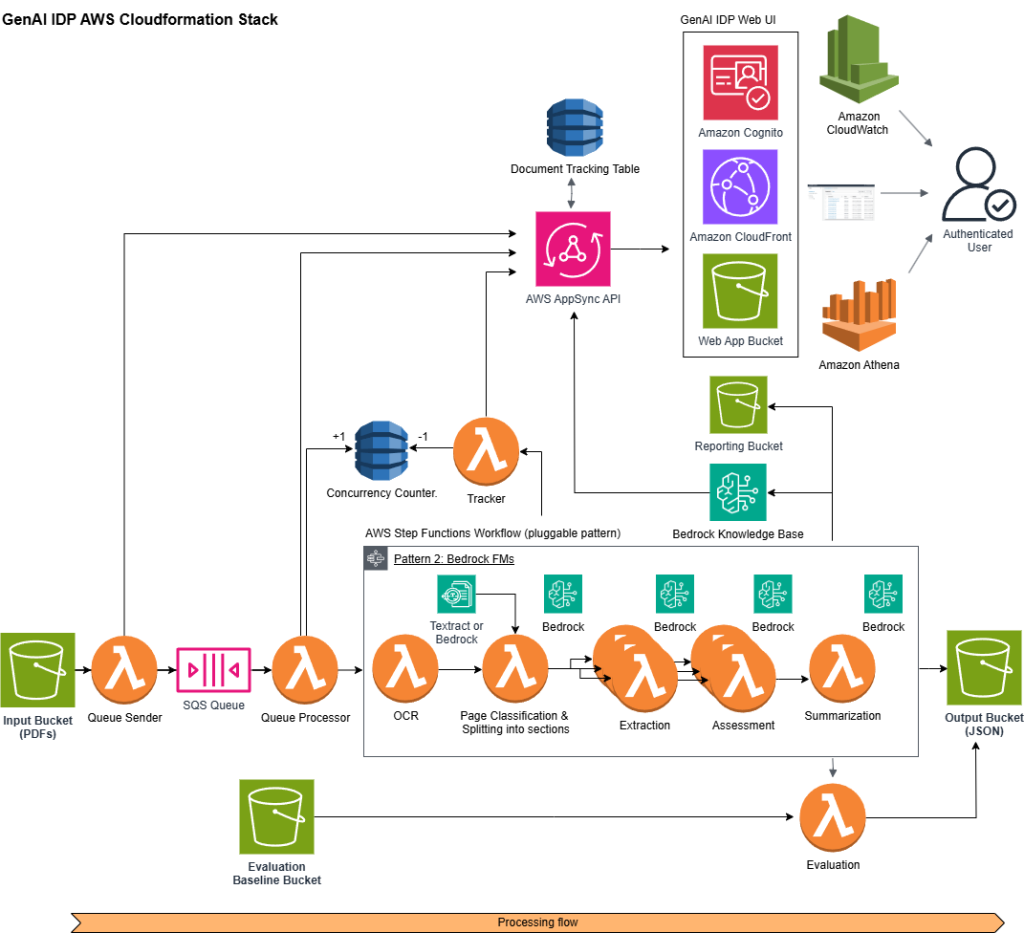
How Myriad Genetics achieved fast, accurate, and cost-efficient document processing using the AWS open-source Generative AI Intelligent Document Processing Accelerator
In this post, we explore how Myriad Genetics partnered with the AWS Generative AI Innovation Center to transform their healthcare document processing pipeline using Amazon Bedrock and Amazon Nova foundation models, achieving 98% classification accuracy while reducing costs by 77% and processing time by 80%. We detail the technical implementation using AWS’s open-source GenAI Intelligent Document Processing Accelerator, the optimization strategies for document classification and key information extraction, and the measurable business impact on Myriad’s prior authorization workflows.
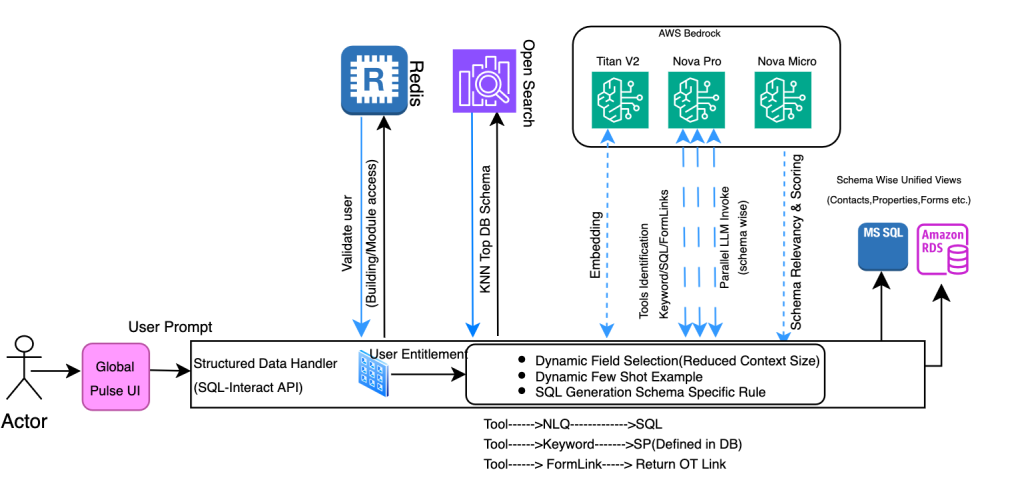
How CBRE powers unified property management search and digital assistant using Amazon Bedrock
In this post, CBRE and AWS demonstrate how they transformed property management by building a unified search and digital assistant using Amazon Bedrock, enabling professionals to access millions of documents and multiple databases through natural language queries. The solution combines Amazon Nova Pro for SQL generation and Claude Haiku for document interactions, achieving a 67% reduction in processing time while maintaining enterprise-grade security across more than eight million documents.
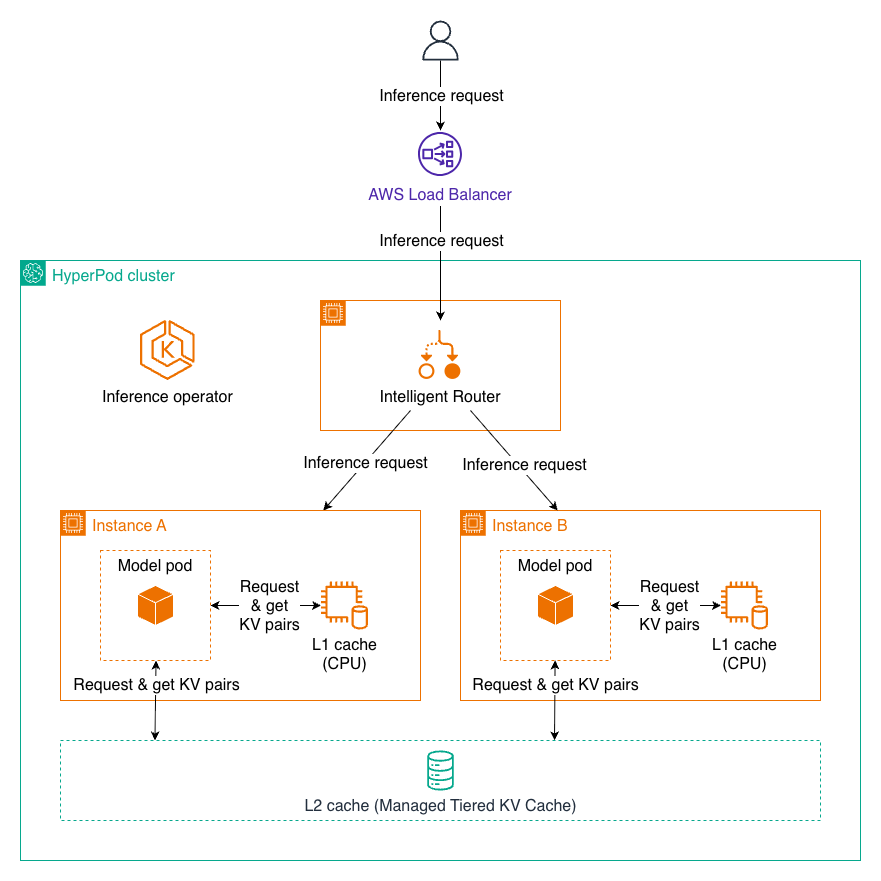
Managed Tiered KV Cache and Intelligent Routing for Amazon SageMaker HyperPod
In this post, we introduce Managed Tiered KV Cache and Intelligent Routing for Amazon SageMaker HyperPod, new capabilities that can reduce time to first token by up to 40% and lower compute costs by up to 25% for long context prompts and multi-turn conversations. These features automatically manage distributed KV caching infrastructure and intelligent request routing, making it easier to deploy production-scale LLM inference workloads with enterprise-grade performance while significantly reducing operational overhead.