Artificial Intelligence
Category: Artificial Intelligence
Thoughts On Machine Learning Accuracy
This blog shares some brief thoughts on machine learning accuracy and bias. Let’s start with some comments about a recent ACLU blog in which they ran a facial recognition trial. Using Rekognition, the ACLU built a face database using 25,000 publicly available arrest photos and then performed facial similarity searches on that database using public […]

AWS Deep Learning AMIs now include ONNX, enabling model portability across deep learning frameworks
The AWS Deep Learning AMIs (DLAMI) for Ubuntu and Amazon Linux are now pre-installed and fully configured with Open Neural Network Exchange (ONNX), enabling model portability across deep learning frameworks. In this blog post we’ll introduce ONNX, and demonstrate how ONNX can be used on the DLAMI to port models across frameworks. What is ONNX? ONNX is an open […]

The AWS DeepLens Inclusivity Challenge submission period extended to 8/19
April 2023 Update: Starting January 31, 2024, you will no longer be able to access AWS DeepLens through the AWS management console, manage DeepLens devices, or access any projects you have created. To learn more, refer to these frequently asked questions about AWS DeepLens end of life. We announced the AWS DeepLens Inclusivity Challenge two weeks […]
AWS Deep Learning AMIs now with optimized TensorFlow 1.9 and Apache MXNet 1.2 with Keras 2 support to accelerate deep learning on Amazon EC2 instances
The AWS Deep Learning AMIs for Ubuntu and Amazon Linux now come with an optimized build of TensorFlow 1.9 custom-built directly from source and fine-tuned for high performance training across Amazon EC2 instances. In addition, the AMIs come with the latest Apache MXNet 1.2 with several performance and usability improvements, the new Keras 2-MXNet backend […]
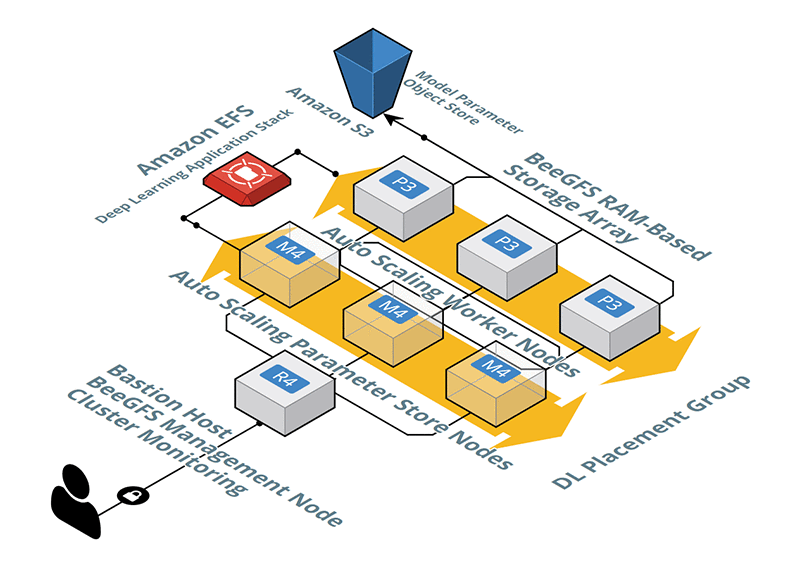
Scalable multi-node deep learning training using GPUs in the AWS Cloud
A key barrier to the wider adoption of deep neural networks on industrial-size datasets is the time and resources required to train them. AlexNet, which won the 2012 ImageNet Large Scale Visual Recognition Competition (ILSVRC) and kicked off the current boom in deep neural networks, took nearly a week to train across the 1.2-million-image, 1000-category […]
Classify your own images using Amazon SageMaker
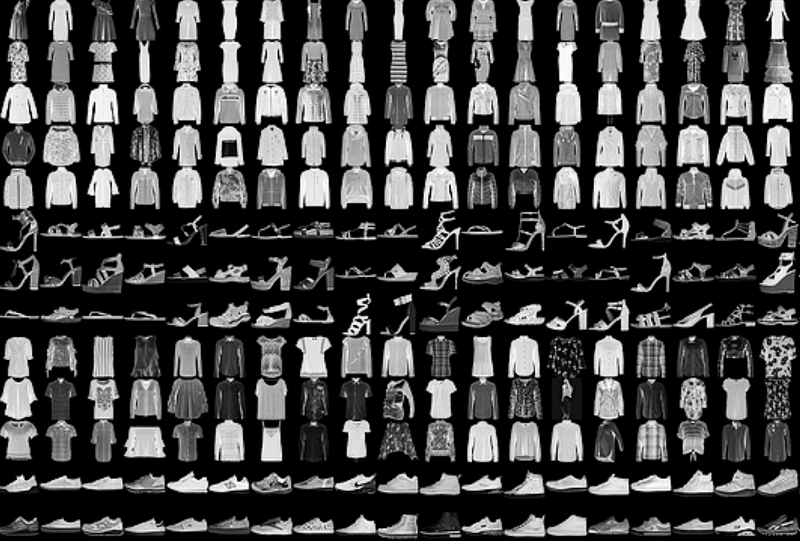
Amazon SageMaker is a fully managed service that supports all of the steps of a ML model’s development: data exploration and building, training, and deploying ML models. With Amazon SageMaker, you can pick and use any of the built-in algorithms, reducing the time to market and the development cost.

Call an Amazon SageMaker model endpoint using Amazon API Gateway and AWS Lambda
March 2025: This post was reviewed and updated for accuracy. At AWS Machine Learning (ML) workshops, customers often ask, “After I deploy an endpoint, where do I go from there?” You can deploy an Amazon SageMaker AI trained and validated ML model as an online endpoint in production. Alternatively, you can choose which SageMaker functionality […]

Amazon Comprehend now supports Syntax Analysis
We’re excited to announce that Amazon Comprehend now provides a Syntax API. This enables you to tokenize text (for example, to extract word boundaries) and the corresponding part of speech (PoS) for each word. Today, Amazon Comprehend enables analysis use cases like such as knowing whether a customer comment is negative or positive, and identifying […]

Create a model for predicting orthopedic pathology using Amazon SageMaker
Artificial intelligence (AI) and machine learning (ML) are gaining momentum in the healthcare industry, especially in healthcare imaging. The Amazon SageMaker approach to ML presents promising potential in the healthcare field. ML is considered a horizontal enabling layer applicable across industries. Within healthcare, this can serve analogous to a radiology or lab report as a […]
Enhanced text classification and word vectors using Amazon SageMaker BlazingText
Today, we are launching several new features for the Amazon SageMaker BlazingText algorithm. Many downstream natural language processing (NLP) tasks like sentiment analysis, named entity recognition, and machine translation require the text data to be converted into real-valued vectors. Customers have been using BlazingText’s highly optimized implementation of the Word2Vec algorithm, for learning these vectors from […]