AWS Public Sector Blog
Accelerating autonomous system innovation with Project MAVERICK field testing
Real missions break perfect prototypes. Through Project MAVERICK (Mission Autonomy Versatile Rapid Innovation and Capabilities Kit), Amazon Web Services (AWS) confronts this reality head-on—bringing cloud capabilities directly into the field to test autonomous systems where it matters most.
Autonomous systems that excel in controlled labs often crumble when faced with actual field conditions. The culprit is often engineers building on limited or untested assumptions about operational reality—not because they’re careless but because the environment (and the adversary) is complex. Unfortunately, these gaps typically surface only when it’s too late to fix them.
AWS takes a different approach: test early, test real. Project MAVERICK is a mobile ruggedized platform equipped with AWS Outposts, secure communications, and a flexible integration architecture. By deploying directly to genuine operational environments, MAVERICK works backward from the hardest tactical challenges alongside customers and partners.
“Project MAVERICK is the mobile platform that brings AWS capabilities and partners into the field for rapid innovation,” said Dave Levy, vice president of AWS Global Defense, during his innovation talk at re:Invent 2025.
The modified truck, equipped with an Outpost, secure communications, and flexible integration architecture, allows AWS to rapidly deploy to remote training ranges, customer facilities, or field exercise locations. A recent 2-day field exercise brought together AWS, Anduril, and Gambit for hands-on testing. In this tactical environment, the team validated conversational drone swarm control, AI in disconnected environments, and interoperability across multiple command and control (C2) systems.
The result: single voice commands that coordinate drone swarms through natural language prompts powered by AWS, Anduril, and Gambit technology—tested in realistic field conditions, not only in a lab.
Integration architecture that breaks down C2 silos with real-time data sharing
AWS partnered with Anduril and Gambit to demonstrate these capabilities using accredited services designed for defense and national security missions. Anduril provided Menace-T, a portable ruggedized command-and-control platform running Anduril’s Lattice software, which enables operators to coordinate assets in real time across austere environments. Gambit, a startup developing autonomous systems technology, contributed their ALIEN autonomous coordination system and multi-drone expertise.
AWS integrated these partner capabilities using AWS Wickr for secure communications, AWS IoT Greengrass for edge deployment, and AWS Outposts for edge compute—creating a unified environment where each organization’s technology could be tested and refined together.
The team ingested legacy Automatic Packet Reporting System (APRS) tracking data and routed the normalized stream into both Anduril’s Lattice and the open source Tactical Awareness Kit (TAK), establishing a shared operating picture across heterogeneous C2 systems without ripping and replacing legacy software. The exercise demonstrated how a single data source can support both commercial and open systems without forcing you to replace existing tools.
This integration exemplifies the mission autonomy data flywheel in action. Improved data visibility across disparate C2 systems leads to faster threat identification and better operational decision-making. Each exercise iteration feeds performance data back into platform design, creating a continuous improvement cycle that reduces risk and accelerates mission success.
By providing a common platform for diverse technology providers, AWS eliminates complex vendor integration and accelerates mission capabilities through proactive collaboration.
Simplifying drone swarm operations with conversational control
The exercise also showcased conversational control of autonomous drone swarms using natural language through AWS WickrGov. Working with Gambit, AWS developed an agentic AI interface where operators describe mission objectives in plain language, such as “Execute a search and rescue mission in the northern sector.” The system then translates that intent into fully coordinated multi-drone operations.
“We just tested and proved that on a phone just with Wickr and a custom Wickr bot all running with Amazon Bedrock on an Outpost server, you can task a swarm of drones, or any robot really, to perform a search-and-rescue mission to full success,” said Andrew Kemendo, chief technology officer at Gambit.
Behind the scenes, the WickrGov bot powered by Amazon Bedrock interprets the natural language request, validates mission parameters, and translates the intent into API calls for Gambit’s ALIEN command platform. During the exercise, AWS successfully launched four autonomous platforms through this conversational interface, demonstrating how natural language control can simplify multi-platform coordination.
Validating the “develop in cloud, deploy at edge” pattern for operational advantage
Gambit developed its Amazon Machine Image (AMI) in AWS Regions, fully testing the integration with AWS agentic AI components. AWS then deployed the identical AMI to an Outpost at the field site, where it ran identically in a disconnected, disrupted, intermittent, and limited (DDIL) environment. This established a repeatable pattern for codevelopment in tactical environments.
The consistency between cloud and edge eliminates the integration risk that typically plagues edge deployments. You can develop and test your solutions using familiar AWS services in the cloud, confident that the same workloads will operate reliably at the tactical edge. This pattern also delivers significant cost advantages—developing and testing on Amazon Elastic Compute Cloud (Amazon EC2) in AWS Regions is more cost-effective than using Outpost capacity for iterative development while still providing identical runtime behavior at the tactical edge.
During the exercise, Menace-T hardware and Lattice software backhauled position location data in real time, so operators could coordinate autonomous platforms and review mission data post-exercise. That data informed follow-on mission planning and future capability development.
Bridging legacy radio networks with modern secure messaging
AWS demonstrated a bidirectional bridge between traditional radio networks and AWS WickrGov secure messaging. During the exercise, an operator spoke on a common tactical radio, and local AI models transcribed the audio to text and published it to a WickrGov room. The system then synthesized text responses to voice and broadcast them back over the radio network. This demonstrates how organizations with significant investments in radio infrastructure can integrate with modern collaboration platforms.
Using accredited infrastructure and validated reference architectures
The capabilities demonstrated during this exercise used AWS services designed for the most demanding security requirements. AWS WickrGov and AWS GovCloud (US) support Federal Risk and Authorization Management Program (FedRAMP) High authorization, while other AWS Regions provide infrastructure accredited for classified workloads. You can develop solutions using AWS services and consistent patterns across all unclassified and classified environments, maintaining operational consistency while meeting stringent security requirements.
These field test exercises validated AWS engineering-built reference architectures that you can adopt and adapt for your own missions. Rather than merely demonstrating capabilities, AWS shares the investment in proving solutions work—delivering reference architectures that organizations can deploy, including an AWS WickrGov bot framework for conversational interfaces and an AWS based serverless TAK implementation.
The following architecture diagram shows integration between AWS WickrGov users, IP radios, AWS Cloud services such as AWS WickrGov bots, Amazon Bedrock, and Amazon Simple Queue Service (Amazon SQS), and edge hardware including the Outpost server, Gambit ALIEN software, Anduril Lattice, and drone swarm.
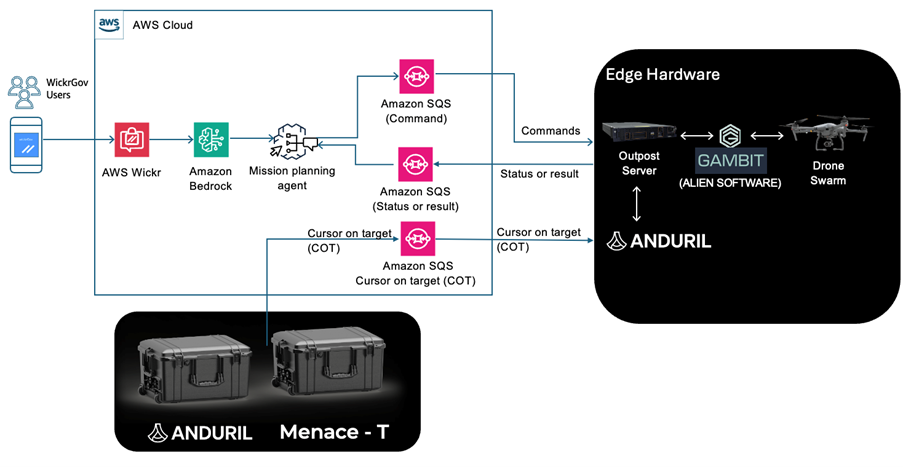
Figure 1: Architecture diagram for the solution described in the post.
Looking forward
The field test exercise demonstrated that conversational control of autonomous drone swarms, edge-based AI processing in DDIL environments, and multi-organization integration using AWS infrastructure are possible and ready for operational validation. More importantly, it validated an approach to collaboration: AWS engineers working together with Anduril and Gambit, in realistic field conditions, solving real problems at mission speed.
Through Project MAVERICK, AWS conducts these events frequently and proactively. MAVERICK will participate in multiple customer exercises and demonstrations throughout 2026, each one an opportunity for collaborative innovation on mission autonomy challenges.
The following graphic shows the DDIL Innovation Lab with Menace-T hardware, edge solutions, cloud compute capabilities, and integration with autonomous systems for field experimentation.
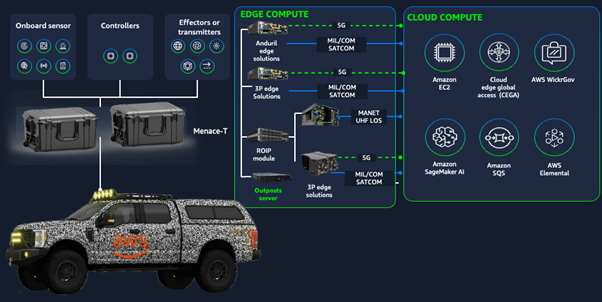
Figure 2: The MAVERICK mobile platform architecture
Organizations working on autonomous systems for defense, national security, or public safety missions can engage AWS engineering resources through AWS Mission Lab—a service you can use to experiment with and deliver innovative mission solutions using AWS infrastructure. Mission Lab provides the resources and support needed to rapidly test and validate new technology integrations, so you can move from concept to operational capability at mission speed.
To learn more about AWS capabilities for autonomous systems and opportunities for field experimentation, contact your AWS account team, the Mission Autonomy Team at missionautonomy@amazon.com, or visit the Cloud Computing for U.S. Defense page. For information about Anduril’s Menace-T and Lattice capabilities, visit Anduril. For more information about Gambit and ALIEN, visit Gambit.