AWS Architecture Blog
Category: Programing Language

Top Architecture Blog Posts of 2023
2023 was a rollercoaster year in tech, and we at the AWS Architecture Blog feel so fortunate to have shared in the excitement. As we move into 2024 and all of the new technologies we could see, we want to take a moment to highlight the brightest stars from 2023. As always, thanks to our […]

Optimizing data with automated intelligent document processing solutions
Many organizations struggle to effectively manage and derive insights from the large amount of unstructured data locked in emails, PDFs, images, scanned documents, and more. The variety of formats, document layouts, and text makes it difficult for any standard Optical Character Recognition (OCR) to extract key insights from these data sources. To help organizations overcome […]

Disaster Recovery (DR) Architecture on AWS, Part III: Pilot Light and Warm Standby
In this blog post, you will learn about two more active/passive strategies that enable your workload to recover from disaster events such as natural disasters, technical failures, or human actions. Previously, I introduced you to four strategies for disaster recovery (DR) on AWS. Then we explored the backup and restore strategy. Now let’s learn about […]

Field Notes: Bring your C#.NET skills to Amazon SageMaker
Amazon SageMaker is a fully managed service that provides developers and data scientists with the ability to build, train, and deploy machine learning (ML) models quickly. SageMaker removes the undifferentiated heavy lifting from each step of the machine learning process to make it easier to develop high-quality models. Amazon SageMaker Notebooks are one-click Jupyter Notebooks […]
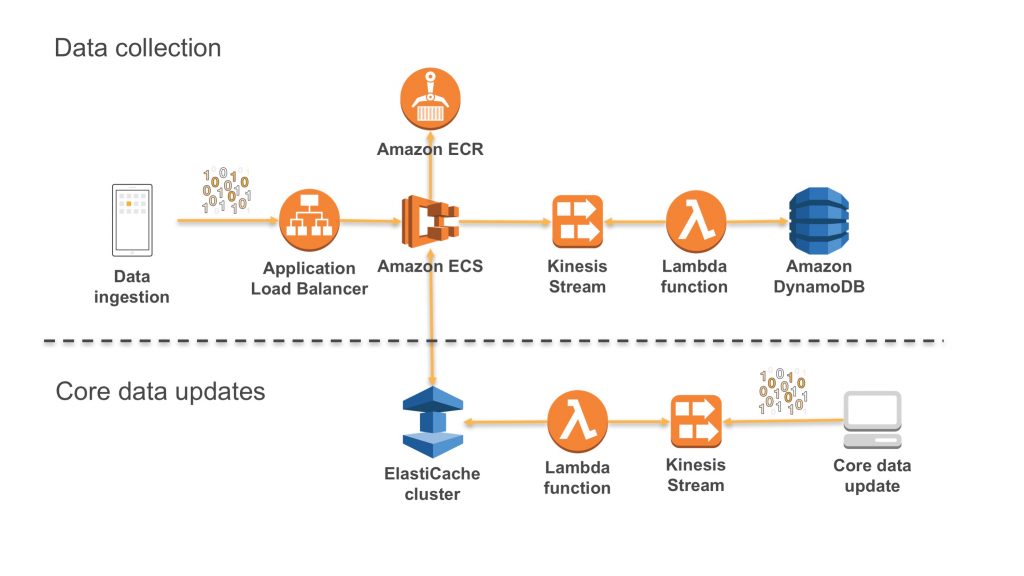
Reactive Microservices Architecture on AWS
Microservice-application requirements have changed dramatically in recent years. These days, applications operate with petabytes of data, need almost 100% uptime, and end users expect sub-second response times. Typical N-tier applications can’t deliver on these requirements. Reactive Manifesto, published in 2014, describes the essential characteristics of reactive systems including: responsiveness, resiliency, elasticity, and being message driven. […]