AWS Compute Blog
Frozen package management for air-gapped RHEL-family AMIs
If you run a regulated, air-gapped compute fleet on RHEL-family instances, you have probably felt three requirements pulling against each other. Your organization must configure the network to remove internet access from the instances. Your team must review and approve new packages or version upgrades before you adopt them. Your team removes public repository definitions, restricts network paths, and configures instances to use only the internal repository your team has approved. Teams in chip design, finance, healthcare, defense, and the public sector often face this combination while still needing operating system updates.
This post describes a two-account pattern that separates the connected package-ingestion path from the air-gapped fleet. You create an authorized initial baseline and approve later changes to form a versioned package snapshot in Amazon Simple Storage Service (Amazon S3). EC2 Image Builder uses the frozen snapshot to build Amazon Machine Images (AMIs). Your team configures AWS Systems Manager Patch Manager to patch the instances your organization runs from the same internal package source.
The accompanying reference implementation demonstrates the pattern for RPM-based RHEL-family systems (AlmaLinux for example). It is a reference, not a substitute for distribution of licensing, vulnerability analysis, testing, or an organization’s change-management process.
The challenge: Getting packages into an air-gapped approval-gated fleet
Common delivery models each assume something an air-gapped fleet might not provide:
- Red Hat Update Infrastructure (RHUI) expects each instance to reach the service. A fleet with no internet egress needs a different content path.
- Red Hat Satellite supports disconnected content management, but it is a separate product and operational footprint. Teams that need a custom package-level approval workflow must integrate that workflow with their content-management process.
- The Red Hat CDN requires a connected, entitled content-management path. Centralizing that path changes the network architecture, not the customer’s Red Hat subscription obligations.
The objective is not to replace these products universally. It is to show a serverless AWS pattern for teams that need an authorized repository baseline, explicit approval for later package changes, and a fleet with no public package source.
How the pattern works
The pattern combines three controls:
- A frozen package repository on Amazon S3: The pattern stores a deployment-authorized baseline and subsequent approved package changes in versioned, per-OS repository prefixes. The repository manifest records the package inventory for each state.
- EC2 Image Builder Orchestration builds AMIs from that repository: The build helps remove upstream repository definitions and configures the internal frozen mirror to be used for all package operations.
- The launched fleet has no internet egress: The
dnfoperations are configured to resolve the internal mirror. Patch Manager uses the same repository source, so image builds and in-place patching draw from one frozen snapshot.
Choosing the upstream source
Choose one package lineage end to end. The parent AMI, repository content, and trusted signing keys must belong to that same lineage.
The reference implementation defaults to AlmaLinux vault content plus EPEL and an AlmaLinux parent AMI. The AlmaLinux OS Foundation states that AlmaLinux aims for binary and application binary interface (ABI) compatibility with RHEL. This is an AlmaLinux compatibility goal, not a Red Hat certification, and it does not make repository mixing a supported practice.
For genuine RHEL systems, use a Red Hat parent AMI, entitled Red Hat repositories, and Red Hat signing keys. A connected content-management host can retrieve content for the isolated environment. This centralizes the network path but does not reduce or change the customer’s Red Hat subscription obligations. Confirm those obligations against the applicable Red Hat agreement.
Do not pair AlmaLinux repositories with genuine RHEL hosts, or Red Hat repositories with AlmaLinux hosts. Mixed-vendor package lineages can create support, stability, and maintainability problems even when the RPMs appear mechanically compatible.
Architecture and workflow
The account boundary provides a primary security boundary for this architecture. The following diagram shows the connected Distribution account, the read-only Workload account, and an example cross-Region layout.
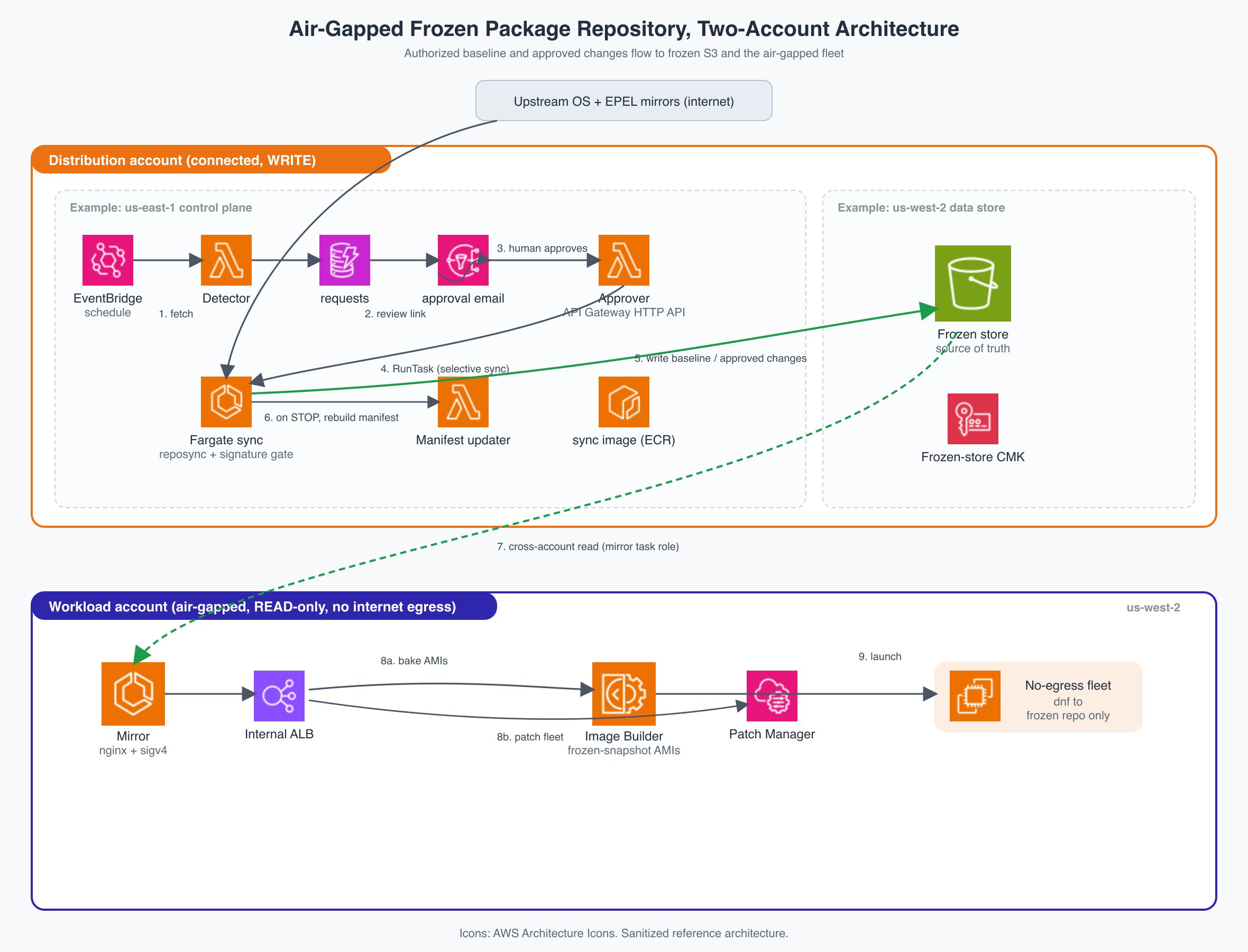
Figure 1: Two-account, cross-Region architecture separating the connected Distribution account from the air-gapped Workload account
The Distribution account owns the writable control plane and the only internet path. It runs Amazon EventBridge, three AWS Lambda functions, Amazon DynamoDB, Amazon Simple Notification Service (Amazon SNS), and the AWS Fargate sync task. It also owns the frozen S3 repository and its AWS Key Management Service (AWS KMS) key.
The Workload account is air-gapped and read-only with respect to the repository. It runs the internal HTTPS mirror, EC2 Image Builder, Patch Manager, and the compute fleet. Its mirror task role can read and decrypt frozen content but cannot write it.
The sample repository places the Distribution control plane in US East (N. Virginia), the frozen store in US West (Oregon), and the Workload resources in US West (Oregon) to demonstrate API-only cross-account and cross-Region operation. This Region split is not required. In most deployments, place the Distribution control plane and frozen store in the same Region unless data residency, disaster recovery, or an existing regional footprint justifies the additional latency, transfer cost, and KMS policy complexity.
The two accounts do not need Amazon Virtual Private Cloud (VPC) peering or a transit gateway. Cross-account access uses S3, KMS, and IAM policies. The VPC address ranges can overlap because no VPC-to-VPC route is required.
Package baseline and scheduled upgrade workflow
Before the scheduled workflow begins, your organization must authorize and run a full sync to establish the initial repository baseline. This bootstrap does not provide package-by-package approval. If your organization requires individual approval for every initial RPM, your team should generate and review the baseline manifest before promotion instead of relying solely on deployment authorization.
After the baseline, the detector runs on a customer-defined schedule. The reference implementation defaults to monthly. The following diagram shows the bootstrap distinction and the selective approval flow.
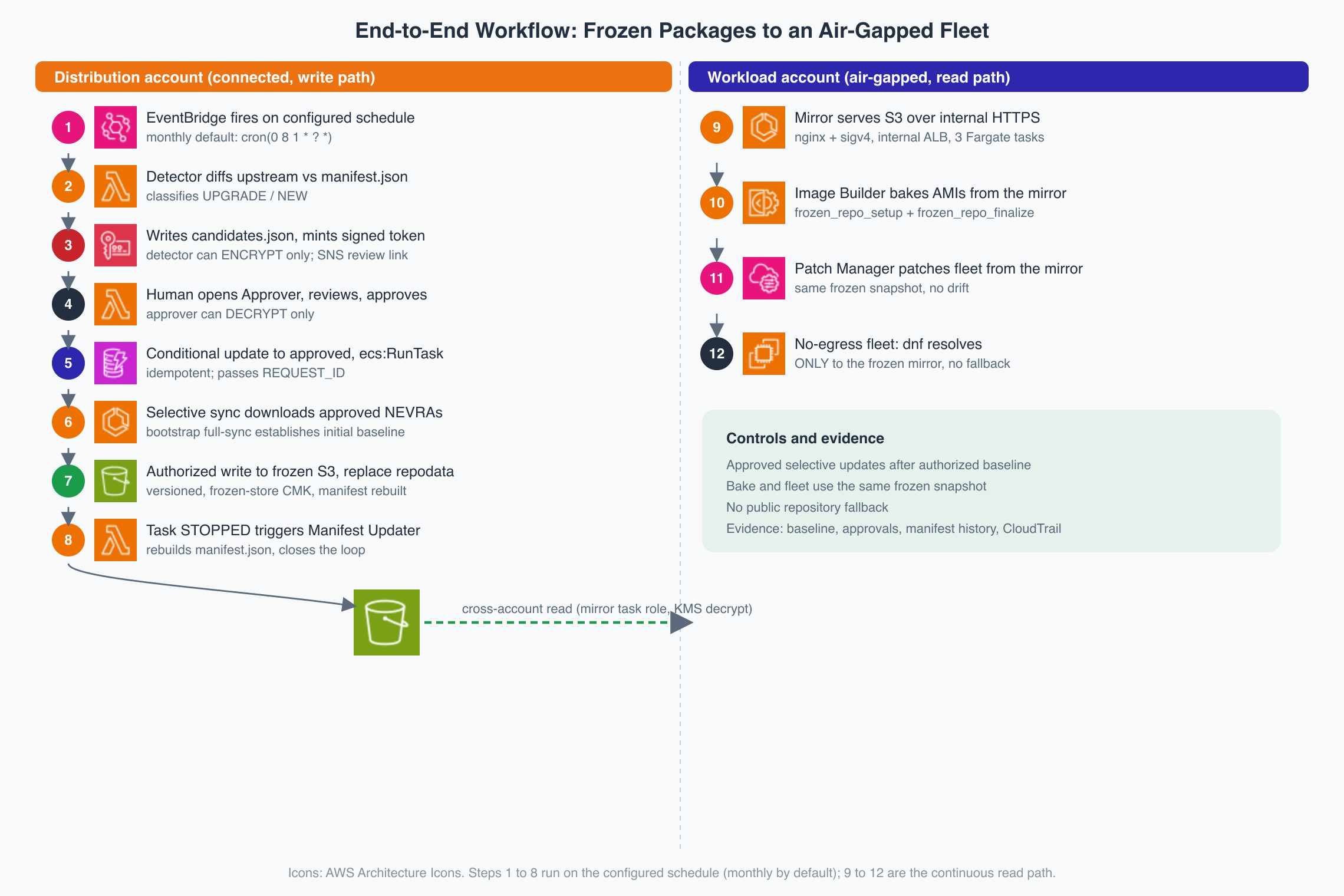
Figure 2: Package baseline bootstrap and the scheduled selective approval workflow
- Detect. Amazon EventBridge invokes the detector Lambda function on the configured schedule. The detector compares upstream repository metadata with
manifest.json, which records the current frozen inventory. It classifies a newer version as an upgrade and an absent package as new. - Request approval. The detector writes candidates to S3, creates a KMS-protected review token carrying the request ID and expiry, and is designed to send a review link through SNS. The detector can use
kms:Encryptbut notkms:Decrypt. - Review. A human opens the review page through an Amazon API Gateway HTTP API, reviews the proposed package versions, and chooses which changes to approve. The approver can use
kms:Decryptbut notkms:Encrypt. - Record and start. A conditional DynamoDB update changes a request from
pendingtoapprovedonly once. The approver then starts the Fargate sync task and passes the request ID. - Selective sync. The task reads the approved package list, downloads those package versions, is designed to perform verification checks, and regenerates repository metadata.
- Update the manifest. When the task stops, Amazon EventBridge invokes the manifest-updater Lambda function. It archives the outgoing manifest and records the resulting repository inventory.
The approval decision controls adoption. It does not prove that package code is safe. Advisory review, vulnerability scanning, testing, and staged rollout remain in separate controls.
Evidence from the approval workflow
The token ties a review action to a specific request and expiry. Separating kms:Encrypt from kms:Decrypt prevents either Lambda function from performing both token roles. The conditional DynamoDB write makes the approval transition single-use.
DynamoDB records request state, AWS CloudTrail records control-plane API activity, and manifest history records repository inventory changes. These service records can feed the organization’s existing audit and evidence-management workflow. Object-level S3 access auditing requires CloudTrail S3 data events. KMS activity alone is not a substitute for those events.
The frozen package repository on Amazon S3
The following diagram shows the per-OS, per-component prefix layout, and manifest objects.
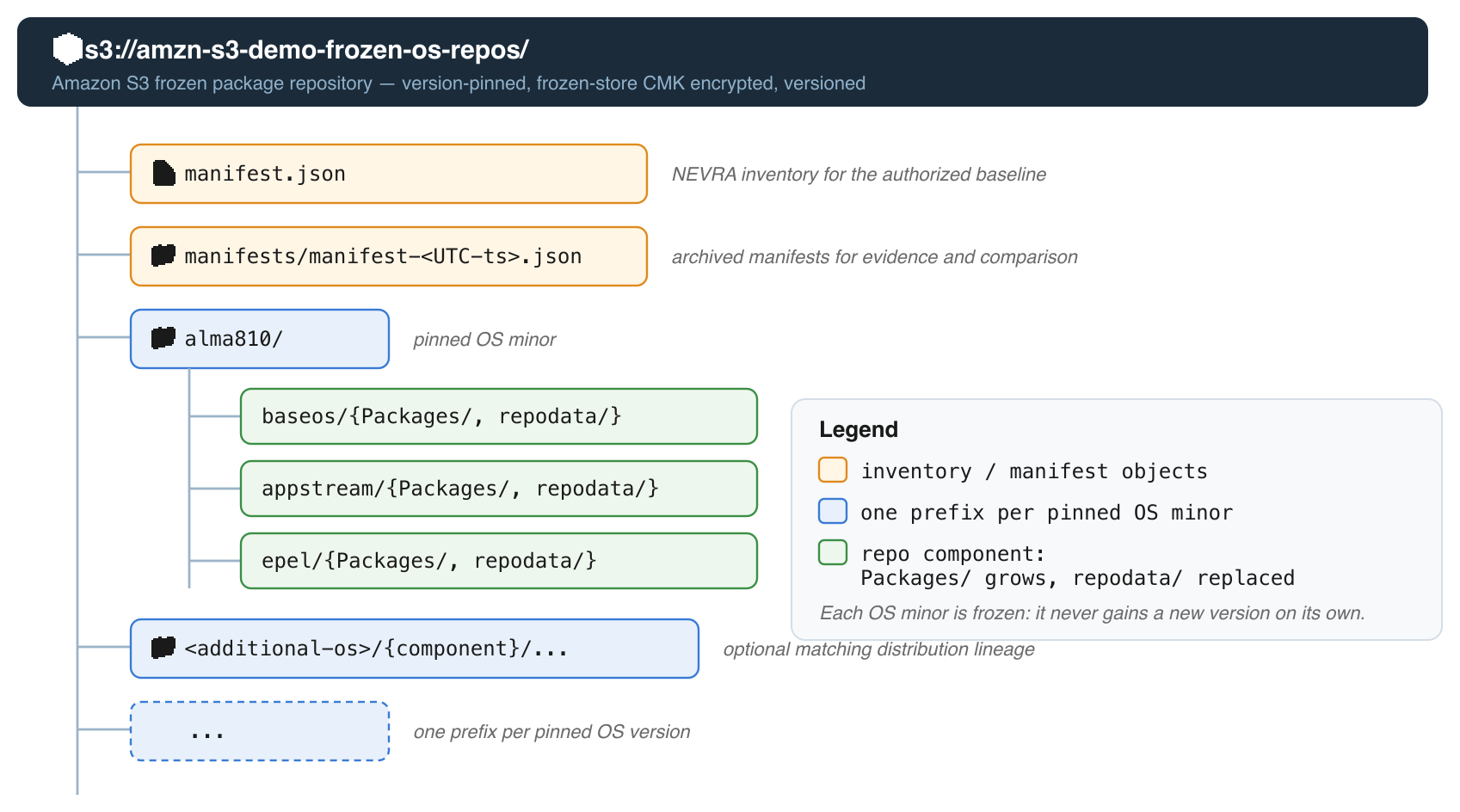
Figure 3: Per-OS, per-component prefix layout of the frozen repository on Amazon S3
Each pinned operating system version receives its own prefix. Repository components such as BaseOS, AppStream, and EPEL contain Packages/ and repodata/ trees. manifest.json records the active inventory, and archived manifests preserve historical evidence and comparison points.
Your organization configures the bucket with versioning and SSE-KMS. Public RPM content does not require a customer-managed KMS key for confidentiality, so your organization could instead configure SSE-S3 for encryption at rest. However, SSE-S3 would remove the separate cross-account authorization control provided by the customer-managed KMS key policy. The customer managed key is used here for explicit cross-account key-policy control and revocation, and the manifests reveal the fleet’s exact software inventory. S3 Bucket Keys reduce KMS request volume. If object-level access evidence is required, enable CloudTrail S3 data events.
A rollback must restore a coherent repository state, including metadata and any required object versions. Restoring only manifest.json does not roll back repository contents.
Building, patching, and running the fleet
At AMI build time, an Image Builder component installs the configured repository keys, moves existing repository definitions aside, and writes one frozen repository definition per component. It locks the package manager to the frozen repository directory, fetches metadata through the internal mirror, and fails the build if the mirror validation step fails. An optional curated package list demonstrates that the AMI can install real packages through the frozen path.
Patch Manager uses the same mirror for the running fleet. A host created from an older AMI and a newly built host are therefore patched toward the same frozen snapshot. Instances run without an Amazon VPC NAT gateway, public IP, or an Amazon VPC internet gateway route in the Workload VPC, and their repository configuration contains no public fallback.
The intended verification model is defense in depth: the sync task helps verify a vendor’s signature before content enters the trusted repository, and the system verifies it again at installation through dnf. The ingestion gate helps reject digest-only results and can be configured to help confirm that only valid package signatures from a trusted lineage key are accepted.
The package mirror
Nginx fronts aws-sigv4-proxy, which signs cross-account S3 GET requests using the mirror task role. To a client, the service appears as a standard HTTPS package repository behind an internal Application Load Balancer and private DNS name.
Use the latest version of aws-sigv4-proxy (current latest is v1.12). This version 1.12 contains the fix for signing S3 paths (or the OS package names) with special characters such as +. Earlier versions can return SignatureDoesNotMatch. The reference implementation pins the reviewed v1.12 release commit immutably. Keep it current through dependency-update reviews.
Security boundaries and limits
The design provides the following controls:
- No automatic public-repository adoption: A new upstream version enters the selective path only after an explicit, recorded decision by the user.
- Repository ingestion and installation checks: You configure strict sync-time signature validation to help validate content before it enters the trusted store.
dnfverifies again during installation. - No package-channel egress: Workload instances are configured to prevent access to public package sources.
- A read-only workload boundary: A Workload-account principal cannot modify the frozen repository.
Human approval is not a malware detection. A reviewer cannot reliably identify a backdoor in a legitimately signed package merely by seeing its name, version, or changelog. Use vulnerability intelligence, scanning, pre-production tests, and staged deployment as additional controls.
The approval state, manifests, and CloudTrail records can help support evidence for control frameworks such as SOC 2 change management, ISO 27001 patch-management controls, and FDA 21 CFR Part 11 electronic records. Applicability depends on the organization’s environment, audit scope, and assessor. Confirm it with the compliance team under the AWS shared responsibility model.
Cost and operations
Cost depends on the amount of repository content and the chosen networking and availability design. Components can include S3 storage and requests, KMS requests, Lambda invocations, DynamoDB, SNS, Fargate tasks, the internal load balancer, Distribution-account internet egress, Amazon VPC endpoints, and AMI snapshots. A three-task always-on mirror costs more than an S3 bucket alone. Estimate the target topology with current AWS pricing rather than applying a fixed monthly figure from the sample.
Run detection and review at an interval defined by patch policy and risk tolerance. The supplied default is monthly, but the Terraform input is configurable. If a package change must be reversed, restore a tested, coherent repository version and rebuild or patch affected hosts as appropriate.
Prerequisites
To set up the reference implementation, work through these in order:
- Two AWS accounts: a connected Distribution account and an air-gapped Workload account.
- Deployment tools: Terraform 1.5 or later, Terragrunt, Finch or Docker, and Python with
pip. - AWS Command Line Interface (AWS CLI): one named profile per account.
- Distribution networking: private subnets with internet egress that works without public IPs, security-group egress on port 443, and DNS resolution for public names.
- Workload networking: VPC interface endpoints for
ssm,ssmmessages,ec2messages,logs,kms, andimagebuilder, plus an S3 gateway endpoint. - Internal mirror identity: an AWS Certificate Manager (ACM) certificate and a private hosted zone. If the parent AMI does not trust the issuing CA, configure the CA file so the build installs the trust anchor.
- Package lineage: a parent AMI, repositories, and signing keys from the same distribution lineage. A RHEL subscription is required when retrieving genuine entitled Red Hat content.
- Optional deployment roles: otherwise, the stack uses each profile’s credentials.
The deployment creates state backend and Amazon Elastic Container Registry (ECR) repositories. Do not create those ECR repositories separately before applying their own Terraform units.
Reference implementation
The companion repository provides Terraform modules, Lambda handlers, two container images, a Terragrunt two-account layout, and Makefile targets for deployment and verification. The shipped alma810 example defaults to the AlmaLinux lineage (RHEL family).
Choose one distribution lineage before deployment:
- AlmaLinux Parent Image default: use an AlmaLinux parent AMI, AlmaLinux vault repositories, EPEL, and the included AlmaLinux and EPEL signing keys. No Red Hat subscription is required.
- Genuine RHEL Parent Image: use a Red Hat parent AMI, an entitled Red Hat content source, and Red Hat signing keys. The customer supplies the Red Hat subscription and content-access integration.
Note: The reference implementation only provides AlmaLinux lineage setup, not genuine RHEL. If you choose to use a genuine RHEL parent image lineage, only the reference implementation code needs to be updated to fetch the Red Hat credentials or subscription access, and the rest of the workflow remains the same.
Please follow the repository README for detailed setup instructions:
- Fill in
environments/config.hcland both account files with the two accounts, networking, mirror certificate, package lineage, and parent AMI. - Create the Terraform state backend with
make bootstrap DIST_PROFILE=<dist> WORK_PROFILE=<work>. - Review both account plans with
make plan DIST_PROFILE=<dist> WORK_PROFILE=<work>. - Deploy in dependency order with
make all BASELINE_APPROVED=true DIST_PROFILE=<dist> WORK_PROFILE=<work>. The baseline sync can take several hours.
Validate the internal package management workflow
Validation begins by running the AlmaLinux EC2 Image Builder pipeline. A successful build produces private, encrypted AMIs in the configured AWS Regions. To validate the configuration, launch a test instance from the generated AMI in a no-egress Workload subnet and verify that the instance is connected to the internal frozen repository for all package management workflow.

Figure 4: Instance showing only the internal frozen repositories enabled, with no public repository configured
The output confirms that only the internal frozen AlmaLinux repositories are enabled: frozen-baseos, frozen-appstream, and frozen-epel. The dnf makecache command successfully downloads metadata for all three repositories through the private mirror. No public repository is configured or used.
Now try installing, upgrading, or installing a new package to test that package operations are served by the internal frozen repository.
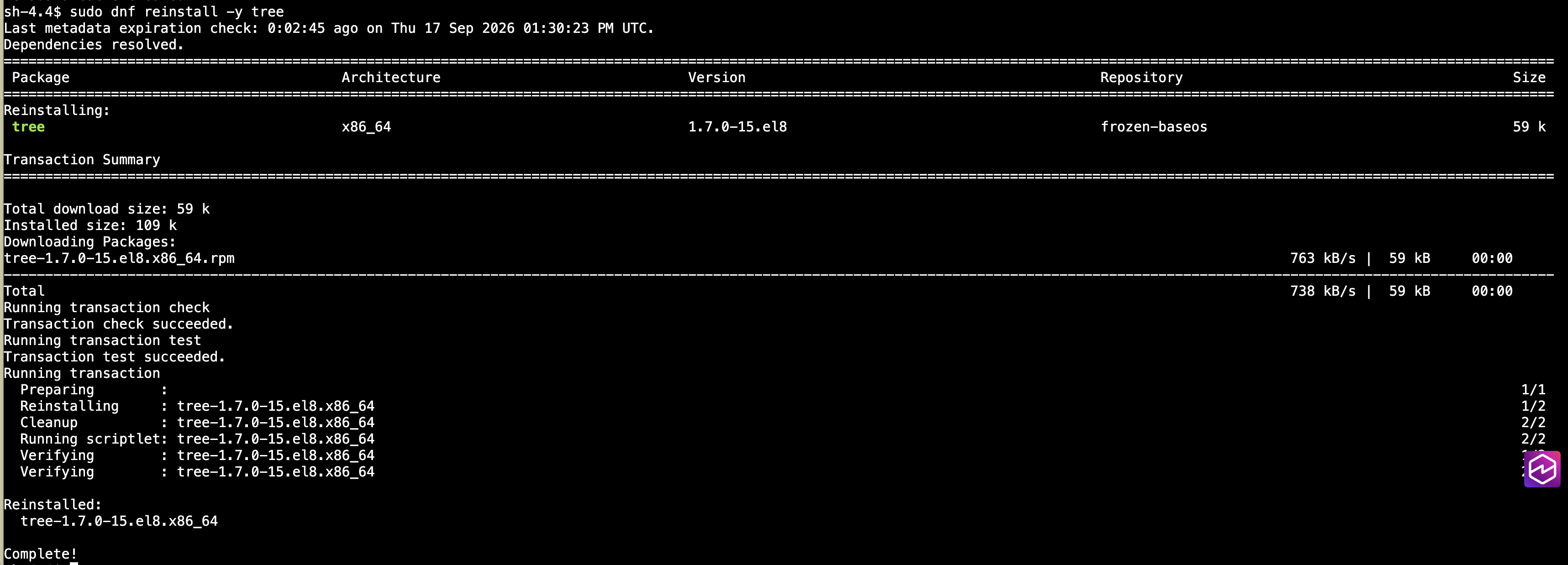
Figure 5: Package install and upgrade served by the internal frozen repository
Recommended practices
- Fail closed on approval data. If the approved package list cannot be retrieved, stop the sync task and avoid substituting a full sync.
- Govern the initial baseline. Record who authorized the bootstrap full sync, or require explicit review of its manifest before promotion.
- Require vendor signatures at ingestion. Do not treat a valid package digest as equivalent to a trusted signature.
- Keep package lineages consistent. Parent AMI, repository content, and signing keys must come from the same distribution lineage.
- Use a customer-defined review cadence. Monthly is only the sample default.
- Use immutable dependency references with active updates. Require
aws-sigv4-proxyv1.12 or later, pin the reviewed artifact by digest or full SHA, and automate update proposals. - Test rollback as a repository operation. Restore metadata and objects together, then validate the mirror before using the restored state.
Clean up
The walkthrough deploys billable resources in both accounts. Please follow the repository README for detailed setup cleanup instructions.
Conclusion
This pattern separates connected package ingestion from an air-gapped fleet, provides an authorized package baseline and an explicit decision point for later package changes or upgrades, and keeps image builds and running hosts on one frozen repository snapshot. To learn more, visit the EC2 Image Builder service page, the EC2 Image Builder documentation, the Patch Manager documentation, and the Amazon S3 user guide. The reference implementation is available in aws-samples.