Artificial Intelligence
Category: Amazon Nova
Scaling UX testing with Amazon Nova Act: A new approach to user flow analysis
Using generative AI enables parallel execution of comprehensive user flow testing at scale. This solution demonstrates how to build a cloud-deployed UX testing platform that automatically generates test scenarios from documentation, executes user flows at scale using the intelligent navigation capabilities of Nova Act, and provides actionable insights through automated analysis.
ScienceSoft’s HIPAA-compliant AI voice scheduler built on AWS
In this post, you will learn how ScienceSoft, an Amazon Web Services (AWS) Services Partner, integrated Amazon Nova 2 Sonic with Amazon Bedrock Guardrails to build a Health Insurance Portability and Accountability Act (HIPAA)-compliant AI voice scheduler. You will see how the solution addresses healthcare scheduling challenges while maintaining privacy, compliance, and responsible AI standards, and how you can apply the same architecture to your own workflows.
Pair Nova 2 Lite with Claude for cost-optimized document processing
In this post, we show how pairing Amazon Nova 2 Lite with Anthropic’s Claude Sonnet 4.6 delivers an efficient solution for digitizing scanned documents at scale. We built a two-model pipeline on Amazon Bedrock for digitizing scanned yearbook pages. Amazon Nova 2 Lite handles native multimodal extraction in a single call: detecting photos, extracting visible names with coordinates, and returning page-level metadata. Claude Sonnet 4.6 then performs spatial reasoning to match names to faces based on page layout.
Build a healthcare appointment agent with Amazon Nova 2 Sonic
In this post, you will learn how to build a voice agent that handles appointment reminder conversations using Amazon Nova 2 Sonic and Amazon Bedrock AgentCore. The agent authenticates patients by voice, manages appointments (confirm, cancel, or reschedule), collects pre-visit health information, and escalates to human staff when needed. You handle routine calls at scale, which can help reduce no-show rates. This sample focuses on the agentic side of the problem: voice conversation and tool orchestration. A browser-based interface is included for testing. To connect the agent to actual phone lines for outbound dialing, you would integrate a telephony service such as Amazon Connect Customer.
How Loka Built a Natural, Low-Latency Voice Agent with Amazon Nova 2 Sonic
In this post, we demonstrate the architecture and approach Loka used to solve a common frustration: robotic, slow voice assistants that cause customers to hang up, damaging brand reputation and driving up support costs.
Embed the world: Multimodal AI for searchable aerial imagery at scale
In this post, we walk through the problem space, our architecture on Amazon Bedrock and Amazon OpenSearch Serverless, the evaluation methodology we built on OpenStreetMap ground truth, four experiments that compared embedding models, fusion strategies, captioning, and search methods, and the practical guidance you can apply when building a similar system. You’ll learn which design choices move the needle for geospatial semantic search, including why Amazon Nova Multimodal Embeddings delivered the highest F1 scores across both benchmark queries in our evaluation. The work described here evolved into Vexcel Intelligence, a searchable imagery product.
Evaluate your Amazon Nova Sonic voice agent at scale, no microphone required
In this post, we walk you through the Nova Sonic Test Harness, an open source framework that we built to solve both problems. It serves as a rapid iteration tool for tuning system prompts and tool configurations (run a conversation, see results, adjust, repeat) and as a comprehensive evaluation framework for validating voice agent quality at scale. It runs complete multi-turn conversations with Amazon Nova Sonic automatically, evaluates them using LLM-as-judge techniques, and can even detect cases where the model’s audio output doesn’t match its text output (audio hallucinations). No microphone required.
The art and science of hyperparameter optimization on Amazon Nova Forge
Fine-tuning for domain-specific tasks means improving performance in one area without degrading the model’s general capabilities, and getting that balance right is harder than it looks. This post walks through how to navigate that balance, from selecting the right customization strategy for your data and task, to configuring the training parameters that most influence outcomes, like learning rate, batch size, and checkpointing. We also cover the common mistakes that lead to wasted training runs and how to catch them early, so you can improve domain performance without degrading general capabilities or burning through compute on avoidable failures.
By the end, you will know how to improve domain performance without degrading general capabilities and how to avoid the expensive failures that come from getting the balance wrong.
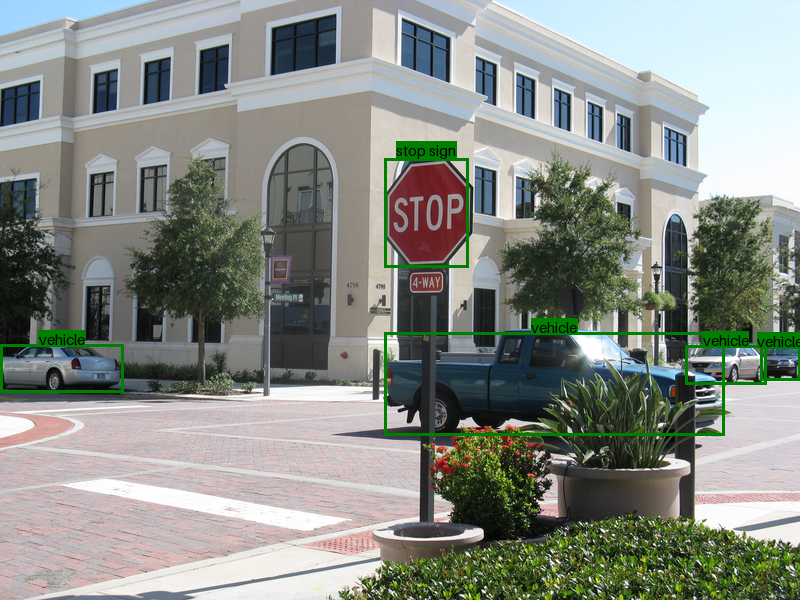
Object detection with Amazon Nova 2 Lite
In this post, we’ll walk through implementing object detection with Amazon Nova 2 Lite. You’ll learn how to deploy an object detection application using Amazon Bedrock, AWS Lambda, and Amazon API Gateway. You’ll also learn how to craft effective prompts, process structured JSON output, and visualize results. We explore practical applications across manufacturing, agriculture, and logistics.
Evaluating Deep Agents using LangSmith on AWS
This post combines learnings from LangChain’s work on evaluating deep agents and Anthropic’s guide to demystifying evals for AI agents into a practical guide. In this post, you will learn how to: 1) apply five evaluation patterns for deep agents, 2) build offline evaluations using pytest and LangSmith, and 3) configure online monitoring for production. The walkthrough uses a text-to-SQL deep agent with Amazon Bedrock for the full development to production lifecycle.