Artificial Intelligence
Category: Technical How-to
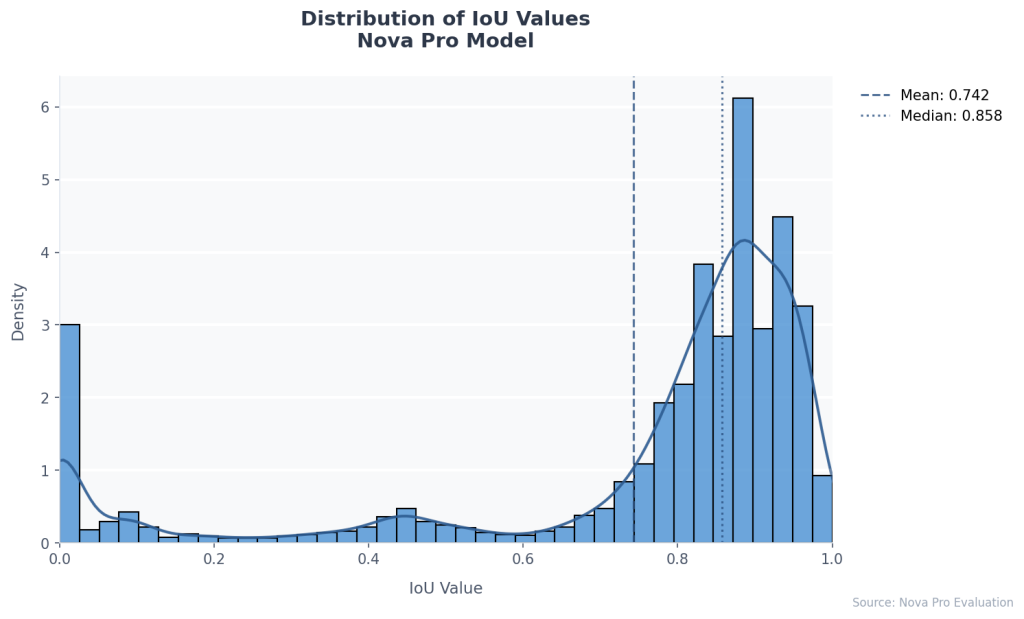
Benchmarking document information localization with Amazon Nova
This post demonstrates how to use foundation models (FMs) in Amazon Bedrock, specifically Amazon Nova Pro, to achieve high-accuracy document field localization while dramatically simplifying implementation. We show how these models can precisely locate and interpret document fields with minimal frontend effort, reducing processing errors and manual intervention.
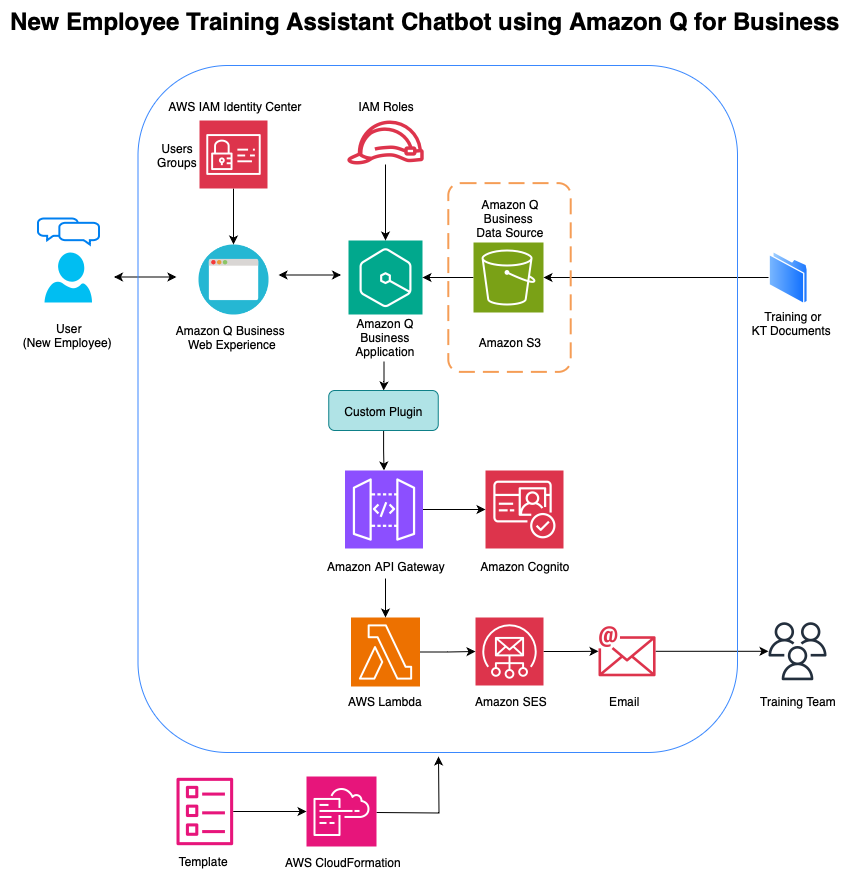
Streamline employee training with an intelligent chatbot powered by Amazon Q Business
In this post, we explore how to design and implement custom plugins for Amazon Q Business to create an intelligent chatbot that streamlines employee training by retrieving answers from training materials. The solution implements secure API access using Amazon Cognito for user authentication and authorization, processes multiple document formats, and includes features like RAG-enhanced responses and email escalation capabilities through custom plugins.
Build a scalable containerized web application on AWS using the MERN stack with Amazon Q Developer – Part 1
In a traditional SDLC, a lot of time is spent in the different phases researching approaches that can deliver on requirements: iterating over design changes, writing, testing and reviewing code, and configuring infrastructure. In this post, you learned about the experience and saw productivity gains you can realize by using Amazon Q Developer as a coding assistant to build a scalable MERN stack web application on AWS.
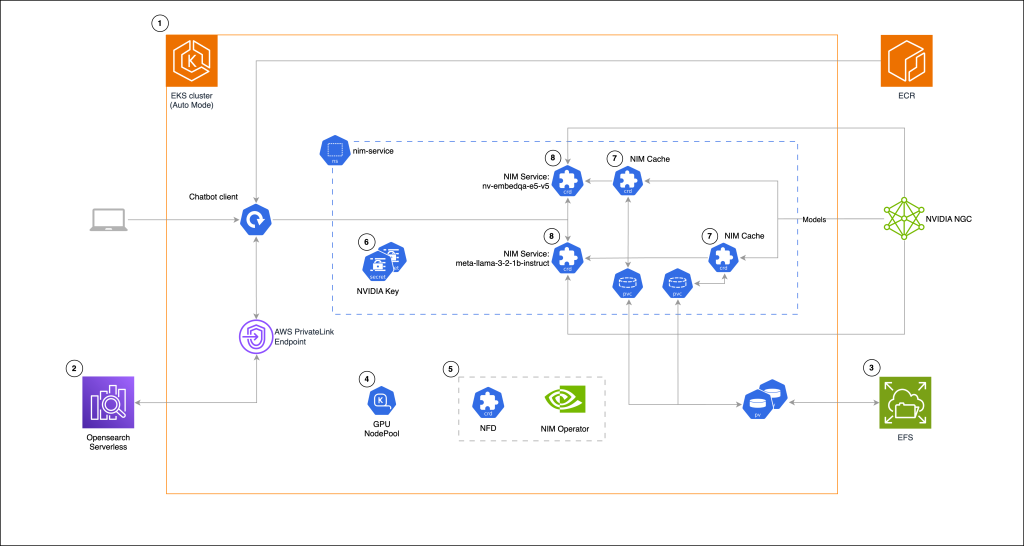
Building a RAG chat-based assistant on Amazon EKS Auto Mode and NVIDIA NIMs
In this post, we demonstrate the implementation of a practical RAG chat-based assistant using a comprehensive stack of modern technologies. The solution uses NVIDIA NIMs for both LLM inference and text embedding services, with the NIM Operator handling their deployment and management. The architecture incorporates Amazon OpenSearch Serverless to store and query high-dimensional vector embeddings for similarity search.
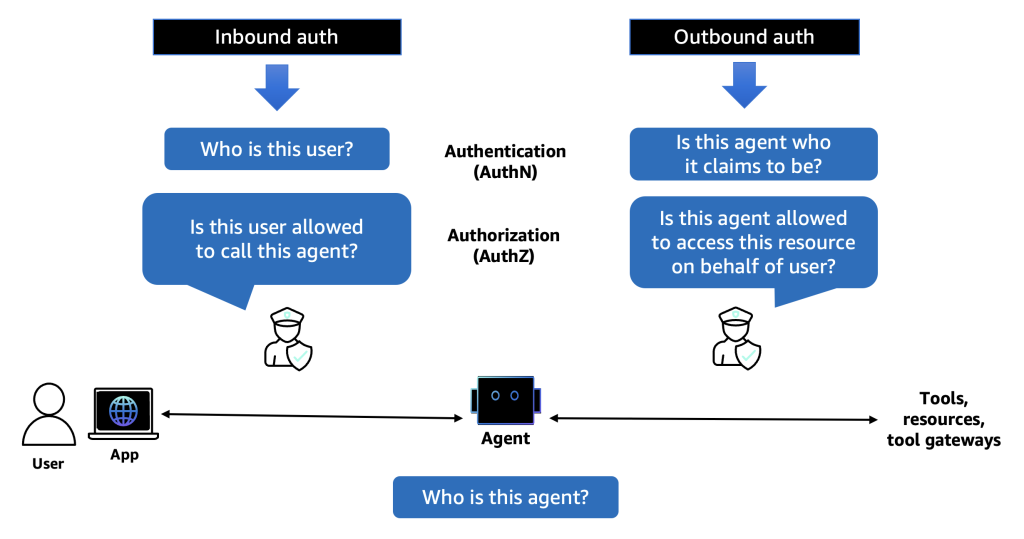
Introducing Amazon Bedrock AgentCore Identity: Securing agentic AI at scale
In this post, we explore Amazon Bedrock AgentCore Identity, a comprehensive identity and access management service purpose-built for AI agents that enables secure access to AWS resources and third-party tools. The service provides robust identity management features including agent identity directory, agent authorizer, resource credential provider, and resource token vault to help organizations deploy AI agents securely at scale.
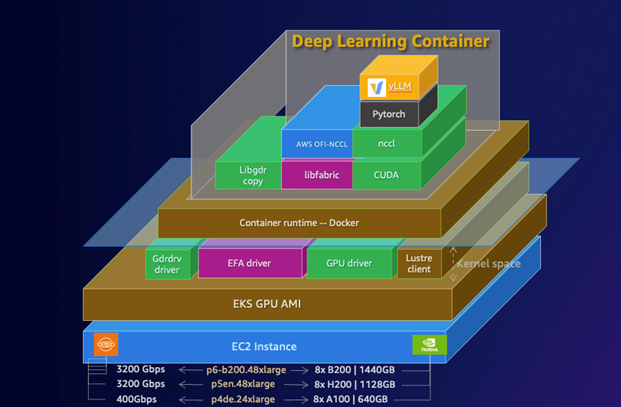
Deploy LLMs on Amazon EKS using vLLM Deep Learning Containers
In this post, we demonstrate how to deploy the DeepSeek-R1-Distill-Qwen-32B model using AWS DLCs for vLLMs on Amazon EKS, showcasing how these purpose-built containers simplify deployment of this powerful inference engine. This solution can help you solve the complex infrastructure challenges of deploying LLMs while maintaining performance and cost-efficiency.
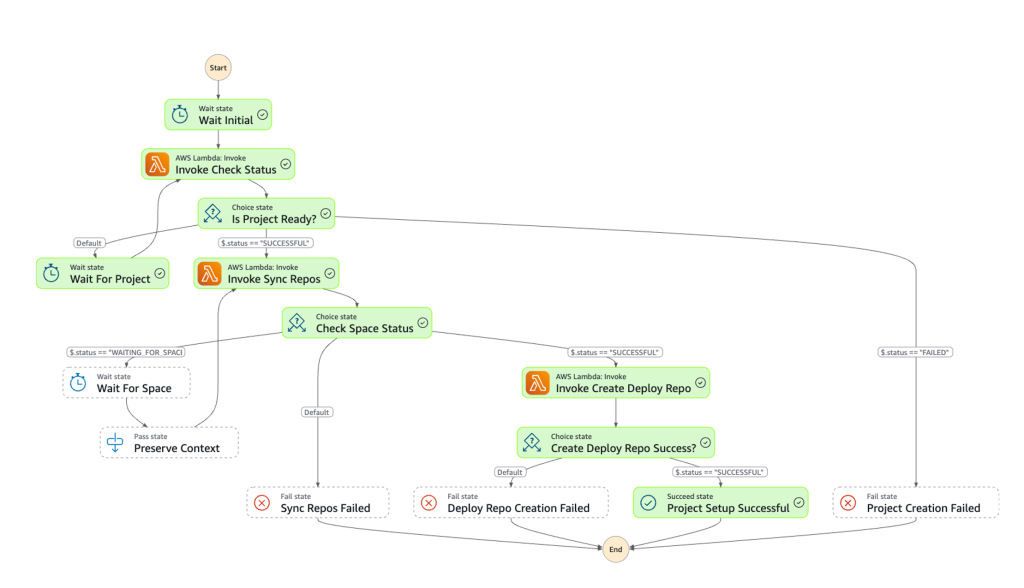
Automate ModelOps with SageMaker Unified Studio, Part 2: Technical implementation
In this post, we focus on implementing this architecture with step-by-step guidance and reference code. We provide a detailed technical walkthrough that addresses the needs of two critical personas in the AI development lifecycle: the administrator who establishes governance and infrastructure through automated templates, and the data scientist who uses SageMaker Unified Studio for model development without managing the underlying infrastructure.
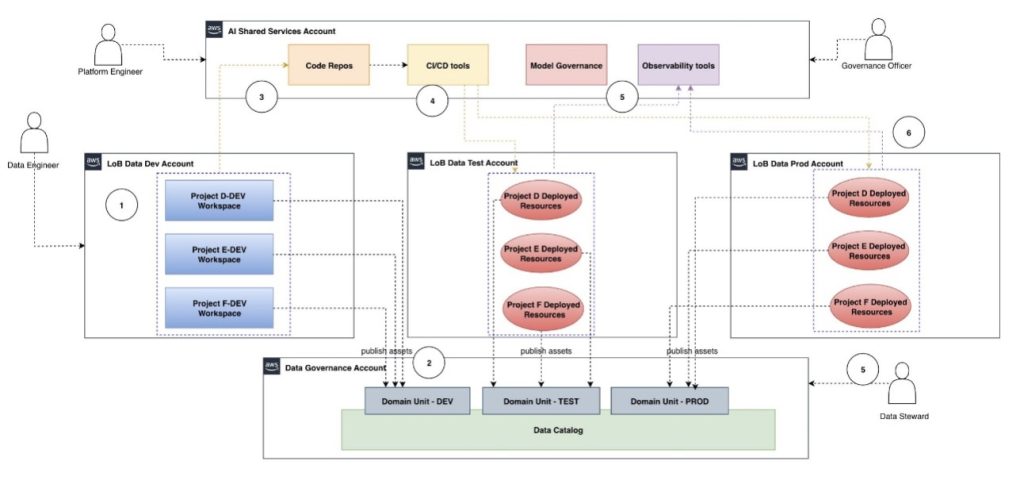
Automate ModelOps with Amazon SageMaker Unified Studio, Part 1: Solution architecture
This post presents architectural strategies and a scalable framework that helps organizations manage multi-tenant environments, automate consistently, and embed governance controls as they scale their AI initiatives with SageMaker Unified Studio.
Automate enterprise workflows by integrating Salesforce Agentforce with Amazon Bedrock Agents
This post explores a practical collaboration, integrating Salesforce Agentforce with Amazon Bedrock Agents and Amazon Redshift, to automate enterprise workflows.
How Amazon Bedrock powers next-generation account planning at AWS
In this post, we share how we built Account Plan Pulse, a generative AI tool designed to streamline and enhance the account planning process, using Amazon Bedrock. Pulse reduces review time and provides actionable account plan summaries for ease of collaboration and consumption, helping AWS sales teams better serve our customers.