Artificial Intelligence
Category: Technical How-to
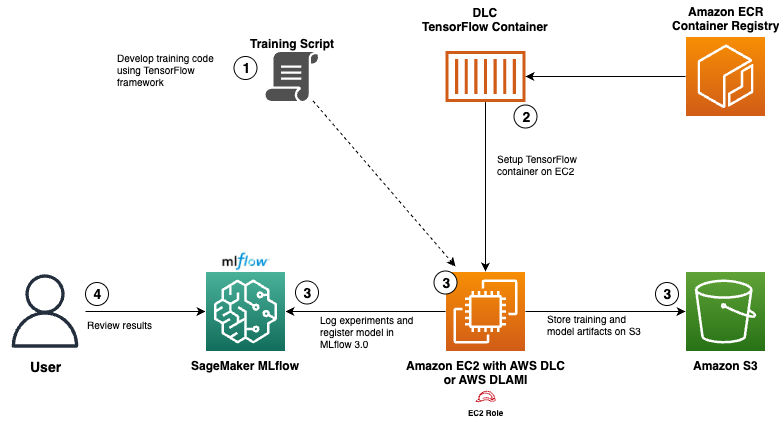
Use AWS Deep Learning Containers with Amazon SageMaker AI managed MLflow
In this post, we show how to integrate AWS DLCs with MLflow to create a solution that balances infrastructure control with robust ML governance. We walk through a functional setup that your team can use to meet your specialized requirements while significantly reducing the time and resources needed for ML lifecycle management.
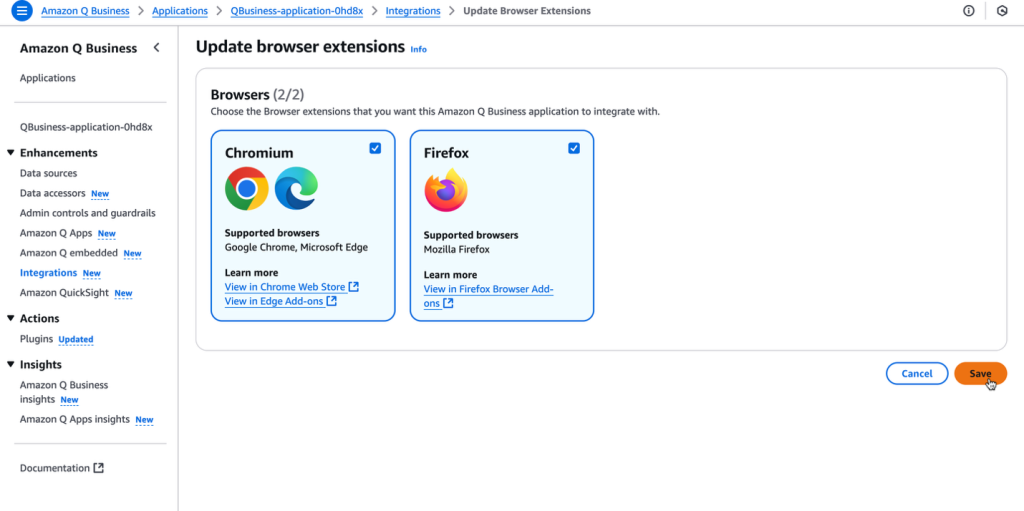
Supercharge your organization’s productivity with the Amazon Q Business browser extension
In this post, we showed how to use the Amazon Q Business browser extension to give your team seamless access to AI-driven insights and assistance. The browser extension is now available in US East (N. Virginia) and US West (Oregon) AWS Regions for Mozilla, Google Chrome, and Microsoft Edge as part of the Lite Subscription.
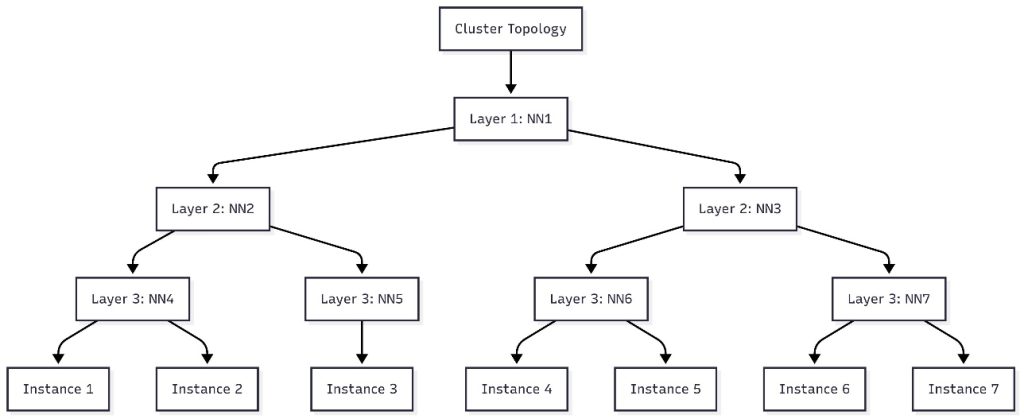
Schedule topology-aware workloads using Amazon SageMaker HyperPod task governance
In this post, we introduce topology-aware scheduling with SageMaker HyperPod task governance by submitting jobs that represent hierarchical network information. We provide details about how to use SageMaker HyperPod task governance to optimize your job efficiency.
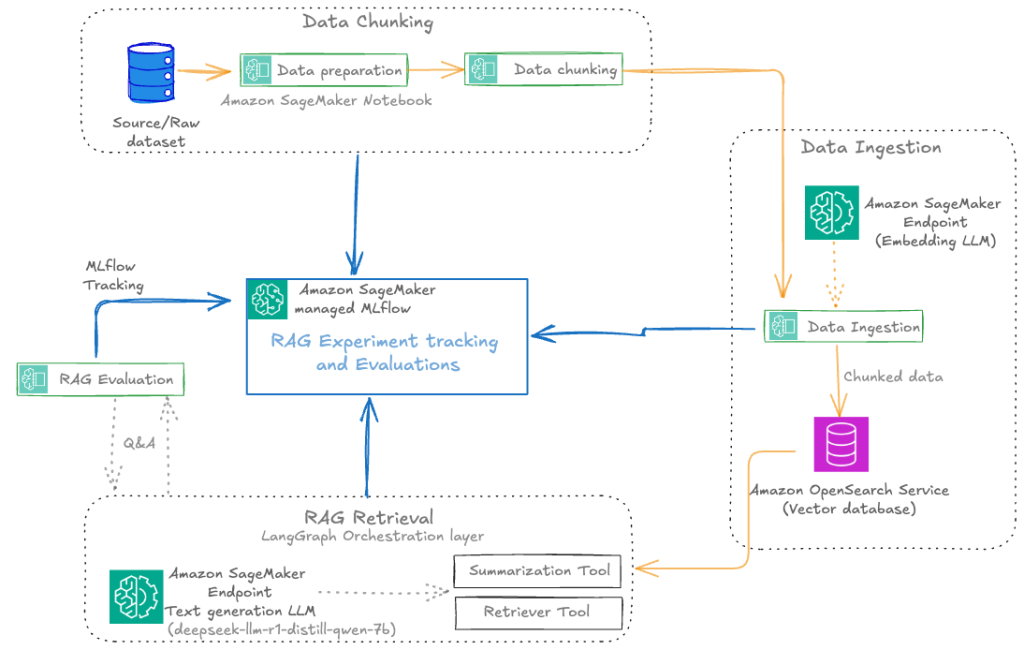
Automate advanced agentic RAG pipeline with Amazon SageMaker AI
In this post, we walk through how to streamline your RAG development lifecycle from experimentation to automation, helping you operationalize your RAG solution for production deployments with Amazon SageMaker AI, helping your team experiment efficiently, collaborate effectively, and drive continuous improvement.
Unlock model insights with log probability support for Amazon Bedrock Custom Model Import
In this post, we explore how log probabilities work with imported models in Amazon Bedrock. You will learn what log probabilities are, how to enable them in your API calls, and how to interpret the returned data. We also highlight practical applications—from detecting potential hallucinations to optimizing RAG systems and evaluating fine-tuned models—that demonstrate how these insights can improve your AI applications, helping you build more trustworthy solutions with your custom models.
Migrate from Anthropic’s Claude Sonnet 3.x to Claude Sonnet 4.x on Amazon Bedrock
This post provides a systematic approach to migrating from Anthropic’s Claude 3.5 Sonnet to Claude Sonnet 4.5 on Amazon Bedrock. We examine the key model differences, highlight essential migration considerations, and deliver proven best practices to transform this necessary transition into a strategic advantage that drives measurable value for your organization.
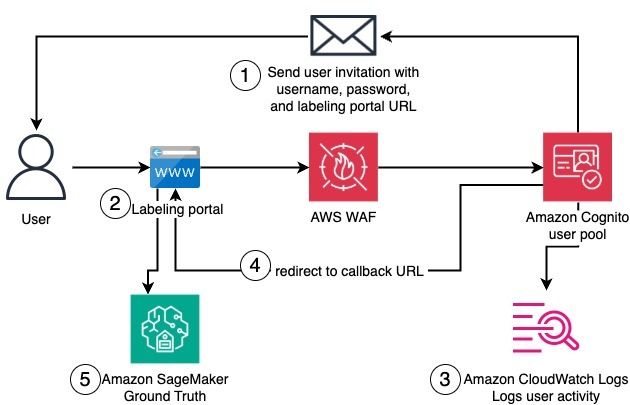
Create a private workforce on Amazon SageMaker Ground Truth with the AWS CDK
In this post, we present a complete solution for programmatically creating private workforces on Amazon SageMaker AI using the AWS Cloud Development Kit (AWS CDK), including the setup of a dedicated, fully configured Amazon Cognito user pool.
TII Falcon-H1 models now available on Amazon Bedrock Marketplace and Amazon SageMaker JumpStart
We are excited to announce the availability of the Technology Innovation Institute (TII)’s Falcon-H1 models on Amazon Bedrock Marketplace and Amazon SageMaker JumpStart. With this launch, developers and data scientists can now use six instruction-tuned Falcon-H1 models (0.5B, 1.5B, 1.5B-Deep, 3B, 7B, and 34B) on AWS, and have access to a comprehensive suite of hybrid architecture models that combine traditional attention mechanisms with State Space Models (SSMs) to deliver exceptional performance with unprecedented efficiency.
Build trustworthy AI agents with Amazon Bedrock AgentCore Observability
In this post, we walk you through implementation options for both agents hosted on Amazon Bedrock AgentCore Runtime and agents hosted on other services like Amazon Elastic Compute Cloud (Amazon EC2), Amazon Elastic Kubernetes Service (Amazon EKS), AWS Lambda, or alternative cloud providers. We also share best practices for incorporating observability throughout the development lifecycle.
Maximize HyperPod Cluster utilization with HyperPod task governance fine-grained quota allocation
We are excited to announce the general availability of fine-grained compute and memory quota allocation with HyperPod task governance. With this capability, customers can optimize Amazon SageMaker HyperPod cluster utilization on Amazon Elastic Kubernetes Service (Amazon EKS), distribute fair usage, and support efficient resource allocation across different teams or projects. For more information, see HyperPod task governance best […]