AWS Messaging Blog
How to build a serverless mass email solution with Amazon SES
Sending mass email campaigns presents significant challenges for many organizations. Enterprises often spend millions annually on proprietary email systems that are inflexible and expensive to maintain. These legacy platforms can restrict sending capacity, offer limited control, and require costly licensing agreements. The challenges intensify when handling large-scale communications like automated notifications, bulk marketing campaigns, and system-generated alerts. These scenarios create reliability issues, scaling limitations, and rising costs that impact teams’ ability to communicate effectively with customers.
Recently, a large federal organization faced similar challenges, spending over a million dollars annually on their email campaigns. By building a custom email solution on AWS, they sent a 2 million email campaign for approximately $300. This cost includes Amazon Simple Email Service (Amazon SES) and other AWS services. This transformation cut costs while providing the scalability and flexibility they needed for their growing campaign needs.
This transformation succeeded because building a cloud-native serverless mass email solution offers several advantages:
- Cost optimization.
- Pay only for email sent and actual compute resources used.
- Remove costs associated with managing email servers.
- Remove expensive licensing fees and maintenance overhead.
- Scalability and reliability.
- Automatically handle varying email volumes without infrastructure changes.
- Support reliable delivery through built-in retry mechanisms and error handling.
- Perform consistently during peak sending periods.
- Security and compliance.
- Secure access control through AWS Identity and Access Management (IAM) roles with least-privilege principles.
- Comprehensive audit trails for all email campaigns with detailed logging to support your reporting requirements.
- Detailed logging that customers can use for their compliance and reporting requirements.
- Data encryption in transit and at rest that you can configure.
In this post, we explore the architecture of a cloud-native serverless mass email solution that integrates Amazon SES with AWS Step Functions, Amazon API Gateway, and Amazon DynamoDB. You will learn how these services work together to process email campaigns at scale while minimizing cost. Let’s get started!
Solution overview
The serverless mass email solution consists of two main components: a user-friendly frontend interface and a scalable serverless backend. The frontend operates completely independently from the backend processing system, communicating through RESTful APIs from Amazon API Gateway. With this architecture, you can use the provided frontend interface as-is. Alternatively, you can integrate your own custom UI or existing applications while using the same backend email processing infrastructure.
The following diagram shows the complete architecture of the serverless mass email solution, including how the frontend and backend components connect through API Gateway to process email campaigns.
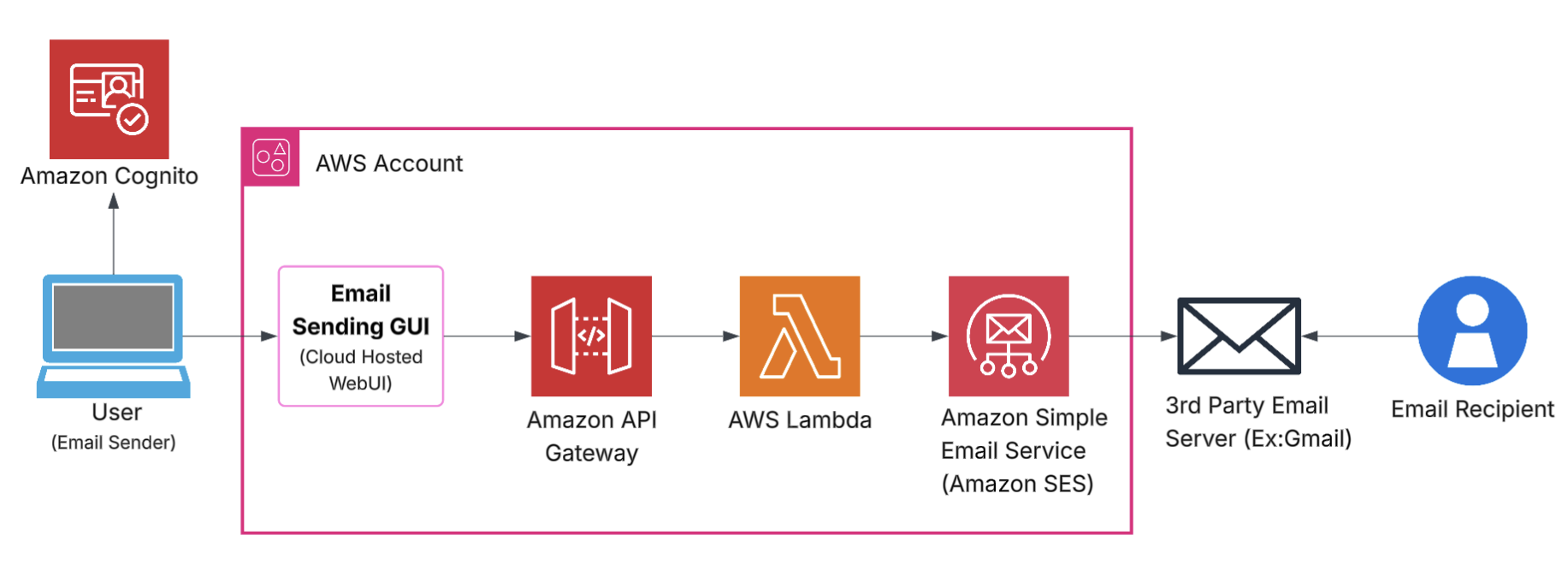
Figure 1: Complete architecture
Frontend architecture and user flow
The frontend of the solution prioritizes usability while providing email campaign capabilities. Here’s how the components work together:
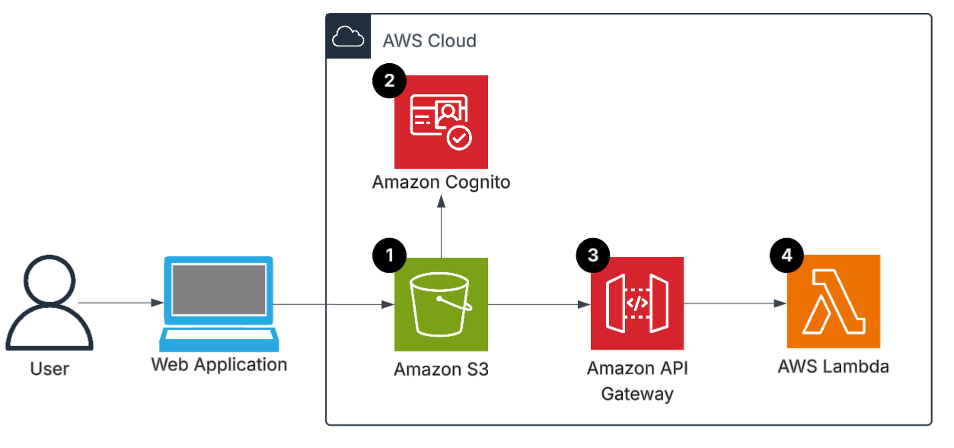
Figure 2: Frontend architecture of the SES email application
- Login – Users navigate to the web interface URL (hosted on Amazon Simple Storage Service (Amazon S3)) which prompts them to authenticate.
- User authentication – Amazon Cognito handles authentication, providing secure user management and restricting access to authorized users.
- User interface – After successful authentication, users are redirected to a graphical user interface (GUI) where they can design and save email templates and launch large-scale campaigns (refer to figures 3 and 4).
- Templates.
- Amazon SES supports two types of templates: stored and inline. Stored templates live in SES, and you can reuse them across campaigns. With inline templates, you define the content and variables directly in the email sending request. Both approaches support dynamic personalization by replacing variables with recipient-specific data when the email is sent. For example, you can create a template that personalizes each email with the recipient’s name, custom offers, or any other dynamic content. For detailed information about template capabilities and personalization options, refer to the Amazon SES template documentation.
- Templates.
The following screenshots show the campaign interface, the template creation interface, and the campaign monitoring interface.
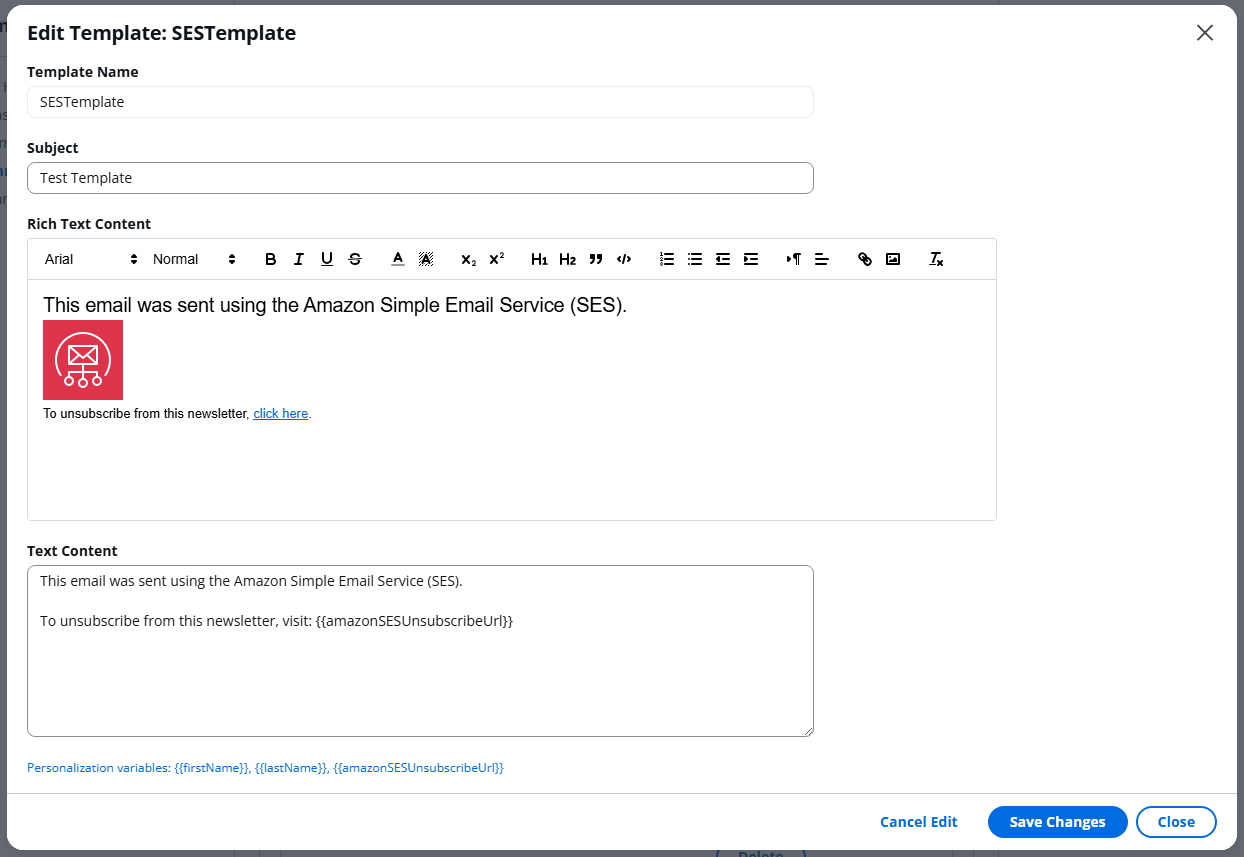
Figure 3: Email template creation interface
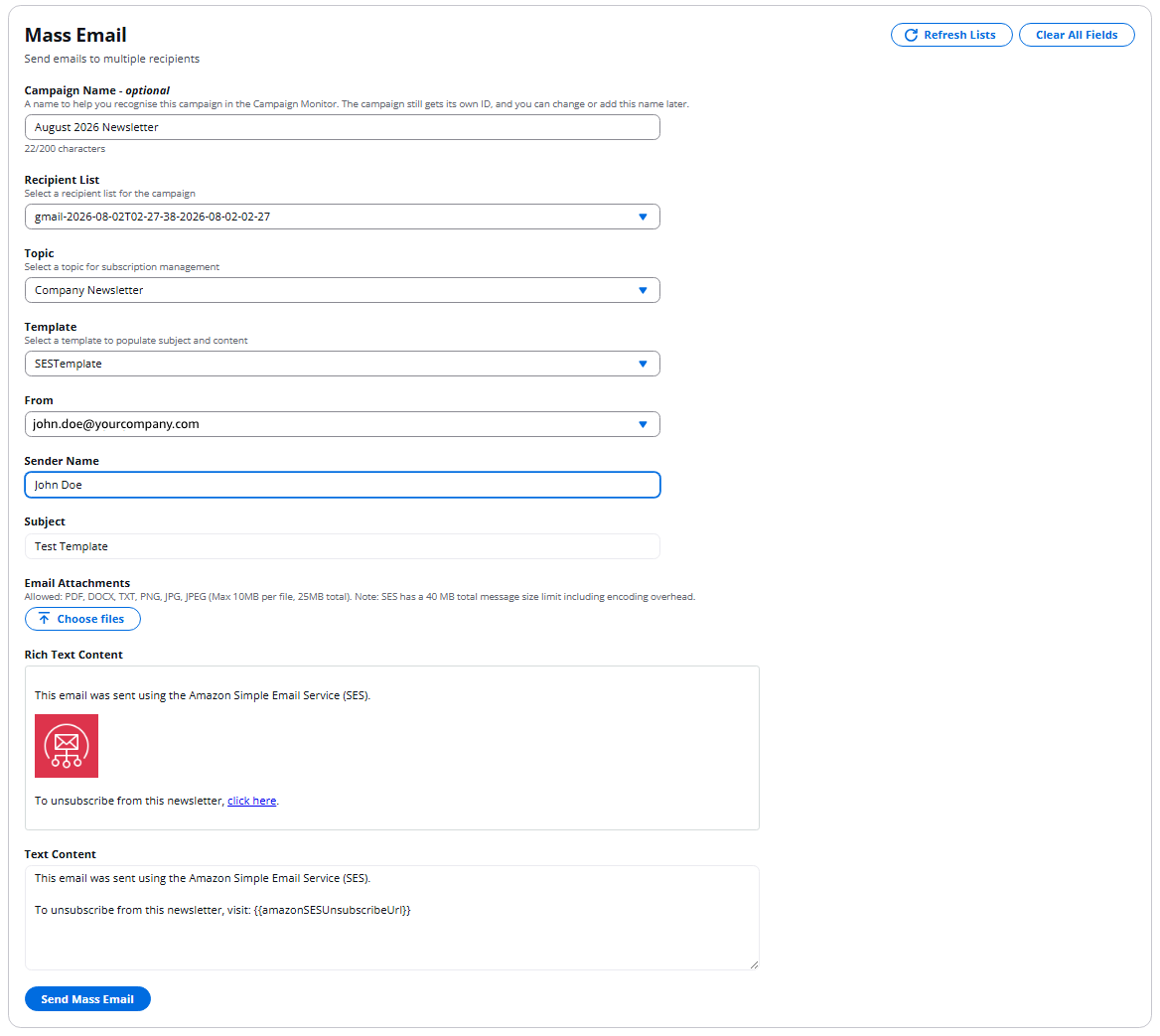
Figure 4: Mass email campaign interface
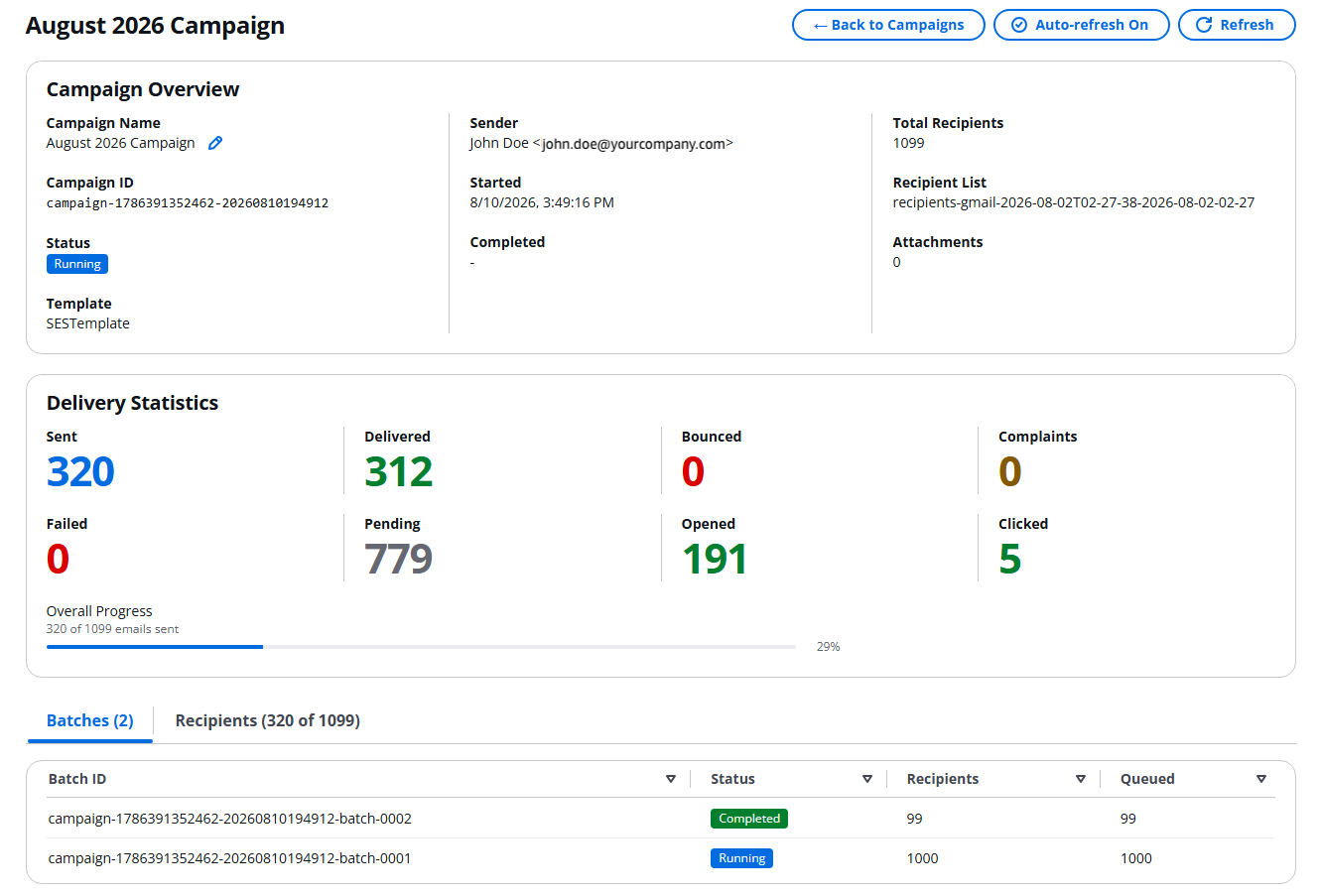
Figure 5: Campaign monitoring interface
- Request processing – Each user action triggers a secure request through Amazon API Gateway to AWS Lambda functions, which then coordinate with our backend processing system.
From the user’s perspective, the experience is similar to using any standard email platform, with the added capability of handling campaigns at scale. This interface helps marketing teams, customer success managers, and business operations staff create and launch email campaigns directly through their browser, without needing to understand complex email protocols.
Backend architecture
After a user initiates an email campaign, our backend orchestrates a series of steps to facilitate reliable, large-scale email delivery. Let’s follow how an email campaign flows through the system:
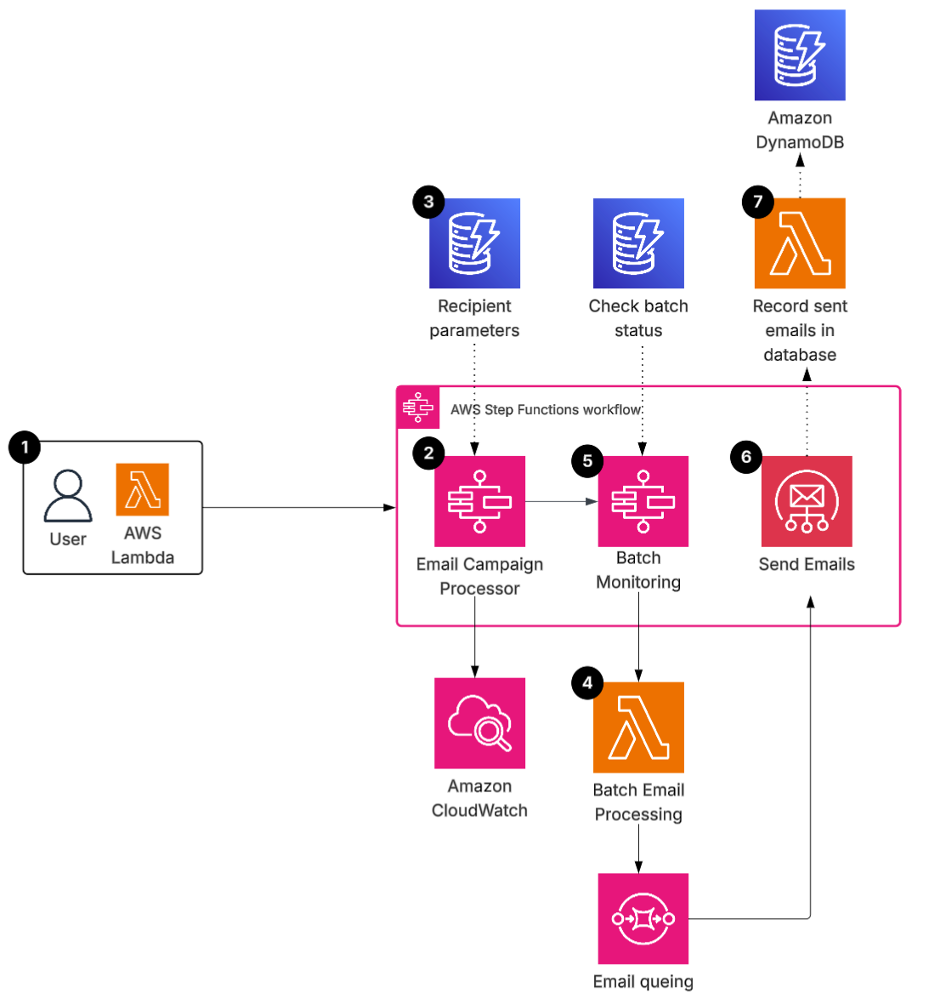
Figure 6: Backend architecture of the SES email application
As shown in the preceding figure, the backend processes email campaigns through the following steps:
- Email campaign processor – When a user creates a new campaign through the GUI, a Lambda function processes the initial request, taking the user’s selected email template and campaign parameters. The function then triggers an AWS Step Functions workflow.
- Workflow orchestration – The Step Functions workflow acts as the conductor and coordinates the entire email sending process. It initializes the campaign, sets up necessary configurations, and organizes the campaign into manageable batches.
- Recipient processing – Before sending email, the Step Functions workflow retrieves recipient information, including the recipient’s name and email address, from DynamoDB and checks it for accurate delivery details.
- Batch email processing – The Step Functions workflow begins organizing the email into manageable batches. The workflow queues these batches in Amazon Simple Queue Service (Amazon SQS), preparing them for processing.
- Batch monitoring – As batches move through the system, Step Functions actively monitors their progress, tracking the status of each batch throughout the sending process.
- Email sending – When SQS receives a message, it invokes a Lambda function that sends the email to Amazon SES for delivery. The function logs each delivery attempt in DynamoDB, with failed deliveries automatically returning to the SQS queue for retry attempts. It also records successful deliveries to support idempotency and prevent duplicate sends.
- Record management – DynamoDB stores an audit trail that tracks both successful and failed delivery attempts, providing detailed logs to support reporting, campaign performance assessments, and compliance efforts.
Using these AWS services, the solution automatically scales from sending a few email to millions without manual intervention or infrastructure provisioning. You pay only for what you use, with no idle server costs. To demonstrate the cost-effectiveness of this architecture: sending 10,000 email costs approximately USD $4, including all AWS service charges. For current pricing details, refer to Amazon SES pricing.
To deploy this solution in your AWS account, refer to the source code on GitHub.
Conclusion
In this post, we explored the architecture of a scalable email sending solution using Amazon SES and other AWS serverless services. This architecture removes the complexity of traditional email infrastructure while providing capabilities for handling large-scale email campaigns. Whether you’re looking to modernize your existing email infrastructure or stand up a new solution, this serverless approach offers the ideal combination of streamlined design, scalability, and cost-effectiveness.