AWS Messaging Blog
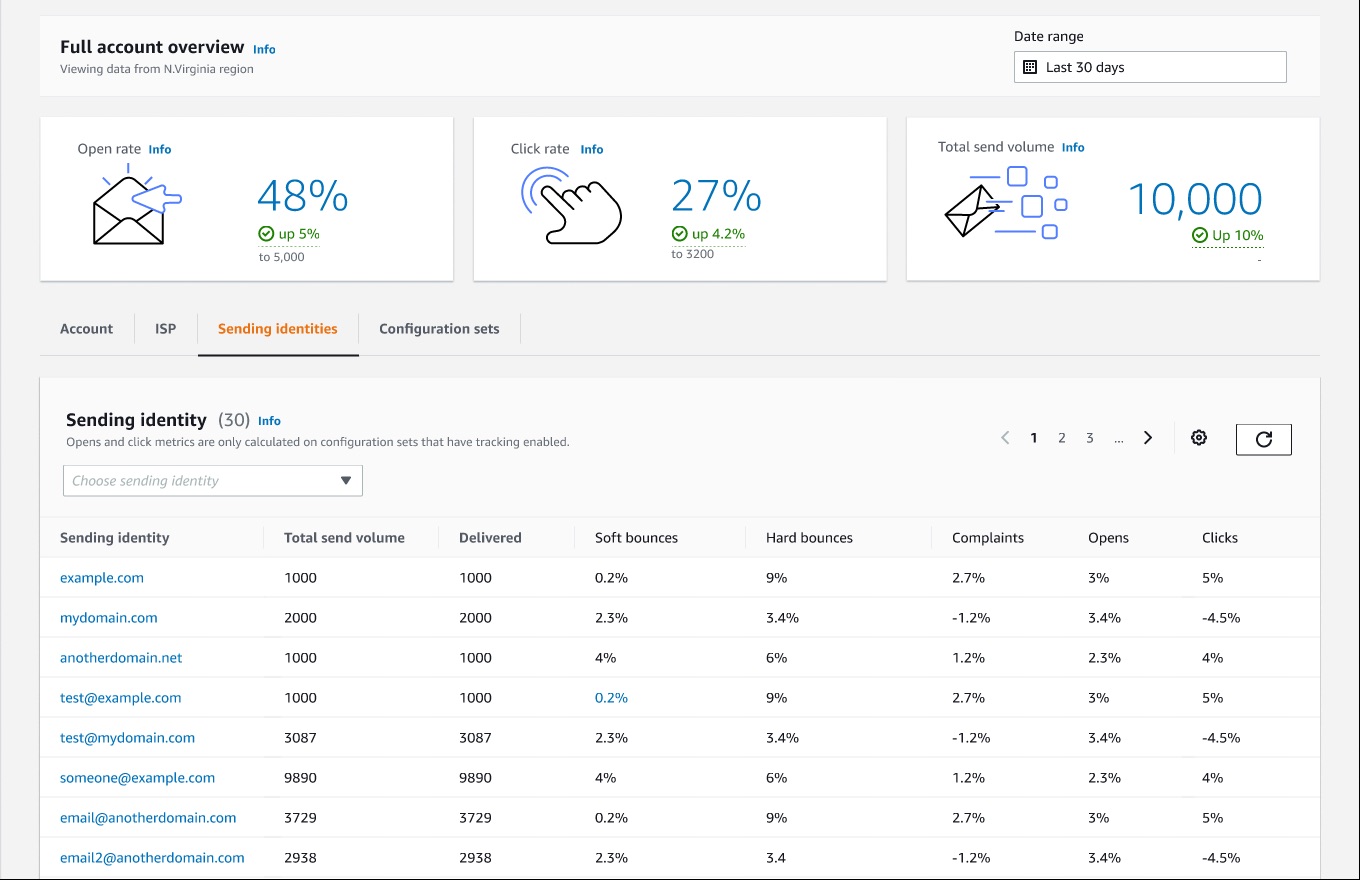
Amazon Simple Email Service (SES) helps improve inbox deliverability with new features
Email remains the core of any company’s communication stack, but emails cannot deliver maximum ROI unless they land in recipients’ inboxes. Email deliverability, or ensuring emails land in the inbox instead of spam, challenges senders because deliverability can be impacted by a number of variables, like sending identity, campaign setup, or email configuration. Today, email […]

How to Automatically Prevent Email Throttling when Reaching Concurrency Limit
Introduction Many users of Amazon Simple Email Service (Amazon SES) send large email campaigns that target tens of thousands of recipients. Regulating the flow of Amazon SES requests can prevent throttling due to exceeding the AWS service limit on the account. Amazon SES service quotas include a soft limit on the number of emails sent […]

Tracking email engagement with AWS Analytics services
Update: July 26, 2023 – This blog has now a script to automate its deployment. You can find it in this Github repository. Email at scale is one of the most valuable forms of reaching and engaging with customers, but creating the most engaging email content means frequent tracking, monitoring, and analyzing bounces, complaints, opens, […]

Registering SMS Sender IDs in Singapore
A few weeks ago, we published a blog post about the process of registering alphanumeric Sender IDs. Today, we’re announcing support for registering Sender IDs in Singapore. About Sender ID registration in Singapore Singapore’s Infocomm Media Development Authority (IMDA) has created a Sender ID registry to protect consumers from fraudulent and malicious SMS messages. This […]
Registering Sender IDs for Sending SMS Messages
With Amazon Pinpoint, you can use Sender IDs to send text messages to recipients in various countries around the world. A Sender ID is a short, alphanumeric identifier (such as “AMAZON”) that appears on a recipient’s device when they receive a message from you. A Sender ID is one type of origination identity—that is, an […]

Queueing Amazon Pinpoint API calls to distribute SMS spikes
Organizations across industries and verticals have user bases spread around the globe. Amazon Pinpoint enables them to send SMS messages to a global audience through a single API endpoint, and the messages are routed to destination countries by the service. Amazon Pinpoint utilizes downstream SMS providers to deliver the messages and these SMS providers offer […]

Deliverability Sessions: Managing Large Volume Spikes in Email
Introduction: In an ideal world of email deliverability, email is sent on a regular cadence to a normalized lists of subscribers and recipient email addresses with no major changes in pattern. Typically the volume, list members and content are relatively the same and mailbox providers (such as Gmail) begin to expect that schedule and those […]

Replace traditional email mailbox polling with real-time reads using Amazon SES and Lambda
Integrating emails into an automated workflow for automated processing can be challenging. Traditionally, applications have had to use the POP protocol to connect to mail servers and poll for emails to arrive in a mailbox and then process the messages inline and perform actions on the message. This can be an inefficient mechanism and prone […]

How to use domain with Amazon SES in multiple accounts or regions
Sometimes customers want to use their email domain with Amazon Simples Email Service (Amazon SES) across multiple accounts, or the same account but across multiple regions. For example, AnyCompany is an insurance company with marketing and operations business units. The operations department sends transactional emails every time customers perform insurance simulations. The marketing department sends […]

Amazon SES configuration for an external SMTP provider with Auth0
Many organizations are using an external identity provider to manage user identities. With an identity provider (IdP), customers can manage their user identities outside of AWS and give these external user identities permissions to use AWS resources in customer AWS accounts. The most common requirement when setting up an external identity provider is sending outgoing […]