Artificial Intelligence
Category: Technical How-to
Model customization, RAG, or both: A case study with Amazon Nova
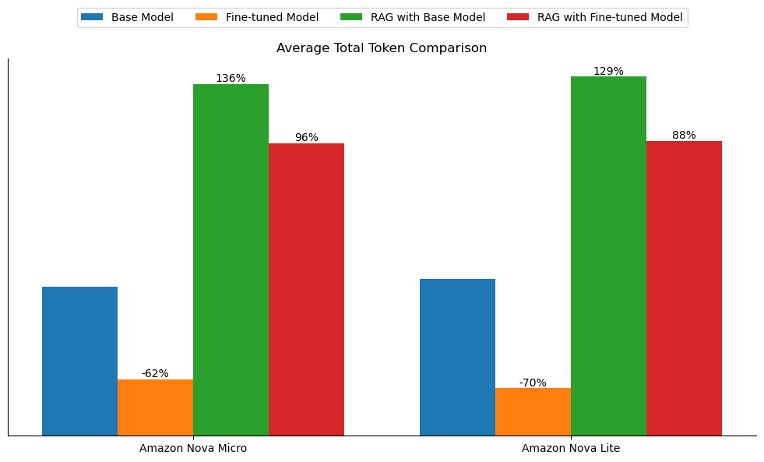
The introduction of Amazon Nova models represent a significant advancement in the field of AI, offering new opportunities for large language model (LLM) optimization. In this post, we demonstrate how to effectively perform model customization and RAG with Amazon Nova models as a baseline. We conducted a comprehensive comparison study between model customization and RAG using the latest Amazon Nova models, and share these valuable insights.

Generate user-personalized communication with Amazon Personalize and Amazon Bedrock
In this post, we demonstrate how to use Amazon Personalize and Amazon Bedrock to generate personalized outreach emails for individual users using a video-on-demand use case. This concept can be applied to other domains, such as compelling customer experiences for ecommerce and digital marketing use cases.

Implement human-in-the-loop confirmation with Amazon Bedrock Agents
In this post, we focus specifically on enabling end-users to approve actions and provide feedback using built-in Amazon Bedrock Agents features, specifically HITL patterns for providing safe and effective agent operations. We explore the patterns available using a Human Resources (HR) agent example that helps employees requesting time off.

Boost team productivity with Amazon Q Business Insights
In this post, we explore Amazon Q Business Insights capabilities and its importance for organizations. We begin with an overview of the available metrics and how they can be used for measuring user engagement and system effectiveness. Then we provide instructions for accessing and navigating this dashboard.

Multi-LLM routing strategies for generative AI applications on AWS
Organizations are increasingly using multiple large language models (LLMs) when building generative AI applications. Although an individual LLM can be highly capable, it might not optimally address a wide range of use cases or meet diverse performance requirements. The multi-LLM approach enables organizations to effectively choose the right model for each task, adapt to different […]

Build an enterprise synthetic data strategy using Amazon Bedrock
In this post, we explore how to use Amazon Bedrock for synthetic data generation, considering these challenges alongside the potential benefits to develop effective strategies for various applications across multiple industries, including AI and machine learning (ML).

Prompting for the best price-performance
In this blog, we discuss how to optimize prompting in Amazon Nova for the best price-performance.

Ray jobs on Amazon SageMaker HyperPod: scalable and resilient distributed AI
Ray is an open source framework that makes it straightforward to create, deploy, and optimize distributed Python jobs. In this post, we demonstrate the steps involved in running Ray jobs on SageMaker HyperPod.

Minimize generative AI hallucinations with Amazon Bedrock Automated Reasoning checks
To improve factual accuracy of large language model (LLM) responses, AWS announced Amazon Bedrock Automated Reasoning checks (in gated preview) at AWS re:Invent 2024. In this post, we discuss how to help prevent generative AI hallucinations using Amazon Bedrock Automated Reasoning checks.

Integrating custom dependencies in Amazon SageMaker Canvas workflows
When implementing machine learning workflows in Amazon SageMaker Canvas, organizations might need to consider external dependencies required for their specific use cases. Although SageMaker Canvas provides powerful no-code and low-code capabilities for rapid experimentation, some projects might require specialized dependencies and libraries that aren’t included by default in SageMaker Canvas. This post provides an example of how to incorporate code that relies on external dependencies into your SageMaker Canvas workflows.