Artificial Intelligence
Unlock global AI inference scalability using new global cross-Region inference on Amazon Bedrock with Anthropic’s Claude Sonnet 4.5
October 2026: This post was reviewed and updated for accuracy.
This post is co-written with Gareth Jones from Anthropic.
Organizations are increasingly integrating generative AI capabilities into their applications to enhance customer experiences, streamline operations, and drive innovation. As generative AI workloads continue to grow, organizations face new challenges in maintaining consistent performance of their AI-powered applications. Customers are looking to scale their AI inference workloads across multiple AWS Regions to support consistent performance.
To address this need, we introduced cross-Region inference (CRIS) for Amazon Bedrock. This managed capability automatically routes inference requests across a set of Regions, so developers can access a broader set of foundation models (FMs). CRIS works through inference profiles, which define FM and the Regions to which requests can be routed.
We are excited to announce availability of global cross-Region inference with Anthropic’s Claude Sonnet 4.5 on Amazon Bedrock. Now, with cross-Region inference, you can choose either a geography-specific inference profile or a global inference profile. This evolution from geography-specific routing provides greater flexibility for organizations. Global CRIS further enhances cross-Region inference by routing inference requests to supported commercial Regions worldwide. Additionally, global CRIS supports key Amazon Bedrock features, including prompt caching, batch inference, Amazon Bedrock Guardrails, Amazon Bedrock Knowledge Bases, and more.
In this post, we explore how global cross-Region inference works, the benefits it offers compared to Regional profiles, and how you can implement it in your own applications with Anthropic’s Claude Sonnet 4.5.
Core functionality of global cross-Region inference
Global cross-Region inference helps organizations manage unplanned traffic bursts by using compute resources across different Regions. This section explores how this feature works and the technical mechanisms that power its functionality.
Understanding inference profiles
An inference profile in Amazon Bedrock defines an FM and one or more Regions to which it can route model invocation requests. The global cross-Region inference profile for Anthropic’s Claude Sonnet 4.5 extends this concept beyond geographic boundaries and routes requests to one of the supported Amazon Bedrock commercial Regions globally, so you can prepare for unplanned traffic bursts by distributing traffic across multiple Regions.
Inference profiles operate on two key concepts:
-
Source Region – The Region from which the API request is made.
-
Destination Region – A Region to which Amazon Bedrock can route the request for inference.
At the time of writing, global CRIS supports over 20 source Regions, and the destination Region is a supported commercial Region dynamically chosen by Amazon Bedrock.
Monitoring and logging
When using global cross-Region inference, Amazon CloudWatch and AWS CloudTrail continue to record log entries only in the source Region where the request originated. This simplifies monitoring and logging by maintaining all records in a single Region regardless of where the inference request is ultimately processed. To track which Region processed a request, CloudTrail events include an additionalEventData field with an inferenceRegion key that specifies the destination Region. Organizations can monitor and analyze the distribution of their inference requests across the AWS global infrastructure.
Data security and compliance
Global cross-Region inference maintains high standards for data security. Data transmitted during cross-Region inference is encrypted and remains within the secure AWS network. Sensitive information remains protected throughout the inference process, regardless of which Region processes the request. Because security and compliance is a shared responsibility, you must also consider legal or compliance requirements that come with processing inference request in a different geographic location. Because global cross-Region inference allows requests to be routed globally, organizations with specific data residency or compliance requirements can elect, based on their compliance needs, to use geography-specific inference profiles to make sure data remains within certain Regions. This flexibility helps businesses balance redundancy and compliance needs based on their specific requirements.
Implement global cross-Region inference
To use global cross-Region inference with Anthropic’s Claude Sonnet 4.5, developers must complete the following key steps:
-
Use the global inference profile ID – When making API calls to Amazon Bedrock, specify the global Anthropic’s Claude Sonnet 4.5 inference profile ID (
global.anthropic.claude-sonnet-4-5-20250929-v1:0) instead of a Region-specific model ID. This works with bothInvokeModelandConverseAPIs. -
Configure IAM permissions – Grant appropriate AWS Identity and Access Management (IAM) permissions to access the inference profile and FMs in potential destination Regions. In the next section, we provide more details. You can also read more about prerequisites for inference profiles.
Implementing global cross-Region inference with Anthropic’s Claude Sonnet 4.5 requires only a few changes to your existing application code. The following is an example of how to update your code in Python:
If you’re using the Amazon Bedrock InvokeModel API, you can quickly switch to a different model by changing the model ID, as shown in Invoke model code examples.
IAM policy requirements for global CRIS
In this section, we discuss the IAM policy requirements for global CRIS.
Enable global CRIS
To enable global CRIS for your users, you must apply a three-part IAM policy to the role. The following is an example IAM policy to provide granular control. You can replace <REQUESTING REGION> in the example policy with the Region you are operating in.
The first part of the policy grants access to the Regional inference profile in your requesting Region. This policy allows users to invoke the specified global CRIS inference profile from their requesting Region. The second part of the policy provides access to the Regional FM resource, which is necessary for the service to understand which model is being requested within the Regional context. The third part of the policy grants access to the global FM resource, which enables the cross-Region routing capability that makes global CRIS function. When implementing these policies, make sure all three resource Amazon Resource Names (ARNs) are included in your IAM statements:
-
The Regional inference profile ARN follows the pattern
arn:aws:bedrock:REGION:ACCOUNT:inference-profile/global.MODEL-NAME. This is used to give access to the global inference profile in the source Region. -
The Regional FM uses
arn:aws:bedrock:REGION::foundation-model/MODEL-NAME. This is used to give access to the FM in the source Region. -
The global FM requires
arn:aws:bedrock:::foundation-model/MODEL-NAME. This is used to give access to the FM in different global Regions.
The global FM ARN has no Region or account specified, which is intentional and required for the cross-Region functionality.
If your organization uses region-specific Service Control Policies (SCPs), make sure that "aws:RequestedRegion": "unspecified" is not included in the deny regions list, as global CRIS requests use this region value. Organizations using restrictive SCPs that deny all regions except specific approved ones will need to explicitly allow "aws:RequestedRegion": "unspecified" in their SCP to enable global CRIS functionality. However, if you have data residency requirements, you should carefully evaluate your use cases before implementing global CRIS, because requests might be processed in any supported commercial Region.
Disable global CRIS
You can choose from two primary approaches to implement deny policies to global CRIS for specific IAM roles, each with different use cases and implications:
-
Remove an IAM policy – The first method involves removing one or more of the three required IAM policies from user permissions. Because global CRIS requires all three policies to function, removing a policy will result in denied access.
-
Implement a deny policy – The second approach is to implement an explicit deny policy that specifically targets global CRIS inference profiles. This method provides clear documentation of your security intent and makes sure that even if someone accidentally adds the required allow policies later, the explicit deny will take precedence. The deny policy should use a
StringEqualscondition matching the pattern"aws:RequestedRegion": "unspecified". This pattern specifically targets inference profiles with theglobalprefix.
When implementing deny policies, it’s important to understand that global CRIS changes how the aws:RequestedRegion field behaves. Traditional Region-based deny policies that use StringEquals conditions with specific Region names such as "aws:RequestedRegion": "us-west-2" will not work as expected with global CRIS because the service sets this field to global rather than the actual destination Region. However, as mentioned earlier, "aws:RequestedRegion": "unspecified" will result in the deny effect.
Note: If your organization uses region-specific Service Control Policies (SCPs), make sure that "aws:RequestedRegion": "unspecified" is not included in the deny regions list, as global CRIS requests use this region value. Organizations using restrictive SCPs that deny all regions except specific approved ones will need to explicitly allow "aws:RequestedRegion": "unspecified" in their SCP to enable global CRIS functionality. However, if you have data residency requirements, you should carefully evaluate your use cases before implementing global CRIS, because requests might be processed in any supported commercial Region.
Request limit increases for global CRIS with Anthropic’s Claude Sonnet 4.5
When using global CRIS inference profiles, you can use global CRIS from over 20 supported source Regions. Because this will be a global limit, requests to view, manage, or increase quotas for global cross-Region inference profiles must be made through the Service Quotas console or AWS Command Line Interface (AWS CLI) in the requested source Region.
Complete the following steps to request a limit increase:
- Sign in to the Service Quotas console in your AWS account.
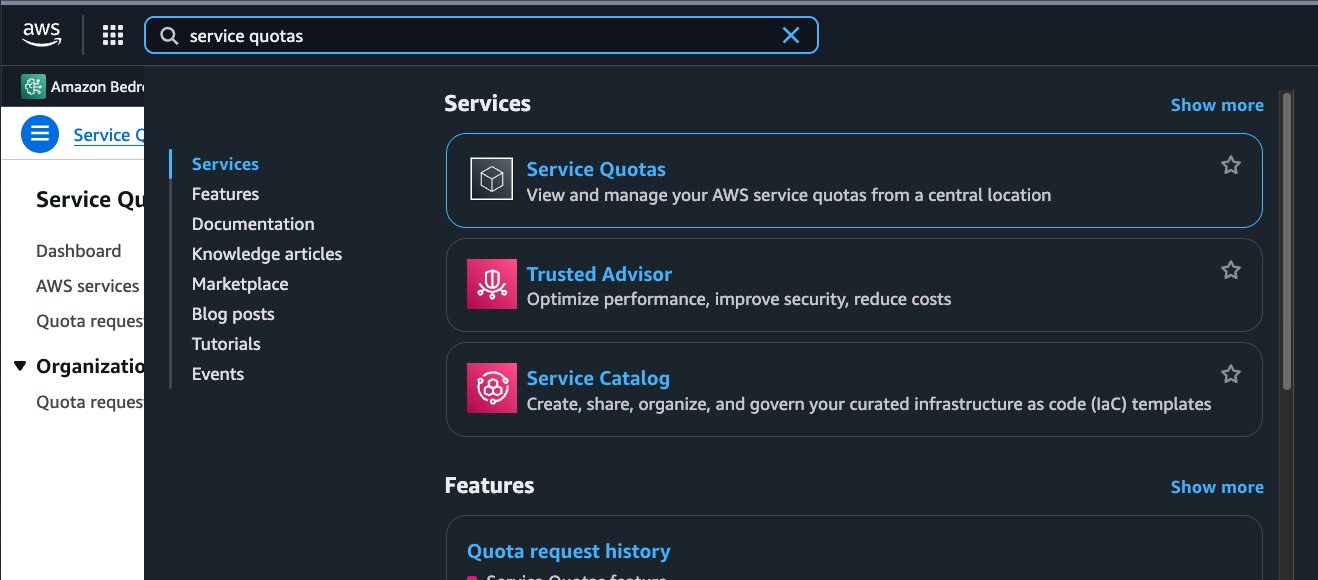
Figure 1: The Service Quotas console
-
In the navigation pane, choose AWS services.
-
From the list of services, find and choose Amazon Bedrock.
-
In the list of quotas for Amazon Bedrock, use the search filter to find the specific global CRIS quotas. For example:
- Global cross-Region model inference tokens per minute for Anthropic Claude Sonnet 4.5 V1.
-
Select the quota you want to increase.
-
Choose Request increase at account level.
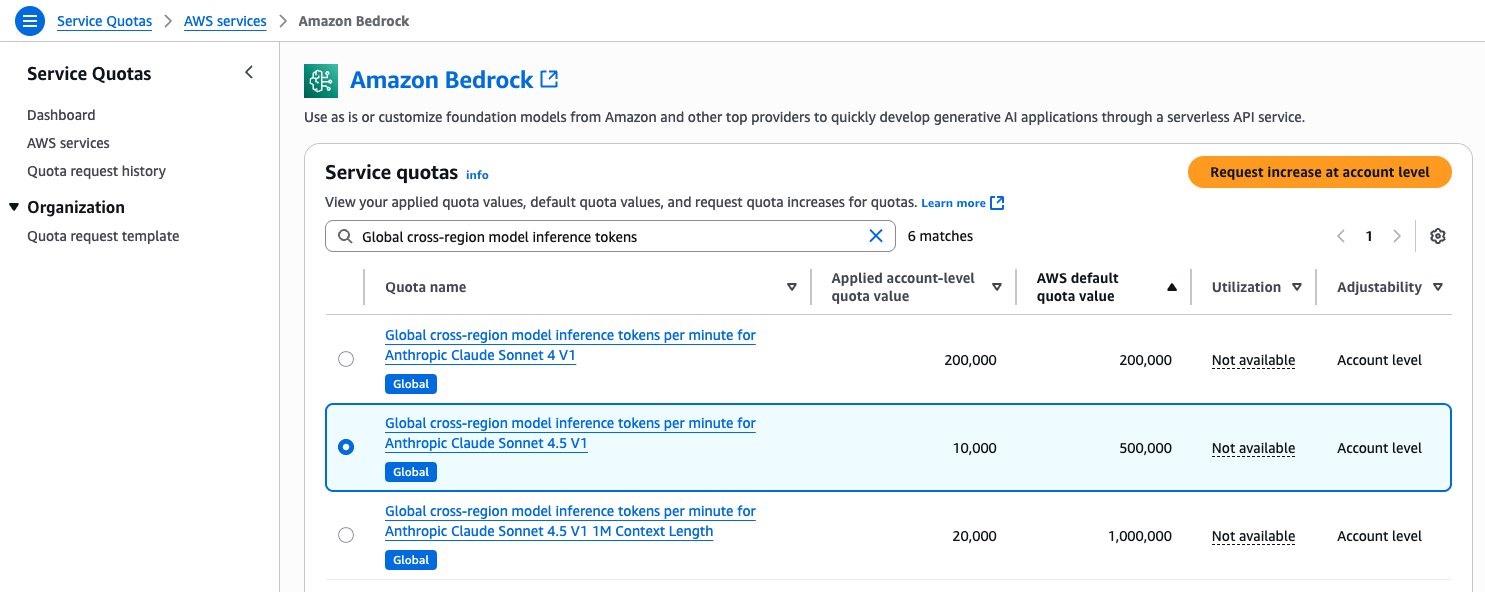
Figure 2: Requesting a quota increase at the account level
-
Enter your desired new quota value.
-
Choose Request to submit your request.
When calculating your required quota increase, remember to take into account for the burndown rate, defined as the rate at which input and output tokens are converted into token quota usage for the throttling system. The following models have a 5x burn down rate for output tokens (1 output token consumes 5 tokens from your quotas):
-
Anthropic Claude Opus 4.
-
Anthropic Claude Sonnet 4.5.
-
Anthropic Claude Sonnet 4.
-
Anthropic Claude 3.7 Sonnet.
For all other models, the burndown rate is 1:1 (1 output token consumes 1 token from your quota). For input tokens, the token to quota ratio is 1:1. The calculation for the total number of tokens per request is as follows:
Input token count + Cache write input tokens + (Output token count x Burndown rate)
Use global cross-Region inference with Anthropic’s Claude Sonnet 4.5
Claude Sonnet 4.5 is Anthropic’s most intelligent model (at the time of writing), and is best for coding and complex agents. Anthropic’s Claude Sonnet 4.5 demonstrates advancements in agent capabilities, with enhanced performance in tool handling, memory management, and context processing. The model shows marked improvements in code generation and analysis, including identifying optimal improvements and exercising stronger judgment in refactoring decisions. It particularly excels at autonomous long-horizon coding tasks, where it can effectively plan and execute complex software projects spanning hours or days while maintaining consistent performance and reliability throughout the development cycle.
Global cross-Region inference for Anthropic’s Claude Sonnet 4.5 delivers multiple advantages over traditional geographic cross-Region inference profiles:
-
Cost-efficiency – Global cross-Region inference for Anthropic’s Claude Sonnet 4.5 offers approximately 10% savings on both input and output token pricing compared to geographic cross-Region inference. The price is calculated based on the Region from which the request is made (source Region). This means organizations can benefit from improved resilience with even lower costs. This pricing model makes global cross-Region inference a cost-effective solution for organizations looking to optimize their generative AI deployments. By improving resource utilization and supporting higher throughput without additional costs, it helps organizations get the most value from their investment in Amazon Bedrock.
-
Streamlined monitoring – When using global cross-Region inference, CloudWatch and CloudTrail continue to record log entries in your source Region, simplifying observability and management. Even though your requests are processed across different Regions worldwide, you maintain a centralized view of your application’s performance and usage patterns through your familiar AWS monitoring tools.
-
On-demand quota flexibility – With global cross-Region inference, your workloads are no longer limited by individual Regional capacity. Instead of being restricted to the capacity available in a specific Region, your requests can be routed across the AWS global infrastructure. This provides access to a much larger pool of resources, making it less complicated to handle high-volume workloads.
If you’re currently using Anthropic’s Sonnet models on Amazon Bedrock, upgrading to Claude Sonnet 4.5 is a great opportunity to enhance your AI capabilities. It offers a significant leap in intelligence and capability, offered as a straightforward, drop-in replacement at a comparable price point as Sonnet 4. The primary reason to switch is Sonnet 4.5’s superior performance across critical, high-value domains. It is Anthropic’s most powerful model so far for building complex agents, demonstrating state-of-the-art performance in coding, reasoning, and computer use. Furthermore, its advanced agentic capabilities, such as extended autonomous operation and more effective use of parallel tool calls, enable the creation of more sophisticated AI workflows.
To help you choose the right approach for your use case, here’s a comparison of the different inference options:
| Inference Type | Inference Profiles | Key Advantage | When to use |
| Geography-specific cross-Region inference profile | US Sonnet4.5, EU Sonnet4.5, JP Sonnet4.5, AU Sonnet4.5, … Inference Profile Docs | All data processing and inference requests remain within destination Regions specified for geographic boundaries. Depending on the source Region you use, your destination Region is chosen within the geographic boundaries. | For customers who have data residency requirements and need to make sure all data processing and inference requests remain within specific geographic boundaries (US, EU, AU, JP). Best for organizations that need to comply with regional data residency regulations. |
| Global cross-Region inference | Global Sonnet 4.5 Global Sonnet 4 … Inference Profile Docs | Requests processed by compute across all supported AWS commercial Regions worldwide, rather than within a single geography. | For customers without data residency needs who want broader coverage and higher throughput at a lower cost. Best for organizations looking to optimize costs across AWS’s global infrastructure. |
For details on supported source Regions and destination Regions for the preceding inference types, see Supported cross-Region inference profiles.
Conclusion
Amazon Bedrock global cross-Region inference for Anthropic’s Claude Sonnet 4.5 marks a significant evolution in AWS generative AI capabilities, with global routing of inference requests across the AWS worldwide infrastructure. With a few code changes and monitoring through CloudTrail and CloudWatch, organizations can quickly use this capability for their AI applications and high-volume workloads. We encourage you to try global cross-Region inference with Anthropic’s Claude Sonnet 4.5 in your own applications and experience the benefits firsthand. Start by updating your code to use the global inference profile ID, configure appropriate IAM permissions, and monitor your application’s performance as your requests are processed by compute across AWS Regions worldwide.
For more information about global cross-Region inference for Anthropic’s Claude Sonnet 4.5 in Amazon Bedrock, see Route model inference requests across AWS Regions with cross-Region inference, Supported Regions and models for inference profiles, and Use an inference profile in model invocation.