AWS Public Sector Blog
CMS Saves $3.5M Annually by Modernizing Open Payments System on AWS
Established by the Physician Payments Sunshine Act of 2010 and expanded by the SUPPORT Act of 2018, the Open Payments program creates public transparency around financial relationships between healthcare providers and pharmaceutical companies. When faced with aging infrastructure and rising costs, the Centers for Medicare & Medicaid Services (CMS) needed to modernize the statutorily mandated Open Payments System (OPS) that has processed over 84 million records and $72 billion in reported payments from pharmaceutical and medical device manufacturers and distributors to healthcare providers.
Index Analytics successfully modernized this decade-old legacy system by transitioning to Amazon Web Services, Inc. (AWS) Cloud services, launching Open Payments 2.0 in summer 2024 with overwhelmingly positive user feedback. The transformation of Open Payments from an on-premises solution to a modern cloud-based application on AWS demonstrates how organizations can achieve significant cost savings and performance improvements through strategic modernization. In this post, we explore how CMS reduced their annual infrastructure costs by approximately $3.5 million while substantially improving system performance and user experience.
Understanding the Challenge
The original Open Payments 1.0 system faced several critical challenges. High ownership costs due to on-premises hosting infrastructure were a significant burden. Expensive commercial off-the-shelf (COTS) licensing costs further strained the budget. The monolithic architecture led to increased maintenance costs, and poor user experience was characterized by frequent lags and timeout issues. Additionally, the system suffered from inflexible resource allocation that couldn’t adapt to seasonal demands, and limited environment management capabilities hampered efficient operations.
The cost impact of the legacy infrastructure was substantial. The previous system’s annual infrastructure and licensing costs averaged $4.1 million over 3 years, due to several factors. Fixed infrastructure costs remained high regardless of usage, and expensive COTS licenses added to the financial burden. Inefficient resource utilization during off-peak periods resulted in wasted capacity, and high operational overhead further increased expenses.
The modernization solution focused on cloud-based architecture transformation. This approach involved reimagining the entire system to take full advantage of cloud technologies and best practices. By adopting cloud-based architecture, the team aimed to address the challenges of the legacy system and create a more flexible, scalable, and cost-effective solution.
Technical Solution with AWS Services and Architecture Components
The modernization initiative implemented several transformative technological improvements, including a modern application framework, improved infrastructure, and an evolution in data processing.
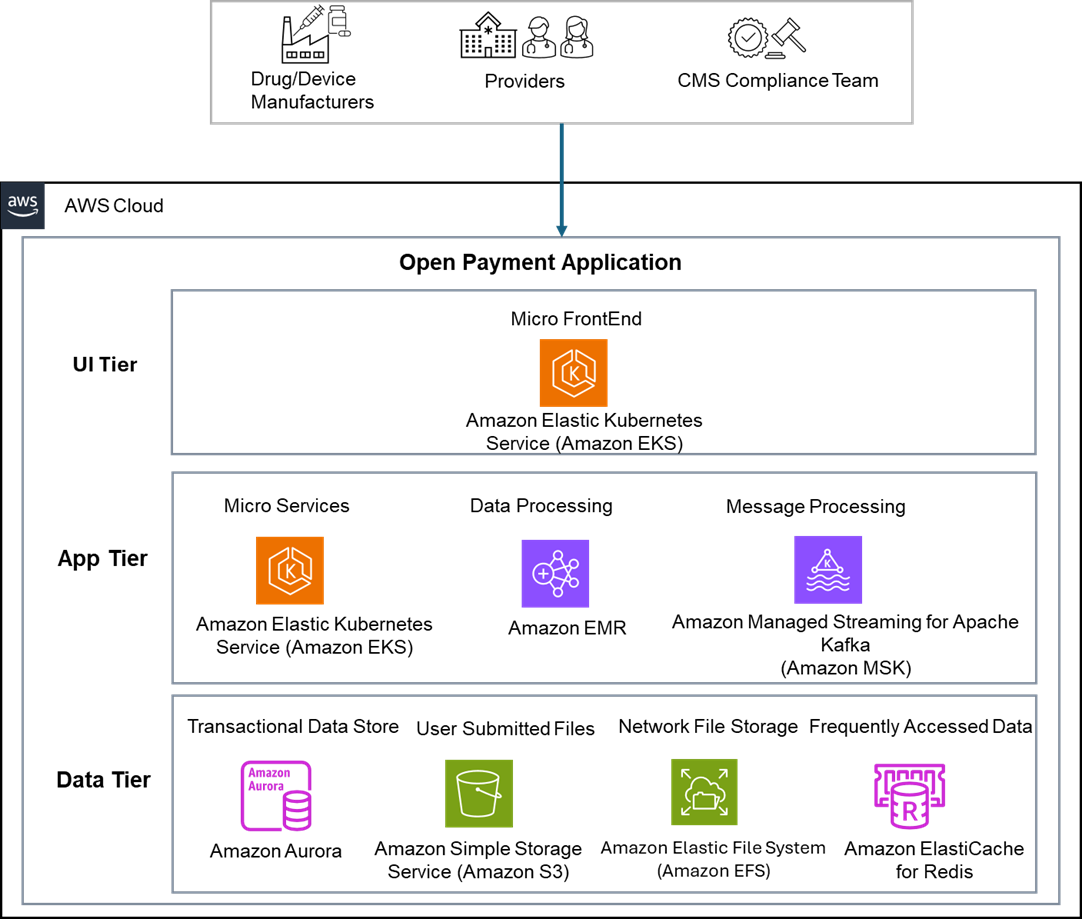
To modernize the application framework, Index Analytics adopted angular micro frontends and Spring Boot microservices for improved performance and scalability. They implemented intuitive, responsive UI, enhancing overall user experience. And they optimized workflow orchestration by using PySpark and Temporal IO.
Infrastructure improvements included containerized applications with Amazon Elastic Kubernetes Service (Amazon EKS) for improved flexibility and deployment efficiency. Index Analytics implemented elastic infrastructure, enabling vertical and horizontal scaling within minutes. A comprehensive observability framework used Amazon CloudWatch for real-time system insights.
For data processing, they replaced traditional extract, transform, and load (ETL) tools with Amazon EMR and PySpark for programmatic data orchestration. Using Amazon Managed Streaming for Apache Kafka (Amazon MSK) to stream critical workflows significantly improved system performance.
COTS Elimination and Cloud Adoption
The team replaced costly licensed software with scalable cloud services. The following table shows the original COTS components that were replaced with AWS services.
| COTS components | AWS service |
| Commercial Database Engine | Amazon Aurora |
| Commercial Java Application Server | Spring Boot on Amazon EKS |
| Commercial Messaging System | Amazon MSK |
| Commercial Data Integration Product | Amazon EMR |
The following diagram shows the architecture of Open Payments.
DevOps and Automation
The modernization included comprehensive DevOps practices that transformed the development and operations workflow. Infrastructure as code (IaC) using AWS Cloud Development Kit (AWS CDK) provided a programmatic approach to infrastructure management. The team implemented automated continuous integration and continuous delivery (CI/CD) pipelines to streamline development and deployment processes, and blue/green deployment environments enabled zero-downtime updates. A comprehensive observability framework used Amazon CloudWatch and Splunk to monitor and troubleshoot capabilities.
Results
The initiative delivered substantial measurable benefits and cost reductions. Annual infrastructure and licensing expenses decreased by 85%, from $4.1 million to $600,000. The team achieved an 80% reduction in both procurement actions and provider matching transaction costs, significantly improving operational efficiency and reducing administrative overhead.
Performance metrics demonstrated remarkable improvements. Publication file processing time decreased from 5 days to 46 hours (250% faster), and final submission processing for 100,000 records dropped from 10 minutes to under 10 seconds (60 times faster). Search functionality now delivers more immediate results across 16 million records. Users praise the system’s enhanced usability, modern interface, and improved performance.
Best Practices for Your Modernization Journey
Based on the Open Payments modernization success, consider these key strategies:
- Embrace Microservices – Break down monolithic applications into manageable, independent services.
- Adopt AWS Managed Services – Use AWS offerings to reduce operational overhead.
- Implement Auto Scaling – Design for elastic resource allocation based on demand.
- Automate Everything – Invest in comprehensive DevOps practices and automation.
- Focus on User Experience – Prioritize performance and usability improvements.
Conclusion
The Open Payments modernization project demonstrates how organizations can achieve substantial cost savings and performance improvements through strategic application modernization and migration to the AWS Cloud. With potential annual savings in the millions and significant performance improvements, the business case for modernization is compelling.
Ready to explore how AWS can help modernize your applications? Contact your AWS account team today or visit our Migration and Modernization page to learn more. To learn more, visit:
- AWS Transform
- AWS Application Migration Service
- AWS Cloud Economics Center
- AWS Migration Acceleration Program
Disclaimer: This communication does not represent the official views, policies, or positions of the Centers for Medicare & Medicaid Services (CMS) or the U.S. Department of Health and Human Services (HHS). References to CMS programs, systems, or activities are provided for informational purposes only and do not constitute endorsement, sponsorship, or approval by CMS or HHS of any products, services, vendors, or organizations mentioned. Any performance metrics, cost figures, or outcomes described are the responsibility of the authors and have not been independently validated by CMS.