AWS DevOps & Developer Productivity Blog
Tag: DevOps
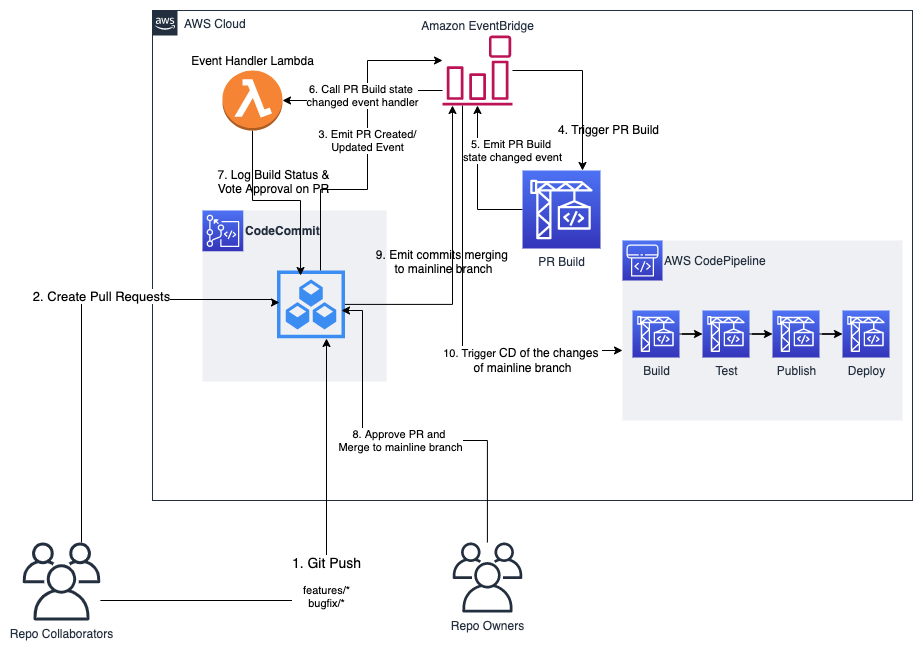
Scalable agile development practices based on AWS CodeCommit
Development teams use agile development processes based on Git services extensively. AWS provides AWS CodeCommit, a managed, Git protocol-based, secure, and highly available code service. The capabilities of CodeCommit combined with other developer tools, like AWS CodeBuild and AWS CodePipeline, make it easy to manage collaborative, scalable development process with fine-grained permissions and on-demand resources.

Building a CI/CD pipeline for cross-account deployment of an AWS Lambda API with the Serverless Framework
Modern-day applications that reside on AWS have several distinct environments and accounts, such as dev, test, and staging. An application has to go through an elaborate process of deployment and testing in these environments before reaching its final destination. To achieve automated deployment of the application across different environments, you must use CI/CD pipelines. Different […]
Securing Amazon EKS workloads with Atlassian Bitbucket and Snyk
This post was contributed by James Bland, Sr. Partner Solutions Architect, AWS, Jay Yeras, Head of Cloud and Cloud Native Solution Architecture, Snyk, and Venkat Subramanian, Group Product Manager, Bitbucket One of our goals at Atlassian is to make the software delivery and development process easier. This post explains how you can set up […]
AWS CodeArtifact and your package management flow – Best Practices for Integration
You often use artifact repositories to store and share software or deployment packages. Centralized artifacts enable teams to operate independently and share versioned software artifacts across your organization. Sharing versioned artifacts across organizations increases code reuse and reduces delivery time. Having a central artifact store enables tighter artifact governance and improves security visibility. This post […]

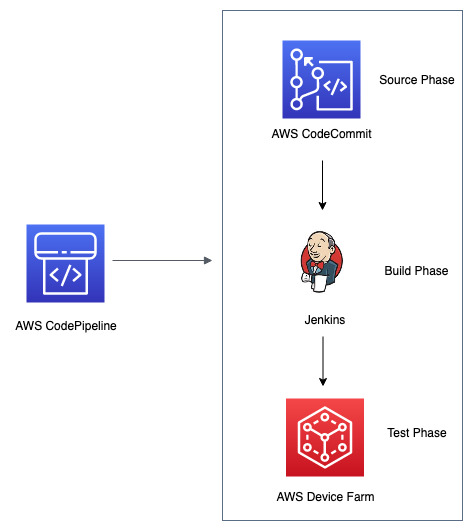
Building and testing iOS and iPadOS apps with AWS DevOps and mobile services
Continuous integration/continuous deployment (CI/CD) helps automate software delivery processes. With the software delivery process automated, developers can test and deliver features faster. In iOS app development, testing your apps on real devices allows you to understand how users will interact with your app and to detect potential issues in real time.

Enhancing automated database continuous integration with AWS CodeBuild and Amazon RDS Database Snapshot
In major integration merges, it’s sometimes necessary to verify the changes with existing online data. To inspect the changes with a cloned database can give us confidence to deploy to the production database. This post demonstrates how to use AWS CodeBuild and Amazon RDS Database Snapshot to verify your code revisions in both the application […]

Monitoring and management with Amazon QuickSight and Athena in your CI/CD pipeline
One of the many ways to monitor and manage required CI/CD metrics is to use Amazon QuickSight to build customized visualizations. Additionally, by applying Lean management to software delivery processes, organizations can improve delivery of features faster, pivot when needed, respond to compliance and security changes, and take advantage of instant feedback to improve the […]

Identifying and resolving security code vulnerabilities using Snyk in AWS CI/CD Pipeline
The majority of companies have embraced open-source software (OSS) at an accelerated rate even when building proprietary applications. Some of the obvious benefits for this shift include transparency, cost, flexibility, and a faster time to market. Snyk’s unique combination of developer-first tooling and best in class security depth enables businesses to easily build security into […]
Customizing triggers for AWS CodePipeline with AWS Lambda and Amazon CloudWatch Events
AWS CodePipeline is a fully managed continuous delivery service that helps automate the build, test, and deploy processes of your application. Application owners use CodePipeline to manage releases by configuring “pipeline,” workflow constructs that describe the steps, from source code to deployed application, through which an application progresses as it is released. If you are […]