AWS Physical AI Blog
Industrial Physical AI on AWS with Galeo Tech and Multiverse Computing
Co-authored by AWS, Galeo Tech, and Multiverse Computing
Introduction
Physical AI, the class of systems that perceive, reason, and act in the real world, has a familiar progression. The initial prototype works and showcases a lot of promise. The second prototype extends functionality to a different device. The harder question comes next: how do we keep this running, and improving, on dozens or hundreds of edge devices, for years?
This post focuses on two differentiators that separate a Physical AI prototype demo from a production-grade deployment: the data and MLOps pipelines that move data into the cloud and model versions back to the edge, and the model compression that makes those models actually run cost-effectively at scale. Galeo Tech handles the first; Multiverse Computing, with CompactifAI, handles the second.
1. Industrial data ingestion and MLOps pipelines on AWS
Industrial Physical AI depends on two flows running continuously: data coming in from physical assets, and new model versions going back out to the edge devices that act on it.
The data side starts on the plant floor. Industrial assets speak a wide range of protocols and integrate with operational systems that were not designed to feed an ML pipeline. Connectivity is often intermittent; network segmentation rules, security and compliance constraints govern what systems can be exposed and how. Pulling clean, time-aligned, AI-ready data out of that environment is a domain-specific engineering problem that combines industrial integration, edge gateway design, and data preparation expertise.
The model side is similar to traditional MLOps: pipelines, monitoring, rollback and model registries. The main difference is that the deployment target is hardware running in a remote location. At industrial scale, fleet management is what sets it apart: rolling out a new model version to a specific device group, monitoring health across distributed devices, and keeping the rest of the fleet stable through change.
Galeo Tech is an industrial expert integrator that designs edge-gateways, Industrial & AI data platforms and MLOps solutions for customers in manufacturing, energy, healthcare and other regulated industries. Galeo Tech’s work centers on bridging the gap between operational technology (OT) and cloud platforms; managing the lifecycle of software running at the edge opens the door to executing modern AI workloads, from machine learning to large language and vision-language-action (VLA) models, close to the assets that generate the data. On the OT side, Galeo Tech typically integrates PLCs, HMI, historians (OSIsoft PI, AVEVA, Honeywell’s Process History Database), SCADA systems, and laboratory and quality systems over protocols such as OPC UA, MQTT and Modbus, applying industrial data modeling conventions such as Unified Namespace and Sparkplug B to keep semantics consistent across systems.
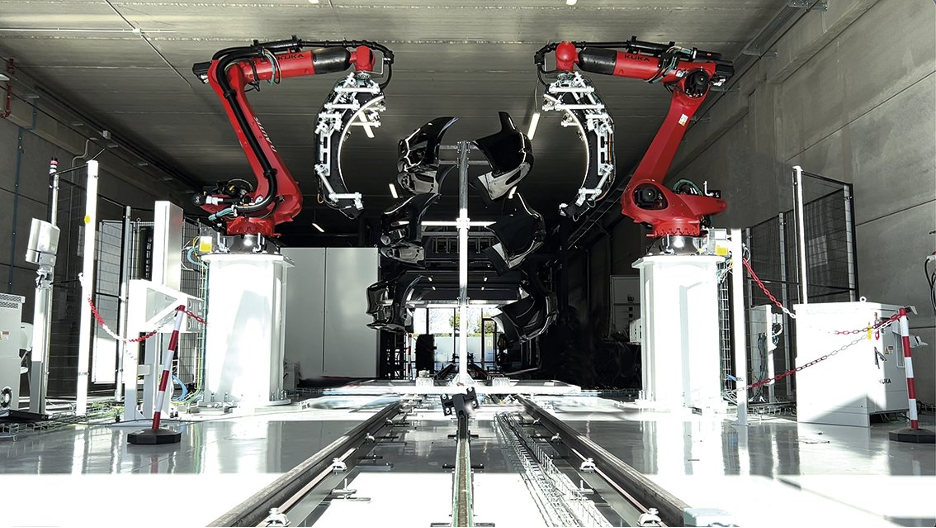
Figure 1: Industrial connectivity at scale example
On AWS, the stack starts with AWS IoT Core, AWS IoT SiteWise, AWS IoT Greengrass for connectivity, Amazon Simple Storage Service (S3), Amazon Kinesis for data storage and streaming, and AWS Lambda, for orchestration, extended with additional services as needed. Galeo Tech’s edge architecture takes inspiration from autonomic computing principles, particularly self-healing and self-management, which become essential as industrial fleets grow beyond what direct human intervention can sustain.
Data ingestion follows a consistent edge-to-cloud pattern. An AWS IoT Greengrass gateway runs on a plant, site or substation hardware, normalizes signals against the customer’s asset model, and buffers locally when connectivity is intermittent, a common condition at upstream sites and remote energy assets. When connectivity is restored, the gateway flushes buffered data through IoT Core or Amazon Kinesis into the customer’s S3 data lake, already structured for Amazon Athena queries and downstream feature engineering. The same pipeline can also deliver data to other analytical platforms when the customer’s architecture requires it.
For industrial Physical AI workloads, Galeo Tech has built an MLOps pipeline on Amazon S3, AWS Lambda, Amazon DynamoDB, and AWS IoT Greengrass. When a new model version lands in Amazon S3, an AWS Lambda function reads the target fleet definition from Amazon DynamoDB devices grouped by site, line, or asset class packages the model as an AWS IoT Greengrass component, and triggers automated deployment to the corresponding edge devices. DynamoDB also keeps the deployment history, which enables controlled rollback when field metrics from the edge indicate degraded performance. The result turns model improvements from a manual reinstallation into a routine release loop, the piece that separates a one-off project from a system that keeps improving in production.
In one production deployment, Galeo Tech applied the same pattern to a manufacturing customer running a fleet of industrial inspection machines. Image and sensor data from the equipment are captured at the edge through OPC UA connectors and a containerized runtime, then streamed to AWS via AWS IoT Core, AWS IoT SiteWise, and Amazon Kinesis Data Firehose into an Amazon S3 data lake. An Amazon SageMaker–trained computer-vision model classifies inspection results in near real time, with AWS Lambda, Amazon DynamoDB and Amazon RDS handling enrichment and persistence, and Amazon Simple Notification Service (SNS) triggering operator alerts when defect thresholds are crossed. Results are surfaced through a secure web application built on Amazon CloudFront, Amazon Cognito and AWS WAF, and integrated with the customer’s ERP to tie classifications back to production records. The outcome is consistent quality classification across shifts and a measurably shorter feedback cycle between detection and corrective action on the line.

Figure 2: Autis engineering AI inspection solution for industrial automotive
2. Model compression and optimization for edge deployment
Once a model is trained and validated, it needs to fit the hardware where it will run. Specialized optimization pipelines from partners are also available through AWS Marketplace, which is how Multiverse Computing distributes CompactifAI to AWS customers.
Physical AI workloads running on industrial edge devices face strict constraints in memory, latency, compute availability, and power consumption. Modern AI models, especially multimodal and vision-based systems, are often too large to be deployed efficiently on embedded or industrial hardware without optimization.
Multiverse Computing addresses this challenge through CompactifAI, a quantum-inspired model compression technology based on tensor networks. Unlike traditional pruning or uniform quantization approaches, CompactifAI analyzes the internal correlation structure of neural networks to identify and remove redundant capacity while preserving the most relevant information pathways inside the model.
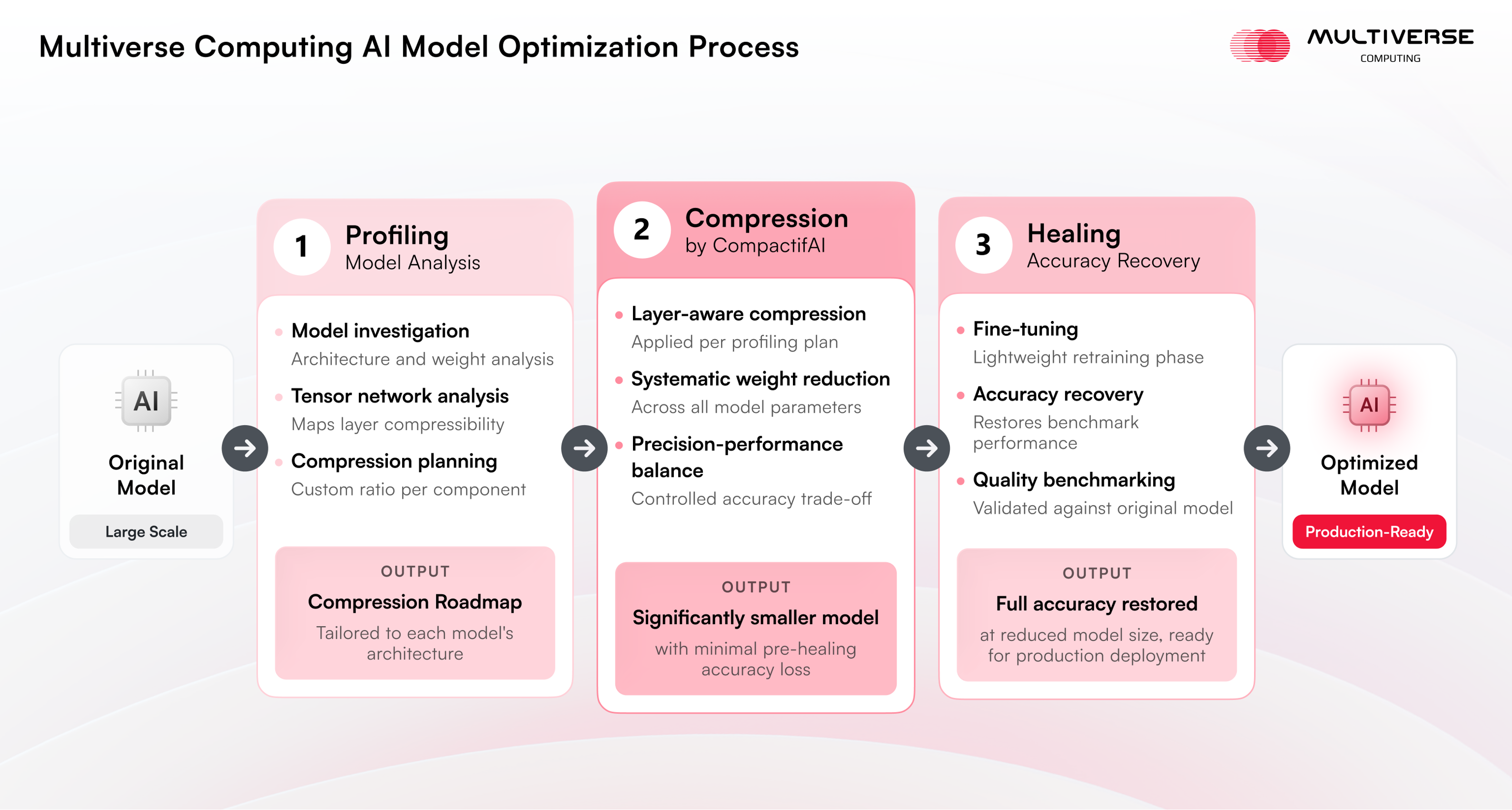
Figure 3: Multiverse Computing AI Model Optimization Process
The CompactifAI workflow consists of three stages: profiling, compression, and healing. The system analyzes model sensitivity layer by layer using quantum-inspired tensor network techniques to determine which parts of the network can be compressed more aggressively while maintaining performance. Compression is then applied through proprietary optimization methods, followed by a lightweight retraining phase (“healing”) to recover model quality after compression.
Customers can run this optimization workflow on AWS infrastructure using services such as Amazon Elastic Compute Cloud (Amazon EC2) and Amazon SageMaker Hyperpod. Optimized models can then be deployed through AWS edge services including AWS IoT Greengrass for low-latency inference on industrial devices.
In internal benchmarks conducted by Multiverse Computing, CompactifAI has demonstrated up to 80% model compression with negligible accuracy loss, cutting inference costs by 50–80% and doubling throughput. In enterprise AI deployments, compressed models delivered 50% faster time-to-first-token, 63% lower energy use, and 78% less storage. In computer vision (YOLO-based perception), it achieved 80% compression, with 43% lower latency and 55% lower power draw while maintaining real-time detection accuracy.
For Physical AI environments, CompactifAI has been applied to industrial computer vision and multimodal workloads, including compressed YOLO perception models for satellite object detection and embedded pedestrian detection systems, as well as optimized Vision-Language Models (VLMs) for robotics and edge-based multimodal reasoning. These optimizations enable advanced AI systems to operate efficiently in environments with strict hardware, latency, and energy constraints, including robotics platforms, autonomous systems, manufacturing environments, drones, and industrial edge infrastructure.
3. The full Physical AI loop and where partners fit
The two stages described above are pieces of a larger picture. The AWS Physical AI framework describes Physical AI as a continuous learning loop organized around four functional areas: data collection and preparation, simulation and model training, model optimization, and edge operations. Each connects the physical world to the digital and back again (see the full framework description in the References section below). In that loop, Galeo Tech covers the first and last stages: industrial data ingestion into AWS and automated model deployment back to the edge. Multiverse Computing covers the third: compressing trained models so they fit the constraints of the target hardware. Both produce artifacts that plug into the standard AWS deployment pattern, which is what allows them to be combined into a single end-to-end stack without custom integration work.
The following architecture summarizes how the four stages connect, with the contributions of Galeo Tech and Multiverse Computing highlighted.
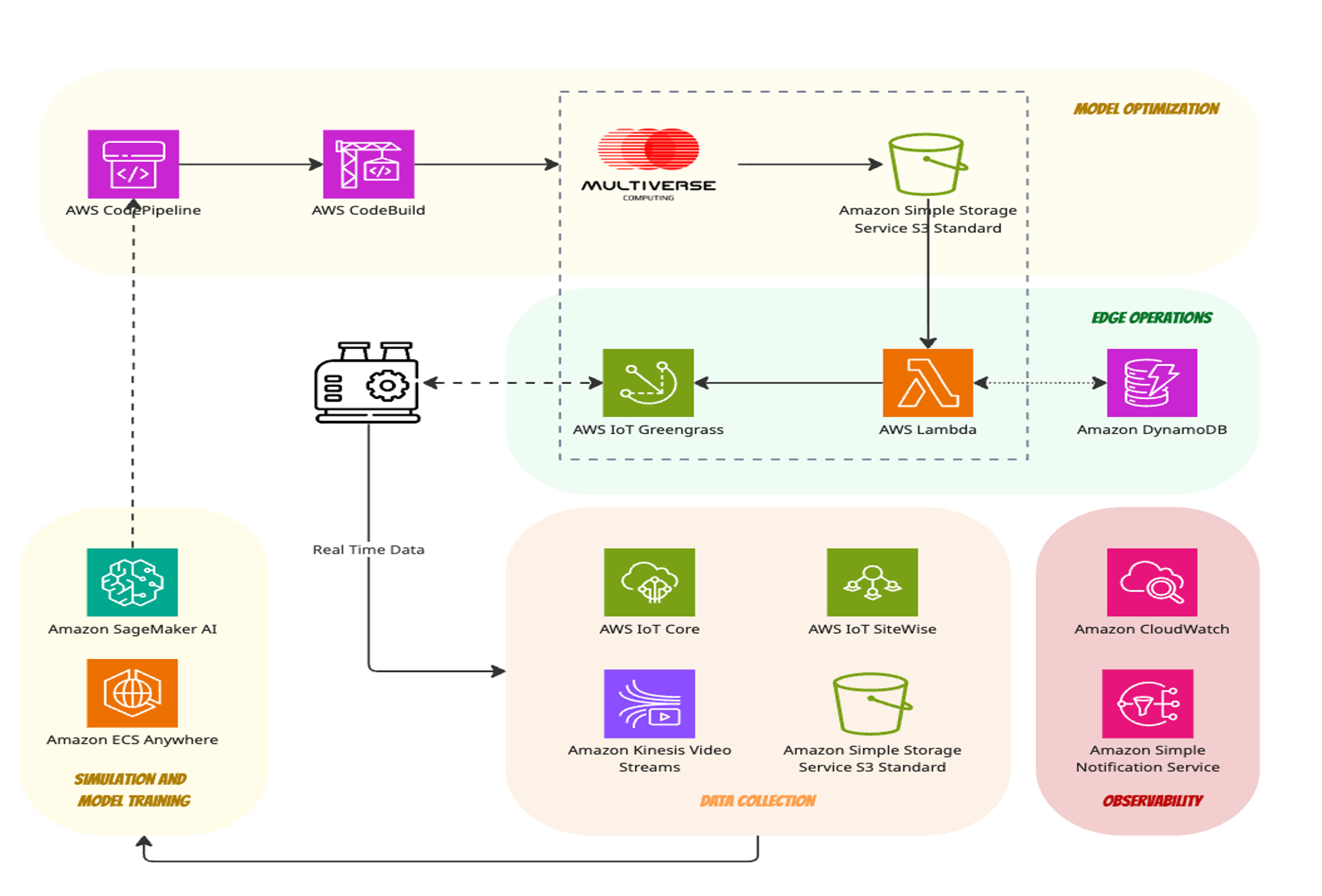
Figure 4: Architecture on AWS summarizing how the four stages connect
The reference architecture is a closed loop. Industrial sensors and operational systems on the plant floor stream into a Galeo Tech-managed ingestion layer that lands data in an Amazon S3 data lake through AWS IoT Core, AWS IoT SiteWise, and, for video and high-frequency signals, Amazon Kinesis Video Streams.
From the data lake, models are trained and validated using Amazon SageMaker AI, with Amazon Elastic Container Service Anywhere (Amazon ECS Anywhere) supporting simulation workloads that need to run closer to operational environments.
Each new model version then enters an automated optimization pipeline orchestrated by AWS CodePipeline and AWS CodeBuild, which hands the artifact to Multiverse Computing’s CompactifAI for compression and acceleration tailored to edge hardware.
The optimized model is written back to Amazon S3 as a versioned artifact, where an AWS Lambda function reads the target fleet definition from Amazon DynamoDB, devices organized into AWS IoT Thing Groups by site, line, or asset class, packages the model as an AWS IoT Greengrass component, and creates a targeted AWS IoT Job that triggers staged deployment to the corresponding edge devices.
Thing Groups enable zone-based rollout strategies: a new model version can be pushed first to a canary group at a single site, validated against field metrics, and then progressively promoted to broader groups across the fleet, limiting blast radius at every step.
Once running on the asset, the model produces inference results and telemetry that flow back into the data lake, closing the loop and feeding the next training iteration. Amazon CloudWatch and Amazon SNS provide end-to-end observability and alerting across cloud pipelines and edge fleet health.
Why the partner layer matters for industrial Physical AI
The AWS Physical AI framework provides the infrastructure and managed services that every stage of the loop depends on. Building a production deployment on top of it for an industrial environment usually requires three more capabilities: domain-specific data ingestion from industrial assets, MLOps pipelines that can deploy new model versions safely, and model optimization that fits the constraints of edge hardware.
Galeo Tech and Multiverse Computing close those gaps directly, and they do it on AWS as the best foundation layer to run physical AI workloads. Galeo Tech brings the industrial integration, data engineering, and MLOps expertise that the data and edge stages of the loop demand. Multiverse Computing brings the model compression layer that sits between training and deployment. Both produce artifacts that fit the standard AWS deployment pattern, allowing them to be combined cleanly into a single end-to-end stack.
Get started
For the architectural foundation, the AWS Physical AI framework and the AWS guidance for Physical AI on robotics are the right place to start. For the partner contributions described in this post, see the Galeo Tech and Multiverse Computing pages.
If you are running an industrial Physical AI workload on AWS, or planning one, the building blocks here apply directly. Reach out to your AWS account team to start a conversation about how to integrate them into your specific environment.
References