Artificial Intelligence
Category: Amazon Bedrock
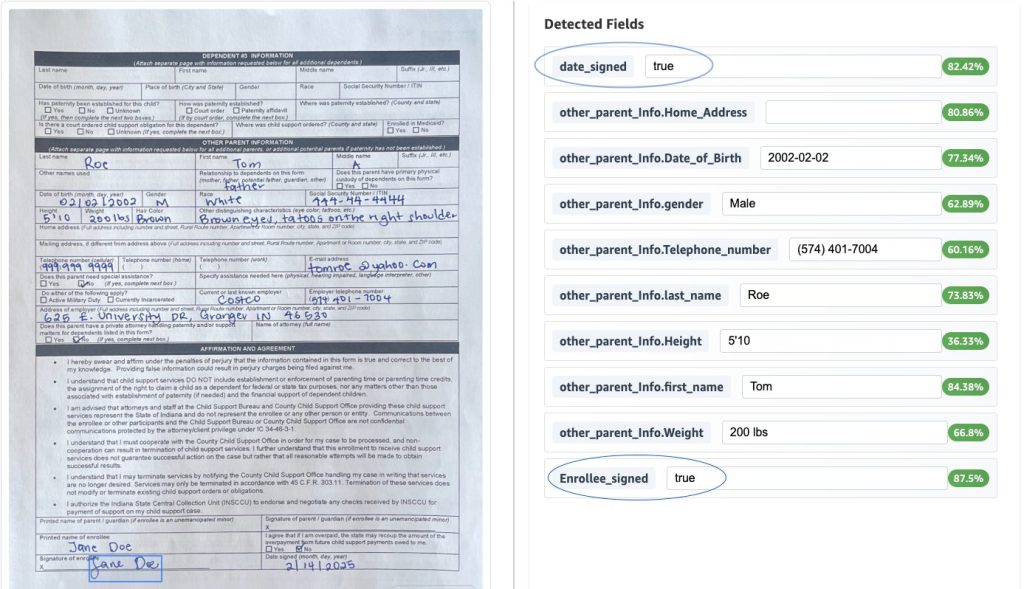
Scalable intelligent document processing using Amazon Bedrock Data Automation
In the blog post Scalable intelligent document processing using Amazon Bedrock, we demonstrated how to build a scalable IDP pipeline using Anthropic foundation models on Amazon Bedrock. Although that approach delivered robust performance, the introduction of Amazon Bedrock Data Automation brings a new level of efficiency and flexibility to IDP solutions. This post explores how Amazon Bedrock Data Automation enhances document processing capabilities and streamlines the automation journey.
Whiteboard to cloud in minutes using Amazon Q, Amazon Bedrock Data Automation, and Model Context Protocol
We’re excited to share the Amazon Bedrock Data Automation Model Context Protocol (MCP) server, for seamless integration between Amazon Q and your enterprise data. In this post, you will learn how to use the Amazon Bedrock Data Automation MCP server to securely integrate with AWS Services, use Bedrock Data Automation operations as callable MCP tools, and build a conversational development experience with Amazon Q.
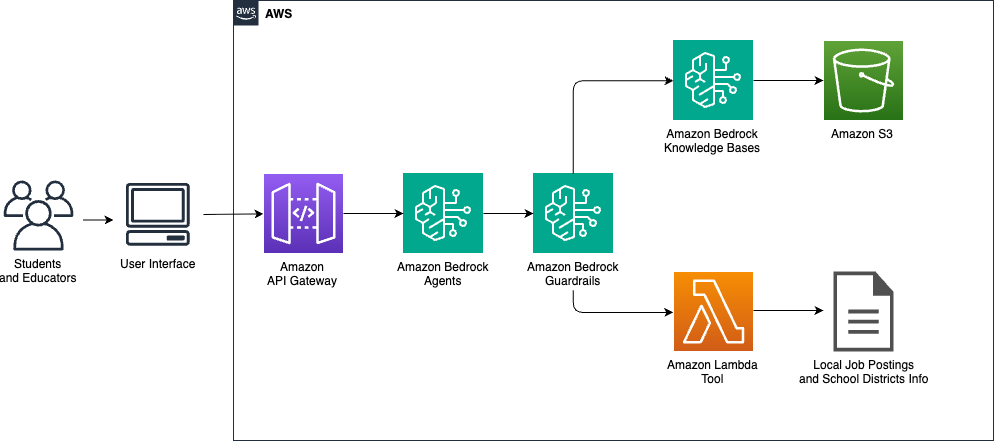
Empowering students with disabilities: University Startups’ generative AI solution for personalized student pathways
University Startups, headquartered in Bethesda, MD, was founded in 2020 to empower high school students to expand their education beyond a traditional curriculum. University Startups is focused on special education and related services in school districts throughout the US. In this post, we explain how University Startups uses generative AI technology on AWS to enable students to design a specific plan for their future either in education or the work force.
Citations with Amazon Nova understanding models
In this post, we demonstrate how to prompt Amazon Nova understanding models to cite sources in responses. Further, we will also walk through how we can evaluate the responses (and citations) for accuracy.

Securely launch and scale your agents and tools on Amazon Bedrock AgentCore Runtime
In this post, we explore how Amazon Bedrock AgentCore Runtime simplifies the deployment and management of AI agents.

PwC and AWS Build Responsible AI with Automated Reasoning on Amazon Bedrock
This post presents how AWS and PwC are developing new reasoning checks that combine deep industry expertise with Automated Reasoning checks in Amazon Bedrock Guardrails to support innovation.
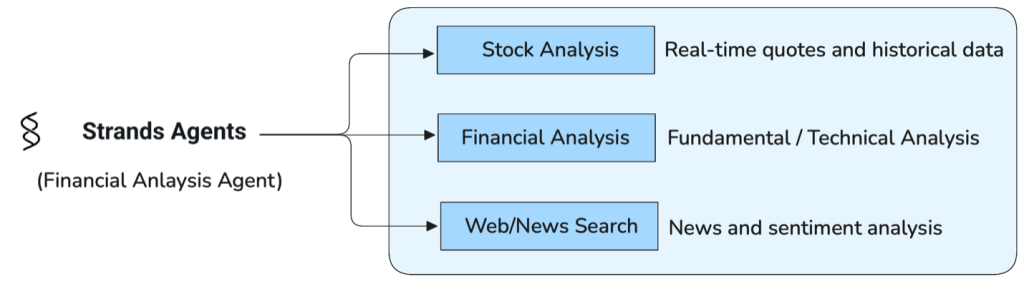
Build an intelligent financial analysis agent with LangGraph and Strands Agents
This post describes an approach of combining three powerful technologies to illustrate an architecture that you can adapt and build upon for your specific financial analysis needs: LangGraph for workflow orchestration, Strands Agents for structured reasoning, and Model Context Protocol (MCP) for tool integration.

Amazon Bedrock AgentCore Memory: Building context-aware agents
In this post, we explore Amazon Bedrock AgentCore Memory, a fully managed service that enables AI agents to maintain both immediate and long-term knowledge, transforming one-off conversations into continuous, evolving relationships between users and AI agents. The service eliminates complex memory infrastructure management while providing full control over what AI agents remember, offering powerful capabilities for maintaining both short-term working memory and long-term intelligent memory across sessions.

Build a conversational natural language interface for Amazon Athena queries using Amazon Nova
In this post, we explore an innovative solution that uses Amazon Bedrock Agents, powered by Amazon Nova Lite, to create a conversational interface for Athena queries. We use AWS Cost and Usage Reports (AWS CUR) as an example, but this solution can be adapted for other databases you query using Athena. This approach democratizes data access while preserving the powerful analytical capabilities of Athena, so you can interact with your data using natural language.
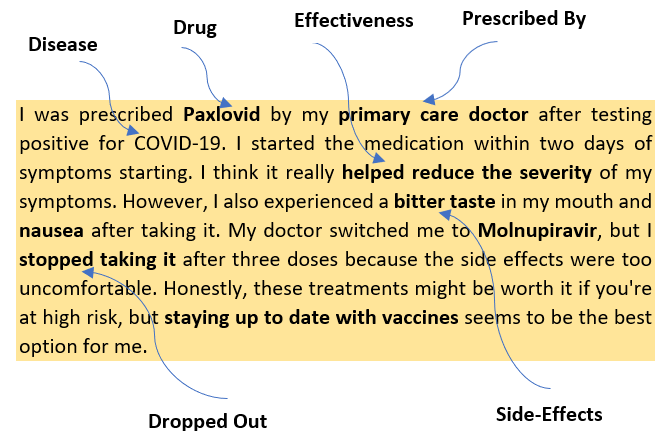
How Indegene’s AI-powered social intelligence for life sciences turns social media conversations into insights
This post explores how Indegene’s Social Intelligence Solution uses advanced AI to help life sciences companies extract valuable insights from digital healthcare conversations. Built on AWS technology, the solution addresses the growing preference of HCPs for digital channels while overcoming the challenges of analyzing complex medical discussions on a scale.