Artificial Intelligence
Category: Compute
Build AI workflows on Amazon EKS with Union.ai and Flyte
In this post, we explain how you can use the Flyte Python SDK to orchestrate and scale AI/ML workflows. We explore how the Union.ai 2.0 system enables deployment of Flyte on Amazon Elastic Kubernetes Service (Amazon EKS), integrating seamlessly with AWS services like Amazon Simple Storage Service (Amazon S3), Amazon Aurora, AWS Identity and Access Management (IAM), and Amazon CloudWatch. We explore the solution through an AI workflow example, using the new Amazon S3 Vectors service.
AI meets HR: Transforming talent acquisition with Amazon Bedrock
In this post, we show how to create an AI-powered recruitment system using Amazon Bedrock, Amazon Bedrock Knowledge Bases, AWS Lambda, and other AWS services to enhance job description creation, candidate communication, and interview preparation while maintaining human oversight.
How Amazon uses Amazon Nova models to automate operational readiness testing for new fulfillment centers
In this post, we discuss how Amazon Nova in Amazon Bedrock can be used to implement an AI-powered image recognition solution that automates the detection and validation of module components, significantly reducing manual verification efforts and improving accuracy.
Manage Amazon SageMaker HyperPod clusters using the HyperPod CLI and SDK
In this post, we demonstrate how to use the CLI and the SDK to create and manage SageMaker HyperPod clusters in your AWS account. We walk through a practical example and dive deeper into the user workflow and parameter choices.
How Clarus Care uses Amazon Bedrock to deliver conversational contact center interactions
In this post, we illustrate how Clarus Care, a healthcare contact center solutions provider, worked with the AWS Generative AI Innovation Center (GenAIIC) team to develop a generative AI-powered contact center prototype. This solution enables conversational interaction and multi-intent resolution through an automated voicebot and chat interface. It also incorporates a scalable service model to support growth, human transfer capabilities–when requested or for urgent cases–and an analytics pipeline for performance insights.
How CLICKFORCE accelerates data-driven advertising with Amazon Bedrock Agents
In this post, we demonstrate how CLICKFORCE used AWS services to build Lumos and transform advertising industry analysis from weeks-long manual work into an automated, one-hour process.
How AutoScout24 built a Bot Factory to standardize AI agent development with Amazon Bedrock
In this post, we explore the architecture that AutoScout24 used to build their standardized AI development framework, enabling rapid deployment of secure and scalable AI agents.
University of California Los Angeles delivers an immersive theater experience with AWS generative AI services
In this post, we will walk through the performance constraints and design choices by OARC and REMAP teams at UCLA, including how AWS serverless infrastructure, AWS Managed Services, and generative AI services supported the rapid design and deployment of our solution. We will also describe our use of Amazon SageMaker AI and how it can be used reliably in immersive live experiences.
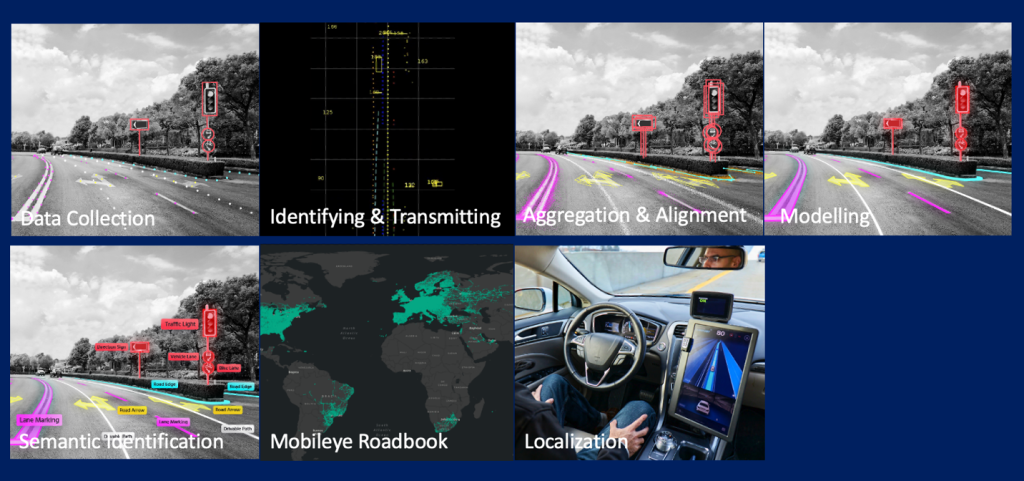
Optimizing Mobileye’s REM™ with AWS Graviton: A focus on ML inference and Triton integration
In this post, we focus on one portion of the REM™ system: the automatic identification of changes to the road structure which we will refer to as Change Detection. We will share our journey of architecting and deploying a solution for Change Detection, the core of which is a deep learning model called CDNet. We will share real-life decisions and tradeoffs when building and deploying a high-scale, highly parallelized algorithmic pipeline based on a Deep Learning (DL) model, with an emphasis on efficiency and throughput.
HyperPod enhances ML infrastructure with security and storage
This blog post introduces two major enhancements to Amazon SageMaker HyperPod that strengthen security and storage capabilities for large-scale machine learning infrastructure. The new features include customer managed key (CMK) support for encrypting EBS volumes with organization-controlled encryption keys, and Amazon EBS CSI driver integration that enables dynamic storage management for Kubernetes volumes in AI workloads.