AWS Public Sector Blog
RareDx: Building a multi-agent AI system to transform rare disease diagnosis
Over 300 million people worldwide live with one of approximately 7,000 classified rare diseases (The Lancet Global Health, 2024). Yet the diagnostic odyssey averages 4.8 years across Europe (European Journal of Human Genetics, 2024), with patients seeing an average of seven physicians before receiving a confirmed diagnosis. An estimated 80 percent of rare diseases have a genetic component (European Commission), making clinical genetics departments the frontline for answers.
For physician geneticists, the daily reality is daunting. The preparation of the diagnostics path takes hours: Each referral arrives with five or more previous specialist letters—often more than 30 pages in different languages and sometimes as low-quality scans—from outside the hospital’s system. The geneticist must read, extract, and mentally synthesize this material before or while seeing the patient, then extracting and mapping symptoms to standardized Human Phenotype Ontology (HPO) codes, considering additional non-structured inputs such as facial images, cross-referencing clinical guidelines, identifying information gaps, and planning diagnostic testing and patient communication.
After testing, interpreting genomic variants against databases such as ClinVar and gnomAD or other tools, integrating the latest literature, and writing a compliant report in a specific medical format and language demands enormous cognitive effort. The cumulative result: physicians spend most of their time on data gathering and administration rather than on the clinical reasoning only a human expert can provide. This is the kind of complex, multi-step knowledge work that agentic systems can support, as shown in recent research (Nature 2026).
In this post, we demonstrate RareDx, an agentic AI-powered application prototype, built on Amazon Bedrock AgentCore, Amazon Web Services (AWS) purpose-built AI services and open source toolkits for Healthcare and Life Sciences. RareDx guides physician geneticists through the entire diagnostic journey; from the first referral letter to the final insurance-coded report. Rather than forcing the physician to switch between dozens of tools, documents, and databases, RareDx provides a single unified interface where all relevant patient data converge around the patient and provides support for operational and administrative tasks.
Architecture: A modular agent fleet on Amazon Bedrock AgentCore
Rare disease diagnosis requires fundamentally different types of reasoning at different stages: extracting clinical history from scanned documents is nothing like interpreting a genomic variant or writing a compliant medical report. A single monolithic model can’t simultaneously excel at all of them. RareDx addresses this by decomposing the problem into a fleet of 12 specialist agents, each optimized for its task with tailored prompts, specialized tools, and appropriate model selection. This modular architecture means each agent can be independently built, tuned, swapped, integrated, or upgraded without affecting the rest of the system, so clinical teams can adjust the user experience and accuracy for each step of the diagnostic journey individually.
How it works
We built RareDx on the Strands Agents SDK, running on Amazon Bedrock AgentCore Runtime. A Clinical Coordinator agent orchestrates 12 specialist sub-agents, including patient-summary-synthesis-agent, phenotype analyst, biomedical-research-agent, terminology-agent, pedigree-specialist, clinical-guideline-specialist, report-generation-agent, and more. Amazon Bedrock provides access to different foundation models and versions, including custom models. So, each agent can use the right model for its reasoning task. For example, RareDx uses fast models for routing decisions and more capable models for complex reasoning tasks, such as variant interpretation and report generation.
- Agent memory: AgentCore Memory provides both short-term memory within a session and long-term memory across visits, scoped per physician-patient pair. The system recalls prior consultations, test results, and diagnostic reasoning when a patient returns.
- Tool gateway: A single Model Context Protocol (MCP) endpoint exposes 30 specialized biomedical tools from the Biomni toolkit (co-developed with the Biomni group from Stanford), deployed through AgentCore Gateway, covering databases such as ClinVar, gnomAD, Ensembl, and OpenTargets, in addition to literature sources including PubMed, arXiv, and ClinicalTrials.gov.
- Data layer: Amazon Simple Storage Service (Amazon S3) stores referral documents and ClinVar variant data in Amazon S3 Tables in Apache Iceberg format for high-performance SQL queries. Amazon DynamoDB tracks patient journey state. AWS HealthLake (FHIR R4) provides patient demographics, conditions, and medications. Amazon Comprehend Medical handles ICD-10, RxNorm, and SNOMED coding.
Figure 1 shows the high level architecture. AWS Amplify offers a frontend between users and the agent coordinator, which uses memory and tools through Amazon AgentCore Gateway to provide the best results.
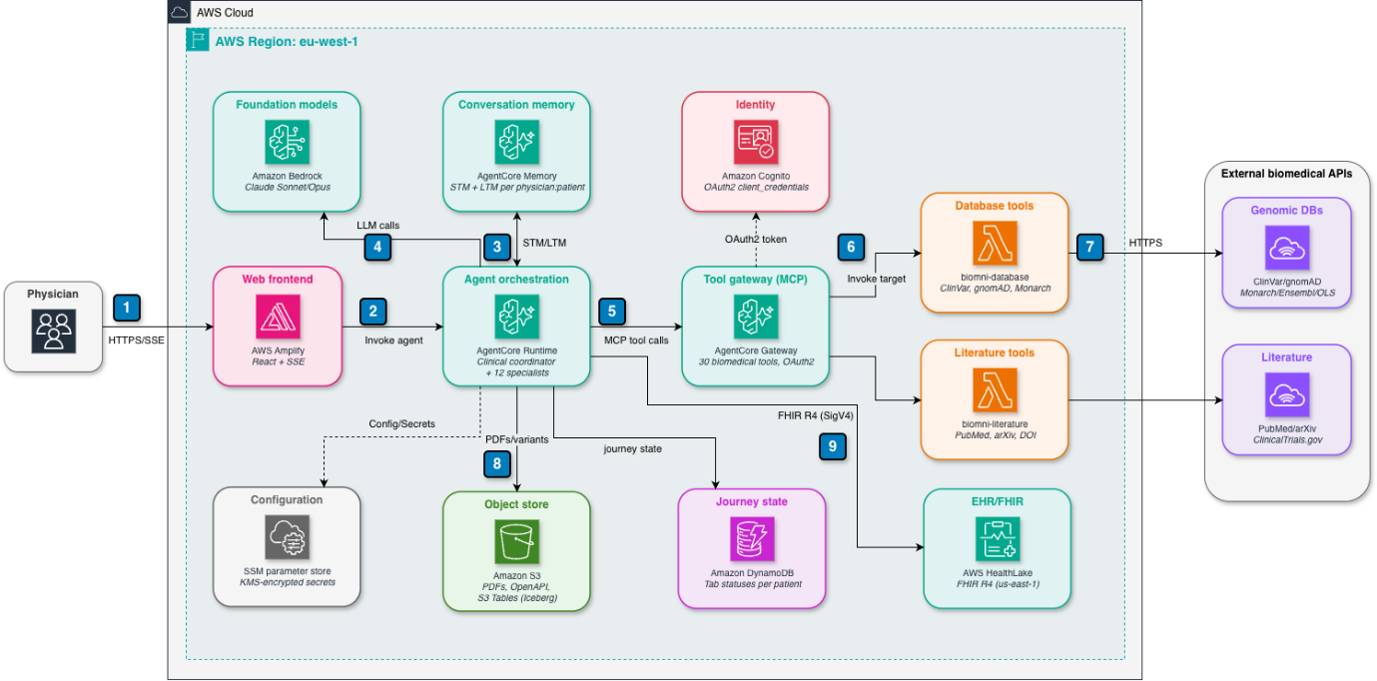
Figure 1 – High-level architecture diagram of RareDx
Compliance and data sovereignty
For healthcare organizations in the EU, data sovereignty is non-negotiable. RareDx runs entirely within the EU (eu-west-1 in Ireland), and Amazon Bedrock operates on a Mantle architecture with zero operator access and zero data retention by default and is designed to support both GDPR and HIPAA compliance. Patient data never leaves the AWS Region and is never used to train models.
An AI-integrated diagnostic journey
Using the spec-driven development with Kiro, an AI-powered development tool from AWS, we’ve built the application prototype in two weeks including the physician interaction layer,a React single-page application hosted on AWS Amplify, streaming real-time agent activity over Server-Sent Events (SSE). The interface supports multiple languages (currently EN, ES, and DE) and is designed for clinical workflows rather than chat.
The application embeds single sign-on through Amazon Cognito for physicians to land on the access-controlled dashboard with all patients in treatment for the specific physician, as shown in the following video.
Figure 2 – Landing page for physicians showing a dashboard of all patients in treatment at different stages
For each of the patients, the diagnostic journey is structured into six stages, each with a dedicated interface providing stage-specific task support and information integration. The following figure shows the referral stage, where the application extracts, translates, and summarizes patient history from scanned referral documents. Physicians can review the scan within the interface.
Figure 3 – At the referral stage, information is processed and presented for physicians to review
The next figure shows the diagnostics planning stage, where the application extracts clinical phenotypes and maps to HPO codes, identifies information gaps for differential diagnostics, and recommends diagnostic pathways based on clinical guidelines. All outputs are traceable to the source information and are reviewed and governed by physicians through human-in-the-loop editing. This helps physicians to prepare communication and surveys for patients effectively before their visits.
Figure 4 – At the planning stage, physicians use the application to prepare for their visits
The next video demonstrates a patient visit. The application provides ambient listening and near-real-time transcription and coding, in addition to options for note editing and uploads. We enriched the experience with AI-assisted facial analysis for dysmorphology, and automated family pedigree construction.
Figure 5 – During the patient visit, the application performs background tasks so physicians can focus on patient interaction
In the next figure, the application integrates additional information from the patient visit and analyzes diagnostic pathways for differential diagnoses. The physician reviews, finalizes the decision, and orders the lab testing. The application can integrate with the lab information system in the backend.
Figure 6 – At the finalization stage, physicians use the application to choose the final diagnostics path
After the lab work and bioinformatics—such as secondary analysis—are complete, the application aggregates variant annotation, scientific literature, clinical trials, and further databases to support physicians during the variant interpretation and diagnose. The application brings built-in analytics capabilities and can flexibly integrate external tools, software, and databases, selected and validated by the physicians’ institute.
Figure 7 – At the diagnose stage, the physicians use the application to help them integrate lab results and scientific research for final diagnosis
Finally, the application assists physicians by automating generation of a compliant diagnostic report using a pre-defined template in the required format and language. It can also support medical coding, embedding standard operating procedures and in-house best practices. Physicians can review and edit all generated inputs in a modularized way.
Figure 8 – At the report stage, the physician uses the application to draft a report
Alongside the entire diagnostic journey, physicians can query accumulated, up-to-date patient data, in combination with connected resources such as PubMed conversationally in the interface shown in Figure 3.
Impact and outlook
In an initial test with an academic medical center’s human genetics department, physicians reported that RareDx could reduce their administrative burden by as much as 60–70 percent, freeing hours for each patient for clinical reasoning and patient interaction. By using the application to handle the extraction, integration, translation, and synthesis of data that today consume most of a geneticist’s working hours, the physician can focus on what only a human expert can do.
Critically, modular agent architecture means the system can be adapted to different institutional workflows, languages, guidelines, and regulatory environments without rebuilding from scratch. It can also be extended to other departments’ integrative workloads. Each specialist agent can be tuned independently; adjusting a report-writing agent for a new national standard or swapping a facial analysis model for an improved version requires no change to the rest of the system. We’re currently working with users to produce production-ready applications for validation.
Conclusion
Built on AWS, RareDx demonstrates how a multi-agent architecture on AWS can help human geneticists streamline the diagnostic journey, accelerating their workflow, and focusing on patients and clinical reasoning. To get started, visit the Healthcare and Life Sciences Agents toolkit on AWS catalog for reusable assets of RareDx.
To learn more about how to build healthcare life sciences agentic systems on AWS, see the following resources:
- Multi-Agent Multimodal Data Analysis on AWS – Part 1: Data Governance and Visualization
- Build a biomedical research agent with Biomni tools and Amazon Bedrock AgentCore Gateway
- The 1000 Genomes Project, reanalyzed: A new analytical baseline for human genomics
- Accelerating life sciences research with Kiro: A unified AI interface to 100+ open source databases
- An AI-facilitated multidisciplinary team board for rare and undiagnosed diseases (and beyond)