IBM & Red Hat on AWS
Transform payments with IBM Payments Center – Wire Services on AWS
ISO 20022 is reshaping how financial institutions and corporate organizations process high-value wire payments globally. This global standard provides richer, more structured, end-to-end payment data, giving organizations a clear path to modernize payment infrastructure and improve transaction visibility.
IBM Payments Center – Wire Services on AWS helps you take advantage of this transition with a SaaS solution that automates payment workflows, simplifies ISO 20022 message transformation, and delivers real-time operational visibility—all on a scalable cost model that supports your modernization goals.
In this post, you’ll learn how IBM Payments Center–Wire Services on AWS helps you optimize high-value payment processing while maintaining the security, scalability, and compliance standards your operations require.
IBM Payments Center – Wire Services overview
IBM Payments Center – Wire Services is a payment processing solution that helps financial institutions and corporate organizations manage high-value cross-border and domestic payments. When you implement this solution, IBM provides a secure multi-tenant environment on AWS, configured to meet your operational and security requirements.
The following diagram (Figure 1) illustrates the business context of IBM Payments Center – Wire Services, showing key stakeholders and business functions that the solution supports.
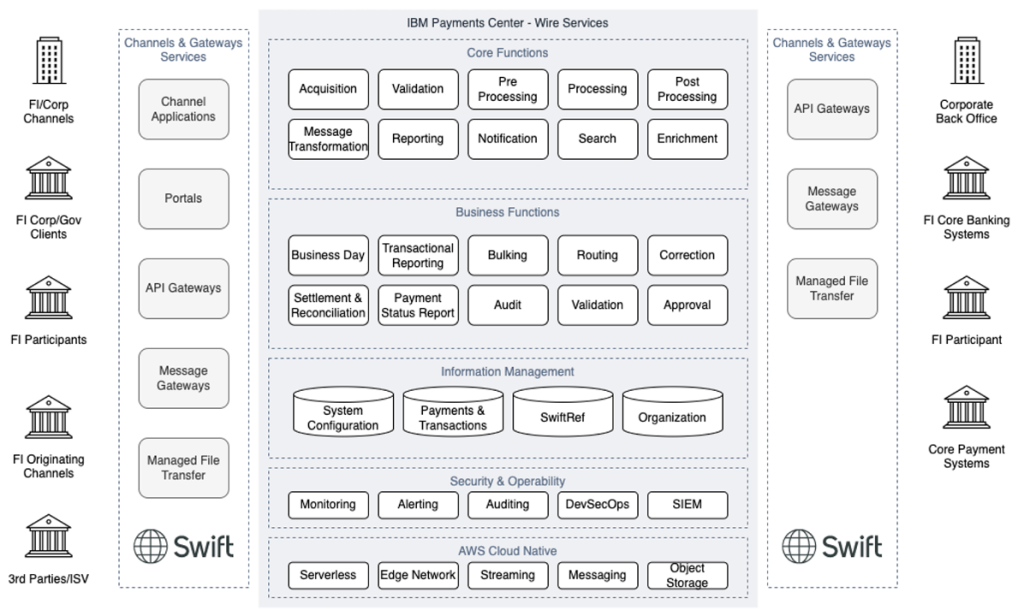
Figure 1. Business context diagram for IBM Payments Center – Wire Services.
Solution components
The Wire Services Transformation Engine supports ISO 20022 adoption and provides the following capabilities:
- Transforms incoming MX messages, based on ISO 20022, into SWIFT Message Type (MT) format, based on ISO 15022, for legacy system compatibility
- Converts outgoing MT messages into MX format for forward compatibility
- Handles both standard and custom format transformations based on your specific requirements
- Provides high availability and scalability by using native AWS scaling capabilities
The Payment Processing Engine manages the complete lifecycle of wire transactions from initiation through completion. This processing engine, built on AWS:
- Supports transaction initiation, correction, approval, and routing
- Transfers outbound files to downstream systems
- Provides detailed end-of-day reporting
- Processes transactions based on the ISO 20022 data schema
- Maintains data integrity throughout the transaction lifecycle
Business benefits
The solution’s automated transaction correction, validation, and intelligent routing features help you process payments more efficiently. These capabilities reduce operational effort and improve data quality by using the rich ISO 20022 data schema. You can scale payment processing capacity based on business demand, minimizing rejected transactions and reducing manual intervention.
Key Features and Capabilities
IBM Payments Center – Wire Services includes these key features to help you manage your payment operations:
Secure connectivity
The solution connects your organization through multiple channels including APIs, IBM Managed File Transfer (MFT), and IBM MQ (Message Queue), supporting secure file exchanges between your systems, the solution, and payment networks such as SWIFT. You can access a secure web application for user management that incorporates IBM Verify to provide two-factor authentication (2FA) or single sign-on (SSO) capabilities.
Data transformation
The solution supports payment format conversions between standard and custom formats, handling both batch and single files. This capability is particularly valuable for organizations transitioning between legacy MT formats and the new ISO 20022 MX formats, as it maintains compatibility across your payment infrastructure while you modernize.
Payment initiation
Your users can submit transactions through the user interface or API integration. The solution supports multiple creation methods:
- Simple forms for quick entries
- Templates for standardized payments
- Cloned transactions for repetitive payments
- Recurring schedules for predictable payment needs
The solution applies validation rules to help maintain payment quality and compliance, regardless of submission method.
Transaction management
The solution provides transaction management capabilities. You can search, track, approve, release, correct, or reject transactions through the user interface. The solution’s built-in automation handles data enrichment, validation, correction, and duplicate checks without manual intervention.
The solution intelligently routes transactions based on configurable business rules and integrates with your backend systems for functions such as posting, screening, limit checks, and foreign exchange services.
Reporting and notifications
You can generate custom reports for your business requirements and receive them through email or IBM Managed File Transfer. The solution delivers real-time notifications about transaction status updates, helping you stay informed about payment progress. Detailed activity logs help you monitor payment processing and maintain visibility across your payment operations.
Each capability is designed to reduce manual effort and help you process payments on AWS.
Solution design and architecture considerations
Real-time payment tracking and visibility
IBM Payments Center – Wire Services provides real-time payment tracking and visibility through dynamic dashboards that help you monitor payments during processing. The solution includes event auditing, exception alerts, and on-demand reporting capabilities so you can stay informed about your transactions and respond to issues promptly.
The following screenshot (Figure 2) shows the dashboard interface for IBM Payments Center – Wire Services, providing visibility into in-flight and processed transactions.
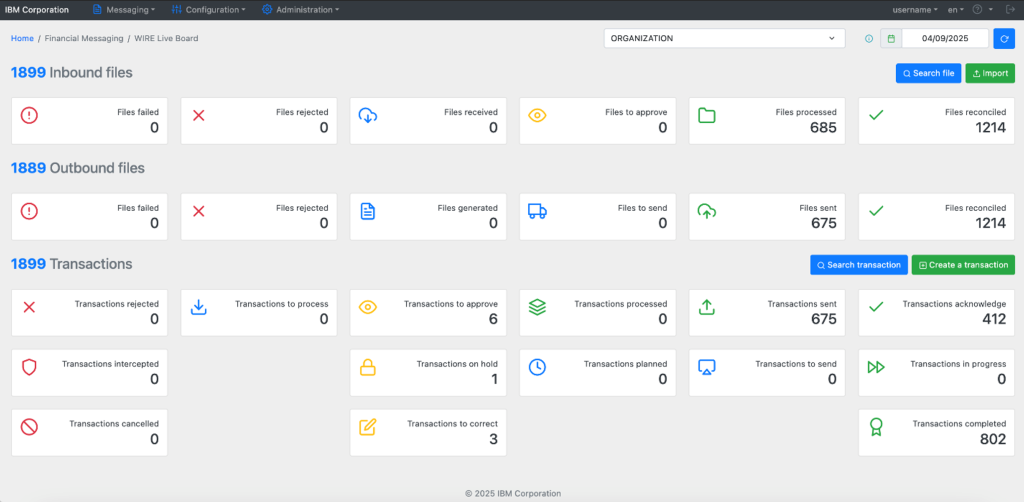
Figure 2. Dashboard interface showing transaction status monitoring with summary metrics and detailed payment records.
The dashboard provides a summary overview that you can enrich with business metrics. You can use it for status monitoring and drill down into specific items to check their status and evaluate whether further analysis or action is required.
Standards and integration framework
IBM Payments Center – Wire Services aligns with industry standards to support integration and compliance across the global financial network. The solution natively supports ISO 20022 formats, including both Cross-Border Payments and Reporting Plus (CBPR+) and High-Value Payment Systems Plus (HVPS+) specifications. In addition, the solution integrates SWIFT GPI (Global Payments Innovation) capabilities. This integration provides end-to-end transaction tracking with improved visibility and transparency for financial institutions and their clients.
Integration capabilities
IBM The solution provides an integration framework for communication with various external services. It supports inbound and outbound integrations through IBM MQ, SFTP, IBM MFT, and REST APIs, providing flexibility for diverse environments. Additionally, the solution provides multiple integration points within payment flows that connect with your backend systems through REST APIs. This architecture helps the solution connect with additional services such as fraud checks, anti-money laundering (AML) verification, posting operations, and account validation.
By integrating with your existing systems and services, IBM Payments Center – Wire Services supports cohesive operational flow and helps you use your preferred third-party services while optimizing your business processes.
Architecture overview
The following diagram (Figure 3) shows the AWS architecture for IBM Payments Center – Wire Services, illustrating how AWS services integrate to support payment processing, storage, and monitoring:
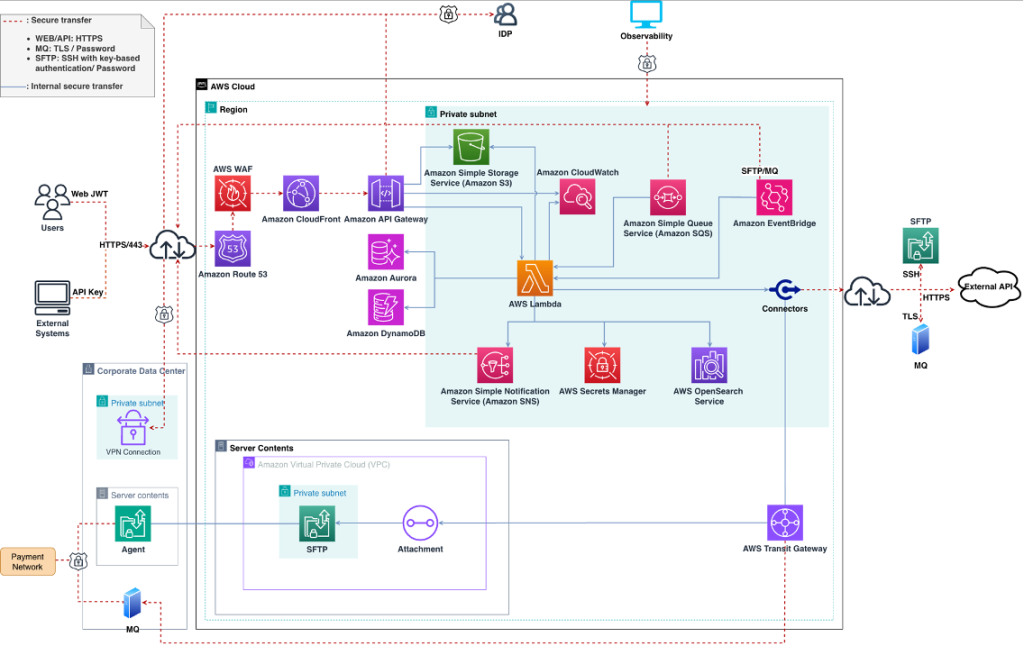
Figure 3. AWS architecture for IBM Payments Center – Wire Services with serverless components, storage, and monitoring.
Authentication and access
The user journey begins when a payment operator or financial institution user accesses the web application through a secure browser session. Authentication is handled by an external Identity Provider (IdP), integrated with IBM Verify, which supports 2FA and SSO so that only authorized personnel can access the application.
The user’s HTTPS request first passes through AWS WAF, which inspects and filters malicious traffic. The request is then routed through Amazon CloudFront for low-latency content delivery and Amazon Route 53 for DNS resolution. Amazon API Gateway serves as the central entry point for all API interactions, managing traffic throttling, request routing, and secure communication between the front-end application and the backend microservices.
Dashboard and notifications
Once authenticated, the user lands on the IPC Wire Services Live Board dashboard—a dynamic, real-time interface that displays all in-flight and processed payment transactions. Transactions are organized by inbound files, outbound files, and individual transaction statuses. This dashboard gives operators immediate visibility into the health of payment operations and supports drill-down into specific items requiring attention.
If a transaction requires manual operator review—for example, a payment flagged for correction or pending approval—the user is proactively notified through Amazon Simple Notification Service (Amazon SNS). Amazon SNS delivers real-time alerts through email, chat, or other configured channels so that no critical action is missed.
Core processing
AWS Lambda functions power the core application logic behind every user interaction: retrieving payment details, running validation rules, applying automated corrections, performing duplicate checks, enriching transaction data, and routing payments based on configurable business rules.
When the user initiates a new payment—whether through simple forms, templates, cloned transactions, or recurring schedules—the request flows through API Gateway to Lambda. Lambda orchestrates the end-to-end processing pipeline including pre-processing, validation, transformation (MX/MT formats), and post-processing steps.
Data storage
Amazon DynamoDB stores temporary and unstructured data such as user session context, short-lived processing state, and transient metadata that supports the real-time responsiveness of the application.
Amazon Aurora, as the relational database engine, persists long-term transactional data including payment metadata, transaction status changes, audit trails, approval histories, and reconciliation records. Aurora provides the durable, consistent data layer required for regulatory compliance and end-of-day reporting.
Amazon Simple Storage Service (Amazon S3) serves as the durable object store for payment documents, file archives, audit records, and batch files. Amazon Simple Queue Service (Amazon SQS) decouples system components by queuing asynchronous messages between processing stages, improving resilience and helping prevent transaction loss during high-throughput periods.
External integration
For integration with external systems, the architecture offers multiple connectivity options depending on your infrastructure. AWS Transfer Family facilitates secure file transfers through SFTP with SSH key-based authentication. REST APIs through API Gateway support real-time programmatic integration. All of these operate within a private subnet inside an Amazon Virtual Private Cloud (Amazon VPC), with AWS Transit Gateway managing connectivity to corporate data centers through VPN and to external payment networks.
These integration points connect the solution with backend systems for fraud screening, anti-money laundering checks, posting operations, account validation, and foreign exchange services.
Security
AWS Secrets Manager securely stores and rotates all sensitive credentials, API keys, and certificates used across these integrations. AWS Key Management Service (AWS KMS) manages encryption keys to help protect data at rest and data in transit.
Observability
Amazon OpenSearch Service powers the solution’s rapid search functionality, helping operators quickly locate specific transactions, files, or audit records across large volumes of payment data.
Amazon CloudWatch continuously monitors all serverless components, collecting metrics and logs and triggering alarms. AWS CloudTrail provides audit logging of every user and system action. These AWS capabilities feed into both IBM’s observability technology and external monitoring systems for cross-service correlation, centralized visibility, and compliance reporting.
The solution operates across multiple Availability Zones for fault tolerance and supports an active/passive disaster recovery strategy across AWS Regions to help maintain business continuity even during regional outages.
Summary
In this post, you learned how IBM Payments Center – Wire Services on AWS helps financial institutions modernize high-value payment processing through automated workflows, simplified ISO 20022 message transformation, and greater operational visibility.
By using IBM Payments Center – Wire Services on AWS, you can improve operational efficiency, operate on a scalable cost model, and accelerate your ISO 20022 migration—all while maintaining the security and compliance standards critical to financial services.
To learn more about IBM Payments Center – Wire Services, visit the IBM Payments Center documentation. To explore additional IBM solutions on AWS, visit AWS Marketplace.
Visit AWS Marketplace to explore additional IBM solutions:
- IBM Verify SaaS
- IBM MQ as a Service Reserved Instance (SaaS)
- IBM MQ and IBM MQ Advanced (software)
- IBM webMethods Managed File Transfer (Subscription License)
- IBM App Connect Enterprise (SaaS)
- IBM API Connect – Full lifecycle API management