AWS for M&E Blog
qibb and AWS redefine media workflows
Today, media companies (such as broadcasters, streaming platforms, news and sports media outlets, and major film and television studios) face an increasingly complex content landscape. Under pressure to create more content with fewer resources, they need to keep up with rising audience expectations for faster, more personalized, and higher-quality content.
Media teams often rely on a wide range of specialized tools and cloud services, including transcoders, media asset management (MAM) systems, playout systems, and analytics platforms. These systems frequently use different metadata formats and lack consistent ways to communicate with one another. This fragmentation leads to inefficiencies across operations.
For technical teams managing workflows, such as live-to-VOD (video on demand) transformation or automated highlight generation, the lack of a centralized orchestration layer means they must manually connect systems. This slows down delivery timelines and increases the risk of human error, especially in fast-paced environments such as live sports or breaking news.
That’s where qibb comes in. As a low-code orchestration platform designed specifically for the media industry, qibb uses Amazon Web Service (AWS) Cloud services to streamline operations and enable more adaptive and intelligent media workflows. Together, qibb and AWS help media organizations automate and scale workflows, so they can deliver personalized content faster and more efficiently.
Orchestrating media with qibb and AWS
The low-code orchestration platform of qibb integrates with AWS media services, third-party applications, and partner solutions across the media ecosystem. This includes services such as Amazon Simple Storage Service (Amazon S3), Amazon Rekognition, and Amazon Transcribe, as well as key media-specific tools, such as MAM systems, content delivery networks, and analytics solutions. This broad integration capability confirms that media companies can connect their entire technology stack, both in the cloud and on premises, without extensive custom development.
Customers can:
- Build, deploy, and adapt media workflows faster – Reducing time to market and supporting rapid iterations
- Integrate cloud services without heavy development effort – Reducing reliance on custom coding and costly integrations
- Control and monitor costs at every step – Verifying efficient resource usage and transparent cost management through centralized dashboards
By combining the robust infrastructure of AWS with the orchestration capabilities of qibb, media companies can build and run content workflows that process large volumes of video assets daily. They can also apply AI-based metadata tagging or automate live-to-VOD turnaround within minutes.
Advanced workflow automation: Real-world use cases
The following are five real-world use cases where the integration of qibb with AWS can provide significant benefits.
Personalized highlight generation for tailored viewer experiences
Traditionally, creating personalized highlight reels required significant manual editing and extensive resource allocation. Now, with qibb orchestrating AWS services, media companies can deliver variations of content based on predefined criteria, such as player focus, game moments, or viewer segments.
qibb coordinates Amazon Rekognition to identify key visual elements—such as specific players, actions, or events—and then uses that data to generate context-specific highlight packages. These workflows are integrated with existing systems (such as MAM systems and editorial tools) so teams can set rules for which moments to include for different types of audiences.
For instance, when Amazon Rekognition detects a specific player’s face or relevant on-screen statistics, qibb can capture that moment, trigger transcoding, apply dynamic overlays, and format the clip for multiplatform distribution. It then routes the content to AWS Elemental MediaConnect for live streaming or to Amazon CloudFront for on-demand playback. By unifying these processes, qibb reduces content turnaround time from hours to minutes. Media companies can supply relevant and tailored content to viewers while maintaining operational efficiency.
What’s more, the dashboard capabilities of qibb provide real-time insights into workflow performance, surfacing key metrics such as content processing times, distribution statuses, and metadata generation. Through a single, intuitive dashboard, operators can monitor workflow performance, address issues in real time, and optimize processes on the fly. This built-in integration provides media companies with a unified workflow that connects content processing, distribution, and metadata management across platforms.
The following workflow shows how a video uploaded to Amazon S3 automatically launches a qibb flow. The workflow branches: one path uses Amazon Rekognition to analyze faces and on-screen text, and the other uses Amazon Transcribe to convert speech to text. qibb combines all of this to identify key moments, sends them into the MAM system, and the MAM drafts highlight clips. qibb wraps it up with monitoring dashboards showing workflow status.
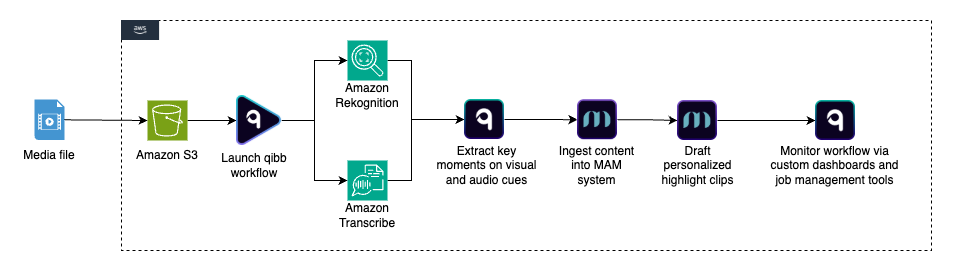
Figure 1: High-level personalized highlight generation
Automated multiplatform distribution
Content distribution has historically been labor-intensive, requiring manual configuration for each delivery channel. AWS and qibb now automate this entire pipeline. Content ingested through Amazon S3 triggers workflows that dynamically transcode videos into optimized formats using AWS Elemental MediaConvert. Amazon Rekognition enriches these assets with near real-time metadata, making the content discoverable and contextually relevant.
The low-code workflow orchestration platform of qibb confirms that each piece of content is automatically routed and optimized for distribution channels such as over-the-top (OTT) services, social media platforms, and traditional broadcast channels. In addition to this, qibb triggers additional workflows, such as archiving content to a MAM system, notifying teams on Slack when content is published, and generating metadata reports for further analysis.
This unified workflow accelerates the entire distribution process, so media companies can execute operational tasks through a single orchestrated flow, focusing on creative efforts rather than repetitive tasks. With customizable dashboards, teams gain at-a-glance visibility into content status and distribution progress, which supports quick operational oversight without duplicating earlier details.
The following workflow shows a file landing in an S3 bucket and instantly triggering a qibb workflow. The process splits: one branch sends the file to MediaConvert, the other processes it with FFmpeg. Both outputs go back into an S3 bucket. Quasar then runs a quality check. If the output meets quality standards, the file moves on to distribution platforms. If it fails, the team is notified on Slack.
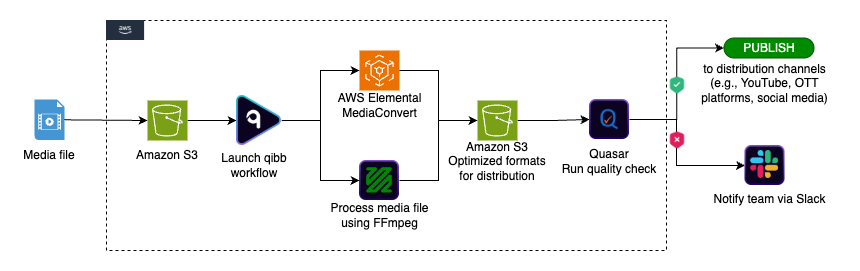
Figure 2: High-level automated multiplatform distribution
Dynamic storage and archive management
Managing storage efficiently is a key operational challenge for media companies dealing with large volumes of content. With qibb, media organizations can automate intelligent tiering across storage solutions, such as Amazon S3 and Amazon S3 Glacier. Within these services, content is archived, retrieved, and retained according to business rules, depending on the access patterns to the content.
For example, a broadcaster can set up a qibb workflow that automatically moves content from Amazon S3 to S3 Glacier based on defined retention periods. This workflow uses the dashboard capabilities of qibb to provide visibility into storage utilization and content lifecycle events, reducing storage costs. Automated notifications are sent to content managers after assets are archived or deleted, which helps manage the entire lifecycle process efficiently, confirming that no asset is overlooked.
The following workflow shows how media is archived. It starts with Iconik marking a file as past its retention date. This triggers a qibb workflow that identifies what needs archiving, verifies file integrity, and transfers the media to an S3 archive bucket. After that, it generates a deletion list, Iconik removes the expired items from the MAM system, and qibb finishes the flow by displaying storage and cost details on monitoring dashboards.
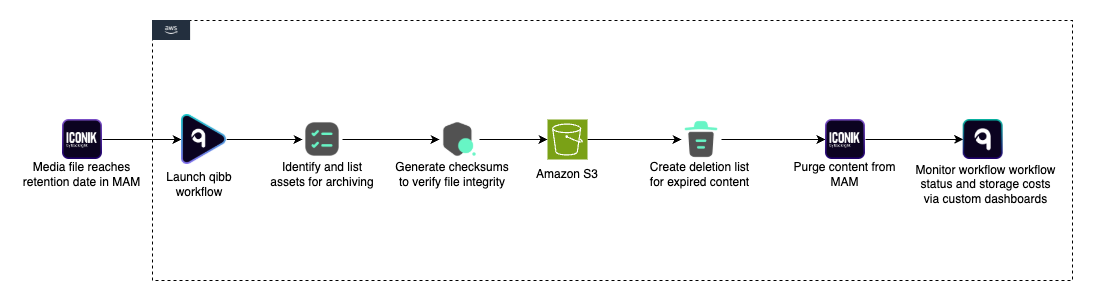
Figure 3: High-level storage and archive
Multicloud and hybrid media workflows
For media companies that operate in both on-premises and cloud environments, qibb provides an orchestration layer that connects AWS services and existing infrastructure. By integrating AWS services with third-party media tools, qibb helps organizations modernize their workflows without disrupting established workflows.
For instance, a post-production house can ingest content through on-premises storage, process it with AWS services (such as Amazon Transcribe or Amazon Rekognition) and then archive it in Amazon S3 or a third-party MAM system. This approach provides companies with the ability to maintain their existing systems while extending workflows into the cloud, modernizing processes at a pace that aligns with their operational and budget requirements.
The following screenshot shows the qibb visual workflow editor in which AWS and Slack nodes are connected in flows. You can drag integrations from the right into the canvas to build or extend automations.
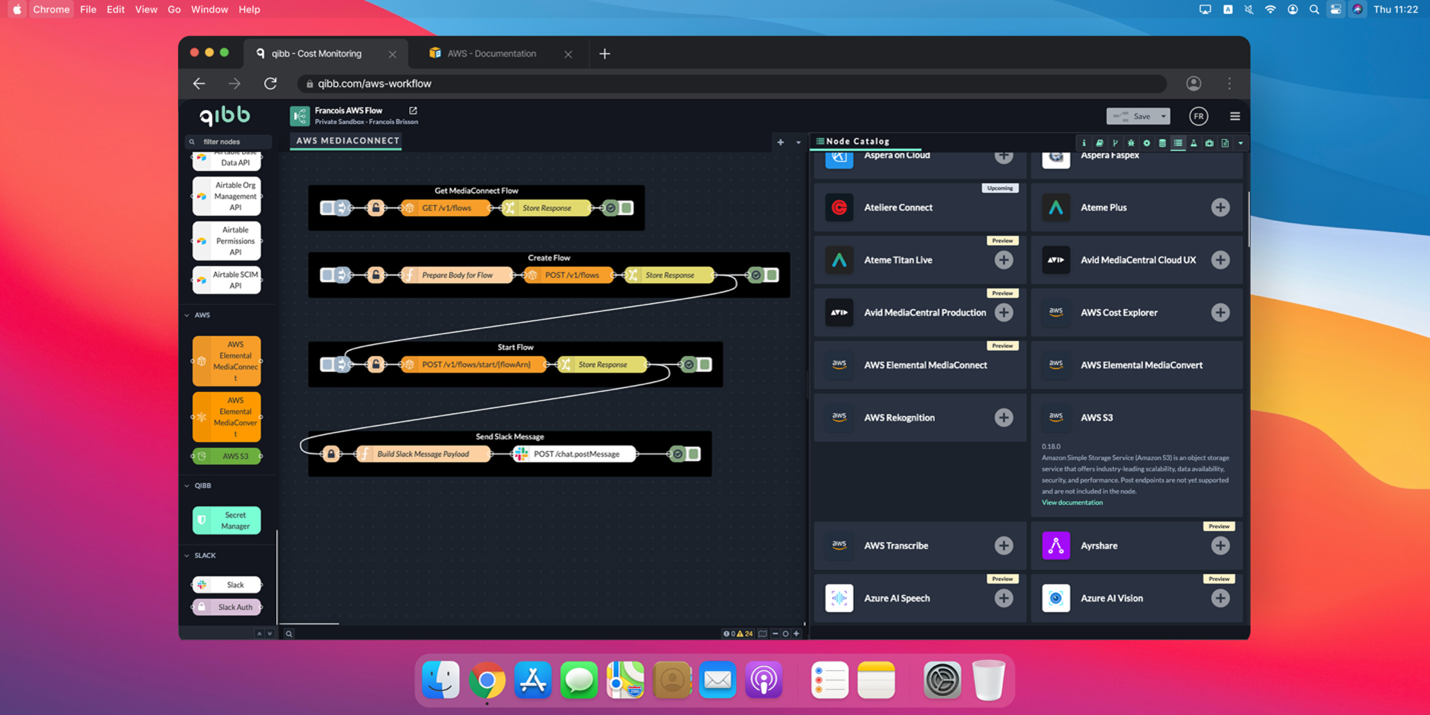
Figure 4: qibb visual workflow editor
Maximized engagement and revenue with AI-driven content monetization
Generic, one-size-fits-all content strategies limit audience engagement and monetization potential. qibb can orchestrate AWS AI and machine learning (ML) services, such as Amazon Bedrock for foundation model (FM) access and Amazon SageMaker AI for custom ML model training and deployment. Media companies can assemble personalized content, enhancing viewer relevance and opening new monetization opportunities.
By using viewer analytics, media companies can orchestrate content creation workflows through qibb to generate tailored highlights and content variations optimized for different viewer segments. For example, personalized sports highlight reels can be dynamically created to focus on viewer preferences, such as favorite athletes or teams.
The result is more relevant, engaging content that boosts audience retention, increases viewer satisfaction, and maximizes revenue streams through targeted monetization strategies.
The following screenshot shows the qibb cost monitoring dashboard.
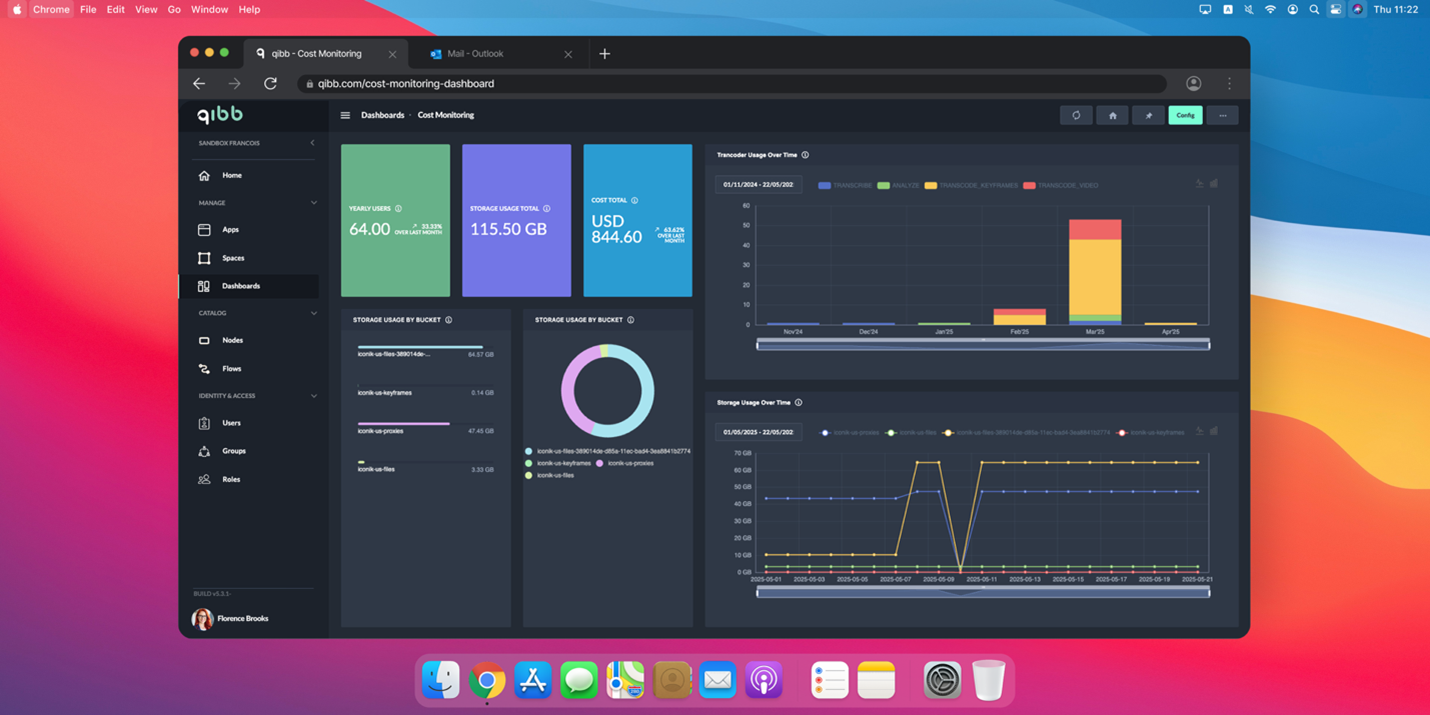
Figure 5: qibb cost monitoring dashboard
Realizing tangible business outcomes
The AWS and qibb partnership delivers clear, measurable business impacts for media organizations:
- Efficiency and speed – Reductions in content turnaround time by up to 40%, empowering media companies to rapidly respond to live events and trending topics.
- Operational flexibility and scalability – Dynamic resource allocation that scales workflows instantly, accommodating spikes in content demand without cost overruns.
- Personalization at scale – Automated workflows help media companies deliver tailored content variations to large and diverse audiences efficiently. By eliminating repetitive tasks and streamlining content packaging, teams can serve relevant, engaging content to more viewers without increasing production overhead.
- Transparent cost control – Near real-time visibility into operational expenses confirms resources are efficiently utilized and costs remain predictable.
Unlocking media workflow potential with AWS and qibb
Together, AWS and qibb empower media organizations to overcome workflow complexity and capitalize on real-time, personalized content opportunities. Media organizations can now streamline complex operations and gain faster access to advanced content workflows that were previously difficult or costly to implem
Discover how qibb on AWS can transform your media workflows. Explore the possibilities today at qibb on AWS Marketplace, contact an AWS representative to learn how we can help accelerate your business, or contact qibb directly for a personalized demo.