Migration & Modernization
How Bizrate Achieved 30% Faster Performance Using AWS Serverless Services
In this blog post, we’ll show how Bizrate re-architected their platform using Amazon Web Services (AWS) serverless and container services. The modernization achieved 30% faster performance, reduced average page response times to 0.01–0.03 seconds, improved SEO rankings, and created a foundation for future Artificial Intelligence (AI) driven innovations. We’ll walk through their journey from identifying the business challenge to measuring the impact of their modernized architecture.
For over two decades, Bizrate Surveys has been a trusted source of consumer feedback, powering insights for retailers, publishers, and brands. Operating at internet scale, Bizrate’s post-purchase and on-site survey platform collects millions of responses every month, directly influencing buying decisions and ad revenue.
Speed is critical to customer engagement for their surveys. As their traffic grew, their legacy Amazon Elastic Compute Cloud (EC2) based stack evolved into a complex architecture that caused slower page loads, effecting both customer experience and Search Engine Optimization (SEO) performance.
The Business challenge :
Bizrate Surveys is a key business unit of People Inc, delivering post-purchase and on-site surveys for major retailers and service brands. The platform’s performance directly impacts survey completion rates, partner value, and corresponding ad revenue.
However, their legacy EC2 infrastructure faced three critical issues:
- Performance degradation: Time-to-first-byte (TTFB), the time between a browser requesting a page and receiving the first byte of data, and page load times lagged behind industry benchmarks, hurting engagement and SEO rankings.
- Operational complexity: Years of incremental changes had created a “spaghetti architecture” that slowed innovation and made scaling difficult.
- Technical debt: Outdated patterns and tightly coupled components limited the ability to adopt new capabilities, such as personalization and AI.
The leadership team’s goal was clear: Deliver a faster, more reliable platform with lower operational overhead, improved SEO performance, and a foundation ready for next-generation features.
The Solution :
Working with the AWS account team, Bizrate reviewed the dependencies to execute a full-stack modernization, replacing their monolithic codebase running on EC2 with a serverless and containerized architecture that scales on demand, improves performance, and reduces complexity.
Modernization Solution Overview
Bizrate’s comprehensive modernization solution used AWS services to create a scalable, secure, and high-performance architecture.
Core Infrastructure Components
- Frontend: Next.js on AWS Amplify hosting and deployment service delivering SEO-optimized pages through server-side rendering and incremental static regeneration
- Content Delivery: Amazon CloudFront content delivery network (CDN) for global caching with AWS Web Application Firewall (AWS WAF) protection against Distributed Denial of Service (DDoS) attacks and malicious bots
- Application Tier: Decoupled microservices running on Amazon Elastic Container Service (Amazon ECS) with AWS Fargate, managed by Application Load Balancer
- Data Storage: Multi-layered approach with Amazon DynamoDB for fast key-value operations, Amazon ElastiCache (Redis) for double-caching, and Amazon OpenSearch Service for advanced search capabilities
- Security & Operations: AWS Identity and Access Management IAM for fine-grained access control, AWS Secrets Manager for credential management, and Amazon CloudWatch for comprehensive monitoring
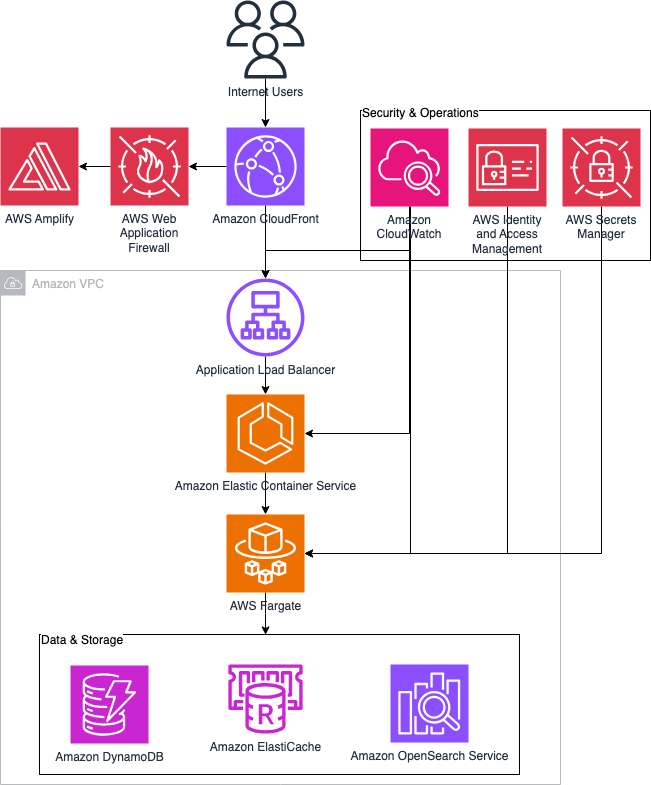
Image 1: Bizrate’s modern architecture diagram
Key Implementation Achievements
Bizrate’s modernization effort focused on five key areas, each delivering specific technical improvements that contributed to the overall performance gains.
Frontend Transformation
The team successfully migrated to Next.js on AWS Amplify, implementing advanced caching strategies for both static assets and dynamic content. This transformation achieved sub-30ms TTFB for SEO-critical pages, significantly improving search engine rankings and user experience.
Edge Performance Optimization
Bizrate established a multi-level caching architecture with CloudFront and Redis, optimizing cache key configurations to maximize hit rates. The team also deployed AWS WAF security rules for comprehensive protection against common web exploits and threats.
Backend Architecture Modernization
The engineering team decomposed the monolith into purpose-specific API and ingestion services running on ECS with Fargate. They implemented intelligent autoscaling based on performance metrics and enhanced security through least-privilege IAM roles and centralized secrets management with AWS Secrets Manager.
Data Platform Enhancements
Bizrate transitioned session data to DynamoDB for consistent millisecond response times and configured OpenSearch with tiered storage for optimal search performance. The team established efficient Extract, Transform, Load (ETL) pipelines to Amazon Simple Storage Service (S3) with automated OpenSearch indexing to enable fast search and analytics across survey data while optimizing storage costs.
DevOps Excellence
The team deployed comprehensive observability through CloudWatch metrics, alerts, and distributed tracing. They established a continuous delivery pipeline with AWS CodePipeline and AWS CodeBuild, enabling rapid iteration and deployment of new features.
Advantages of Modernization
The modernization effort delivered measurable improvements across performance, efficiency, and business impact, confirmed through the metrics shown in the following sections.
Performance gains
The new architecture reduced average target response time from 0.04–0.10 seconds to 0.01–0.03 seconds. Server-side rendering improved category and review page SEO rankings, driving increased organic traffic to the platform.
Target response time before the production deployment: The following performance chart demonstrates the baseline response times before modernization.
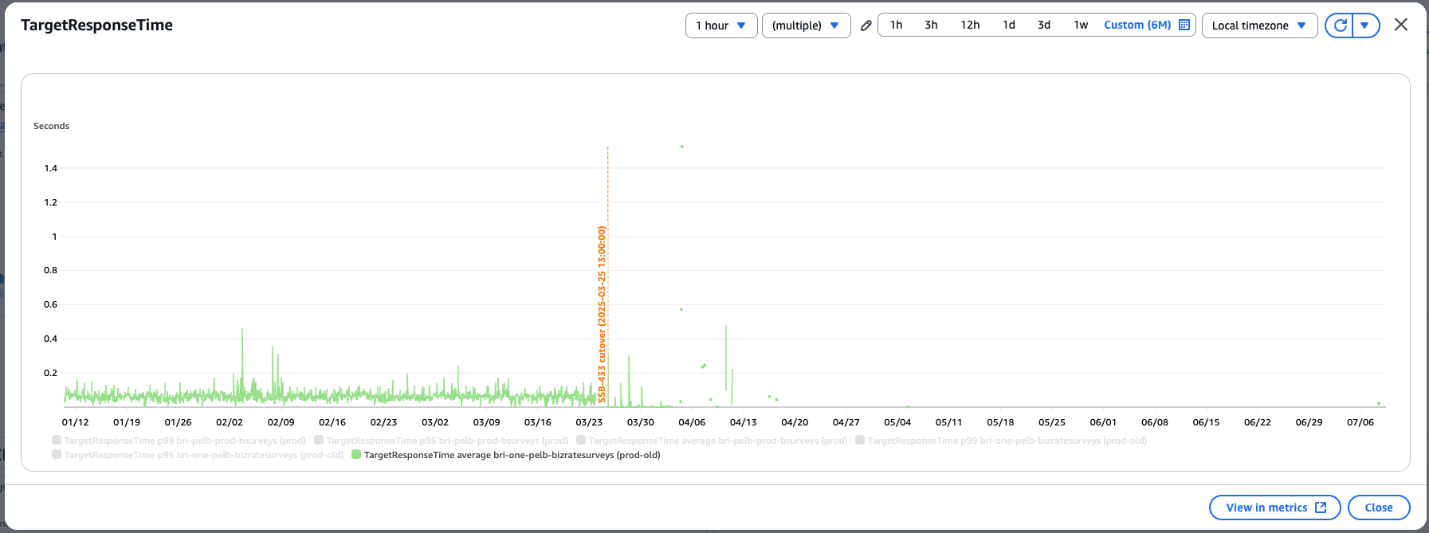
Image 2: Legacy system average target response time 0.04–0.10 seconds
Target response time after the production deployment: The chart below shows the significant improvement in response times achieved through the modernized architecture.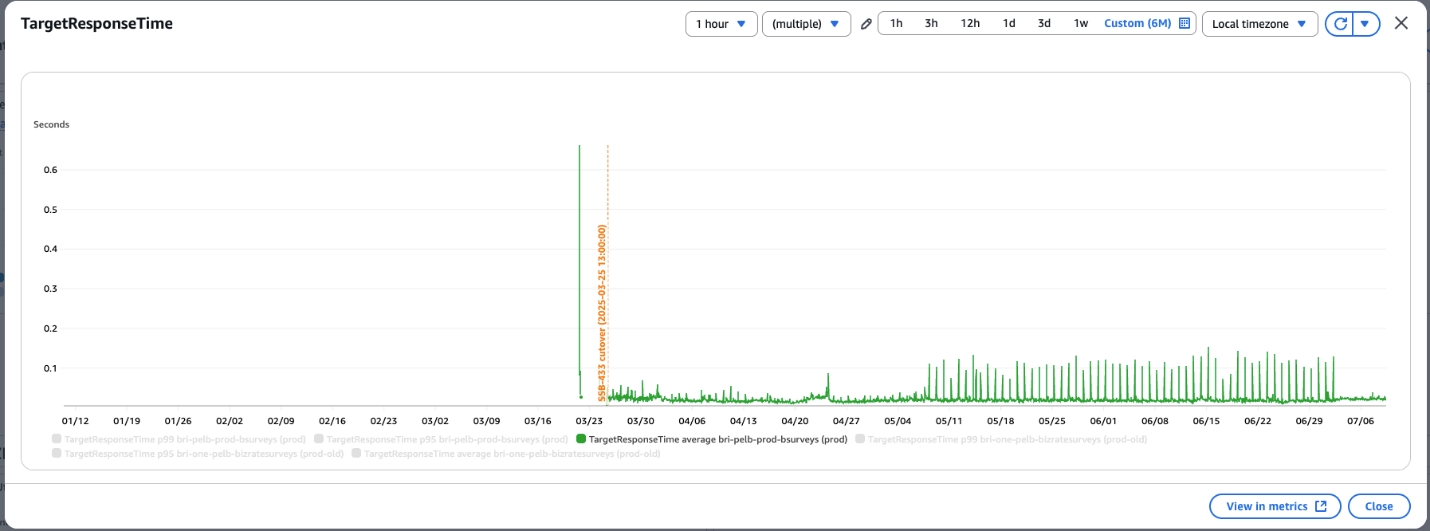
Image 3: Modern system average target response time 0.01–0.03 seconds
Cache efficiency
The modernization improved CloudFront cache hit ratio from a variable 40–80% range to a stable 60–80%, reducing backend load and improving global page responsiveness.
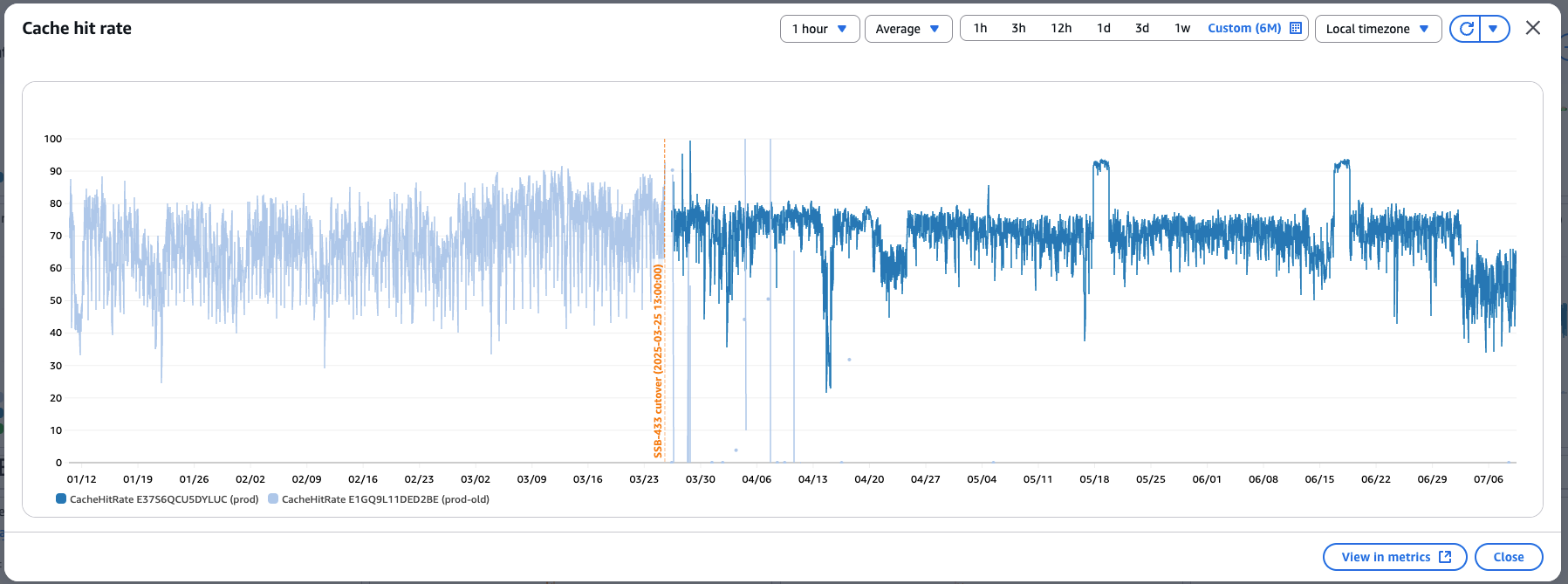
Image 4: Cache hit rate comparison showing improvement from variable 40–80% range to consistent 60–80% performance
Business impact
The modernization effort immediately realized the identified goals. The platform achieved 30% faster performance overall, resulting in higher SEO visibility and organic traffic. The simplified architecture reduced operational overhead, freeing developers to focus on innovation rather than maintenance. The new serverless and containerized foundation is ready for Generative AI features such as Retrieval Augmented Generation (RAG) based analytics and personalized survey flows.
Learning highlights
Based on the AWS Well-Architected Framework, the Bizrate implementation team highlighted several key insights from this project. Combining edge and application caching proved to be the key to reducing latency at scale, with the multi-level approach delivering consistent performance improvements. The team found that Server Side Rendering (SSR) for SEO-critical pages combined with Incremental Static Regeneration (ISR) for predictable updates balanced performance and cost effectively. SSR generates fully-formed HTML on the server before sending it to the browser, which improves SEO rankings by making content immediately visible to search engine crawlers rather than requiring JavaScript execution. They emphasized that observability and automation should be built in from day one to maintain velocity post-migration, noting that regular review of metrics such as Target Response Time (TRT) and Cache Hit Ratio (CHR) helped the team further narrow down the optimization path.
Conclusion:
Bizrate’s modernization journey shows how AWS serverless and container services can transform a legacy application into a fast, scalable, and innovation-ready platform. The 30% performance improvement was achieved by reducing average response times from 0.04–0.10 seconds to 0.01–0.03 seconds through a combination of Next.js on AWS Amplify for optimized frontend delivery, multi-level caching with CloudFront and ElastiCache, and decomposing the monolithic application into containerized microservices on ECS with Fargate.
By prioritizing performance, operational simplicity, and SEO, Bizrate not only solved its immediate challenges but positioned itself to lead in the next wave of customer experience innovation. The improved cache hit ratio, now consistently at 60–80%, further demonstrates how the architectural changes fundamentally enhanced platform efficiency and user experience.
To learn more about application modernization, visit the AWS Application Modernization page or contact your AWS account team.