AWS Storage Blog
Category: AWS CloudFormation

How WeatherBug reduced storage costs by 80% using Amazon S3 Storage Lens and Kiro CLI
WeatherBug is the third largest weather intelligence company in the US, delivering real-time forecasts, radar, lightning alerts, and interactive maps to over 10 million users. As their data footprint has grown across hundreds of Amazon Simple Storage Service (Amazon S3) buckets in a multi-account AWS environment, their storage costs rose steadily with no clear visibility […]
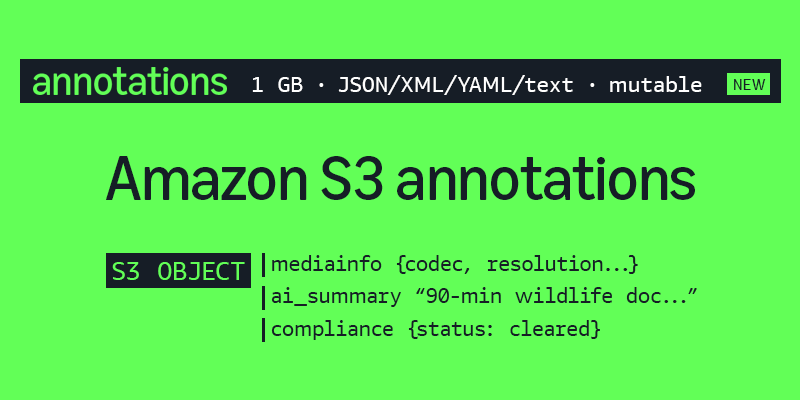
Track healthcare data lineage in real time with Amazon S3 annotations
Organizations that store sensitive data need to answer a simple question: where did this data come from, and what happened to it? In healthcare, this isn’t optional. Regulations like HIPAA, GDPR, and SOX require organizations to produce this information on demand. When an auditor asks, for example, “Show me every transformation that touched patient record […]
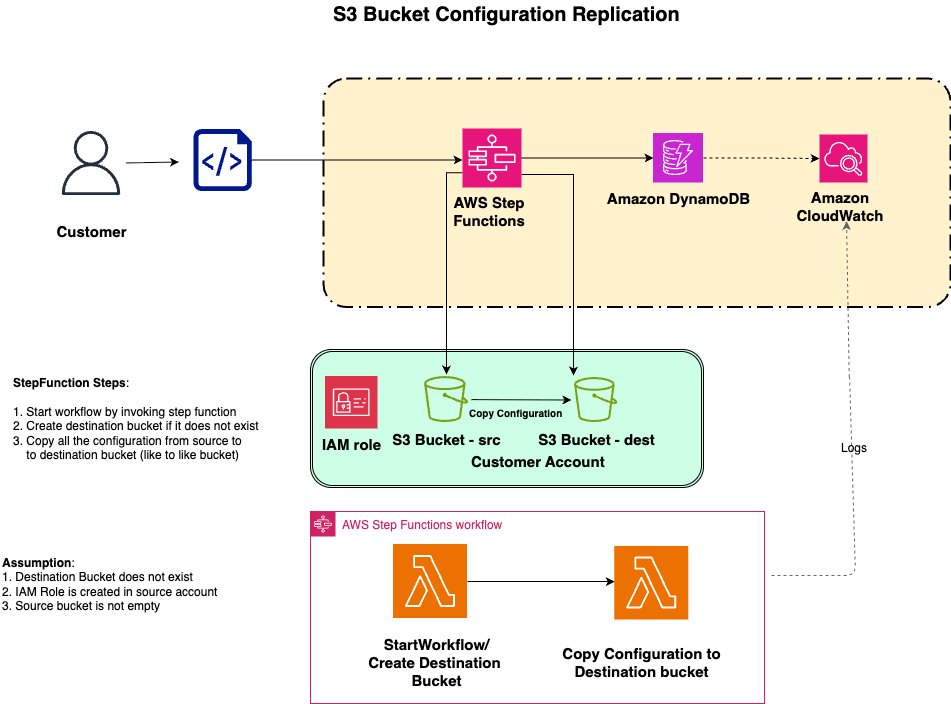
Replicate Amazon S3 bucket configurations across AWS Regions with AWS Step Functions
Many organizations operate thousands of Amazon S3 buckets in a single AWS Region, each with its own configuration accumulated over the years. Some were created manually in the AWS Management Console and others by scripts that are no longer actively maintained, provisioned by different business units with their own policies, lifecycle rules, encryption, and tags. […]

Query Amazon S3 access logs instantly with CloudWatch and S3 Tables
Knowing who accessed your data, when, and how is the foundation for security investigations, compliance audits, cost attribution, and performance troubleshooting. Detailed access logs capture every request: who made it, which resource was accessed, and what response was returned. In practice, though, they arrive as semi-structured records spread across different locations. Turning them into actionable […]

Scalable cross-cloud data migration to Amazon S3 with distributed rclone
Migrating petabytes of data across cloud providers is one of the most operationally demanding tasks an organization can take on. At this scale, simple transfer approaches break down. Teams lose track of what has been copied and what has failed. Transfers stall and require constant manual intervention to restart. In some cases, teams need to […]

Implement single-exchange tokens for short-lived Amazon S3 presigned URLs with Terraform
Organizations across industries use signed URLs to grant temporary, credential-less access to private resources such as receipts, medical or financial records, legal files, or confidential reports. However, signed URLs can be reused by anyone until they expire, creating security risks if a URL is shared or inadvertently disclosed. This risk can be mitigated by vending […]
Migrate to Amazon S3 account regional namespaces
Since its launch in 2006, Amazon S3 has used a global namespace where bucket names must be unique across all AWS accounts and AWS Regions. This design has served customers well at scale, but organizations managing multiple accounts and environments often encounter naming collisions. When a bucket is deleted, its name returns to the global […]

Building automated AWS Regional availability checks with Amazon S3
Every day, organizations expand into new markets, migrate critical workloads across geographies, and build systems that need to operate reliably in multiple locations. At the root of these efforts is a simple question: “What can I deploy, and where?” The answer shapes important architecture decisions, from which AWS Regions to expand into, to how you […]

Advanced notice: Amazon S3 to disable the use of SSE-C encryption by default for all new buckets and select existing buckets in April 2026
Starting on April 6, 2026, we will be changing how server-side encryption with customer-provided keys (SSE-C) is enabled for Amazon S3 buckets. With this change, SSE-C will be disabled by default on all new S3 general purpose buckets. Furthermore, SSE-C will also be disabled for all existing buckets in Amazon Web Services (AWS) Accounts that […]

Rapid monitoring of Amazon S3 bucket policy changes in AWS environments
Enterprises today manage hundreds of access policies across their expanding cloud environments. As they scale their cloud infrastructure, maintaining visibility into policy changes becomes increasingly important. Central security teams can enhance their cloud governance by implementing comprehensive monitoring of access policies. This approach supports compliance efforts while strengthening overall resource security across their environments. Users […]