AWS Big Data Blog

Ingest Excel data automatically into Amazon QuickSight
Amazon QuickSight is a fast, cloud-powered, business intelligence (BI) service that makes it easy to deliver insights to everyone in your organization. This post demonstrates how to build a serverless data ingestion pipeline to automatically import frequently changed data into a SPICE (Super-fast, Parallel, In-memory Calculation Engine) dataset of Amazon QuickSight dashboards. It is sometimes […]

Lower your costs with the new pause and resume actions on Amazon Redshift
Today’s analytics workloads typically require a data warehouse to be available 24 hours a day, 7 days a week. However, there may be times when you need an Amazon Redshift cluster for a short duration of time at frequent (or infrequent) intervals. For example, you may run a periodic ETL job or use a cluster […]

Tune Hadoop and Spark performance with Dr. Elephant and Sparklens on Amazon EMR
This post demonstrates how to install Dr. Elephant and Sparklens on an Amazon EMR cluster and run workloads to demonstrate these tools’ capabilities. Amazon EMR is a managed Hadoop service offered by AWS to easily and cost-effectively run Hadoop and other open-source frameworks on AWS.
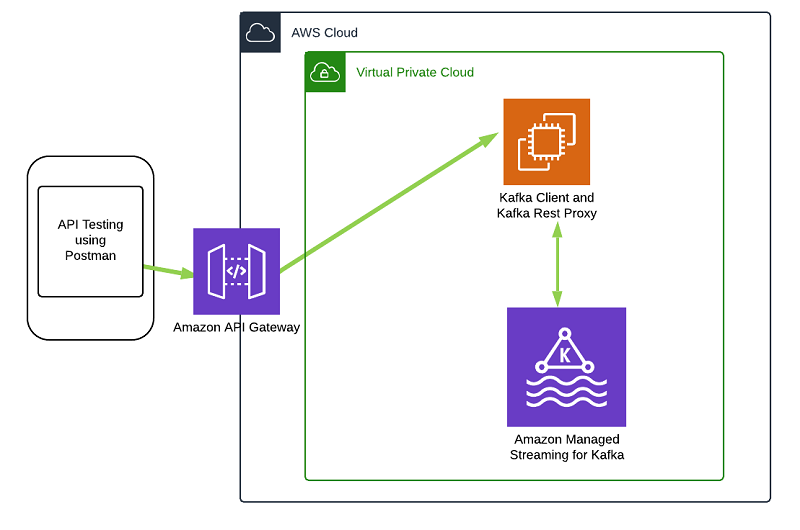
Govern how your clients interact with Apache Kafka using API Gateway
In this blog post, we will show you how Amazon API Gateway can answer these questions as a component between your Amazon MSK cluster and your clients. Amazon MSK is a fully managed service for Apache Kafka that makes it easy to provision Kafka clusters with just a few clicks without the need to provision servers, manage storage, or configure Apache Zookeeper manually. Apache Kafka is an open-source platform for building real-time streaming data pipelines and applications.

Integrate Power BI with Amazon Redshift for insights and analytics
July 2022: This post was reviewed for accuracy. Amazon Redshift is a fast, fully managed, cloud-native data warehouse that makes it simple and cost-effective to analyze all your data using standard SQL and your existing business intelligence (BI) tools. Microsoft Power BI is a business analytics service that delivers insights to enable fast, informed decisions. […]

How Siemens built a fully managed scheduling mechanism for updates on Amazon S3 data lakes
Siemens is a global technology leader with more than 370,000 employees and 170 years of experience. To protect Siemens from cybercrime, the Siemens Cyber Defense Center (CDC) continuously monitors Siemens’ networks and assets. To handle the resulting enormous data load, the CDC built a next-generation threat detection and analysis platform called ARGOS. ARGOS is a […]

Load data incrementally and optimized Parquet writer with AWS Glue
October 2022: This post was reviewed for accuracy. AWS Glue provides a serverless environment to prepare (extract and transform) and load large amounts of datasets from a variety of sources for analytics and data processing with Apache Spark ETL jobs. The first post of the series, Best practices to scale Apache Spark jobs and partition […]
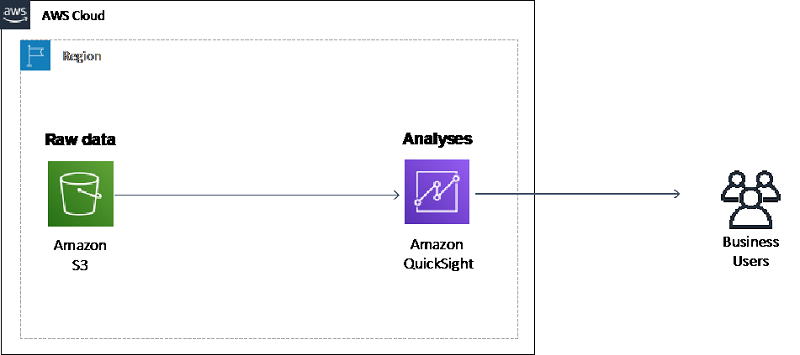
Build machine learning-powered business intelligence analyses using Amazon QuickSight
Imagine you can see the future—to know how many customers will order your product months ahead of time so you can make adequate provisions, or to know how many of your employees will leave your organization several months in advance so you can take preemptive actions to encourage staff retention. For an organization that sees […]

Analyze your Amazon S3 spend using AWS Glue and Amazon Redshift
The AWS Cost & Usage Report (CUR) tracks your AWS usage and provides estimated charges associated with that usage. You can configure this report to present the data at hourly or daily intervals, and it is updated at least one time per day until it is finalized at the end of the billing period. The […]

Cross-account AWS Glue Data Catalog access with Amazon Athena
June 2021 Update – Amazon Athena has launched built-in support for AWS Glue Data Catalogs sharing. The below solution is no longer relevant and you should make use of the built-in feature. Many AWS customers use a multi-account strategy. A centralized AWS Glue Data Catalog is important to minimize the amount of administration related to […]