AWS Big Data Blog
Category: Learning Levels
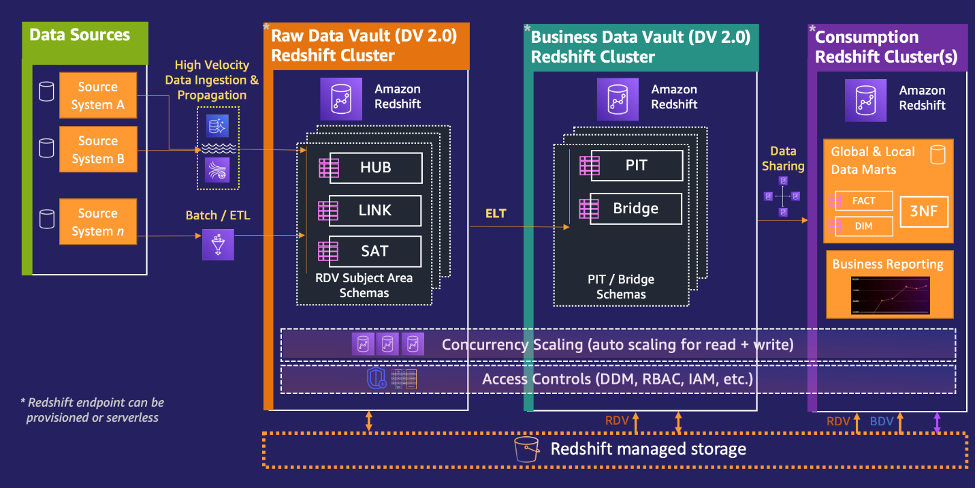
Power enterprise-grade Data Vaults with Amazon Redshift – Part 2
Amazon Redshift is a popular cloud data warehouse, offering a fully managed cloud-based service that seamlessly integrates with an organization’s Amazon Simple Storage Service (Amazon S3) data lake, real-time streams, machine learning (ML) workflows, transactional workflows, and much more—all while providing up to 7.9x better price-performance than any other cloud data warehouses. As with all […]

Decentralize LF-tag management with AWS Lake Formation
In today’s data-driven world, organizations face unprecedented challenges in managing and extracting valuable insights from their ever-expanding data ecosystems. As the number of data assets and users grow, the traditional approaches to data management and governance are no longer sufficient. Customers are now building more advanced architectures to decentralize permissions management to allow for individual […]
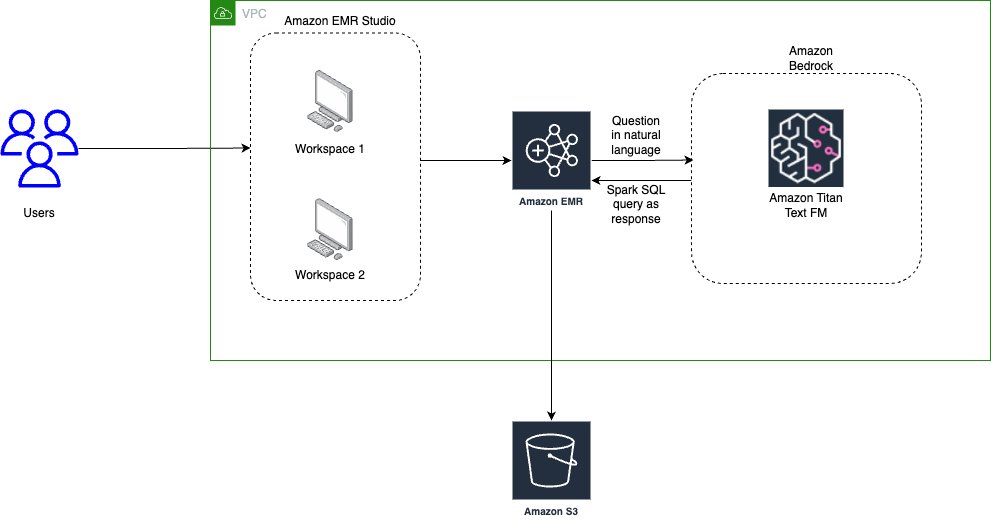
Use generative AI with Amazon EMR, Amazon Bedrock, and English SDK for Apache Spark to unlock insights
In this era of big data, organizations worldwide are constantly searching for innovative ways to extract value and insights from their vast datasets. Apache Spark offers the scalability and speed needed to process large amounts of data efficiently. Amazon EMR is the industry-leading cloud big data solution for petabyte-scale data processing, interactive analytics, and machine […]

Introducing shared VPC support on Amazon MWAA
In this post, we demonstrate automating deployment of Amazon Managed Workflows for Apache Airflow (Amazon MWAA) using customer-managed endpoints in a VPC, providing compatibility with shared, or otherwise restricted, VPCs. Data scientists and engineers have made Apache Airflow a leading open source tool to create data pipelines due to its active open source community, familiar […]

Implement Apache Flink real-time data enrichment patterns
You can use several approaches to enrich your real-time data in Amazon Managed Service for Apache Flink depending on your use case and Apache Flink abstraction level. Each method has different effects on the throughput, network traffic, and CPU (or memory) utilization. For a general overview of data enrichment patterns, refer to Common streaming data enrichment patterns in Amazon Managed Service for Apache Flink. This post covers how you can implement data enrichment for real-time streaming events with Apache Flink and how you can optimize performance. To compare the performance of the enrichment patterns, we ran performance testing based on synthetic data. The result of this test is useful as a general reference. It’s important to note that the actual performance for your Flink workload will depend on various and different factors, such as API latency, throughput, size of the event, and cache hit ratio.

Clean up your Excel and CSV files without writing code using AWS Glue DataBrew
Managing data within an organization is complex. Handling data from outside the organization adds even more complexity. As the organization receives data from multiple external vendors, it often arrives in different formats, typically Excel or CSV files, with each vendor using their own unique data layout and structure. In this blog post, we’ll explore a […]
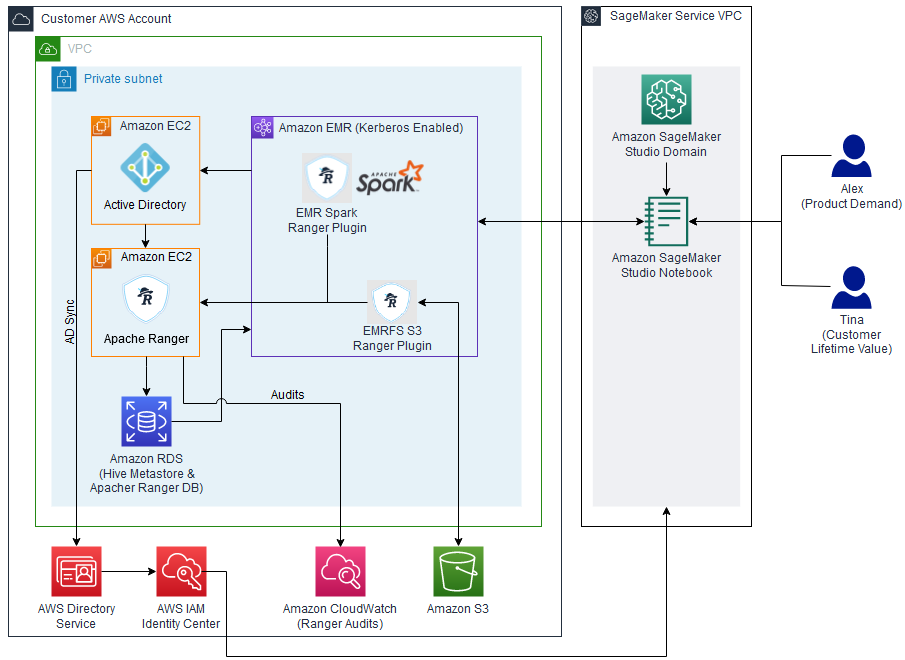
Implement fine-grained access control in Amazon SageMaker Studio and Amazon EMR using Apache Ranger and Microsoft Active Directory
In this post, we show how you can authenticate into SageMaker Studio using an existing Active Directory (AD), with authorized access to both Amazon S3 and Hive cataloged data using AD entitlements via Apache Ranger integration and AWS IAM Identity Center (successor to AWS Single Sign-On). With this solution, you can manage access to multiple SageMaker environments and SageMaker Studio notebooks using a single set of credentials. Subsequently, Apache Spark jobs created from SageMaker Studio notebooks will access only the data and resources permitted by Apache Ranger policies attached to the AD credentials, inclusive of table and column-level access.

Configure dynamic tenancy for Amazon OpenSearch Dashboards
Amazon OpenSearch Service securely unlocks real-time search, monitoring, and analysis of business and operational data for use cases like application monitoring, log analytics, observability, and website search. In this post, we talk about new configurable dashboards tenant properties. OpenSearch Dashboards tenants in Amazon OpenSearch Service are spaces for saving index patterns, visualizations, dashboards, and other […]
Introducing Amazon MWAA support for Apache Airflow version 2.7.2 and deferrable operators
Today, we are announcing the availability of Apache Airflow version 2.7.2 environments and support for deferrable operators on Amazon MWAA. In this post, we provide an overview of deferrable operators and triggers, including a walkthrough of an example showcasing how to use them. We also delve into some of the new features and capabilities of Apache Airflow, and how you can set up or upgrade your Amazon MWAA environment to version 2.7.2.

Use IAM runtime roles with Amazon EMR Studio Workspaces and AWS Lake Formation for cross-account fine-grained access control
Amazon EMR Studio is an integrated development environment (IDE) that makes it straightforward for data scientists and data engineers to develop, visualize, and debug data engineering and data science applications written in R, Python, Scala, and PySpark. EMR Studio provides fully managed Jupyter notebooks and tools such as Spark UI and YARN Timeline Server via […]