Artificial Intelligence
Category: Amazon Bedrock Knowledge Bases
Build an AI-powered website assistant with Amazon Bedrock
This post demonstrates how to solve this challenge by building an AI-powered website assistant using Amazon Bedrock and Amazon Bedrock Knowledge Bases.
Build a multimodal generative AI assistant for root cause diagnosis in predictive maintenance using Amazon Bedrock
In this post, we demonstrate how to implement a predictive maintenance solution using Foundation Models (FMs) on Amazon Bedrock, with a case study of Amazon’s manufacturing equipment within their fulfillment centers. The solution is highly adaptable and can be customized for other industries, including oil and gas, logistics, manufacturing, and healthcare.
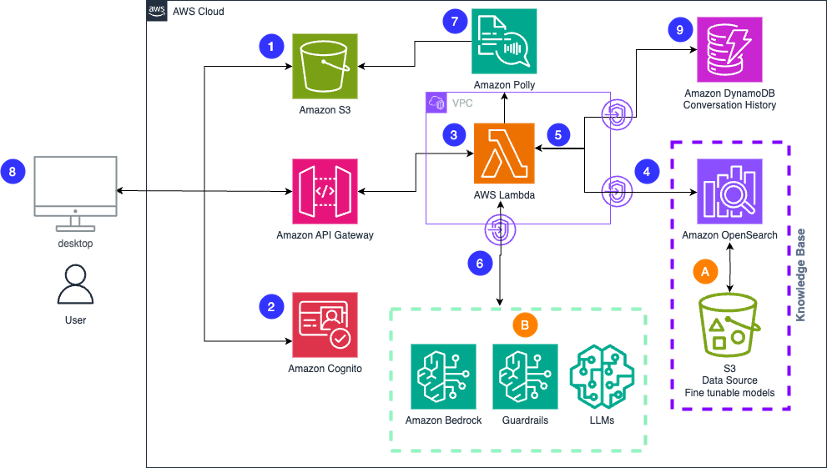
Build scalable creative solutions for product teams with Amazon Bedrock
In this post, we explore how product teams can leverage Amazon Bedrock and AWS services to transform their creative workflows through generative AI, enabling rapid content iteration across multiple formats while maintaining brand consistency and compliance. The solution demonstrates how teams can deploy a scalable generative AI application that accelerates everything from product descriptions and marketing copy to visual concepts and video content, significantly reducing time to market while enhancing creative quality.
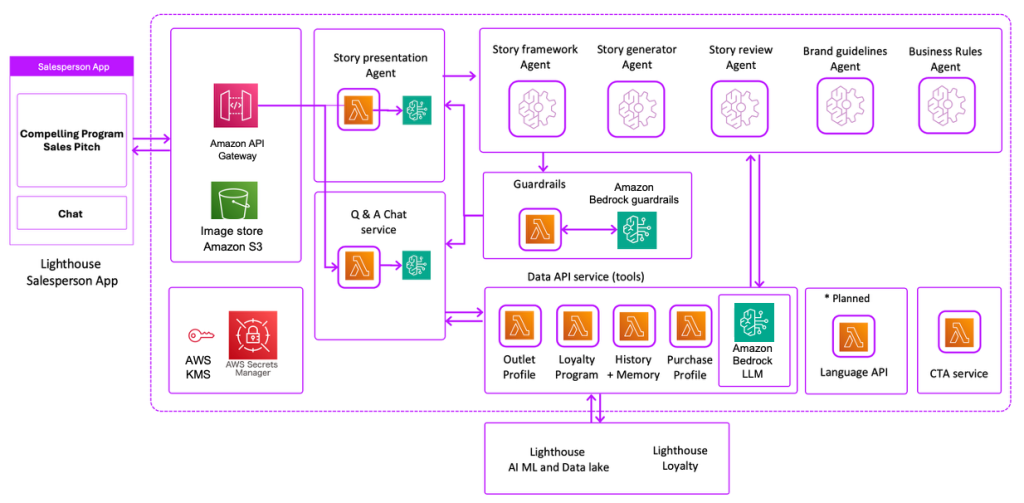
Vxceed builds the perfect sales pitch for sales teams at scale using Amazon Bedrock
In this post, we show how Vxceed used Amazon Bedrock to develop this AI-powered multi-agent solution that generates personalized sales pitches for field sales teams at scale.

Unlock global AI inference scalability using new global cross-Region inference on Amazon Bedrock with Anthropic’s Claude Sonnet 4.5
This post is co-written with Gareth Jones from Anthropic. Organizations are increasingly integrating generative AI capabilities into their applications to enhance customer experiences, streamline operations, and drive innovation. As generative AI workloads continue to grow in scale and importance, organizations face new challenges in maintaining consistent performance, reliability, and availability of their AI-powered applications. Customers […]
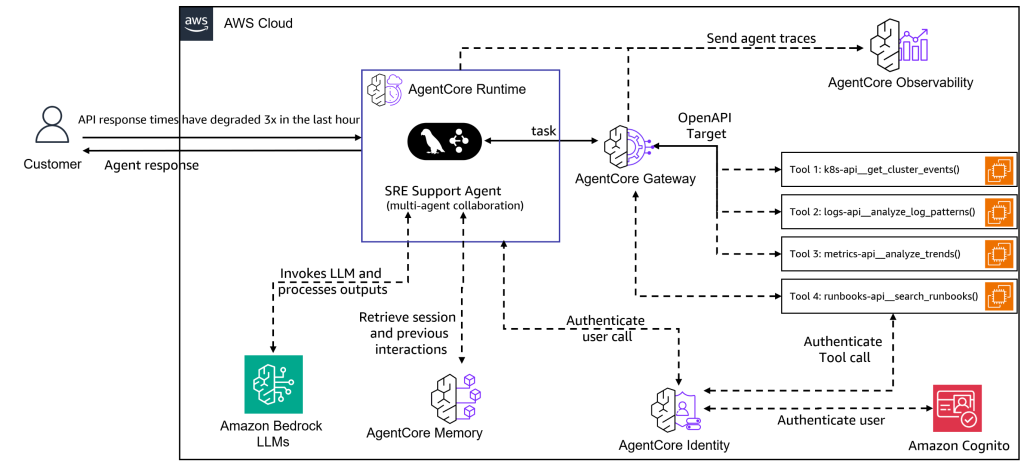
Build multi-agent site reliability engineering assistants with Amazon Bedrock AgentCore
In this post, we demonstrate how to build a multi-agent SRE assistant using Amazon Bedrock AgentCore, LangGraph, and the Model Context Protocol (MCP). This system deploys specialized AI agents that collaborate to provide the deep, contextual intelligence that modern SRE teams need for effective incident response and infrastructure management.
Deploy Amazon Bedrock Knowledge Bases using Terraform for RAG-based generative AI applications
In this post, we demonstrated how to automate the deployment of Amazon Knowledge Bases for RAG applications using Terraform.

Tyson Foods elevates customer search experience with an AI-powered conversational assistant
In this post, we explore how Tyson Foods collaborated with the AWS Generative AI Innovation Center to revolutionize their customer interaction through an intuitive AI assistant integrated into their website. The AI assistant was built using Amazon Bedrock,
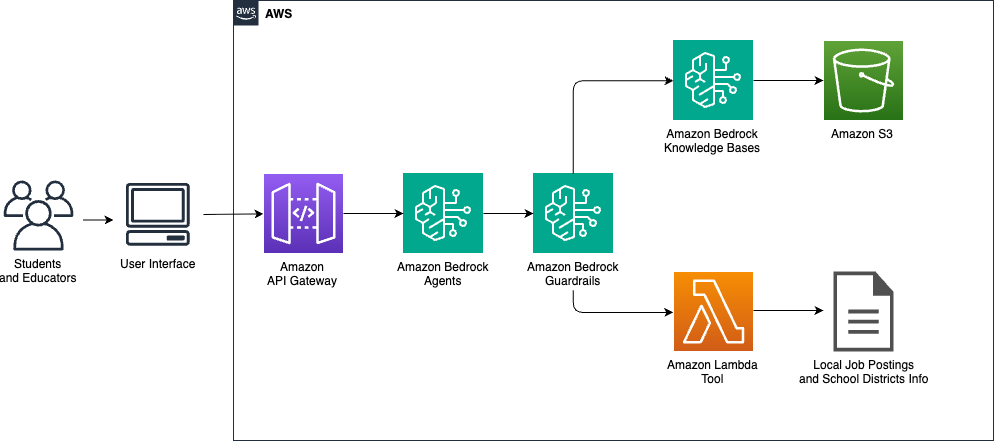
Empowering students with disabilities: University Startups’ generative AI solution for personalized student pathways
University Startups, headquartered in Bethesda, MD, was founded in 2020 to empower high school students to expand their education beyond a traditional curriculum. University Startups is focused on special education and related services in school districts throughout the US. In this post, we explain how University Startups uses generative AI technology on AWS to enable students to design a specific plan for their future either in education or the work force.
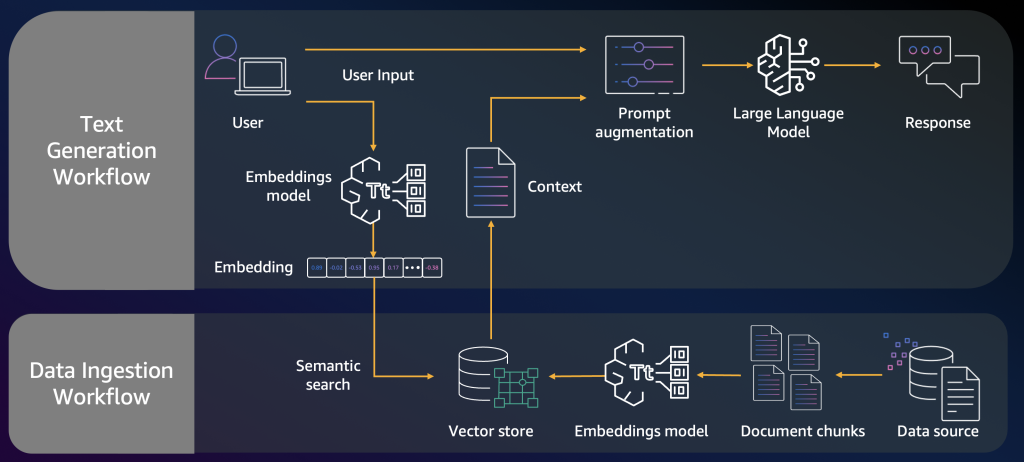
How Nippon India Mutual Fund improved the accuracy of AI assistant responses using advanced RAG methods on Amazon Bedrock
In this post, we examine a solution adopted by Nippon Life India Asset Management Limited that improves the accuracy of the response over a regular (naive) RAG approach by rewriting the user queries and aggregating and reranking the responses. The proposed solution uses enhanced RAG methods such as reranking to improve the overall accuracy