AWS for M&E Blog
How AWS powers Dramaze AI-enhanced streaming platform
Netmedias recently launched Dramaze.com, a groundbreaking freemium video-on-demand (VOD) streaming platform that brings short-form drama episodes to audiences across Asia and the Middle East. In an increasingly competitive streaming landscape where content localization and rapid scaling are critical for success, the company faced the challenge of delivering culturally relevant entertainment while maintaining operational efficiency and exceptional user experience.
The technical challenge was significant. Netmedias needed to process and distribute 2,400 short-form videos at launch with plans to scale to 9,600 videos over 12 months, deliver content with subtitles in nine languages, and implement AI-driven features for automated subtitle translation and poster generation. At the same time, they needed to maintain a lean engineering team of only three developers and meet a 3-month timeline to market.
By partnering with Amazon Web Services (AWS), Netmedias built a fully serverless, AI-enhanced streaming solution that achieved remarkable results: 95% reduction in subtitle translation time (from 11 hours to 30 minutes for 70 episodes with a combined runtime of 4 hours), automated poster generation using generative AI, and successful market launch across the Philippines, with a phased release planned across Southeast Asia and the Middle East. The platform now serves diverse audiences with localized content.
Solution architecture
The Dramaze platform’s content delivery workflow is architected around three distinct pipelines: generative AI, video transcoding, and distribution. The design allows for scaled processing of thousands of short-form videos with AI enhancement. This workflow is shown in the following diagram.

Figure 1: Overall content delivery workflow for the Dramaze platform
The Dramaze platform uses a fully serverless, event-driven architecture built on AWS managed services. This approach enables rapid scaling while minimizing operational overhead for the lean engineering team at Dramaze.
The following outlines the sequence of events that occurs when a content moderator uploads a video:
- The uploaded video and original subtitles land in an Amazon Simple Storage Service (Amazon S3) bucket, which triggers an S3 event to invoke AWS Lambda.
- AWS Lambda runs subtitle translation and poster cover selection using Amazon Bedrock.
- The Amazon Bedrock large language model (LLM) translates the subtitle text, understands the video storyline, and selects the best image frame.
- The translated subtitles and poster cover photos are stored in Amazon S3.
- AWS Lambda loads the transcoding configuration from Amazon S3 and runs video processing.
- AWS Elemental MediaConvert converts the movie to HTTP Live Streaming (HLS) streaming format.
- The transcoded video files are stored in Amazon S3.
- Amazon EventBridge manages the job completion event and AWS Lambda informs the status to the content moderation service (CMS).
- Amazon CloudFront with AWS WAF distributes video streaming to the frontend.
- Lambda@Edge verifies the user’s subscription to allow access.
This sequence is shown in the following architecture diagram.
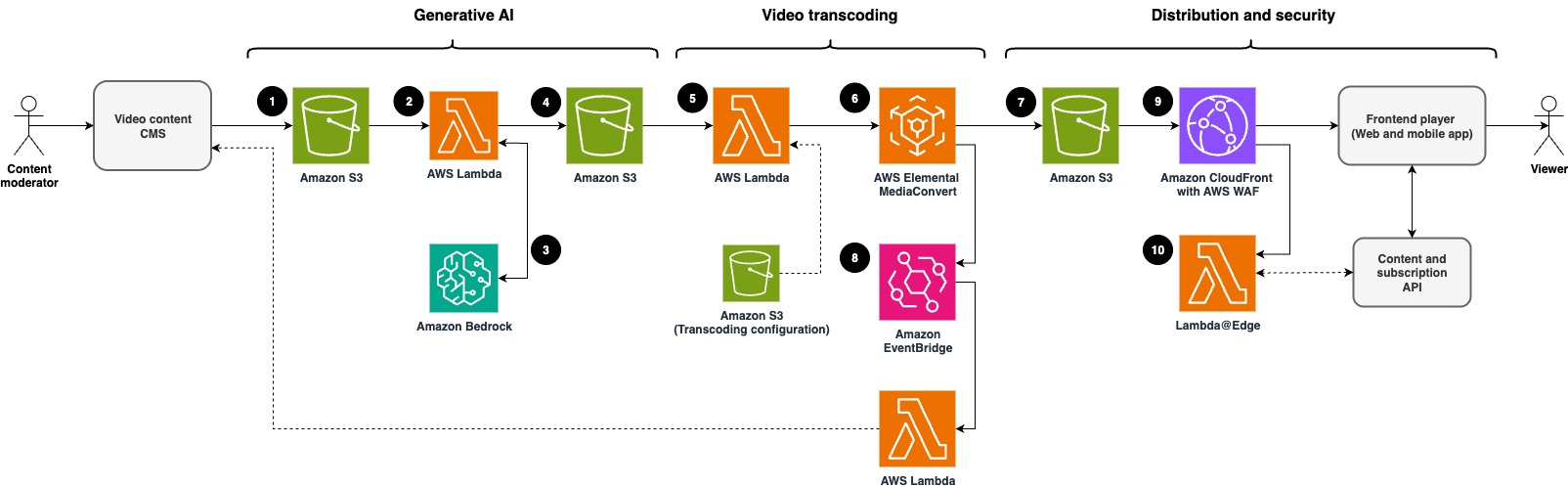
Figure 2: End-to-end architecture for the Dramaze platform
Video processing pipeline
The core video workflow follows a streamlined, automated process that starts with content ingestion and transcoding.
The content ingestion and transcoding phase begins when content moderators upload source videos through the CMS to Amazon S3, which triggers Lambda functions to initiate processing workflows. Amazon Bedrock then performs automated subtitle translation and poster frame selection from the video content. Subsequently, AWS Elemental MediaConvert transforms source videos into adaptive bitrate (ABR) streams at multiple resolutions with quality-defined variable bitrate (QVBR).
Amazon EventBridge coordinates the entire event-driven workflow, capturing job completion events and triggering downstream processes. This decoupled architecture enables independent scaling of components and simplified error handling. Finally, the processed video streams globally with low latency through Amazon CloudFront.
Amazon Bedrock powered AI enhancement
Amazon Bedrock serves as the unified platform for both episode poster creation and subtitle translation, providing single API access to multiple foundation models (FMs). Through this approach, Netmedias conducted comprehensive testing across eight different LLMs for optimal language pair performance. The customer then selects the best-performing models for each specific use case without vendor lock-in. Because this evaluation is repeatable, Netmedias can establish new benchmarks as new models appear. The single API approach through Amazon Bedrock enables rapid testing and deployment of new models as they become available, continuously optimizing translation quality for the Dramaze content library.
Automated poster creation
The Dramaze automated poster creation system combines sophisticated frame analysis with AI-powered selection. The process begins with FFmpeg-based keyframe extraction using a two-stage approach. First, scene detection filters identify significant transitions. Next, interval-based sampling provides comprehensive timeline coverage at 20%, 40%, 60%, and 80% of content duration.
Each extracted frame undergoes rigorous quality assessment using content-aware thresholds for brightness, contrast calculation, and blur detection. This preprocessing improved frame selection from 1–2 frames per video to 8–12 high-quality candidates.
The prequalified frames, along with comprehensive content descriptions provided by content providers during ingestion, are sent to Amazon Nova Pro for analysis. Amazon Nova evaluates visual appeal, composition, and contextual relevance based on both the frame imagery and content descriptions information, providing ranked suggestions to the Dramaze content moderation team for final selection.
This flow is shown in the following diagram.
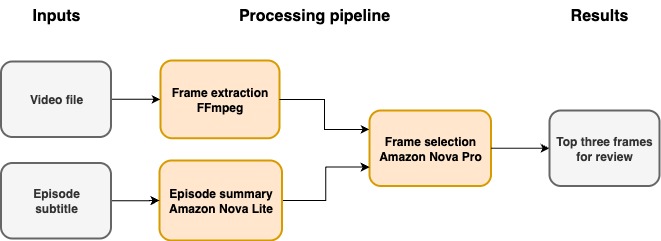
Figure 3: The Dramaze AI-powered poster creation pipeline
The following screenshots show a before (on the left) and after (on the right) comparison of the Dramaze AI-driven poster creation.
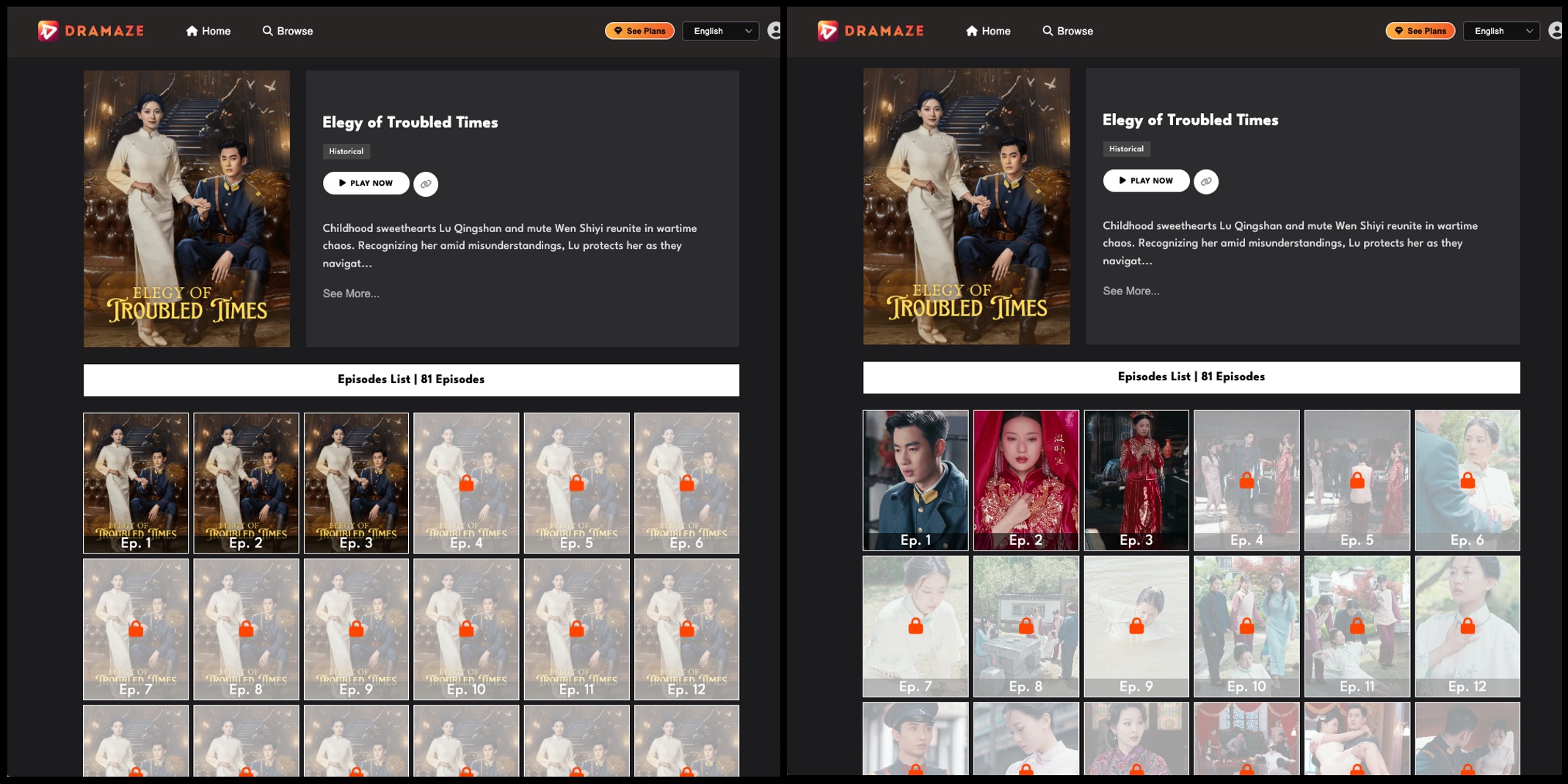
Figure 4: Before and after screenshot comparison of the Dramaze AI-driven poster creation
Subtitle translation and language-model pairing
Subtitle translation quality is strongly language-pair dependent. For example, a model that excels for Chinese to English might produce less natural phrasing or weaker term consistency for Chinese to Arabic, Thai, or Bahasa. To avoid locking the platform to a single LLM provider, Netmedias evaluates multiple FMs through the unified interface of Amazon Bedrock and selects the best performer for the relevant language pair.
The process starts with a short list of eight LLMs and a representative set of real subtitle assets. Each model is evaluated under the same constraints, so results are directly comparable. Translations are scored against subtitle-specific criteria: semantic accuracy, readability, name and term consistency, and formatting integrity (timestamps and indexing). The content team then conducts human review on sampled episodes and selects the best-performing model for each language pair.
Based on tests, DeepSeek R1 performed best for Chinese to English translation. After the optimal model is selected for each language pair, those choices are configured in the video processing pipeline so newly ingested content is automatically translated and delivered in the required set of languages.
Video transcoding and encoding optimization
The extensive configuration parameters of AWS Elemental MediaConvert enable precise optimization for vertical video formats, which means Dramaze can fine-tune encoding settings specifically for portrait-oriented content that performs optimally on mobile devices.
QVBR is an intelligent encoding technology that adjusts bitrate based on content complexity. AWS Elemental MediaConvert analyzes each scene and allocates bandwidth according to the visual information present. Complex scenes with rapid motion receive higher bitrates. Simpler scenes with minimal movement receive lower bitrates. This approach reduced bandwidth consumption by 30% compared to constant bitrate encoding for the short-form drama content on the Dramaze platform.
Security and global distribution
AWS WAF protects against common web exploits, and Lambda@Edge functions at Amazon CloudFront edge locations validate viewer entitlements in real time. This serverless verification approach enforces geographic restrictions and protects premium content without impacting performance.
Amazon CloudFront distributes processed videos worldwide with low-latency delivery. The content delivery network (CDN) integrates seamlessly with transcoded ABR streams, automatically optimizing cache strategies based on viewer demand patterns.
Amazon CloudWatch provides end-to-end observability with automated alerting, enabling proactive issue detection and resolution across the entire pipeline.
This architecture delivers exceptional performance while maintaining operational simplicity, which frees the operations team to focus on content curation rather than infrastructure management.
Outcomes
By standardizing the platform with a serverless, event-driven architecture that has Amazon Bedrock and AWS Elemental MediaConvert at its core, Netmedias was able to turn Dramaze from a concept into a production-grade streaming service within a 3-month window without increasing the size of the engineering team. This also aligns infrastructure costs with content library growth and viewer adoption. This means Netmedias pays only for what they use, keeping cost low while they scale out.
From the customer’s perspective, the most visible impact was how quickly the team could move from content preparation to going live in new markets.
Launching in the Philippines while preparing for additional markets might previously have required a much larger operations and engineering team. With AWS managed services handling scalability, reliability, and generative AI, Netmedias could stay focused on content strategy and partnerships.
“As a lean company, we needed enterprise-grade reliability to achieve multiplied results beyond our scale. AWS empowers us to focus on strategies, audiences, and markets, while its resilient infrastructure not only powers our core but scales intelligently with our growth.” — Elize Ng, Chief Operating Officer, Netmedias
Future plans
As the Dramaze catalog grows towards and beyond 10,000 short-form episodes and the service matures, Netmedias plans to deepen its use of AWS services to improve discovery, engagement, and personalization with the use of generative AI for episode-level summaries, intelligent multilingual search, and personalization as the catalog and markets grow.
Conclusion
The Dramaze platform demonstrates how AWS serverless architecture and AI services enable small teams to achieve enterprise-scale results. By using Amazon Bedrock and AWS Elemental MediaConvert, Netmedias reduced subtitle translation time by 95%, automated poster generation, and launched with only three engineers in 3 months. This architecture proves that with managed services and strategic AI integration, lean organizations can compete globally while maintaining the flexibility to adopt emerging technologies as the streaming landscape evolves.