AWS for M&E Blog

AWS at NAB show 2019 [Updated 4/5/2019]
To help media companies across the world elevate the viewing experience for their audiences, Amazon Web Services will demonstrate advances in content creation, distribution, media supply chain, and AI during the NAB Show 2019 (April 8-11, Booth SU2202, Las Vegas Convention Center). AWS will feature a full range of cloud and on-premises video solutions to ingest, […]

[Updated Mar 18] AWS M&E symposium, New York City – March 20, 2019
Click here to download the presentations Please save the date for the AWS M&E Symposium + Media Day Workshop, coming to New York City March 20, 2019. As part of the Executive Track, hear from fellow media business leaders and technologists about how they are revolutionizing how content is created, distributed, and monetized, including case […]

TVB – Microservices architecture for live streaming platform [Cantonese w/English Subtitles]
In this episode of This Is My Architecture, TVB shows off their microservices architecture. Sam Leung, Head of Application Development, explains how they handle traffic spikes, uplift service availability, and raise team productivity with the microservice architecture. By walking through different use cases, Sam explains the technique of selecting different AWS services for APIs with […]

Arqiva: TV steps up to the cloud
This article originally appeared in FEED Magazine, Issue 07. For years, Arqiva has been the network underpinning a notable portion of UK broadcast delivery. But last month the company launched a new, cloud-based service – a suite of virtualized media management tools aiming to expand Arqiva’s already far-reaching broadcast services to include cloud-based playout, OTT […]

New case study: Mikros Animation
Mikros, a visual-effects and animation studio owned by Technicolor, has been producing animations for films and television shows for more than 30 years. As Mikros prepared to work on a new film, Sherlock Gnomes, it realized it needed more compute capacity than it could get from its on-premises IT environment used for rendering—the process of […]

Guest post from Videon: Low latency live streaming with Videon and AWS Elemental
Guest post by Videon The content and opinions in this post are those of the third-party author and AWS is not responsible for the content or accuracy of this post. Low latency live video has typically been synonymous with traditional broadcasting. Being able to achieve 4-8 seconds of system latency has been hard to match with […]

How-to: Use QVBR for streaming live events like the 2018 AWS re:Invent keynotes
Introduction AWS re:Invent is the largest event of the year for Amazon Web Services and the keynote addresses are the centerpieces of the week-long event. Live streams from re:Invent command a large viewership from around the world and are the highlight of the year for the AWS Event Technology Team. In 2018, AWS Elemental introduced […]
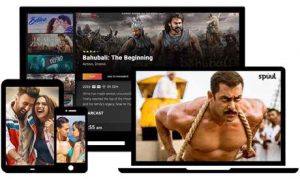
Spuul chooses tools in the cloud
This article originally appeared in FEED Magazine, Issue 06. OTT video is becoming an increasingly viable mode of content delivery, allowing niche players from regional broadcasters to businesses to deliver content in a more targeted way. Singapore-based OTT service Spuul serves Indian content to viewers both in India and abroad across a range of platforms. […]

Creating a custom AWS Elemental MediaTailor metric and Amazon CloudWatch alarm
In a previous blog, we demonstrated how to programmatically access default logs and metrics provided by AWS Elemental MediaTailor. In this post, we will walk through creating our own metric using the MediaTailor log groups that have been made available in Amazon CloudWatch. At a glance, this is what we will do: Create an IAM […]

How to set up a resilient end-to-end live workflow using AWS Elemental products and services: Part 1
Part 1: Single-region reference architecture deployment walkthrough: The Fundamentals (This Post) Part 2: Single-region reference architecture deployment walkthrough: Advanced Workflows Part 3: Multi-regions reference architecture deployment walkthrough: Advanced Workflows Part 4: High-Availability Advanced Workflows with Automatic Failover Single-region reference architecture deployment walkthrough: The Fundamentals In a recent blog post, Kiran Patel described the resiliency challenges […]