AWS Public Sector Blog
Intelligent energy systems that serve tactical forces
Fuel convoys are among the most dangerous missions in modern warfare. Every resupply run exposes personnel to significant risk while consuming logistics capacity that could support primary mission objectives. Yet tactical forces have long operated power systems without the telemetry and analytics that commercial utilities consider standard—leaving commanders to make energy decisions without visibility into consumption patterns, generator health, or remaining operational capacity.
The Department of War (DoW) has identified this capability gap as a strategic vulnerability. Amazon Web Services (AWS), working with Sentient Industries, addressed it directly by developing an intelligent energy management system that connects tactical power assets to cloud-based analytics and machine learning (ML). The Technology Readiness Experimentation (T-REX) 26-1 exercise at Camp Atterbury, Indiana, validated this approach in December 2025, demonstrating real-time monitoring, predictive analytics, and automated optimization across 20 technologies operating simultaneously.
Operating energy systems blind creates visibility gap
Modern military operations depend on reliable electrical power. Communications systems, computing platforms, sensor networks, and weapon systems all require continuous energy supply. However, supplying energy is only half of the problem. Without telemetry infrastructure, field commanders can’t see consumption patterns, generator health status, or remaining operational capacity in real time.
This visibility gap forces a difficult choice: over-provision resources and increase the logistics burden, or risk mission failure through power shortages. In addition, maintenance occurs on fixed schedules rather than actual equipment conditions. Energy planning relies on historical averages rather than predictive models informed by current operational tempo. The result is more frequent and potentially unnecessary resupply missions in contested environments.
Cloud-integrated energy management closes visibility gap
AWS and Sentient Industries built an architecture that connects Sentient’s Modular Energy for Tactical Expeditionary Operations Resource (METEOR) system to AWS Cloud services, creating a complete pipeline from the tactical edge to actionable intelligence in the cloud.
AWS IoT Greengrass provides an edge runtime on METEOR power modules, hosting custom software components that collect, transform, and transmit telemetry to an Amazon Kinesis stream in the AWS Cloud. Transmission occurs over dual transport paths, with cellular as the primary link and Iridium satellite as a fallback for communications-challenged environments. AWS provided IoT Greengrass components, stream manager and disk spooler, provide complementary resilience. Stream manager buffers and manages export of data streams to cloud destinations, and disk spooler persistently queues MQTT messages to disk, preventing telemetry from being lost during outages of either pathway and automatically resuming delivery after connectivity is restored.
These components publish telemetry into an Amazon Kinesis Data Streams pipeline, which ingests and streams incoming data points for parallel downstream processing. AWS Glue performs extract, transform, and load (ETL) operations, normalizing sensor data before loading it into Amazon Timestream, a purpose-built time-series database optimized for Internet of Things (IoT) and operational telemetry workloads. Amazon Quick Sight connects directly to this data store to provide operational dashboards showing energy posture across deployed systems. AI-powered analytics, driven by Amazon Bedrock, deliver predictive maintenance recommendations and consumption forecasts based on historical patterns. AWS Wickr provides secure, encrypted coordination of power distribution decisions across tactical networks.
The architecture sends Cursor-on-Target data (as defined by MIL-STD-6090) to common operational picture tools, such as Team Awareness Kit (TAK) and Accenture’s Ageon, to provide geospatial energy awareness. Operators can view power system status through tactical map overlays showing generator locations, current output, fuel levels, and predicted operational duration.
The following diagram is the IoT telemetry system architecture, showing edge devices to AWS Cloud integration. The diagram depicts a telemetry module with cellular modem (4G connectivity and GPS) and Iridium 9704 satellite modem connected using USB and universal asynchronous receiver-transmitter (UART) interfaces. Data flows through dual transport paths—with 4G cell provider as primary and Iridium satellite as fallback—to AWS Cloud services including Kinesis Data Streams and IoT Greengrass deployment. The architecture includes battery systems connecting through a switch to tactical command systems using TAK Server and a local tactical microgrid (TMG) monitor for operational awareness.
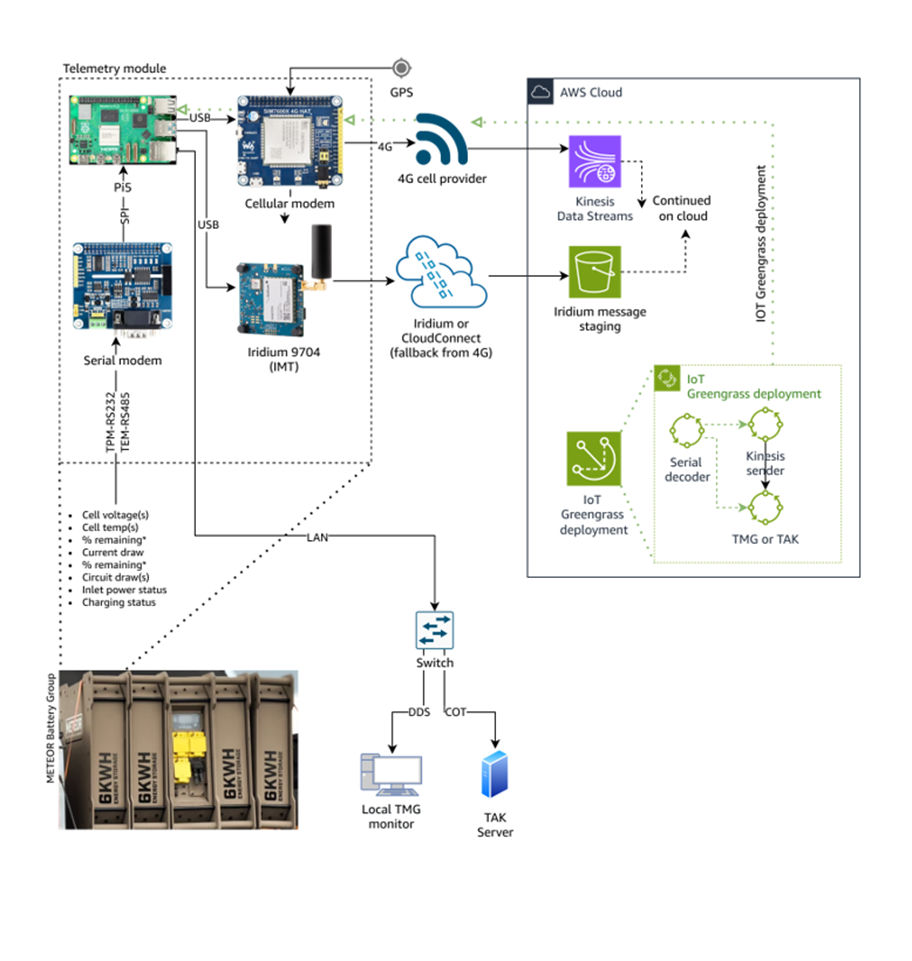
Figure 1: IoT telemetry system architecture
T-REX 26-1: Field validation
The T-REX 26-1 exercise, led by the Office of the Under Secretary of War for Research and Engineering, tested these capabilities under demanding operational conditions over 2 weeks in December 2025. The exercise engaged multiple sensor technologies, counter-unmanned aerial system (UAS) operations, and tactical command systems in scenarios designed to stress energy resilience.
The Sentient and AWS solution supplied electrical power to 20 different technologies simultaneously throughout the exercise, with 14 technologies actively demonstrating capabilities ranging from electronic warfare systems to autonomous aerial platforms. Tactical operators gained real-time visibility into consumption patterns, generator health metrics, and remaining fuel capacity through Amazon Quick Sight dashboards and TAK map overlays. Logistics officers received advance notice of projected fuel requirements through Amazon Bedrock forecasting, supporting proactive resource allocation to help prevent shortages. The dual-path communications architecture maintained data flow throughout the exercise, validating resilience in contested communications scenarios.
The following diagram illustrates the AWS Cloud data processing pipeline from raw telemetry to analytics and user dashboard. The diagram shows data ingestion through Iridium message staging and Kinesis Data Streams, processing through AWS Lambda and AWS Glue for normalization, storage in Amazon Timestream and Amazon Relational Database Service (Amazon RDS) for PostgreSQL, and analytics delivery through Amazon Quick Sight. Amazon EventBridge provides event-driven alerts, and Amazon Bedrock powers predictive analytics. The architecture includes secure communications using AWS Wickr, with components deployed in a virtual private cloud (VPC) endpoint featuring NAT Gateway, Application Load Balancer, Amazon Elastic Container Service (Amazon ECS) with Amazon Elastic Container Registry (Amazon ECR), Amazon DynamoDB, and Amazon API Gateway connected through Amazon VPC interface endpoints.
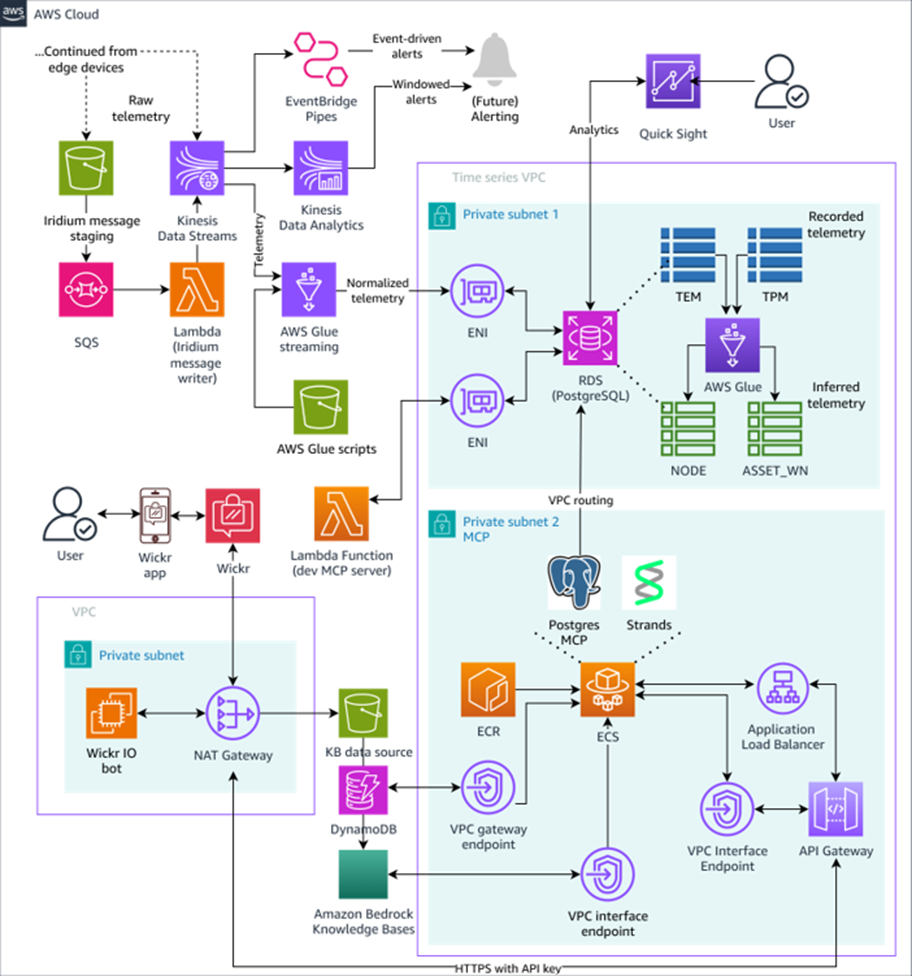
Figure 2: AWS Cloud data processing pipeline architecture
Operational impact
The validated architecture delivers six operational advantages for forces in contested environments:
- Extended operational duration – Intelligent load balancing and consumption optimization reduce the frequency of tactical energy system recharging and replacement, decreasing dependence on auxiliary fossil fuel–based power sources. This directly reduces both fuel resupply convoys and battery swap logistics, cutting the overall sustainment footprint and enabling units to operate longer on existing energy resources.
- Enhanced situational awareness – Real-time telemetry eliminates the energy blind spot in tactical planning. Commanders incorporate power considerations into tactical decisions with confidence in their energy posture.
- Reduced logistics burden – Predictive analytics enable more accurate forecasting of energy resource requirements—including fuel consumption and battery replacement intervals—reducing the safety margins required to account for uncertainty. Fewer resupply missions and optimized swap schedules mean less exposure to the risks of convoy operations in contested environments.
- Autonomous optimization – The system continuously optimizes load management and energy allocation based on mission requirements and system health, reducing operator workload while maximizing efficiency across the tactical microgrid.
- Predictive maintenance – Analytics identify equipment degradation patterns before failures occur, transitioning maintenance from reactive repairs to proactive interventions and extending system operational life.
- Safety – The system’s remote monitoring capability reduces the need for personnel to physically inspect power systems in contested or hazardous environments. Continuous telemetry detects fault conditions—including overloads, thermal anomalies, and voltage irregularities—before they escalate, protecting both personnel and the equipment they depend on for mission-critical operations.
What’s next
The T-REX 26-1 results establish a foundation for broader implementation. Three areas will advance the technology from prototype validation to operational deployment.
Future exercises will validate performance across multiple simultaneous deployments, stress-testing the architecture’s ability to coordinate energy distribution at battalion and brigade scale. Tactical microgrid integration will extend the solution beyond individual METEOR unit monitoring to coordinate power distribution across multiple generation sources, storage systems, and consumption points, creating resilient energy networks for contested environments. As operational data accumulates, Amazon Bedrock ML models will identify equipment degradation signatures with greater precision, maturing predictive maintenance from concept to operational capability.
This architecture also addresses energy management challenges beyond defense. Remote mining operations, disaster response teams, and humanitarian missions all face similar visibility gaps in distributed power systems. The AWS and Sentient solution provides a proven reference architecture applicable wherever intelligent energy management delivers operational advantages.
Conclusion
Tactical forces no longer need to operate energy systems without visibility. The AWS and Sentient Industries solution transforms energy management from a vulnerability into a force multiplier—providing commanders with the real-time telemetry, predictive analytics, and automated optimization needed to make informed power distribution decisions in contested environments.
The T-REX 26-1 exercise validated this approach at scale. As the DoW continues to modernize how it executes operations and serves the warfighter, intelligent energy management provides the foundation for mission success across defense, commercial, and humanitarian applications.
Learn more
Learn about Cloud Computing for U.S. Defense. Explore Deploying Small Language Models at Scale with AWS IoT Greengrass and Strands Agents. Discover Amazon Bedrock Agents.